 Author: Radomskyi Maksym Vasyliovych
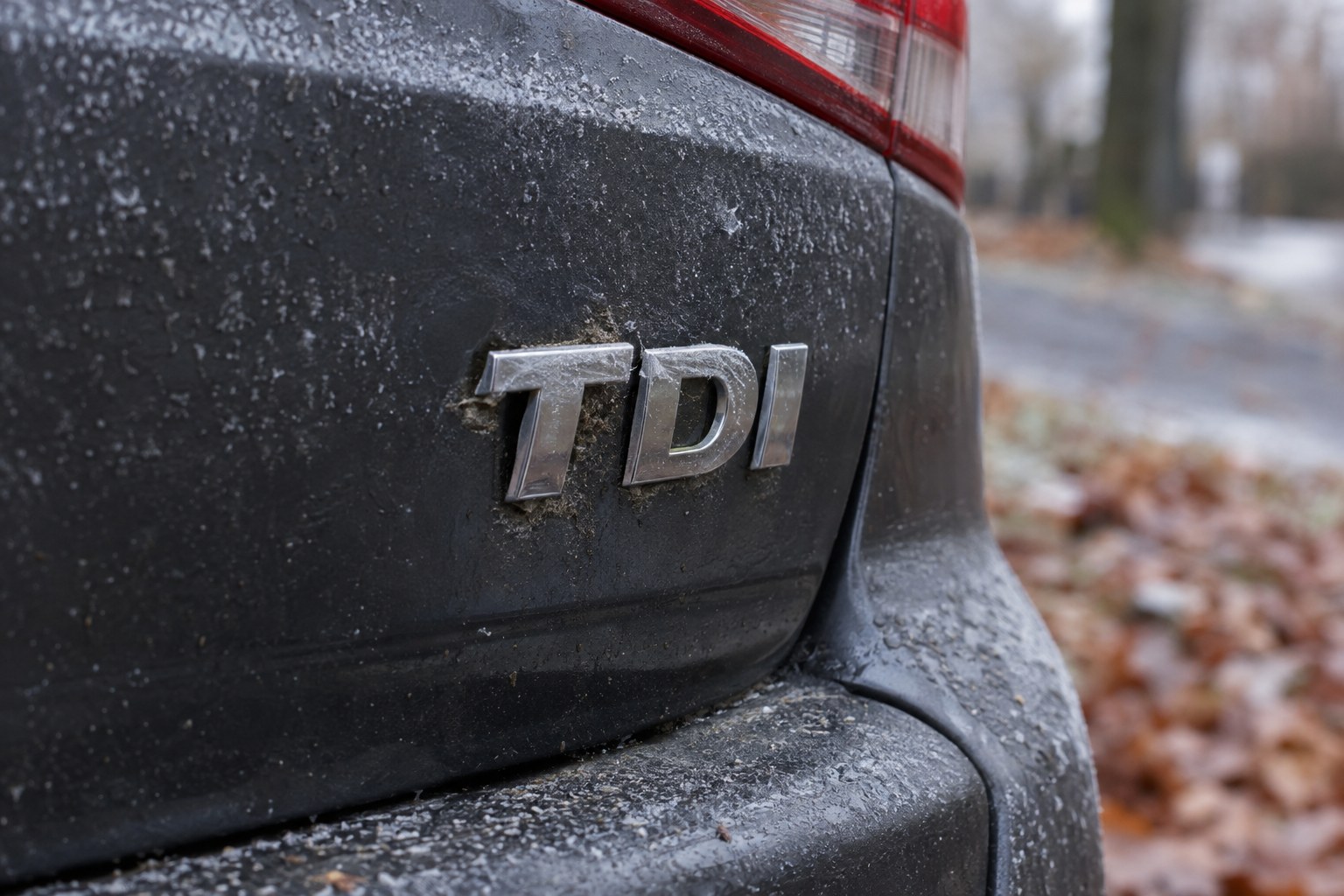
A badge or self-adhesive lettering most often comes off in autumn and winter not because of “bad tape”, but because of a cold surface, moisture, salt, and dirt getting under the edge. It is better to reattach the emblem now, while it is warm during the day: adhesive tape bonds well to the part at about +15…+20 °C, but on cold metal and plastic it barely sticks. Below is how to tell that a badge is about to fall off, what to choose instead of the old one, and how to reattach it so it makes it through the winter.
Contents
- Why a badge peels off in autumn and winter
- How to tell an emblem is about to fall off
- At what temperature you can stick a badge using 3M tape
- Self-adhesive or pins: what to choose instead of the old badge
- How to choose a new badge or lettering so it fits in place
- How not to tear off a badge at the car wash in winter
Why a badge peels off in autumn and winter
Most body lettering and some emblems are held on with double-sided tape with a foam core. It works as long as the adhesive layer stays tightly bonded to both the part and the body. Cold makes the adhesive harder: 3M, a manufacturer of tapes, states прямо in its technical data that at low temperatures the adhesive layer is too stiff to properly “wet” the surface, so they do not recommend applying it below the specified minimum. And tape that has been applied correctly usually holds up fine in freezing temperatures.
That is why a typical scenario is a badge that held for years falling off именно during the shoulder season. Usually there are several causes at once:
- The old tape has lifted at the edge. Water and salty slush get into the gap, freeze, and gradually push the part away.
- The emblem was once reattached in the cold or on a poorly degreased surface—the adhesive did not bond fully, and the first winter reveals it.
- A pressure-washer jet aimed right at the edge. Pressurized water hits under the lip, and in freezing weather it also freezes there.
- Cleaning with a brush or scraper. You caught the edge of the lettering—the letter lifted, and from then on it is barely holding on.
How to tell an emblem is about to fall off
Inspect the rear door, trunk lid, and grille in daylight. Warning signs:
- the edge of the badge or an individual letter has lifted, and you can see a dark strip of dirt under it;
- the part “moves” if you lightly press on one side with a finger;
- after a wash, water or ice stays around the lettering for a long time;
- on a pinned emblem, a retainer has cracked or gone missing, and it is holding only on the adhesive.
A letter that has already lifted can disappear in one go on the highway or at the car wash. So if the edge has поднялся, it is better to remove it and reattach it now than to search later for the exact same lettering: something similar in size and font does not always fit where the old one was.
At what temperature you can stick a badge using 3M tape
There are no exact figures for “any tape”—each product has its own. As a guideline, 3M’s technical data for VHB mounting tapes works well:
| Parameter | What the manufacturer says | What it means in practice |
|---|---|---|
| Ideal application temperature | +21…+38 °C | Stick it in a garage, bay, or on a warm day |
| Minimum temperature | +10 °C or +15 °C depending on the tape | Warm up a cold body panel first, rather than sticking it “outside” |
| Strength build at room temperature | ≈50% in 20 min, ≈90% in 24 h, 100% in 72 h | Do not wash the car for the first day and do not drive into freezing temperatures immediately after application |
| Cold-weather performance | After correct application, holds satisfactorily | The key is to apply it in warm conditions, not what the weather will be afterward |
Our 3M double-sided tape is made on an ethylene-vinyl acetate base, not VHB, so the figures above are a guideline rather than a guarantee. The tape description also says: both surfaces must be clean and degreased, you should apply it in warm conditions, at above-zero temperature, pressing the part firmly. For badges, a 6 mm width is usually enough. More about how 3M tape behaves in freezing temperatures is in the article about a spoiler on the trunk lid.
Self-adhesive or pins: what to choose instead of the old badge
Emblems are attached in three ways, and they are not interchangeable:
| Mounting | Where it occurs | What to consider in winter |
|---|---|---|
| Self-adhesive (tape already applied) | Model and trim lettering on the trunk lid, some rear emblems | Holds only if applied warm onto a degreased surface |
| Pins, clips, latches | Front emblems in the grille, some rear badges | Mechanical mounting is not affected by cold, but you need intact holes and retainers |
| Combined | Emblem with pins plus tape | Check that both parts of the mounting are in place |
A self-adhesive emblem is not automatically a replacement for one that was mounted on pins: the old holes will remain, and a flat part may not sit flush on a curved surface. Cutting off the pins and setting a badge on adhesive is a modification that holds worse than the factory mounting. So first look at the back of the old part and the mounting area on the body, and only then choose a new badge.
How to choose a new badge or lettering so it fits in place
Make, model, and even VIN are not enough to select an emblem: a generation change, facelift, and body type often change the size, curvature, and mounting. What to verify before ordering:
- Overall dimensions including the border. A round emblem is measured by diameter; an oval and lettering by width and height.
- Type and placement of mounts: self-adhesive, number and spacing of pins, clips.
- Installation location. Front, rear, and steering-wheel emblems are different items.
- Appearance: font, color, gloss or matte, black-chrome or fully chrome.
- Whether it is one word or separate letters and whether the set includes an alignment template.
Look for model-specific lettering and emblems in the badges section by make and model; universal lettering is in universal badges. If you need to remove an old adhesive badge, a step-by-step guide is in the article how to properly remove a badge from a car, and you can remove adhesive residue without harming the paint using tips from how to remove tape marks on a car.
How not to tear off a badge at the car wash in winter
A well-applied badge goes through a normal wash without problems—the main thing is not to help it fall off:
- do not wash the car for the first day after application, and avoid high-pressure washing for the first three days;
- keep the wash jet at a distance and do not aim it right under the edge of the lettering;
- brush snow off the trunk lid with a soft brush, and do not knock ice around the emblem off with a scraper—let it melt in warmth;
- for black gloss and chrome on plastic, do not use aggressive chemicals and abrasive polishes;
- after a wash in freezing weather, wipe the area around the badge so water does not freeze under the edge.
More details about washing in winter for tuning parts are in the article “Car washing in winter and tuning”.
We deliver with Nova Poshta across all of Ukraine.
How it works
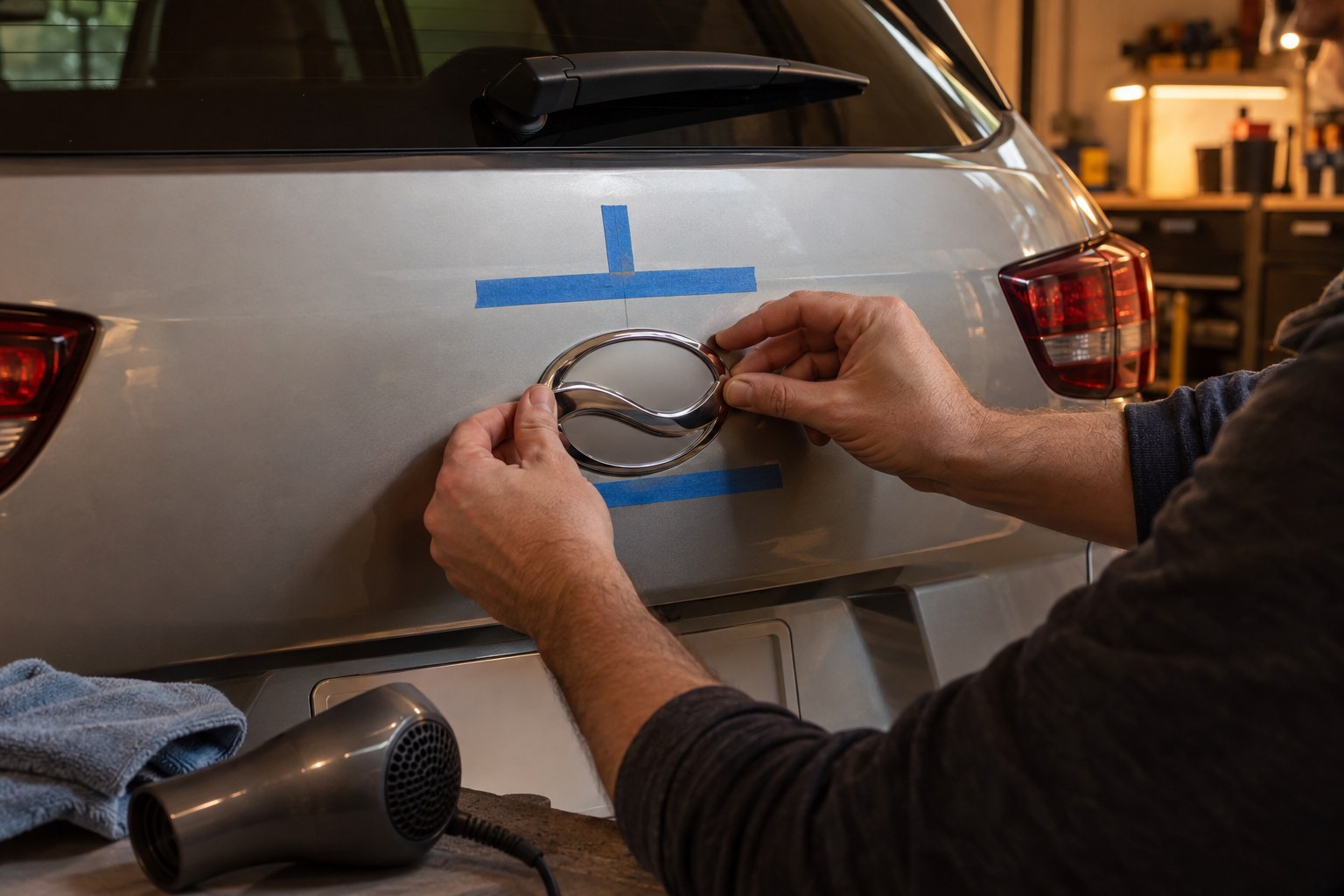
- Warm the body and part Drive the car into a warm garage or wait for a warm day; cold metal can be carefully warmed with a household hair dryer from a distance, without overheating the paint or plastic.
- Remove the old badge Warm it with a hair dryer and carefully cut through the adhesive layer with fishing line or dental floss; do not pry with a screwdriver so as not to scratch the paint.
- Remove adhesive residue Remove the old adhesive with a plastic scraper and a sticker remover, and do not use metal tools or abrasives.
- Degrease the surface and the back of the part Wipe both surfaces with an alcohol cleaner and let them dry completely; if needed, apply a thin layer of primer only where the tape will sit.
- Mark the position Mark the outline of the old badge with strips of masking tape so the new lettering sits straight in the same place.
- Apply and press down Remove the protective film, place the part according to the markings, and press firmly over the entire surface for several tens of seconds.
- Let the adhesive set Do not wash the car for the first day, and postpone pressure washing for three days; then check whether an edge has lifted.