01.09.2026
69
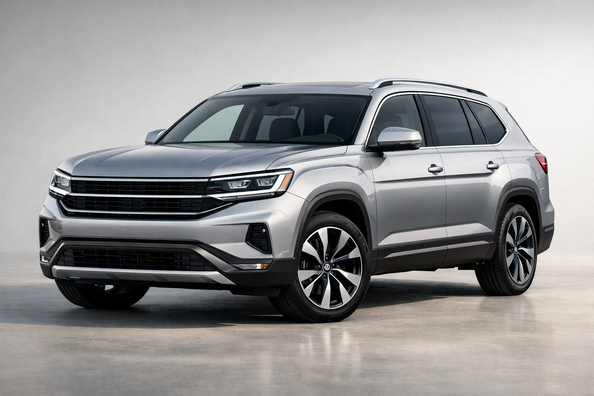
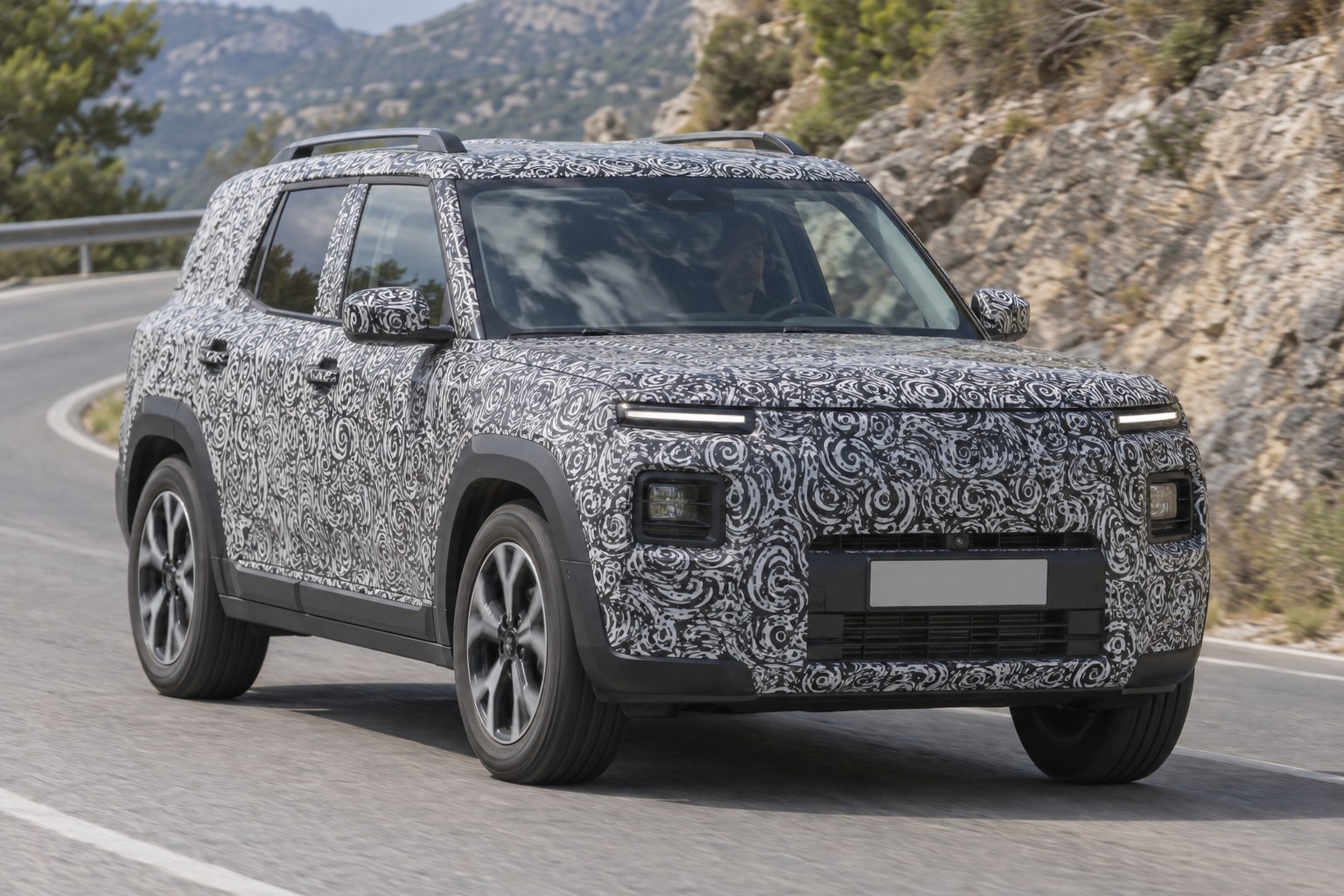
Volkswagen Atlas 2027 is the second generation of the brand’s large 7-seat crossover, tailored for families, long trips, and lots of luggage. At launch, everything is fairly simple and clear: one gasoline 2.0-liter turbo engine with 282 hp, an 8-speed automatic transmission, front-wheel drive as standard, and all-wheel drive as an option. The main changes are a richer interior, updated electronics, better official fuel economy, and a higher price.
An important nuance: there are still very few mass owner reviews specifically about the Atlas 2027, so the practical picture has to be pieced together from official specs, early drives in pre-production cars, and what owners of the current Atlas 2026 have already praised or criticized.
The Atlas plays in the segment of large three-row crossovers, where buyers usually choose not with emotions but by cabin space, third-row usability, cargo capacity, and everyday ease. Its direct rivals are models such as the Honda Pilot, Toyota Grand Highlander, Hyundai Palisade, Kia Telluride, Ford Explorer, and Chevrolet Traverse.
Who it suits: families with two or three kids, those who regularly go on road-trip vacations, carry strollers, suitcases, sports gear, or a trailer. Who it doesn’t: those who mostly drive around the city alone or as a couple, want a hybrid, prioritize fuel savings above all, or need a more compact body for tight parking garages.
The Atlas is also known as the Terramont in some markets, and this matters for choosing accessories: the same model is often listed under the Terramont name. The first generation lasted through the 2026 model year, and the starting point depends on the market: effectively the late 2010s, with a 2016–2017 launch depending on the country and model-year designation.
Atlas 2027 is an all-new second generation. It was unveiled in spring 2026, with sales planned for fall 2026. Production remains in Chattanooga, Tennessee. This is not a minor refresh but a deep update with new exterior styling, a reworked cabin, and a shift in positioning toward a more expensive family crossover.
At launch, only one powertrain is confirmed: the gasoline 2.0-liter turbo EA888 Evo5 producing 282 hp and 350 N·m of torque. There’s only one transmission—an 8-speed automatic. Base versions are front-wheel drive, with all-wheel drive available separately.
In practice, this means the Atlas 2027 doesn’t split into a dozen trims: the choice is simpler, but there are fewer alternatives at the start. There’s no hybrid version yet, which may turn away those focused on city fuel consumption. On the other hand, for a large crossover the official numbers look decent, and the ability to tow up to 2 268 kg makes the model suitable not only for family duty but also for active leisure.
The Atlas 2027 is built on the MQB Evo platform. The wheelbase remains 2 980 mm, while the body is slightly longer. In character, it’s not a “driver’s” crossover but a big, calm vehicle for smooth, predictable travel with an emphasis on space and stability.
| Parameter | Value |
|---|---|
| Generation | Second, model year 2027 |
| Engine | 2.0 L turbo, 282 hp, 350 N·m |
| Transmission | 8-speed automatic |
| Drivetrain | Front-wheel drive or all-wheel drive |
| Length | 5 098 mm |
| Width | 1 989 mm |
| Height | 1 781 mm |
| Wheelbase | 2 980 mm |
| Ground clearance | Officially not yet specified for 2027; reference for the previous model is about 159 mm |
| Trunk | 583 L behind the third row, 1 572 L behind the second, 2 740 L behind the first |
| Seating capacity | 7 seats, 3 rows |
| Towing | Up to 2 268 kg |
| Fuel tank | 70.4 L |
| Turning circle | 12.3 m |
| Wheels | 18, 20, or 21 inches |
By the numbers, it’s truly a big crossover. Even with the third row up, there’s still 583 L of cargo space, meaning room for everyday items and a couple of suitcases doesn’t disappear. But the flip side is obvious too: more than five meters in length is no longer a format you can easily ignore on narrow streets or in older underground parking garages.
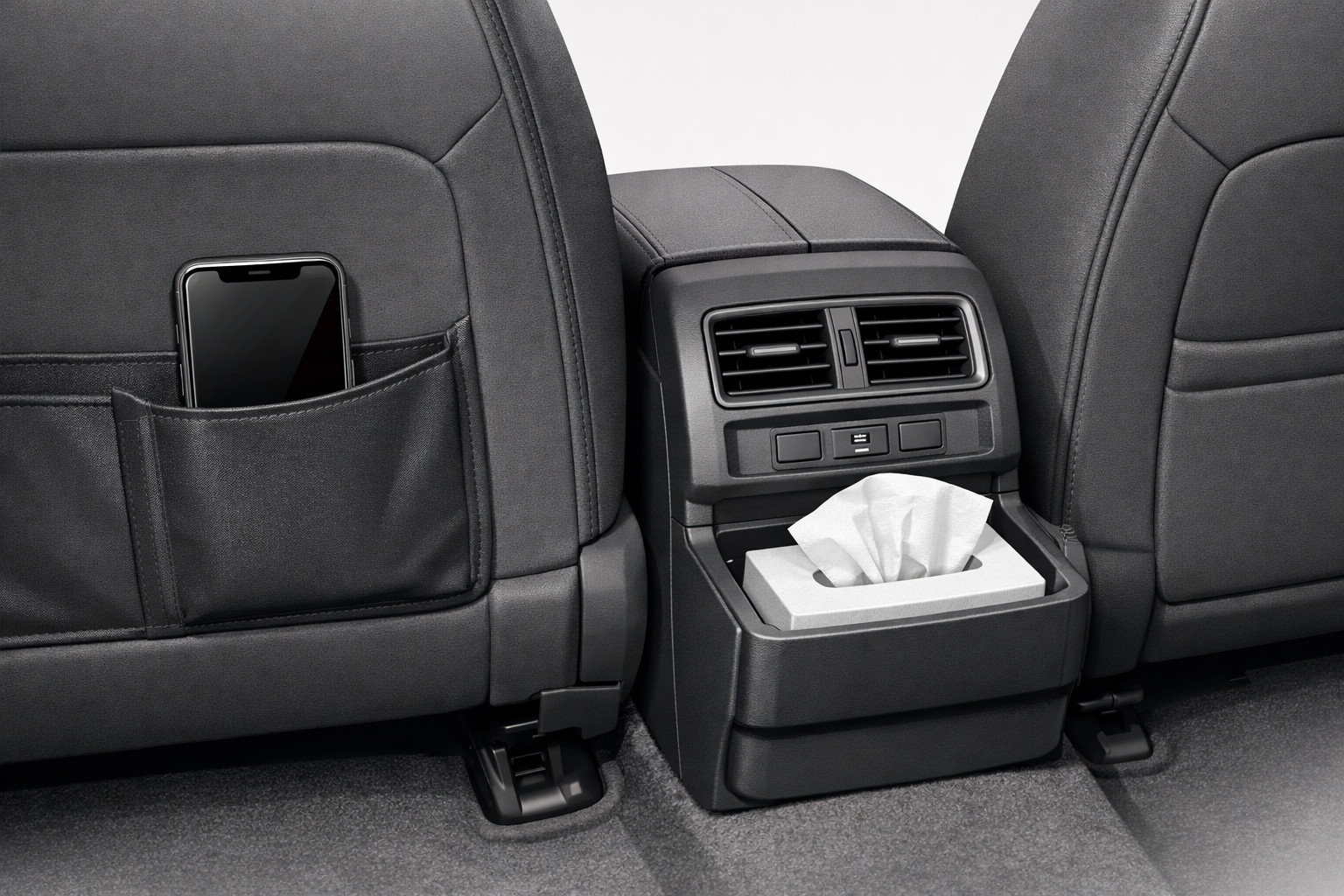
Inside, the Atlas 2027 has clearly moved closer to a higher class. Even the base version lists a 10.25-inch digital instrument cluster and a 12.9-inch central screen, while higher trims get a 15-inch display, a better audio system, expanded ambient lighting, more premium trim materials, seat massage, and genuine inserts.
Safety is solid as well: the IQ.DRIVE driver-assist suite is standard, a center front airbag has been added, and there are driving and parking assistance systems. But there’s an important real-world point here: based on Atlas 2026 feedback, owners are annoyed by touch controls and occasional screen glitches. So the cabin looks more upscale, but the questions of ergonomics and multimedia reliability are still worth checking on production cars.
In daily life, the Atlas 2027 is strong where big crossovers are supposed to be strong: a high seating position, wide door openings, a truly usable third row for kids and short adult trips, and a second row that doesn’t force compromises. For family outings, this is one of the model’s key advantages.
From an operating standpoint, it’s worth looking at your usage scenario. If the car spends most of its time on highways or intercity routes, the official consumption looks reasonable: about 9.4 L/100 km combined for front-wheel drive and 10.2 L/100 km for all-wheel drive. But if it’s daily short city trips, the large body, 12.3 m turning circle, and lack of a hybrid can quickly remind you that the Atlas wasn’t built for an economical urban routine.
| Pros | Cons |
|---|---|
| Very spacious cabin and large trunk even in 7-seat configuration | Starting price has increased noticeably compared with the previous Atlas |
| One straightforward and sufficiently powerful engine without confusing trim variations | No hybrid version at launch |
| Better interior and richer equipment than its predecessor | Touch controls and multimedia may be a weak point |
| A good base for long trips, country house runs, leisure, and towing | The third row is still a compromise for adults on long journeys |
| Calm, predictable on-road behavior | The dimensions won’t suit everyone in the city and in tight parking |
From an owner’s perspective, the Atlas 2027’s main trump card isn’t a single spec number, but the combination of space, cargo capacity, and adequate performance without feeling like the vehicle is overloaded by its own size. The main risk is also clear: it’s a large and now not inexpensive crossover that has to justify its price not with flashy screens, but with convenient day-to-day usability.
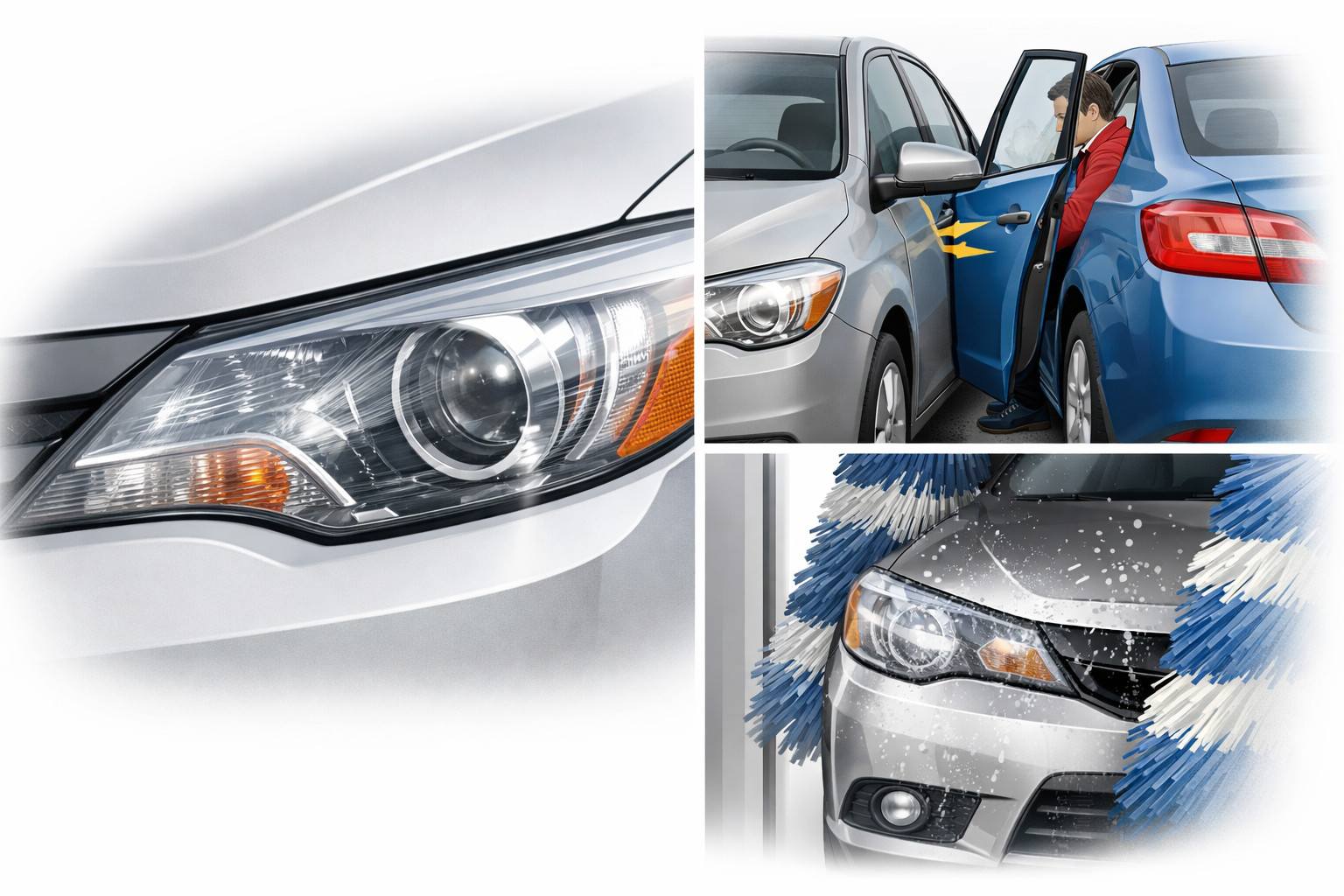
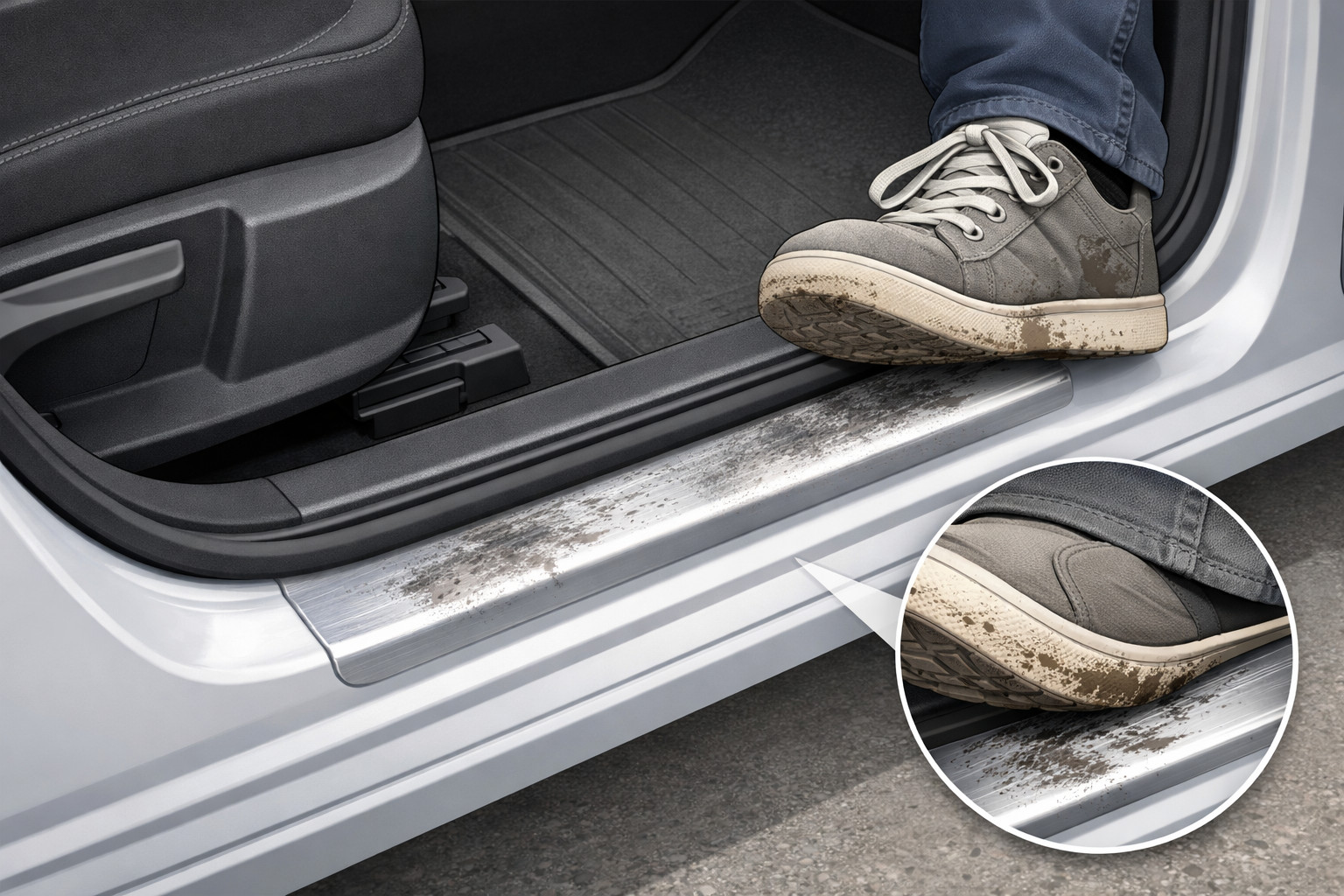
For this format, the most useful upgrades aren’t decorative tuning but things that protect the interior and expand everyday use cases. In a big family crossover, the first items that usually come in handy are floor mats, trunk protection, and a roof rack for fully loaded trips. On the website, it’s worth searching for the model both as Atlas and as Terramont.
The Volkswagen Atlas 2027 looks like a strong update for those who truly need a large three-row crossover, not just a high seating position. It doesn’t promise a sporty character or record-breaking efficiency, but it delivers space, a torquey standard engine, a big trunk, and the logic of a family vehicle without unnecessary complications. The main caveats are the higher price, the lack of a hybrid, and questions around the ergonomics of touch controls.
The material is based on real experience selecting parts, practical know-how, and real-life use cases for large family crossovers and their accessories. That’s why the conclusion here is simple: if you need a spacious vehicle for people and things, the Atlas 2027 is worth considering; if your priority is compactness, a lower entry price, or electrification, it’s better to look elsewhere.
| ✔ | Very spacious cabin and a large trunk even in the 7-seat configuration. This is practical for family trips when you need to carry people and cargo without constant compromises. |
| ✔ | One clear 2.0-liter turbo engine with 282 hp makes the choice easier and provides enough torque reserve for a large crossover. There’s no need to sort through many versions at the start. |
| ✔ | The interior has become richer: even the base version has a digital instrument cluster and a large central screen, while higher trims get an even larger display and better materials. This is a noticeable step up compared with the predecessor. |
| ✔ | Atlas 2027 is well suited for long trips and towing up to 2,268 kg. For the country house, vacations, and hauling a trailer, that’s a real advantage. |
| ✔ | Its road behavior is described as calm and predictable. For a large family crossover, that is more useful than excessive “sportiness”. |
| ✘ | The starting price has risen noticeably compared with the previous Atlas. For some buyers, this may become the main obstacle. |
| ✘ | There is no hybrid version at launch. In city use, this makes the model less attractive for those who focus primarily on fuel consumption. |
| ✘ | Touch controls and multimedia have already drawn criticism in the current Atlas, and this remains an issue for the new generation. There is still no long-term experience, but the ergonomics risk has not gone away. |
| ✘ | The third row on a long trip remains a compromise for adults. The model is designed primarily for a family, not for comfortable transport of seven adults. |
| ✘ | Dimensions of over 5 meters and a turning diameter of 12.3 m make life harder in the city and in tight parking lots. This is not the most convenient option for narrow streets and old parking garages. |
Shipping to EU
Wholesale and retail
Own warehouse
Опис продукту
Подарунки не надаються при оформленні покупки у кредит під 0,01% або при покупці частинами.