22.09.2026
281
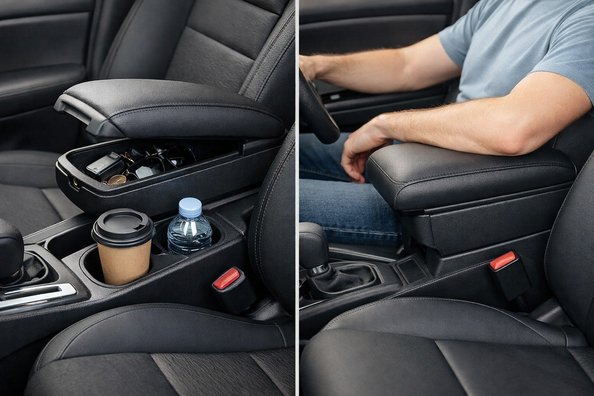

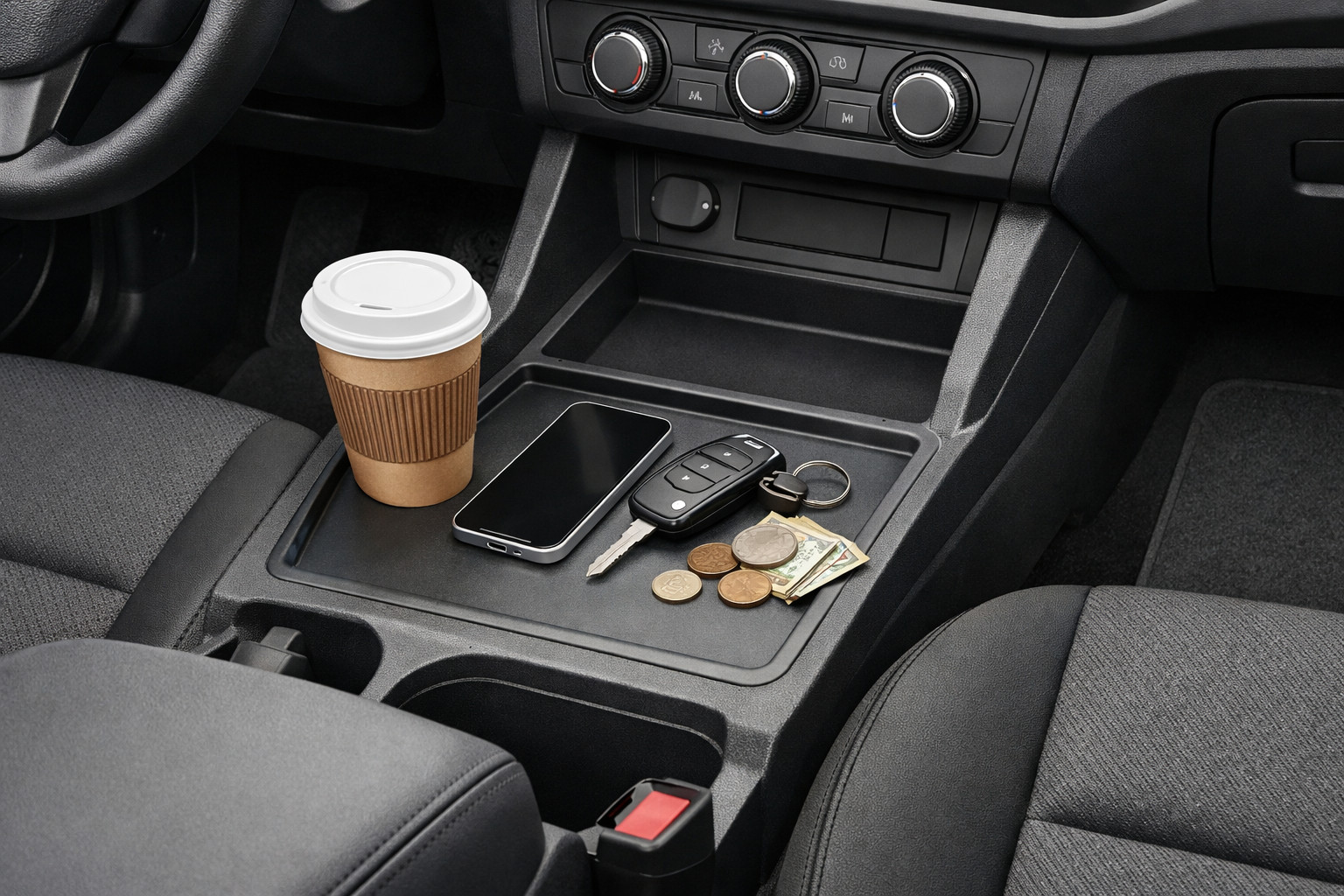
For city driving, the convenience of an armrest is defined not by a storage box for small items, but by whether it gives your arm proper support in traffic and doesn’t interfere with the handbrake, seat belt, or seating position. If there’s a decent gap between the seat and the center console, a universal option is usually more practical: it more often has adjustments, a larger box, and is easier to clean.
A cupholder armrest wins where the cabin is tight or you don’t want to interfere with mounts. But it also depends much more on the shape of the factory holder: if the fit isn’t tight, you get play, small rattles over bumps, or even it popping out of the socket.
In city driving, an armrest works in short cycles: pull away, brake, turn, park, pull away again. So what matters most isn’t how big it is, but whether your elbow rests at the right height and whether you have to move your arm every time during a maneuver or when using the handbrake.
A universal armrest usually handles ergonomics better: it sits higher and often has adjustment for height, reach, or angle. A cupholder armrest takes a different approach: installation is simpler, intervention is minimal, and for some narrow cabins it’s essentially the only option that doesn’t press into the seat.
| Option | Strengths | Weaknesses | Who it suits |
|---|---|---|---|
| Cupholder armrest | Fast installation, minimal interior intervention, convenient for narrow consoles | Heavily depends on the shape of the mounting spot, play and noise appear more often, sometimes a weaker lid | For those with a tight cabin or for whom it’s important to install everything without adjusting mounts |
| Universal armrest | Better support in traffic jams, more adjustments, larger box, easier-to-clean surface | Requires accurate measurements, may interfere with the handbrake, belt, or seat travel | For those who drive in the city daily and want proper ergonomics, not just an extra compartment |
DD Tuning expert comment: Most often, people don’t get the armrest type wrong—they get the measurements wrong. They look at the overall length, but don’t check mount width, distance to the handbrake, and whether the lid will press into the elbow when shifting. For the city, what’s critical isn’t box capacity, but support height relative to the seat.
Its strong side is simplicity. In many cases, you don’t need to drill or glue anything: the armrest goes into the factory spot, and that’s the end of the installation. That’s why this option is often chosen for cars where the owner doesn’t want to interfere with the interior or is simply looking for a quick solution.
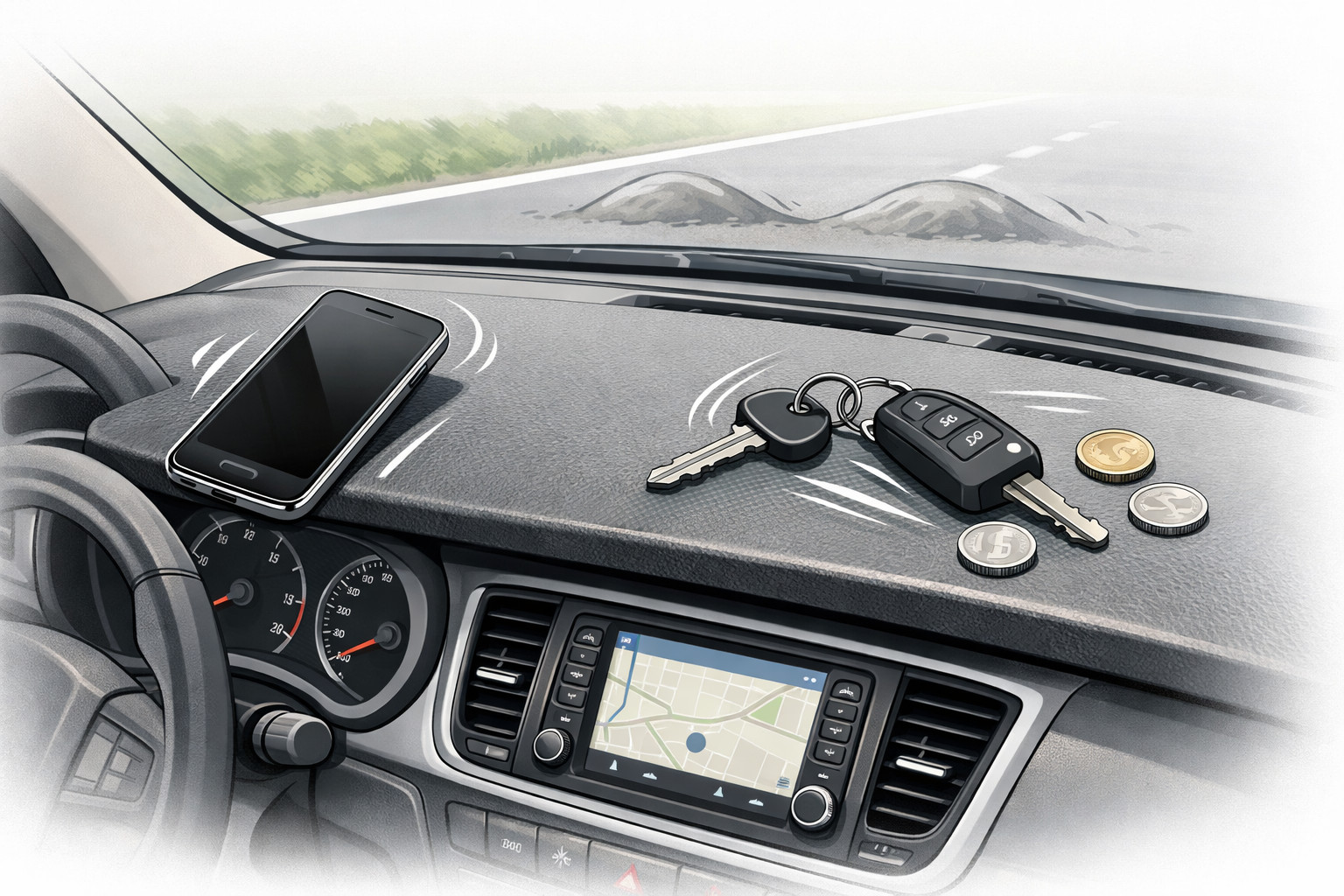
The weak point is its dependence on specific geometry. In model-specific solutions, dimensions can differ noticeably, and the mounting part is sometimes small relative to the overall construction. If the cupholder is shallow, narrow, or the wrong shape, the armrest seems to fit, but under load it starts to wobble. In the city, this is especially noticeable on cobblestones, speed bumps, and sharp lane changes.
As for durability, everything comes down to the base and the lid. If the plastic is soft and the lid hinge is weak, the problem shows up sooner than the upholstery wears. Practicality is also a compromise: you get support and a box, but you often lose part of the cupholder’s original function.
This is the more ergonomic option if there’s space in the cabin. The typical mounting width in such models is roughly in the 12–16 cm range, and height can be around 35–40 cm. That’s why a universal armrest is more often adjustable to the driver’s real seating position, not the other way around.
In the city, you feel it right away: your elbow sits higher and more naturally, your arm hangs less in the air, and the larger box is genuinely useful for small items. If the upholstery is eco-leather, it’s easier to quickly wipe after winter, rain, or dirty shoes. For everyday use, it’s only “a small thing” on paper.
The downsides are practical too. Before buying, you need to check whether the armrest will block the handbrake, whether it will interfere with buckling the seat belt, and whether it will limit seat movement. In budget versions, there’s often another issue: the idea is right, but the frame rigidity and assembly quality are weak, so after some time wobbling or squeaking appears.
If the car drives in the city every day, sits in traffic, and the driver actually rests their right arm on support, a universal armrest is almost always more comfortable. Especially if the cabin allows normal height and forward reach.
If the car is compact, the center console is narrow, the handbrake sits high, and there’s little space between the seat and plastic, a cupholder armrest looks more logical. It’s not as flexible in fit, but it’s often the only way to add any support at all without conflicting with controls.
For a company car, rental car, or a situation where you don’t want to measure and fit anything, a cupholder option also makes sense. But if you need everyday comfort rather than just quick installation, the universal one usually pays off in convenience within the first week.
| Scenario | What to choose | Why |
|---|---|---|
| Daily traffic jams 40–90 minutes | Universal armrest | Provides more stable support, adjusts better in height, and tires your arm less |
| Tight cabin, high handbrake, little space near the console | Cupholder armrest | Lower risk that the construction will catch the handbrake or seat |
| Need the fastest installation with no modifications | Cupholder armrest | Usually installs easier and doesn’t require mount adjustment |
| Need a box for small items and everyday practicality | Universal armrest | More often has larger internal volume and a more convenient lid |
| Not confident about cabin measurements | Measure first, and if space is limited—cupholder armrest | A gap mistake with a universal option costs more than a mistake with a simpler cupholder fit |
A more expensive solution makes sense when the armrest isn’t just “for show,” but for daily support in city driving. Here it’s worth paying extra not for decorative inserts, but for a stiffer base, better lid geometry, more precise adjustment, and a lower risk of noise over time.
To compare designs, you can look at the basic universal armrest and the universal option with different geometry; if you need a wider selection for different interiors, it’s more convenient to go to the all armrests section. For a cupholder armrest, paying extra is justified only when there is exact compatibility with the factory spot and the construction has no play already at the fitting stage.
From a customer’s experience: the owner of a compact hatchback first wanted a cupholder armrest because he didn’t plan to measure anything. After checking, it turned out the factory spot sat too low and the elbow ended up dropped, so they chose a universal option with a small forward reach. In daily traffic, the gain wasn’t in the box, but in the fact that the arm rests naturally and you don’t have to keep it hanging all the time.
In short, for the city a universal armrest is usually better: it provides more stable support, more adjustments, and better everyday practicality. A cupholder armrest is worth taking when the cabin is narrow, you need the fastest possible installation, or there’s a risk that a universal construction will catch the handbrake or seat.
The main thing is to measure the cabin first and think about your real seating position, and only then look at the material, the small-items box, and the price. This material is based on real selection experience, installation practice, and real usage scenarios, so the conclusion is simple: in the city, the winner isn’t the option that looks better in photos, but the one that doesn’t wobble, doesn’t interfere with driving, and fits your interior geometry.
| ✔ | A universal armrest is usually more comfortable as an arm support in the city: it adjusts better in height and reach, so the elbow rests more naturally in traffic jams. |
| ✔ | It often has a larger storage compartment for small items, and the surface is easier to wipe clean, which is useful for everyday city use. |
| ✔ | A cup holder armrest installs faster and requires almost no modifications to the interior, so it suits those who do not want to drill or adjust mounts. |
| ✔ | In a narrow cabin, a cup holder version may be more practical, as it is less likely to interfere with the seat or handbrake. |
| ✘ | A cup holder armrest depends heavily on the shape and depth of the factory mount: if the fit is loose, play, rattling, or even popping out can occur. |
| ✘ | A universal armrest requires precise measurements, and without them it may block the handbrake, interfere with the seat belt, or limit seat movement. |
| ✘ | In cheaper models of both types, the mounts, base rigidity, or lid hinge are often weak, so problems appear before the upholstery wears out. |
| ✘ | A cup holder armrest often partly loses the cup holder function itself, so it is a compromise between arm support and cabin convenience. |
Shipping to EU
Wholesale and retail
Own warehouse
Опис продукту
Подарунки не надаються при оформленні покупки у кредит під 0,01% або при покупці частинами.