 Author: Radomskyi Maksym Vasyliovych
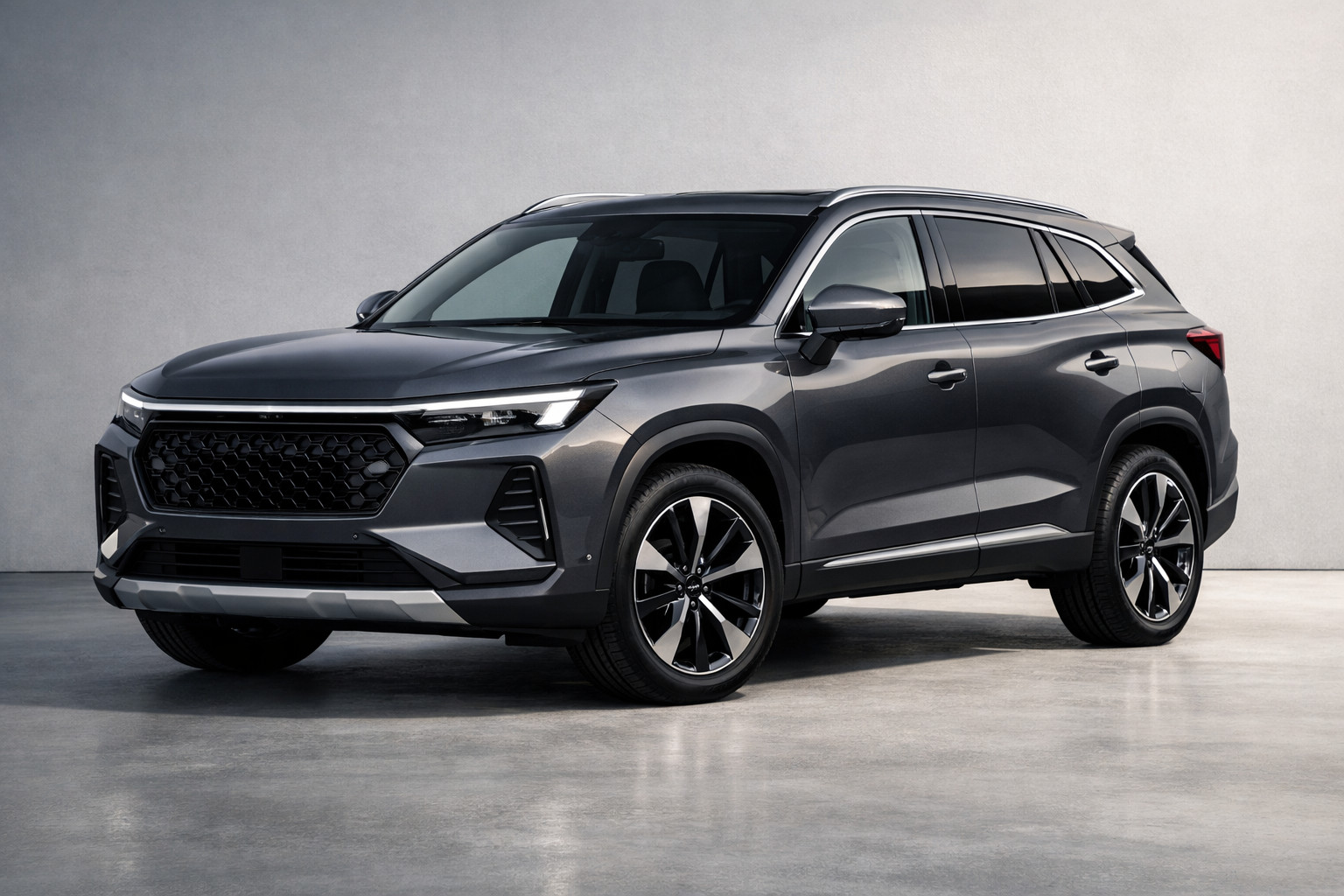
Jaecoo 7 is a family SUV measuring 4.5 m in length that made a loud entrance into Europe thanks to a simple formula: rich equipment, a long warranty, and a strong hybrid version. What works best here isn’t image, but the price-to-space-to-equipment ratio. The weakest points are a not-so-calm suspension, overloaded controls via the screen, and a mediocre case for the pure petrol version.
The bold claim of being “one of Europe’s most popular cars” should be read with a caveat: the model’s brightest success is confirmed primarily in the UK market. But as a new mainstream challenger to the Hyundai Tucson, Kia Sportage, Nissan Qashqai, or Volkswagen Tiguan, the Jaecoo 7 has indeed become very noticeable. It’s an option for those who want the most equipment for their money; not the best choice for a driver who values a finely tuned suspension and flawless ergonomics.
The model and its place in the market
In the mass-market family SUV segment, the Jaecoo 7 hits competitors where it hurts most: where you usually have to pay extra for large wheels, a panoramic roof, heating features, a head-up display, or an extended electronics package, here much of that is already included in affordable trims. This, together with a 7-year warranty, is exactly what made the model stand out at the start of European sales. It’s also useful to check the Jaecoo 7 2026 review and Jaecoo 7 prices and trims to compare the equipment with market logic.
Demand is explained rationally. People see a spacious interior, hybrid versions, a modern safety suite, and a price that forces comparisons of the Jaecoo 7 not with exotics, but with the segment’s main players. In other words, it’s bought not for brand heritage, but for the feeling of “a lot of car for the money.”
Generations and model history
For the Jaecoo 7, what matters is the current J7 generation, sold since 2023, with the model’s European acceleration falling in 2025–2026. There isn’t yet a long history of generational changes, so the main nuance for a buyer is simple: this is a very new car. Because of that, long-term reliability statistics are still limited, and some figures—ground clearance, boot volume, even hybrid output—may vary depending on the market and version.
| Parameter | Data | Comment |
|---|---|---|
| Start of sales | 2023 | This is when the current J7 generation launched. |
| Active European phase | 2025–2026 | These years saw the most noticeable market surge. |
| Model status | New generation without a long history | Plus: modern tech; minus: limited accumulated reliability statistics. |
Engines and transmissions
In Europe, the Jaecoo 7 has three main directions: the regular 1.6 turbo petrol, the full hybrid SHS-H, and the plug-in hybrid SHS-P. In short, the petrol version is the entry point to the model and the way to get AWD, SHS-H is the compromise without needing to charge, and SHS-P is the strongest argument of the whole lineup if you have somewhere to charge.
| Version | Hardware | Power and torque | Drive and transmission | Practical takeaway |
|---|---|---|---|---|
| 1.6 turbo petrol | 1.6 L, 4 cylinders | around 147 hp, 275 N·m | FWD or AWD, automatic transmission | Suitable if you need a simpler entry into the model or specifically AWD, but it’s the weakest option for consumption and performance. |
| SHS-H | 1.5 L turbo hybrid | 165 kW, 224 hp, 295 N·m | FWD, hybrid transmission | A good balance for those who want lower consumption without dependence on a plug. |
| SHS-P | 1.5 L turbo plug-in hybrid | 205 kW, 365 N·m | FWD, hybrid transmission | The strongest version for city and suburb use; up to 90 km of electric range under WLTP gives real meaning to daily charging. |
For SHS-P, one detail is worth keeping in mind: combined power can be presented slightly differently across various market materials. For European specs, it makes sense to ориент to 205 kW and 365 N·m, but the principle doesn’t change: it’s the most economical and most convincing option in real-world use.
Body, dimensions, and chassis
By size, the Jaecoo 7 sits right in the middle of the mainstream family segment. It doesn’t look small, but it also doesn’t turn into a bulky crossover that wears you out in the city. The other side is the chassis tuning: on smooth surfaces it’s fine, but over potholes and transverse bumps the suspension is often criticized for being fidgety.
| Parameter | Value | What it means in practice |
|---|---|---|
| Dimensions | 4 500 × 1 865 × 1 670 mm | A typical family SUV: spacious enough, but not yet cumbersome in the city. |
| Wheelbase | 2 672 mm | Provides a decent margin of space for the second row. |
| Ground clearance | 174 mm officially; some versions mention 200 mm | You need to look at the specific spec rather than generalize across all markets. |
| Boot | 340/1 265 L officially for SHS; in independent measurements 412–500 L | Volume and compartment shape noticeably depend on the version and measurement method. |
| Fuel tank | 60 L | A convenient reserve for long trips, especially in regular hybrid versions. |
| Suspension | MacPherson front, multi-link rear | The layout is right for the class, but it’s not just the design—tuning matters too. |
| Wheels and brakes | 235/50 R19, disc brakes, ventilated front | Looks good, but 19-inch wheels don’t help ride comfort on rough asphalt. |
| Towing | 750 kg unbraked, 1 500 kg braked | Capability is sufficient for a light trailer or modest everyday loads. |
In practice, this means the car is convenient for daily city use, trips out of town, and family routes, but you shouldn’t expect benchmark smoothness. With the boot, it’s also important not to confuse marketing with reality: the numbers exist on paper, but compartment shape and version strongly affect usable volume.
Interior, comfort, and safety
The model’s strong side is the sense of being well equipped. There’s a 10.25-inch digital instrument cluster, a 13.2- or 14.8-inch central screen, wireless smartphone connectivity, fast wireless charging, and in higher trims a head-up display and a Sony audio system. For a family SUV, that’s a serious argument: the cabin feels more expensive than you’d expect for the price.
But along with that come typical compromises. Some everyday functions are buried in the screen, there’s no separate volume knob, climate control is heavily tied to touch menus, and the driver attention monitoring system can be annoying with excessive sensitivity. On safety, the picture is good: 5 stars Euro NCAP, a strong set of assistants including automatic braking, adaptive cruise control, lane keeping, blind-spot monitoring, and a 360-degree camera.
| Item | Data | What the owner gets |
|---|---|---|
| Digital cluster | 10.25 inches | Modern, easy to read, adds a sense of novelty. |
| Central screen | 13.2 or 14.8 inches | A large display, but not everything about it is convenient. |
| Smartphone connectivity | Apple CarPlay and Android Auto wirelessly | Convenient in daily use without extra cables. |
| Audio | 6 or 8 Sony speakers | A solid baseline level for the class. |
| Safety | 5 stars Euro NCAP | A strong argument for a family buyer. |
Everyday use
In daily life, Jaecoo 7 versions differ more than the price list suggests. SHS-P has an 18.3 kWh battery, can charge on AC at 6.6 kW and via fast charging up to 40 kW, and can also supply power externally via V2L. If the car is regularly charged at home or near the office, this is the version with the best economy: even after the battery is depleted, it can deliver around 5.8 L/100 km, and in mixed driving real tests returned about 6.7 L/100 km.
The 1.6T petrol is simpler in ownership logic and may be needed by those for whom AWD matters, but in tests it looked the least convincing—around 9.3 L/100 km and without a sense of torque reserve. SHS-H looks like the golden mean for those who don’t want to depend on charging. For a family, the details matter too: the rear row is spacious, towing up to 1 500 kg is useful, but the boot across versions isn’t as versatile as you’d want from a car in this class.
Strengths and weaknesses
The Jaecoo 7 doesn’t have one magic advantage. Its strength is in a set of useful solutions, while the weaknesses mostly lie in the finer tuning of the car.
| Aspect | Pros | Cons |
|---|---|---|
| Equipment | Many options are already included in affordable trims, with less need to pay extra for basic conveniences. | There’s a lot of electronics, but not everything is equally convenient day to day. |
| Hybrid versions | SHS-H and especially SHS-P deliver strong economy and quieter urban driving. | The real benefit of SHS-P is fully realized only when regular charging is available. |
| Interior | A spacious second row, a good sense of width and room to spare. | The boot isn’t class-leading, and its shape isn’t always convenient for bulky cargo. |
| Chassis | On normal asphalt, there’s enough capability in reserve. | Over rough surfaces, the suspension can feel a bit firm or fidgety. |
| Function controls | A big screen and a modern-looking cabin. | Climate control and some settings are buried in menus; there’s no physical volume knob. |
| Safety | 5 stars Euro NCAP and a wide suite of assistants even from lower trims. | Driver attention monitoring can feel too intrusive for some users. |
| Reliability and market | A long warranty reduces the psychological risk of a first purchase. | The model is still very new, reliability statistics are limited, and early recall campaigns have already happened. |
Tuning and accessories
For the Jaecoo 7, what makes the most sense is not decorative tuning, but upgrades for everyday use. It’s a new model with a decent cabin and a solid basic spec, so the main task of accessories here is to protect the interior, make entry easier, and reduce minor day-to-day wear.
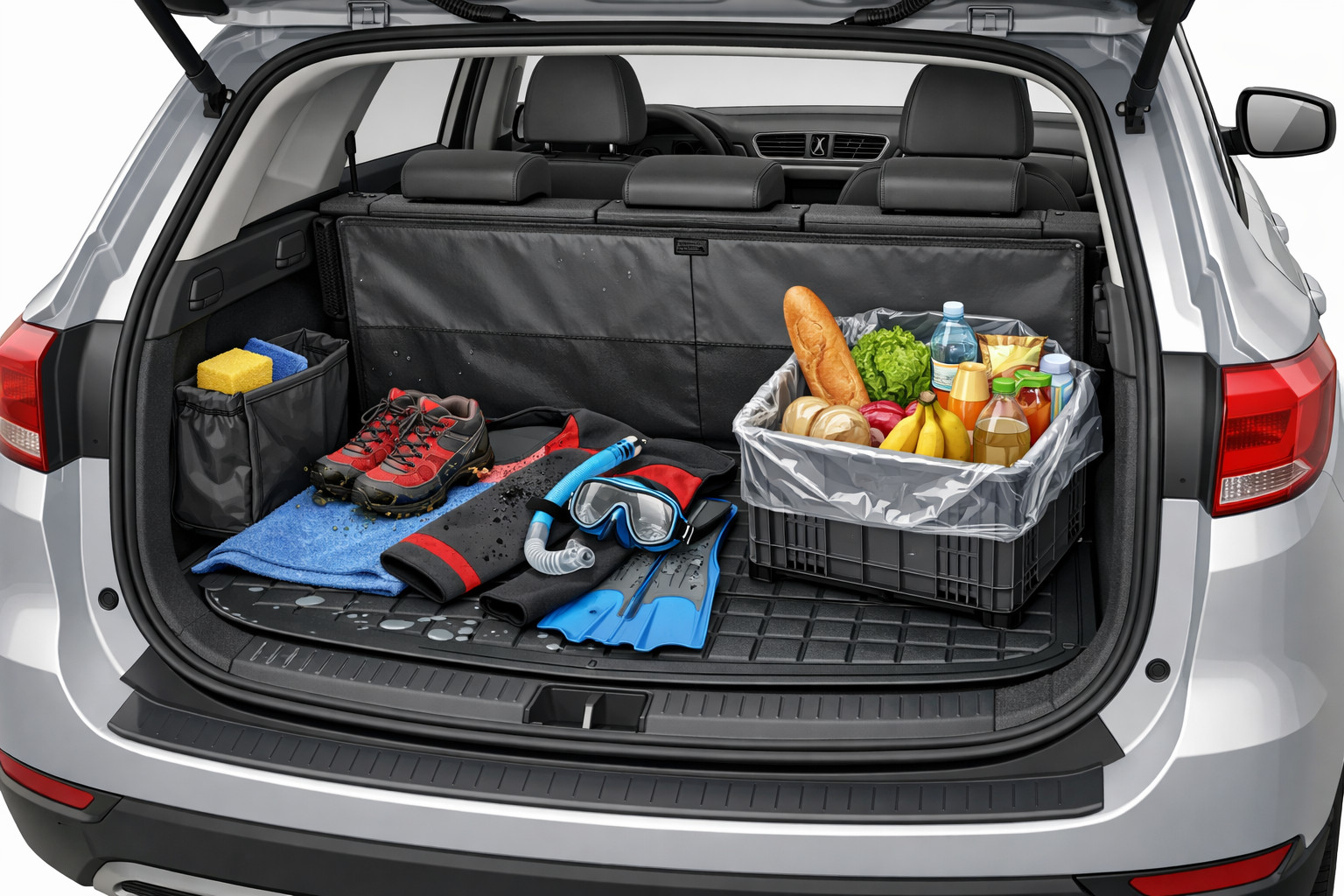
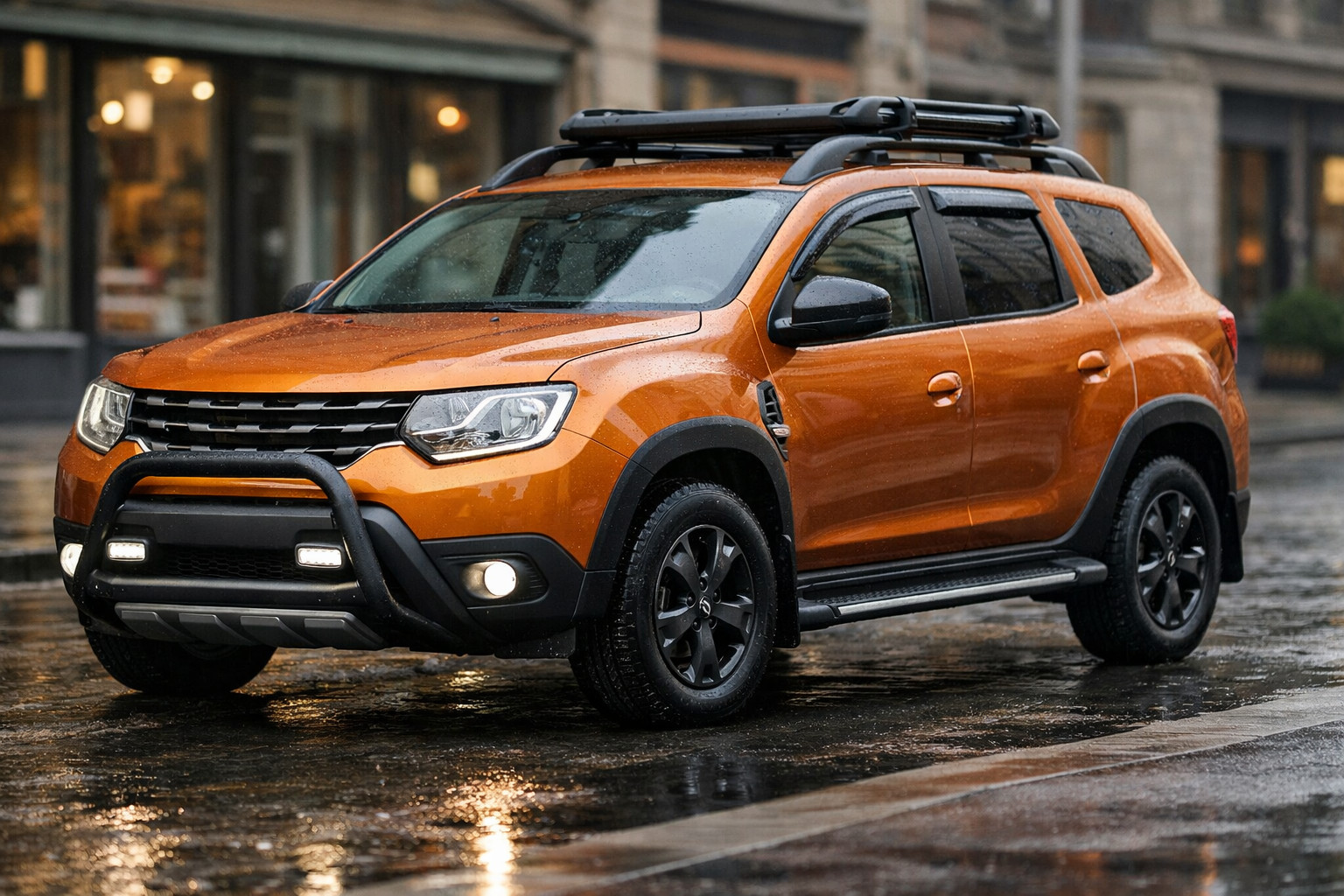
It’s worth starting with things that truly work every day. If the car lives in the city, carries kids, goes to the countryside, or often sees wet shoes and dirty wheel arches, practical accessories deliver the biggest effect for sensible money. For this model, the following solutions are appropriate: rubber floor mats, side steps, and bull bars and step bars. They best combine protection, entry comfort, and practicality without unnecessary show.
What to consider for this model
- Rubber floor mats — the first purchase for a family SUV if you don’t want to scrub textile mats every week after rain, snow, and sand.
- Side steps — useful if children or elderly passengers often get in; entry becomes easier, and the lower body collects less dirt.
- Bull bars and step bars — make sense for country trips and active use, but they should be chosen as functional protection rather than just decorative metal.
Conclusion
The Jaecoo 7 took off not because it turned the class upside down, but because it hit the mass buyer’s demand very precisely: a spacious SUV, strong equipment, modern hybrids, and a price that makes you look at it without prejudice. The best choice in the lineup is SHS-P; a slightly simpler but still logical option is SHS-H. The petrol version is worth choosing only if you specifically need AWD or you’re fundamentally not interested in a hybrid setup.
If you need a car with the smoothest suspension, exemplary ergonomics, and already accumulated reliability statistics, the Jaecoo 7 won’t be the obvious favorite. But if your priorities are equipment, space, and the rational economy of hybrids, it’s definitely worth considering.
Pros and cons
Rich equipment even in more affordable trims: there’s a large screen, wireless CarPlay/Android Auto, heated seats, and some driver-assistance systems without having to pay extra for every little thing separately.
The hybrid versions look the most rational, especially SHS-P: they offer low fuel consumption in real-world use and a noticeable electric range for daily trips.
The spacious cabin and proper wheelbase make the Jaecoo 7 well suited as a family SUV, especially for second-row passengers.
The safety package looks convincing: 5 Euro NCAP stars, adaptive cruise control, lane keeping, blind-spot monitoring, and a 360-degree camera.
The long 7-year warranty reduces the risk for a buyer choosing a brand new to them and not wanting to overpay for peace of mind.
The suspension is not tuned for comfort without reservations: on potholes and transverse bumps it is often described as rather stiff or nervous.
Controlling some functions through the screen is inconvenient in everyday use: there is no separate volume knob, and the climate controls are hidden in the menu.
The petrol 1.6T version looks the least convincing in terms of consumption and dynamics, so it only makes sense if you need all-wheel drive or are fundamentally against a hybrid.
The model is still very new, so there is almost no long-term reliability data, and the text also mentions the first recall campaigns.