 Author: Radomskyi Maksym Vasyliovych
This plan is for a Skoda Kodiaq 2016-2023 owner who carries family, bags, a stroller, or sports gear every day and wants less sand, salt, and wet mud on the door sills and in the cabin. In this scenario, clean sills don’t come from exterior accessories, but from properly covering the areas where dirt appears daily: the footwell, the lower bodywork, and the trunk.
The logic is simple: first install what actually catches moisture and debris, then add convenience items, and only after that look at solutions that are more about looks or a specific usage style. For the Kodiaq this is especially important, because some accessories depend heavily on the 5- or 7-seat version, the trunk floor type, and compatibility with each other.
What this upgrade needs to accomplish
In your case, the goal isn’t to keep the sills sterile clean in any weather. The real goal is different: reduce the amount of dirt passengers bring in on their shoes, cut down road spray from the wheels on the lower body, and keep the trunk from becoming a constant source of mess after trips with kids.
In the Kodiaq, family mode almost always means frequent rear-door opening, loading kids, wet shoes, bags, a stroller, or gear into the trunk. If the car is 7-seat, the third row becomes an additional dirt zone as well. That’s why it’s not one “magic” add-on that works here, but a combination of several items in the right order.
What to upgrade first
The first wave for a Kodiaq in this scenario is front and rear all-weather floor mats. They take the daily hit from water, snow, sand, and fine dirt that would otherwise spread onto the sills and carpet. If you have the 7-seat version, third-row mats are not a small detail—they’re a separate must-have.
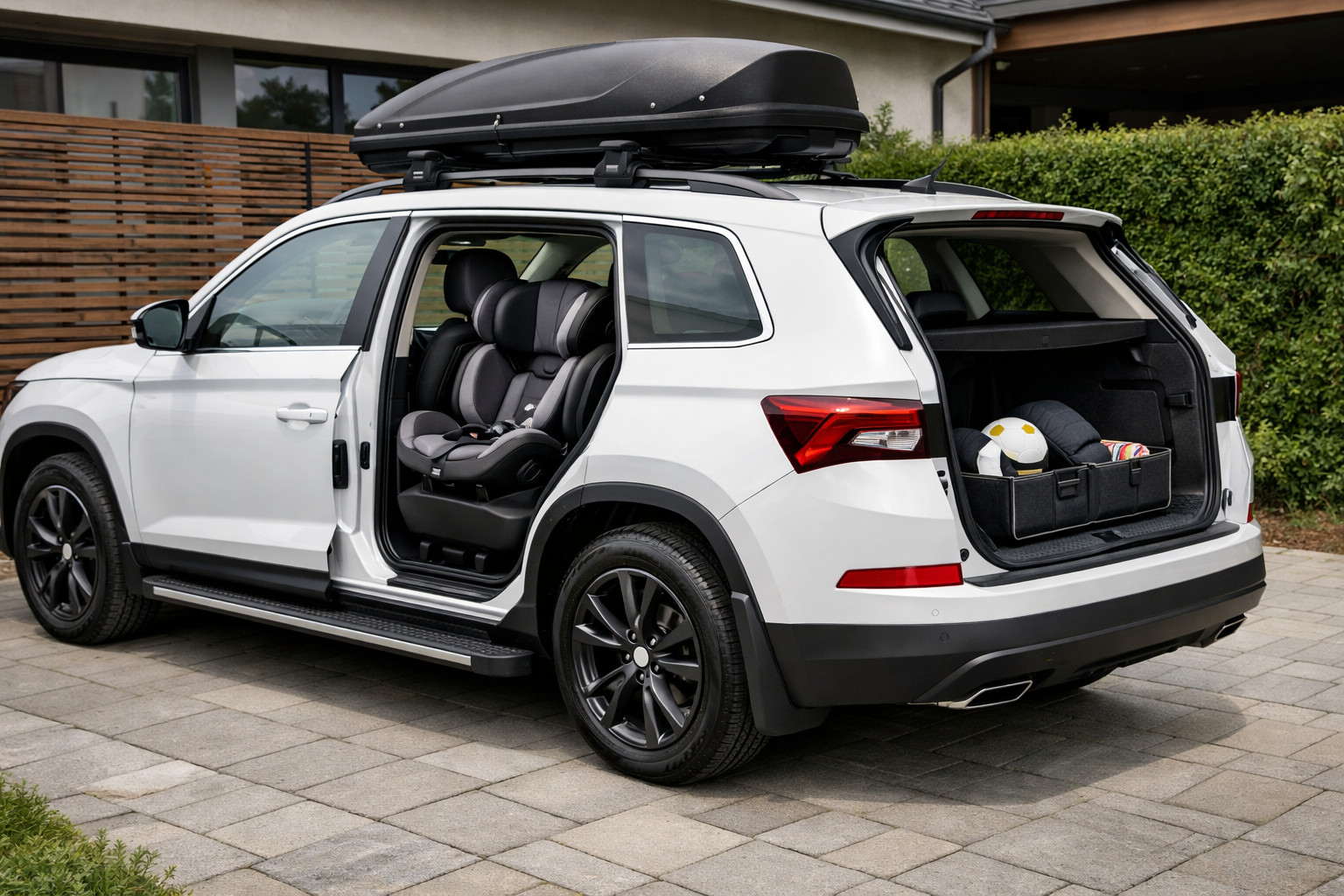
The second mandatory piece is trunk protection. But it’s important not to buy something that “almost fits.” A rigid tray and a double-sided mat are tied to the 5-seat version with the basic floor, and the tray also assumes no spare wheel. If your interior layout changes often, a foldable trunk protector can be more practical because it adapts better to family use.
The third basic upgrade is mud flaps. For this scenario, rear ones are almost always justified, because they take on part of the salt, fine gravel, and dirt that gets thrown at the lower body. Front ones are also useful, but only if you’re not planning side steps, because there’s a compatibility conflict.
Upgrade, what it’s for, who really benefits (table)
| Upgrade | What it’s for | Who really benefits |
|---|---|---|
| Front and rear all-weather floor mats | Catch water, sand, and salt in the entry area instead of on the carpet and sills | Anyone who drives daily, especially in winter and shoulder seasons |
| 3rd-row mats | Cover a separate dirt zone in the rear | Only 7-seat versions |
| Rear mud flaps | Reduce splash on the lower body and the load from salt | Those who often drive in the city and on highways in rain, snow, and slush |
| Front mud flaps | Add protection to the front section of the lower body line | Those who don’t install side steps and want full perimeter protection |
| Trunk protection: tray, double-sided mat, or foldable protector | Prevents wet items, a stroller, and bags from dirtying the trunk floor and side panels | Families who regularly carry things; the choice depends on 5 vs 7 seats and floor type |
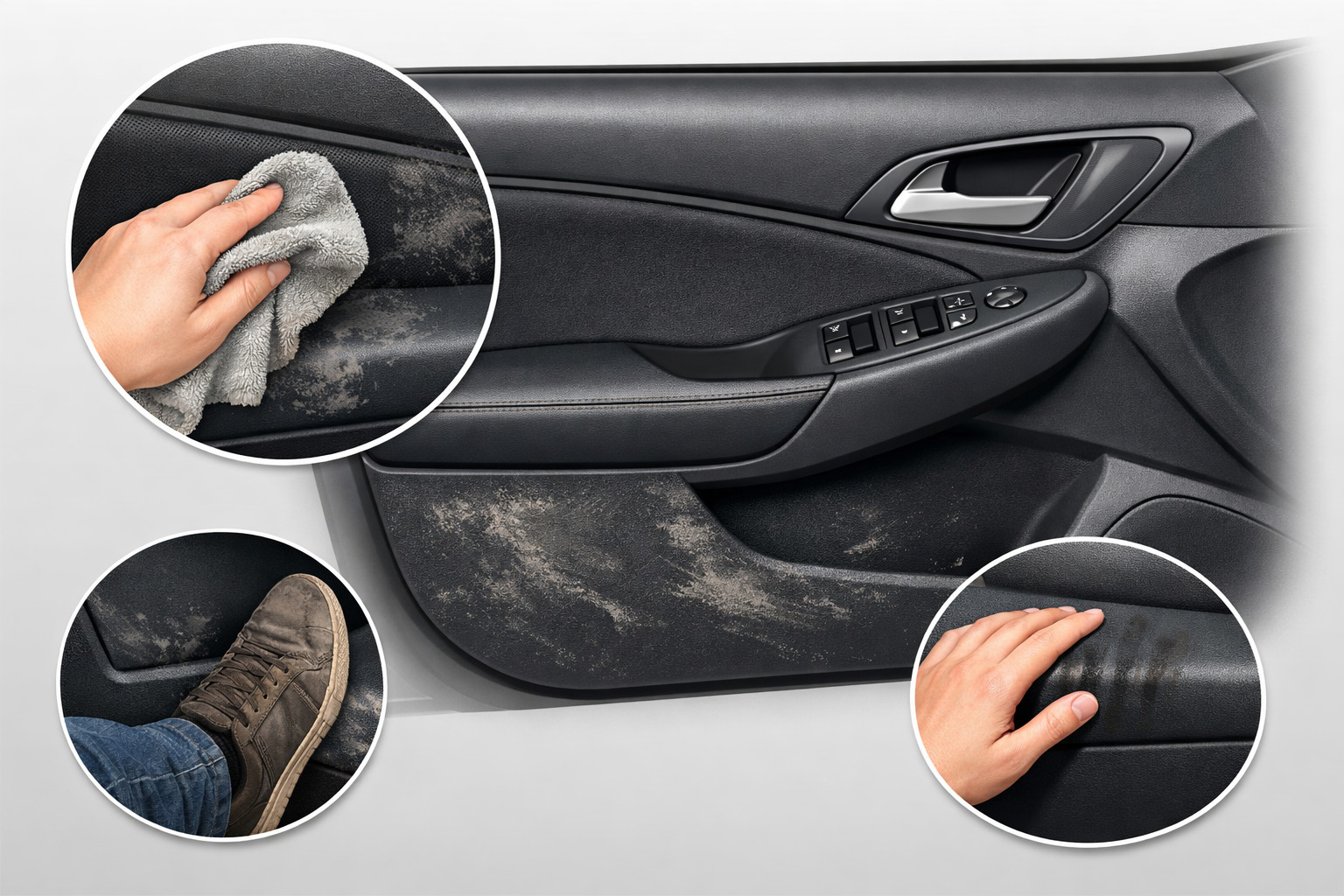
| Decorative door-sill trims | Protect paint from shoe scuffs | Those whose kids often catch the sill when getting in |
| Rear sunshades | Provide shade and a calmer ride in summer | Families with kids in the rear row |
| Side steps | Make entry easier and improve access to the roof | Those who actually use the roof or find it uncomfortable to get in without extra support |
DD Tuning expert comment: The most common mistake on the Kodiaq is starting with side steps, thinking they’ll solve the clean-sill issue. In practice, in family mode dirt comes in on shoes and gets thrown up from under the wheels, so the first money should go to mats, trunk protection, and mud flaps. The second mistake is not checking 5 vs 7 seats, the trunk floor type, and compatibility between front mud flaps and side steps.
What makes sense as a second stage
Once the basics are covered, the second stage should focus on things that reduce everyday wear. If you often load a stroller, scooter, shopping bags, or sports bags, a trunk sill protector quickly becomes useful. It won’t make the car cleaner by itself, but it saves the upper edge from small impacts and scuffs.
For a family, rear side-window sunshades are very noticeable. This isn’t about dirt, but about comfort that you’ll actually feel in daily warm-season driving. If you have a 5-seat version with a false floor, you can also consider a net organizer, but that’s an auxiliary item for light small stuff, not a key upgrade.
What’s more about comfort or appearance
Side steps for the Kodiaq are a typical upgrade that’s easy to buy for the wrong task. They really can make entry easier or help reach things on the roof, but for clean sills they’re a weak solution. What’s more, they collect dirt and ice themselves, add work during washing, and are not a first purchase for family mode.
Decorative door-sill trims have a different role: they preserve the paint from minor scratches and make the entry area look tidier. This is useful if kids often hit the sill with their shoes, but they don’t replace mats, mud flaps, or trunk protection. In other words, it’s not about fighting dirt anymore, but about reducing wear.
What people often buy for nothing
The first typical mistake is buying side steps specifically for cleaner sills. In this scenario, they don’t address the main source of dirt, and sometimes they even make day-to-day use worse: snow, sand, and ice build up on them. Add the conflict with front mud flaps, and it becomes an expensive upgrade that doesn’t match your main goal.
The second mistake is paying extra for looks before the basics are covered. Sill trims, exterior decorative elements, and other nice little extras only make sense after the car already has proper mats, trunk protection, and at least rear mud flaps.
The third mistake is buying trunk accessories without checking the configuration. For the Kodiaq this is critical: 5 or 7 seats, basic floor or not, the presence of a spare wheel—all of this affects compatibility. This is where unnecessary spending happens most often.
What to install first, what to postpone, what’s optional (table)
| What to install first | What you can postpone | What’s optional |
|---|---|---|
| Front and rear all-weather floor mats | Door-sill trims | Side steps as a way to keep sills cleaner |
| Trunk protection matched to your interior version | Trunk sill protector | Decorative exterior elements that don’t catch dirt and don’t protect the cabin |
| Rear mud flaps | Rear sunshades | Front mud flaps if you’re definitely planning side steps |
| 3rd-row mats for the 7-seat version | Net organizer for the 5-seat version with a false floor | Any upgrade bought without checking compatibility for the trunk floor and seat count |
A ready upgrade plan for this scenario
- First, determine your configuration: 5 or 7 seats, trunk floor type, spare wheel presence, left-hand-drive version.
- Install all-weather mats in the front and rear. For the 7-seat version, add the third row right away.
- Choose trunk protection for your usage: a rigid tray for a clearly compatible 5-seat configuration, a double-sided mat for calmer everyday use, or a foldable protector if you often change the interior layout.
- Add rear mud flaps. Install front ones only if you’re not planning side steps.
- After that, address everyday wear: trunk sill edge, sunshades, and if needed, door-sill trims.
- And only at the end consider side steps: not on a “just because” basis, but if you truly need easier entry or roof access.
When it makes sense to choose more expensive solutions
More expensive items are justified here only when you have a second goal besides cleanliness. If you need easier cabin access for kids or older passengers, or you regularly use a roof box, then original side steps may make sense. But you should consider them only after the basic upgrades—and with the understanding that they don’t play well with front mud flaps.
If you want to compare different options, it’s logical to look not at a single product, but at the whole category of side steps for Kodiaq. And when the budget is one and you need maximum daily benefit, it’s usually smarter to spend the money on rubber floor mats and correctly matched trunk protection than on an exterior accessory that adds another dirty zone.
From a customer’s experience: the owner of a 7-seat Kodiaq was looking specifically for cleaner sills and initially considered side steps. In the end, he chose mats for the front, rear, and third row, rear mud flaps, and a foldable trunk protector because he carries kids and sports gear every day. As a result, the cabin became easier to clean, and he postponed the side steps because they didn’t address the main goal.
Conclusion
For a Skoda Kodiaq 2016-2023 in the “clean sills + daily family mode” scenario, the right order is: mats first, then trunk protection, then mud flaps, and only after that smaller items for comfort or scuff protection. Side steps are not a baseline solution here, but rather a separate upgrade for a different usage style.
The material is based on real selection experience, practical know-how, and real-world usage scenarios. If you focus not on appearance but on where exactly water, salt, and everyday dirt accumulate in the Kodiaq, the best result comes from a simple logic: protect the cabin, the trunk, and the lower bodywork—rather than starting with the most expensive accessory.
How it works
- Determine your Kodiaq configuration First, check whether you have a 5- or 7-seat version, what type of trunk floor you have, and whether there is a spare wheel. The compatibility of mats, trunk protection, and some other accessories depends on this.
- Install all-season mats First of all, cover the front and rear area with quality all-season mats, because they are what catch water, sand, and salt in everyday use. For the 7-seat version, add third-row mats right away.
- Choose trunk protection for your version Next, install trunk protection: a rigid tray, a double-sided mat, or a folding protector depending on your configuration and how often you change the cabin layout. This will help keep the floor and side panels clean when transporting a stroller, bags, or sports gear.
- Add rear mud flaps After the trunk, install rear mud flaps — they reduce splashing on the lower part of the body and exposure to salt and dirt. Front mud flaps only make sense if you are not planning side steps.
- Cover everyday wear in the entry and trunk area If children often scuff the sill, add decorative sill trims. If needed, you can also install trunk edge protection or rear sunshades for more comfort on trips with children.
- Leave side steps for last Side steps do not solve the main task of keeping the sills clean, and they themselves collect dirt and ice. They are worth choosing only if you really need easier access to the cabin or the roof.
Pros and cons
All-season floor mats for the front and rear effectively catch water, sand, and salt in the entry area, so less dirt is tracked onto the sills and carpet. For the 7-seat version, it also makes sense to cover the third row right away.
Trunk protection matched to the vehicle configuration helps keep the floor and side panels from getting dirty from wet items, a stroller, or bags. In family use, this is especially useful because the trunk is often used every day.
Rear mud flaps reduce splashing on the lower body and the impact from salt, which is practically helpful in rain, snow, and slush. This is one of the few upgrades that works specifically for a cleaner lower part of the car.
Decorative sill trims can protect the paint from scratches if children often catch the sill with their shoes while getting in. They do not solve the dirt problem, but they reduce everyday wear in the entry area.
A foldable trunk liner is convenient for families whose cabin configuration often changes or who transport different items. It adapts better to daily use than rigid solutions if the trunk is not always used in the same way.
Side steps do not solve the main source of dirt on the sills, because in family use dirt gets in through shoes and flies up from under the wheels. In addition, they collect snow, sand, and ice themselves.
Front mud flaps should not be bought automatically if side steps are planned, because there is a compatibility conflict between them. As a result, you may buy an accessory that you will then have to decide not to install.
The rigid trunk liner and double-sided trunk mat are tied to a specific configuration — the 5-seat version with the standard floor, and the liner also without a spare wheel. If these details are not checked, it is easy to make a mistake with the purchase.
Sill trims and other decorative elements by themselves do not make the car cleaner. It makes sense to install them only after the basic items — mats, trunk protection, and mud flaps.