
































































 Author: Radomskyi Maksym Vasyliovych
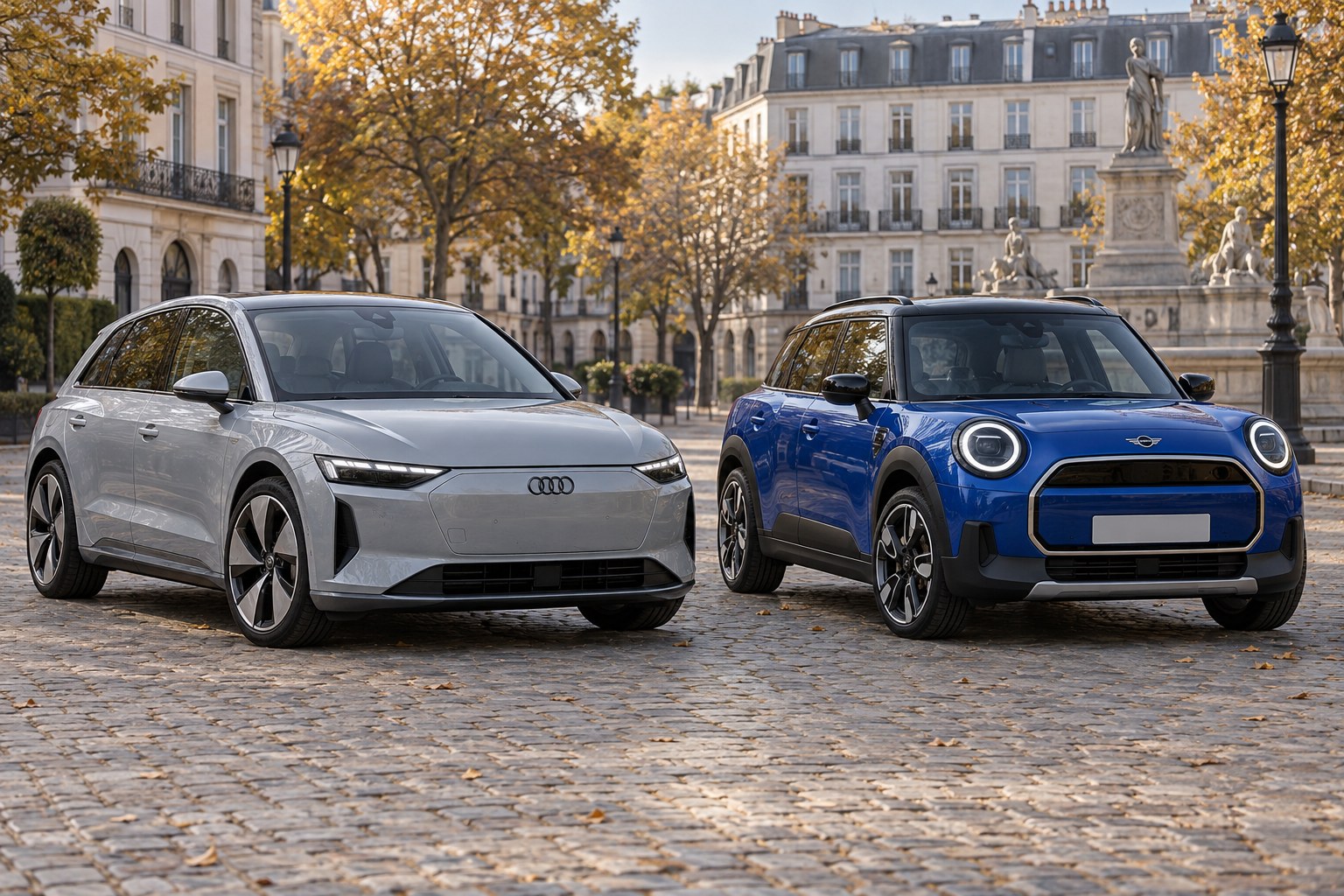
Audi A2 e-tron and MINI Aceman are two premium electric compacts in roughly the same class, but with different logic. The short answer: the A2 e-tron is bigger (4,324 mm vs 4,079), rear-wheel drive, with 52–84 kWh batteries and a range of up to 646 km WLTP, charging up to 183 kW and a starting price in Germany of €38,200; deliveries start in December 2026. Aceman is more compact, front-wheel drive, with 42.5 or 54.2 kWh batteries, range up to 405 km, charging up to 95 kW, on sale since November 2024, and in Germany starts at €30,950. Below is a comparison based on official Audi and MINI data.
Contents
- What these cars are and when they appeared
- Which one is bigger and more practical
- Which one has more range and power
- Which one charges faster
- How much they cost in Europe
- Which one is right for whom
- What accessories both will need
What these cars are and when they appeared
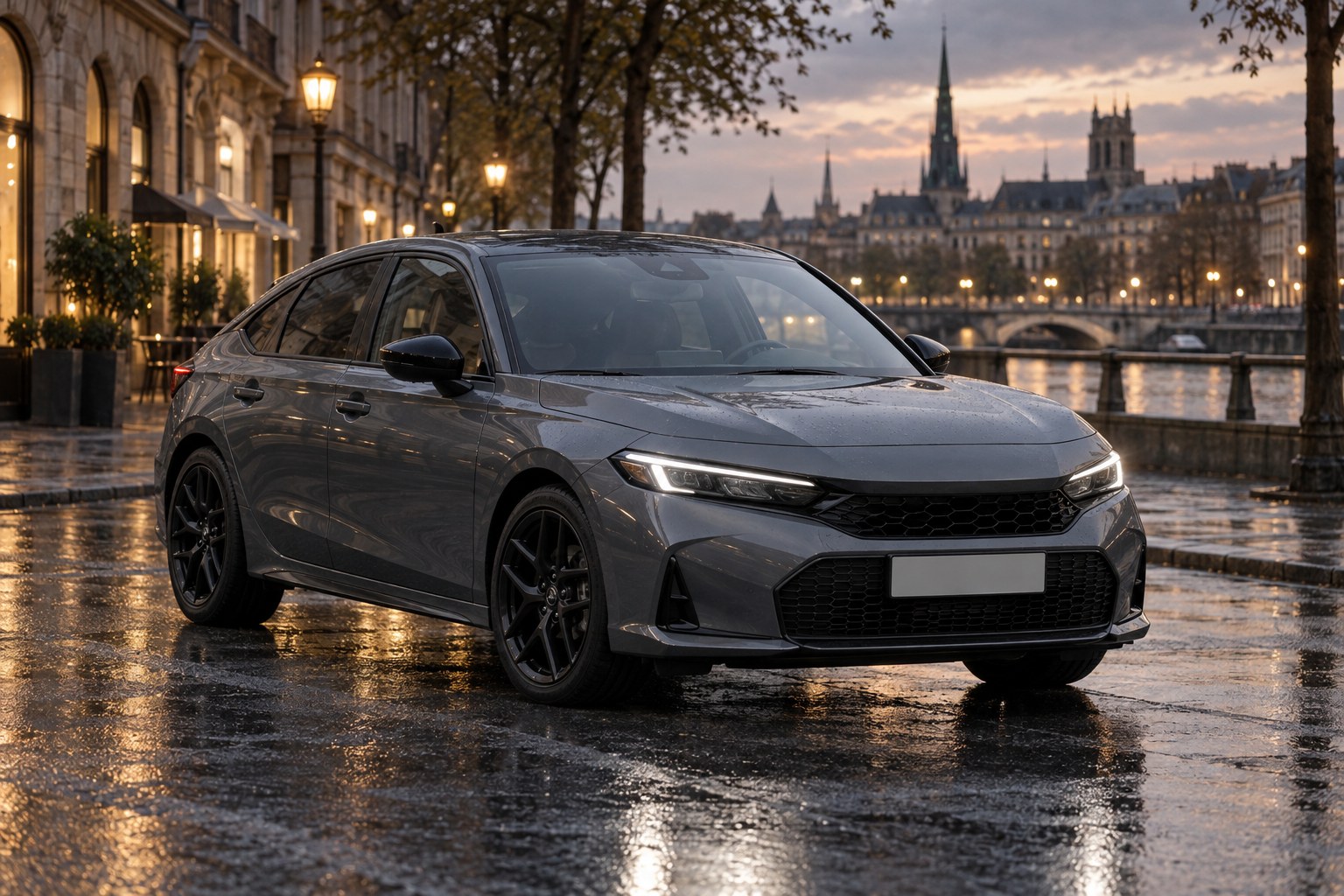
Audi A2 e-tron is an all-new electric hatchback that Audi officially unveiled on September 7, 2026, and presented to the public on October 12 at the Paris Motor Show. Orders in Europe have been taken since September 10, with first customer deliveries in December 2026. All four versions are rear-wheel drive, the drag coefficient is 0.24, and Audi calls efficiency the model’s core idea. A full breakdown of all versions and prices is in our review Audi A2 e-tron after the premiere.
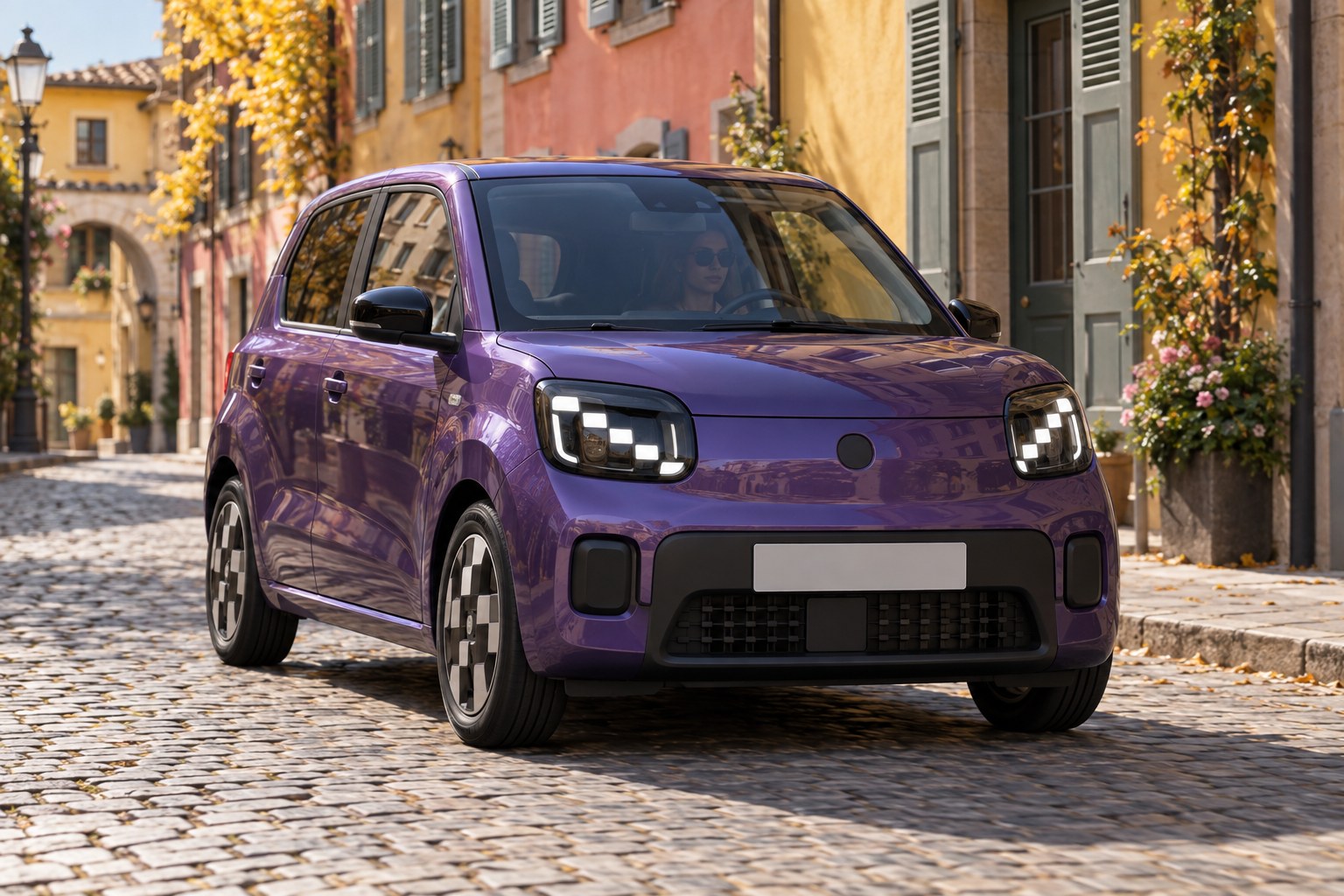
MINI Aceman is an electric crossover positioned in the MINI lineup between the three-door Cooper and the Countryman. Its world premiere took place in April 2024, with first deliveries in November 2024—meaning the car has been on European roads for two years already. Drive is front-wheel, and there are three versions: Aceman E, Aceman SE, and the sporty John Cooper Works. More about the model is in the MINI Aceman review, and the flagship version is covered in the John Cooper Works Aceman Electric review.
Which one is bigger and more practical
| Parameter | Audi A2 e-tron | MINI Aceman |
|---|---|---|
| Length / width / height | 4 324 / 1 789 / 1 548 mm | 4 079 / 1 754 / 1 514 mm |
| Wheelbase | 2 768 mm | 2 606 mm |
| Drive | rear, single motor | front, single motor |
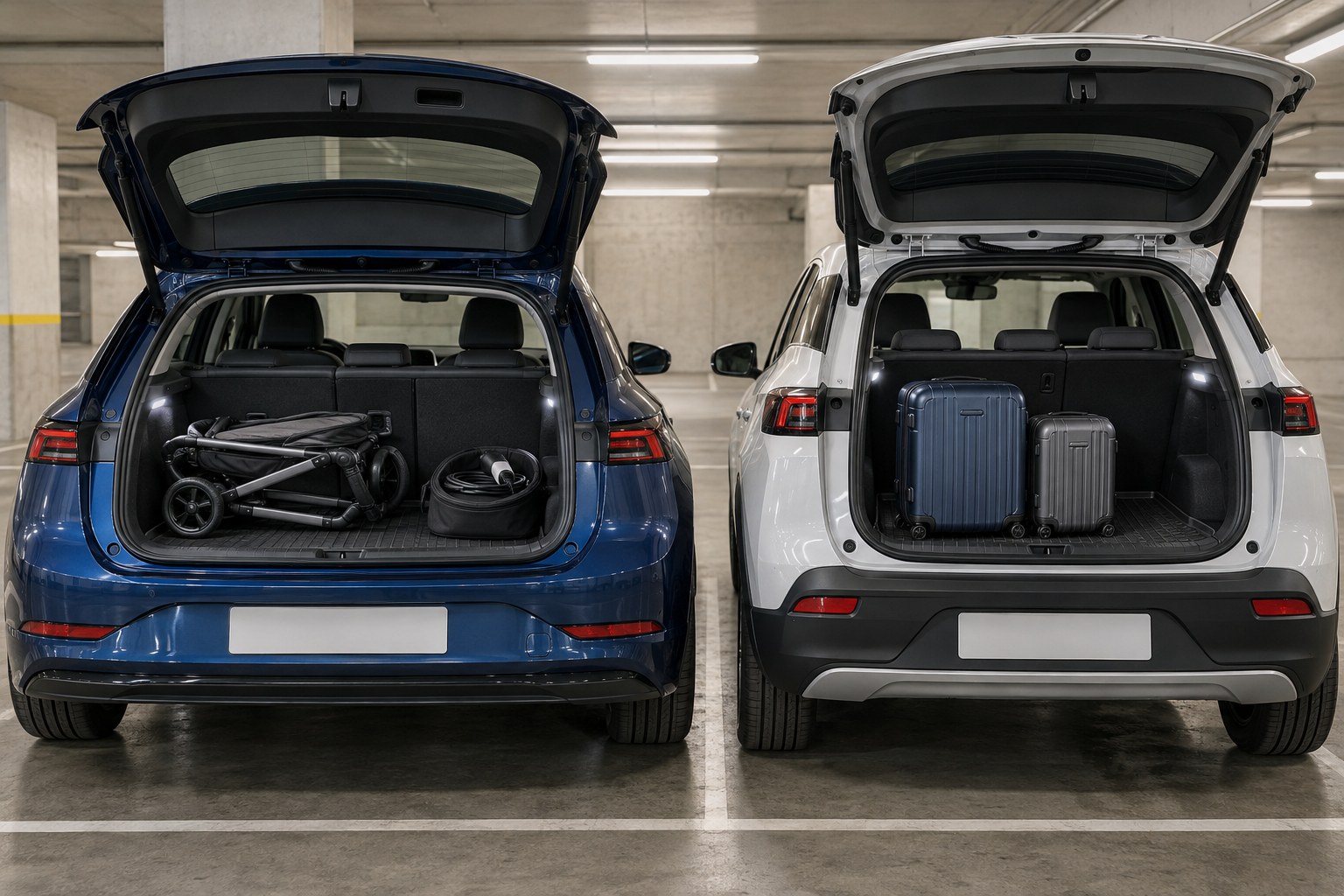
| Trunk | 396 L (up to 1,336 L) + 13 L front compartment in the 170 and 240 kW versions | 300 L (up to 1,005 L) |
| Seats | 5 | 5 |
| Curb weight | Audi has not disclosed it | 1,720 kg (E), 1,785 kg (SE), 1,825 kg (JCW), with driver |
The A2 e-tron is 245 mm longer, and its wheelbase is 162 mm longer—extra knee room in the second row that the Aceman cannot match. The difference in trunk space is even more noticeable: 396 L vs 300 L, and with the seats folded 1,336 L vs 1,005 L. In terms of capacity, the Aceman essentially remains a city car, while the A2 e-tron already competes with compacts in the Volkswagen ID.3 class. On the other hand, the Aceman is only slightly longer than four meters and has a turning radius of 11.1 m—its strong side in tight courtyards and parking lots.
Which one has more range and power
| Version | Power | Battery (gross) | 0–100 km/h | Top speed | WLTP range | WLTP consumption |
|---|---|---|---|---|---|---|
| A2 e-tron 125 kW | 170 hp | 52 kWh, LFP | 8.8 s | 160 km/h | up to 423 km | from 13.7 kWh/100 km |
| A2 e-tron 140 kW | 190 hp | 61 kWh, LFP | 7.9 s | 160 km/h | up to 515 km | from 12.8 |
| A2 e-tron 170 kW | 231 hp | 84 kWh, NMC | 7.0 s | 160 km/h | up to 646 km | from 13.9 |
| A2 e-tron 240 kW | 326 hp | 84 kWh, NMC | 5.7 s | 200 km/h | up to 630 km | from 14.2 |
| Aceman E | 184 hp (135 kW) | 42.5 kWh (38.5 net) | 7.9 s | 160 km/h | 301–309 km | 14.1–14.6 |
| Aceman SE | 218 hp (160 kW) | 54.2 kWh (49.2 net) | 7.1 s | 170 km/h | 384–405 km | 14.0–14.7 |
| JCW Aceman | 258 hp (190 kW) | 54.2 kWh (49.2 net) | 6.4 s | 200 km/h | up to 355 km | 16.0–16.4 |
On range, Audi wins without question: even the base A2 e-tron with a 52 kWh battery goes farther (423 km) than the longest-range Aceman SE (405 km), and the 170 kW version delivers 646 km—more than 240 km extra. The reason is simple: larger batteries and better aerodynamics—consumption of 12.8–14.2 kWh per 100 km versus 14.1–16.4 in the MINI.
In dynamics, the picture is more interesting. The Aceman SE reaches 100 km/h in 7.1 s, meaning it is quicker than the A2 e-tron 140 kW (7.9 s) with a similar battery price point, and the JCW at 6.4 s trails only the top Audi 240 kW (5.7 s). But it is worth remembering the layout: the Audi’s motor drives the rear wheels, the MINI’s drives the front. Rear-wheel drive provides cleaner steering feel and better pull-away under load; front-wheel drive is more predictable on slippery surfaces for an inexperienced driver.
Battery chemistry differs as well. The lower A2 e-tron versions use lithium iron phosphate (LFP) batteries, which tolerate daily charging to 100% and are cheaper to produce, but hold capacity worse in freezing temperatures; the 84 kWh versions are NMC. In the Aceman, MINI describes both batteries simply as lithium-ion, without specifying the chemistry.
Which one charges faster
| Parameter | Audi A2 e-tron | MINI Aceman |
|---|---|---|
| Max DC power | 100 kW (52 kWh), 105 kW (61 kWh), 183 kW (84 kWh) | 75 kW (E), 95 kW (SE, JCW) |
| 10–80% at a fast charger | 24 / 26 / 29 min | 28 min (E), 31 min (SE, JCW) |
| Alternating current (AC) | Audi does not specify in the press release | 11 kW three-phase; 0–100% in 4 h 15 min (E) and 5 h 30 min (SE) |
| Bidirectional charging | V2L optional; V2H in Germany, Austria, Switzerland | not stated |
At a fast charger, the 10–80% time is similar for both—24 to 31 minutes—because the MINI’s smaller battery offsets its lower power. But in kilometers the difference is big: in the same half hour, the A2 e-tron 170 kW adds roughly 450 km of range, while the Aceman SE adds about 280 km. Plus, the A2 e-tron can supply energy externally: power tools or a fridge at a campsite (V2L), and in DACH countries even a home via a compatible station (V2H). MINI does not claim such a function for the Aceman.
How much they cost in Europe
| Version | Manufacturer price in Germany |
|---|---|
| Audi A2 e-tron 125 kW, 52 kWh | from €38,200 |
| Audi A2 e-tron with a 61 kWh battery | from €41,900 |
| Audi A2 e-tron 170 kW, 84 kWh | from €48,900 |
| Audi A2 e-tron 240 kW | from €51,200 |
| MINI Aceman E | €30,950 (€30,000 + €950 delivery, MINI Deutschland price list dated 28.01.2026) |
| MINI Aceman SE | €34,450 (€33,500 + €950 delivery) |
The difference in starting price is €7,250 in MINI’s favor, and for that money Audi offers a larger body, a larger battery, and 114 km more range. If you compare versions with a similar battery—Aceman SE (54.2 kWh, €34,450) and A2 e-tron 61 kWh (€41,900)—the difference grows to €7,450, but Audi again goes farther (515 km vs 405) and charges faster. MINI publishes the price of the John Cooper Works Aceman in a separate price list, so it is not included in the table. Neither manufacturer has announced official prices for Ukraine.
Which one is right for whom
- Audi A2 e-tron is for those who regularly drive out of town and want one car for every situation: a 396-liter trunk, 515–646 km range in the mid and higher versions, 183 kW fast charging, and bidirectional power. Downsides: the car is not yet on the road, with first deliveries only in December 2026, and the 160 km/h speed limit in three of the four versions is noticeable on the autobahn.
- MINI Aceman is for the city and suburbs, when compactness, character, and price matter: from €30,950, an 11.1 m turning radius, a lively SE at 7.1 s to 100 km/h, and the JCW at 6.4 s. The model has been on the market since 2024, so there are owner reviews and a used-car market. Downsides: a 300 L trunk, 301–405 km WLTP, and charging up to 95 kW.
In short: the Aceman is design and emotion in a compact format for less money; the A2 e-tron is the rational choice for range, capacity, and charging tech, but with an extra cost and a wait until the end of the year.
What accessories both will need
There are no model-specific accessories in the catalog yet for either the A2 e-tron or the Aceman: for Audi, the templates have not been taken because the production car is not on the road yet, and from the MINI lineup we carry Cooper, Clubman, and Countryman. So at the start, it is worth choosing items that do not require exact templates:
- Floor mats.Universal rubber mats with a raised edge keep water and snow in—an important argument for an EV with a flat floor, because a damp cabin in winter draws energy for heating. Model-specific EVA mats will appear after the cars reach Ukraine and templates are taken from them.
- Trunk mat. For the Aceman with its 300 L trunk, a universal sheet 900×1000 mm will work; for the A2 e-tron, 1000×1200 mm; the excess is trimmed to the contour.
- Window deflectors. They attach according to the shape of specific doors, so there are no universal ones; the range for other models is in the window deflectors section.
We ship with Nova Poshta across Ukraine.
Strengths and weaknesses of the Audi A2 e-tron and MINI Aceman
Audi A2 e-tron: range of up to 646 km according to WLTP and consumption from 12.8 kWh per 100 km
Audi A2 e-tron: 396 l trunk (up to 1,336 l), wheelbase 2,768 mm
Audi A2 e-tron: charging up to 183 kW, bidirectional V2L and V2H power
MINI Aceman: price from €30,950 in Germany — €7,250 cheaper than the base Audi
MINI Aceman: compact 4.08 m body and 11.1 m turning radius, lively SE (7.1 s) and JCW (6.4 s)
MINI Aceman: on the market since 2024 — owner feedback and service experience are available
Audi A2 e-tron: deliveries only from December 2026, reliability not yet proven
Audi A2 e-tron: 160 km/h limit in three of four versions, no all-wheel drive
Audi A2 e-tron: more expensive by €7,000–7,500 than comparable versions
MINI Aceman: trunk only 300 l and range of 301–405 km
MINI Aceman: charging up to 75–95 kW, higher consumption of 14.1–16.4 kWh/100 km
Both: no model accessories in the catalog yet, no official prices for Ukraine