31.08.2026
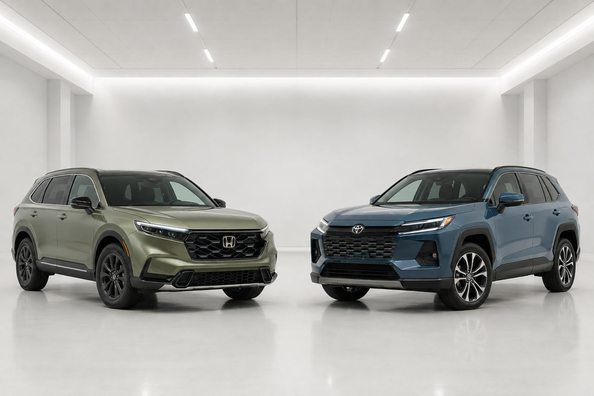

If you put brand preferences aside, the choice is simple: Toyota RAV4 Hybrid 2026 is the stronger rational buy for the money, while Honda CR-V Hybrid 2026 is more convincing as a calm, everyday family crossover. Toyota has a lower entry price, better rated efficiency in the best-value trims, stronger towing, and more reserve for winter and broken roads. Honda offers a gentler character, better acoustic comfort, and a slightly more successful sense of space.
Another key difference: RAV4 2026 is already a new generation with an all-hybrid lineup, while CR-V Hybrid 2026 remains an evolution of the current vehicle. So Toyota wins on numbers and functionality, while Honda wins on mature tuning and everyday ease.
The main question isn’t which crossover is “better overall”, but what exactly you’re paying for. If it matters to you to spend less up front, stop at gas stations less often, occasionally tow a trailer, or drive in winter on imperfect roads, the RAV4 looks stronger. If you need a vehicle for family use, city driving, highway trips, and daily comfort without an emphasis on towing and ground clearance, the CR-V delivers a more pleasant real-life result.
There’s no single absolute winner also because within both lineups a lot depends on the trim: front- or all-wheel drive, wheel diameter, an “off-road” package, equipment level. That’s why you should look not only at the model name, but at the exact configuration.
A typical mistake is comparing only rated fuel consumption and power. For these two models, it’s just as important how they actually drive, how much they tow, how quiet they are on the highway, and what happens to running costs after choosing AWD, larger wheels, or a “pseudo off-road” version.
| Option | Strengths | Weaknesses | Who it suits |
|---|---|---|---|
| Toyota RAV4 Hybrid 2026 | Lower starting price, better efficiency in best-value trims, more powerful hybrid system, towing up to 1,588 kg in AWD, stronger battery warranty | Firmer character, higher chance of road and wind noise, less maximum cabin space | For those who count costs, drive in winter, go out of town, or occasionally tow a trailer |
| Honda CR-V Hybrid 2026 | Quieter and softer ride, a better sense of family comfort, more passenger space, slightly better maximum cargo volume | Higher entry price, weaker towing, slightly worse efficiency in some trims, shorter battery warranty | For those who need one all-purpose family crossover without an emphasis on towing and bad roads |
The RAV4’s strength is that it explains its price very well. The base entry point is lower, and the hybrid system delivers more: 226 hp in FWD and 236 hp in AWD versus 204 hp in the CR-V Hybrid. Add to that strong fuel-consumption numbers, especially in base front-wheel-drive versions, and noticeably better towing capacity. If you need a crossover not only “to work and back”, but also for a cottage trip, bikes, a light trailer, or winter travel, the RAV4 looks more practical.
Another Toyota advantage is ground clearance and overall reserve for rough roads. In regular versions it’s 206 mm, in Woodland it’s 216 mm. Those figures don’t make the RAV4 a true off-roader, but they give more freedom on dirt roads, snow, and ruts than a typical city crossover. Plus there’s a longer hybrid battery warranty, which matters for those buying for the long haul.
The compromise is also clear: the RAV4 isn’t as refined in daily feel. Reviews more often mention a firmer ride, more noise, and a simpler cabin impression. In other words, it’s a very strong buy with your head, but not necessarily the most pleasant car in the details.
The CR-V Hybrid wins not with numbers on paper, but with how easy it is to live with every day. It’s quieter, softer, takes bumps more calmly, and generally suits families who drive a lot in the city and on the highway without hauling/towing tasks. It has more passenger space, and its maximum cargo volume is slightly better than in the RAV4 Hybrid.
For the role of a single family vehicle, that’s a strong argument. If the car regularly carries kids, adults in the second row, suitcases, a stroller, or bags for long weekends, the CR-V gives a calmer, more “home-like” feel. At the same time, the equipment is modern: solid infotainment, wireless smartphone compatibility, and a strong set of driver assists.
But this comfort costs real money. The starting price is higher, and towing in the hybrid versions is modest — 454 kg. Efficiency is also good, but not as strong as in the most cost-effective RAV4. So the CR-V is better seen not as the “better-value hybrid”, but as a pricier yet more pleasant-to-live-with crossover.
For city use and budget, Toyota is the more logical choice: the lower entry price and better efficiency quickly show up in real ownership. For a family that simply wants a quiet, soft, predictable crossover without special operating conditions, Honda looks stronger.
If you live outside the city, drive often in winter, choose all-wheel drive not “just to have it”, and don’t rule out a trailer, the RAV4 makes a more convincing case. If you need one car for everything, but without towing and without regular trips on bad roads, the CR-V will often feel nicer from the first week of ownership.
| Scenario | What’s better to choose | Why |
|---|---|---|
| Maximum value for your money | Toyota RAV4 Hybrid | Lower starting price, good fuel consumption, strong battery warranty |
| Everyday family crossover | Honda CR-V Hybrid | Quieter cabin, softer ride, greater sense of space |
| Winter, bad roads, cottage trips | Toyota RAV4 Hybrid AWD | Better ground clearance and a more convincing practicality margin |
| Need to tow a trailer sometimes | Toyota RAV4 Hybrid AWD | The towing difference is too big to ignore |
| City trips and long highway drives without hauling tasks | Honda CR-V Hybrid | More comfortable delivery, less tiring in a relaxed mode |
| Want one universal car without an off-road bias | Honda CR-V Hybrid | A more balanced everyday character if pull and clearance aren’t priorities |
Paying extra for the Honda CR-V Hybrid is justified when the vehicle is truly working as family transport: daily city driving, highway runs, kids in the second row, lots of time behind the wheel, and a desire to hear less of the suspension and the road. In that scenario, comfort is felt every day, not only in a spec sheet.
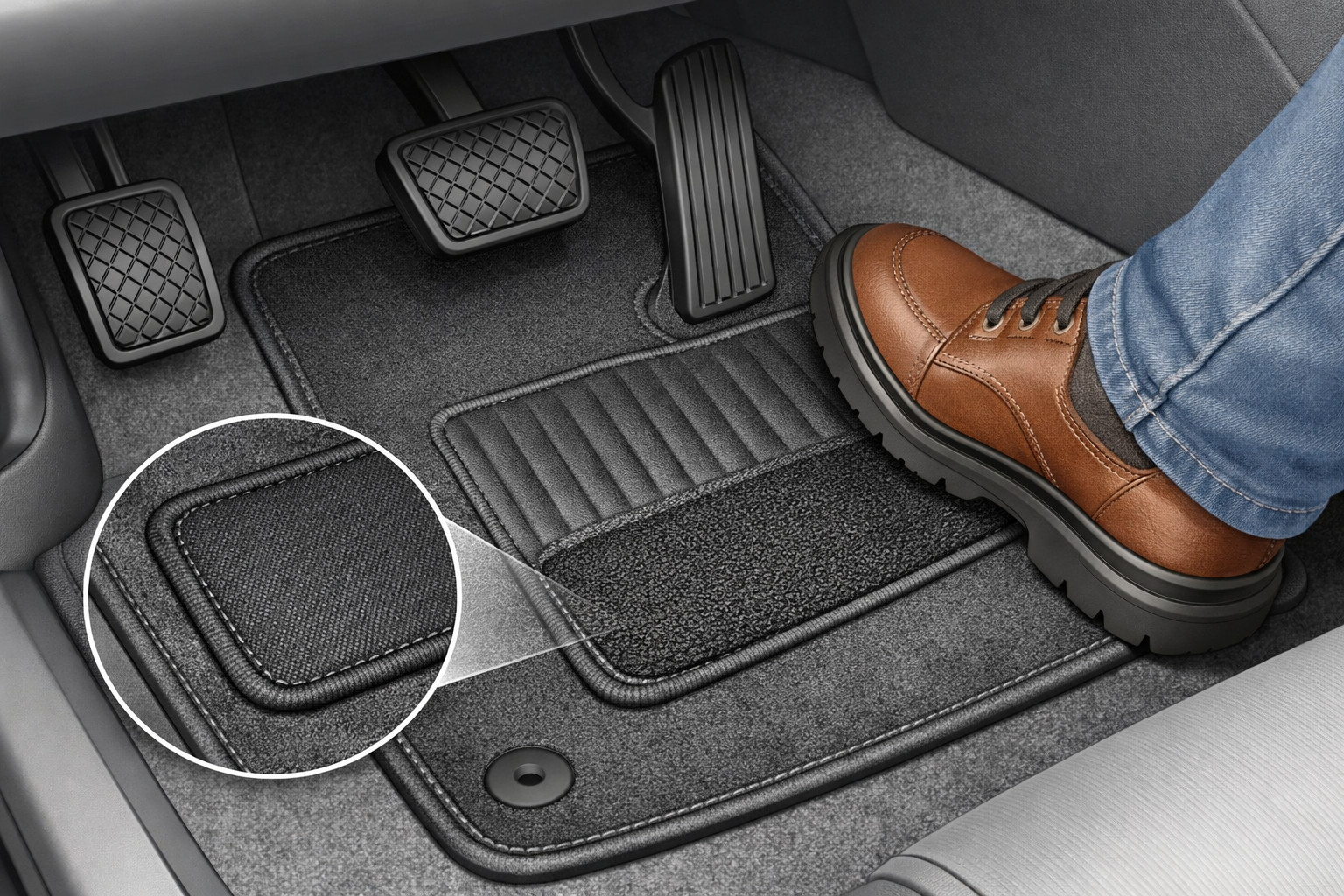
Paying extra for higher-end versions of the Toyota RAV4 Hybrid makes sense when you genuinely need AWD, better ground clearance, winter confidence, and practicality for trips with gear. But there’s an important detail here: often it’s smarter not to simply buy an “even more expensive trim”, but to allocate part of the budget to real everyday items — rubber floor mats for RAV4, a trunk mat for RAV4 or roof racks and crossbars for CR-V. These things deliver more day-to-day benefit than a decorative upcharge for a version whose capabilities you won’t use.
Toyota RAV4 Hybrid 2026 is the better choice if price, efficiency, pull, winter performance, and overall practicality come first. Honda CR-V Hybrid 2026 is the stronger option if you need a quieter, softer, more family-oriented crossover without an emphasis on trailers and bad roads.
One thing is worth remembering: there is no “best hybrid for everyone”. If you choose rationally for your scenario, the RAV4 wins as a head-driven purchase, while the CR-V wins as the more comfortable everyday all-rounder.
| ✔ | Lower entry price and better efficiency in the value trims make the 2026 Toyota RAV4 Hybrid a more rational buy if upfront costs and fuel consumption matter. |
| ✔ | RAV4 has stronger towing capability: the AWD version is rated to tow up to 1,588 kg, while the Honda CR-V Hybrid is much more modest in this regard. |
| ✔ | For winter and rough roads, Toyota looks more practical thanks to better ground clearance and a larger geometric margin. |
| ✔ | The 2026 Honda CR-V Hybrid is quieter and rides more smoothly, so it is better suited to everyday city and highway trips without stressing the suspension. |
| ✔ | The CR-V offers a greater sense of cabin space and a slightly larger maximum cargo volume, which is convenient for family trips. |
| ✘ | The RAV4 Hybrid feels firmer and noisier, especially on larger wheels, so it may be less comfortable in everyday driving. |
| ✘ | The Honda CR-V Hybrid has a higher starting price, so its comfort and quietness cost more from the outset. |
| ✘ | The CR-V Hybrid is less suitable for towing: the hybrid versions are rated at only 454 kg, so it is far less practical for a trailer. |
| ✘ | In some versions, the CR-V falls behind the RAV4 in fuel economy, especially with AWD or TrailSport. |
Shipping to EU
Wholesale and retail
Own warehouse
Опис продукту
Подарунки не надаються при оформленні покупки у кредит під 0,01% або при покупці частинами.