10.08.2026
267
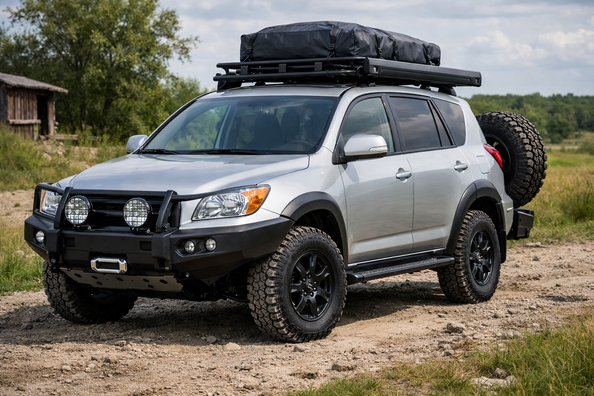

This upgrade plan is for a Toyota RAV4 2006–2013 owner who needs the car not for showy outings, but for the cottage, broken asphalt, muddy dirt roads after rain, winter ruts, and everyday practical work. The main goal here isn’t to turn the crossover into an SUV, but to reduce the risk of a puncture, bottoming out, and dragging dirt into the cabin—without killing handling and durability.
An important nuance: RAV4 2006–2012 and RAV4 2013 are already different cars in character. For 2006–2012, the factory 190.5 mm ground clearance is already a solid base for this scenario, while the 2013 is lower from the factory—so for it, the right tires, underbody protection, and a sensible approach to lifting the suspension are even more critical.
The right modification package for this RAV4 should solve three specific things: traction on mixed surfaces, survivability on potholes, and basic protection from dirt and contact with uneven terrain. If the car drives to the cottage on a broken road, what usually gets in the way isn’t the lack of big heavy-duty accessories, but an unlucky tire setup, too-low sidewall, or the habit of pushing into deep ruts at “passenger-car pace.”
For 2006–2012, the priority is not to ruin the good factory geometry with unnecessary decorative items. For 2013, the logic is even stricter: because of the lower ground clearance, it’s better to first get the most out of the stock setup and only then think about lifting the suspension.
Start with tires. For cottage trips and bad roads, the best solution is not aggressive heavy options, but a moderate all-terrain-style crossover tire set, preferably on 16- or 17-inch wheels. A taller sidewall handles potholes, sharp edges, and rutted dirt roads better than an 18-inch option with a lower profile.
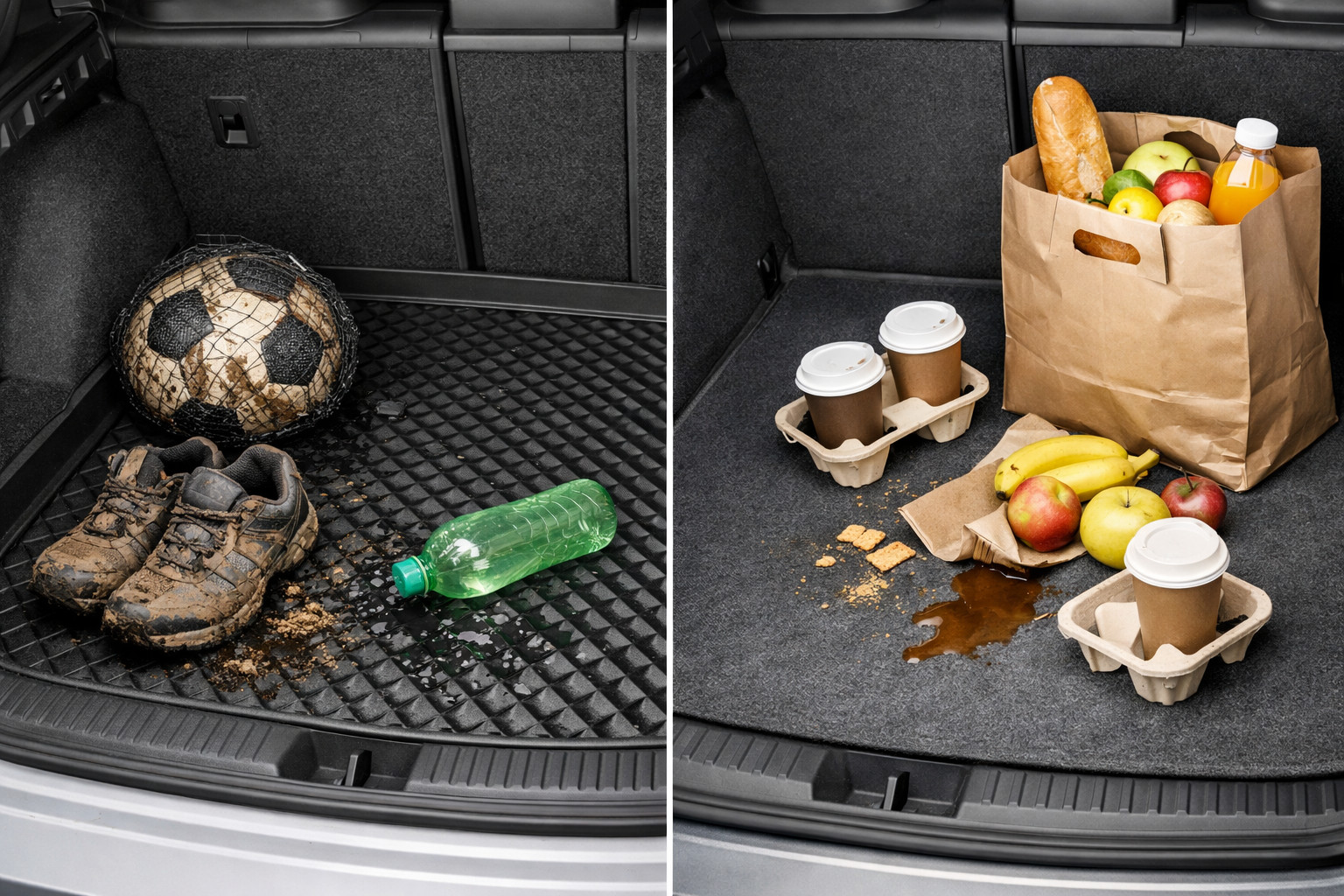
The second step is small practical protection: mud flaps, all-weather cabin mats, a trunk mat or cargo tray. It doesn’t look like “tuning,” but these are exactly the items that save time on washing every day and protect the interior when you carry shovels, crates, seedlings, or bags.
Third in priority is protecting the lower part of the vehicle—but only if your route is truly rocky, has icy ridges, or hard ruts. If you mostly have wet dirt roads and potholes, tires and careful driving are often enough.
| Upgrade | Why it’s needed | Who it truly benefits |
|---|---|---|
| Mixed-surface tires on 16 or 17 inches | Better grip on dirt, more sidewall reserve, less afraid of potholes | Those who often drive in rural areas, to the cottage, on broken inter-village roads |
| Mud flaps | Less dirt on sills, doors, and underbody; less sandblasting on the body | Those who regularly drive in slush, on gravel, or through puddles |
| Rubber floor mats and a cargo tray | Easier to clean the interior; less moisture and dirt in the upholstery | Those who carry tools, harvest, dogs, kids’ items, jerry cans |
| Engine skid plate and protection for vulnerable components | Reduces the risk of unpleasant contact with a stone, ice, or a ridge in a rut | Those whose route is not only muddy but also harsh in terrain |
| Moderate suspension lift | Adds a bit more clearance under the car where the stock height is no longer enough | Those who truly scrape the underside even after switching to the right tires |
| Towbar or roof rack | Adds functionality for a trailer, bike carrier, or long items | Only for those who use it regularly, not once a season |
DD Tuning expert comment: the most typical mistake with a cottage-spec RAV4 is installing spacers first and only then thinking about tires. As a result, the car becomes taller on paper, but doesn’t grip better on wet dirt and may wear components faster. Another common mistake is hanging on to 18-inch wheels, even though switching to a more practical size often makes a more noticeable difference than any exterior tuning.
If, after tires and basic protection, the car still regularly hits the underside, then you can look at a moderate suspension lift. The key word is “moderate.” For this scenario, a small lift makes sense—not tall spacers that start adding unnecessary load to the CV drives and other components.
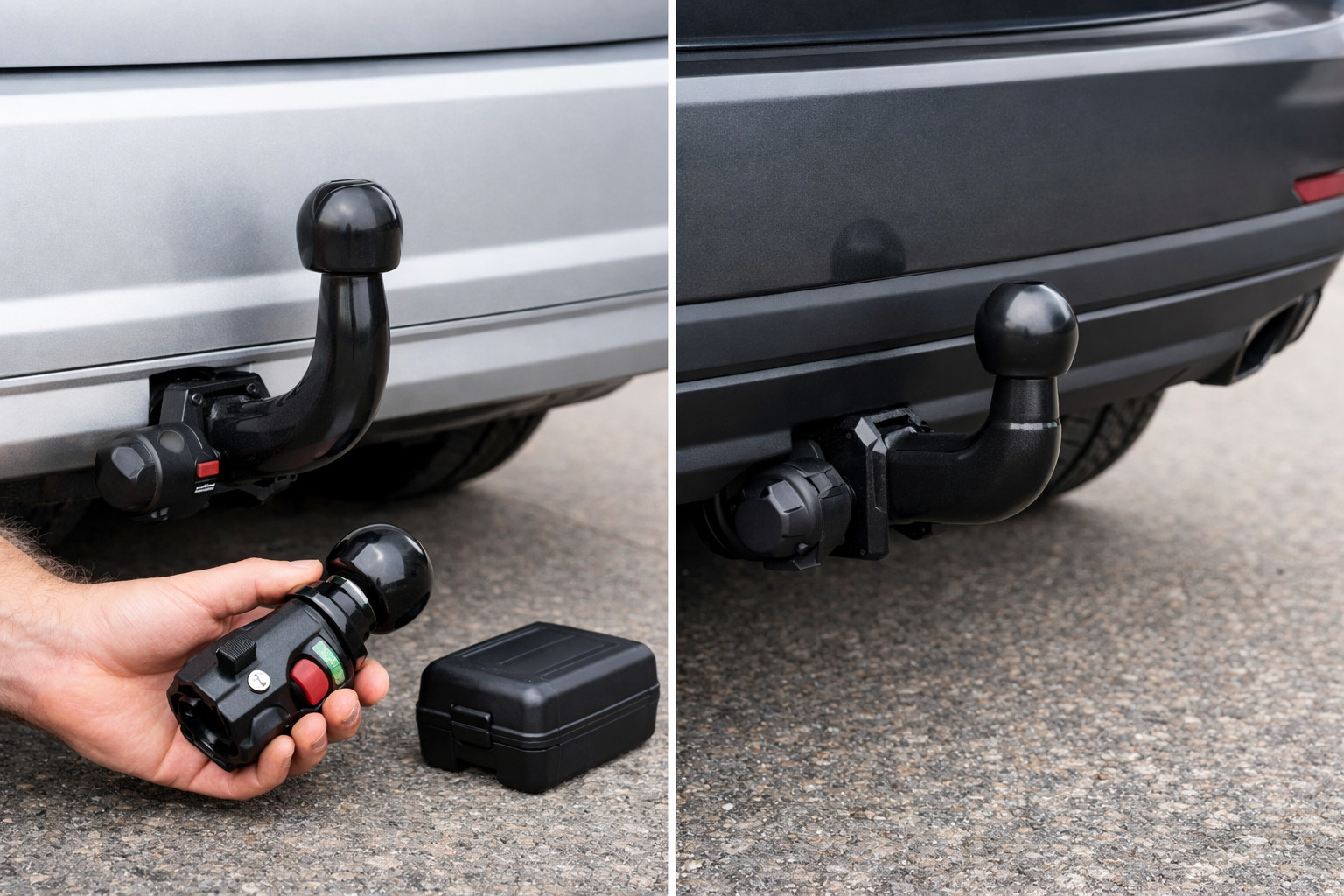
As a second stage, it also makes sense to install a towbar if the RAV4 actually works with a trailer, platform, or bike carrier. For 2006–2012, this upgrade is especially logical on more powerful versions, and for 2013 you should realistically assess the weight of what you plan to tow.
If we’re talking about a 2006–2012 with a full-size spare, don’t rush to give it up for a cleaner look. For long trips to rural areas, it’s a more practical option than solutions where, after a puncture, you can only “limp” to a service shop.
Window deflectors, trim pieces, small exterior décor, cabin organizers—this is no longer about capability, but about everyday convenience and personal taste. They can be appropriate, but they don’t solve any key problem on a bad road.
A roof rack is also often seen as a must-have for a cottage car, although in practice the RAV4 has enough interior volume for most tasks. The roof only makes sense when you need to carry long items, dirty gear, or equipment you don’t want to put in the cabin.
Most often, money is wasted on three things. First: a big spacer lift “just in case,” when the stock geometry with proper tires is already enough. Second: 18-inch wheels or keeping a low profile purely for looks, even though they handle potholes worse. Third: exterior body kits that don’t add real benefit in cottage mode.
| What to install first | What can be postponed | What isn’t necessary |
|---|---|---|
| Practical 16- or 17-inch tires | Moderate suspension lift | 18-inch set for looks |
| Mud flaps, rubber floor mats, cargo tray | Towbar | Decorative trim pieces |
| Skid plate or protection for lower components, if the route is harsh | Crossbars or roof rack | Large spacers without a verified need |
| Check suspension condition and alignment after changing wheels | Additional cabin accessories | Any exterior body kit that doesn’t add practical function |
More expensive upgrades are justified when the car constantly works under load, drives the same difficult route, and you’ve already exhausted the simple steps. That is: the tires are chosen correctly, basic protection is installed, and the problem remains. That’s the moment to consider a quality suspension lift kit, more serious protection, or a towbar for regular work—not for a one-time trip.
If you’re only evaluating whether it’s worth investing in this generation at all, first take a look at the RAV4 2006–2013 review. If you already have a 2013 or you’re choosing between generations, it’s useful to cross-check the logic with the article about RAV4 2013–2018. And when the scenario is already clear and you need brand-compatible accessories, it’s convenient to continue via the Toyota section.
From a customer’s experience: the owner of a RAV4 2008 initially wanted to lift the car right away and install a roof rack, because it seemed like that’s what was missing on the cottage road. In the end, he started with tires, mud flaps, and a cargo tray, and after a few trips realized the suspension lift could be postponed. The biggest difference came not from expensive parts, but from the right order of upgrades.
For a Toyota RAV4 2006–2013 in the “cottage and bad roads” scenario, the smartest path is simple: tires first, then basic protection from dirt and underbody contact; next—only if truly needed—a moderate suspension lift; and only after that a towbar or roof setup. The key is not to confuse functional upgrades with decorative ones and not to spend money on things that don’t change how the car behaves on your route. This material is based on real selection experience, hands-on practice, and real usage scenarios—not an abstract list of accessories.
| ✔ | The right 16- or 17-inch tires provide more sidewall reserve, so they handle potholes, sharp edges, and broken dirt roads better. For trips to the country, this is more useful than low-profile wheels. |
| ✔ | Mud flaps, rubber floor mats, and a trunk liner really reduce the amount of dirt in the cabin and make cleaning easier after trips in slush or with cargo. This is especially useful if the car carries seedlings, tools, or bags. |
| ✔ | Engine and underbody protection makes sense on routes with rocks, icy ridges, or deep ruts. It lowers the risk of damaging important components when hitting uneven surfaces. |
| ✔ | For those who actually tow a trailer or carry long items, a tow hitch or roof rack adds practicality. It is not about off-road ability, but about convenience in everyday tasks. |
| ✘ | Excessive suspension lift without a real need can be unnecessary and does not solve the main problem on wet ground. The author directly advises against making this the first step. |
| ✘ | 18-inch wheels and a low profile handle potholes worse, so in a country-house scenario this is more of a step toward appearance than usefulness. On bad roads, such a setup is less practical. |
| ✘ | Decorative trims, body kits, and other exterior accessories do not add real benefit on broken roads. They are easy to pay for, but they will not improve traction or protect the car. |
| ✘ | A roof rack is not essential if it is used rarely. For most everyday tasks, the RAV4's interior space is enough, so this is often a postponed rather than a top-priority purchase. |
Shipping to EU
Wholesale and retail
Own warehouse
Опис продукту
Подарунки не надаються при оформленні покупки у кредит під 0,01% або при покупці частинами.