25.09.2026
46
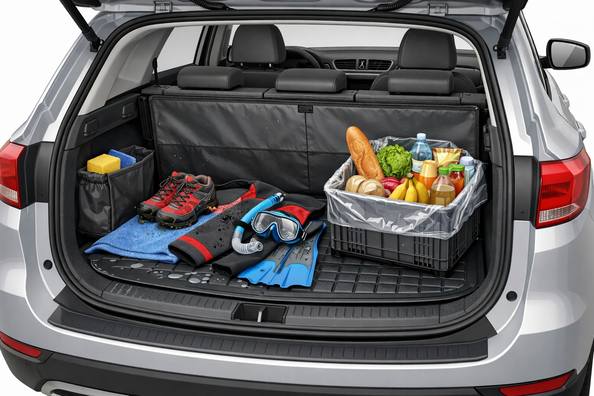
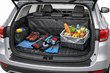
The problem isn’t the wet items themselves, but the fact that moisture in the trunk often has no proper barrier. If there’s a flat pad, textile liner, or a poorly fitted universal mat under bags, cleats, skates, or shopping bags, water runs into the corners, gets under the trim, and over time causes dampness and odor.
In real use, the best results come not from one “magic” accessory, but from a combination: a waterproof tray with a raised lip, a non-slip cargo surface, and for small purchases—securing them with a net or stops. And one more important thing: after the trip, wet sports gear should be taken out and dried, not left in a closed trunk.
The trunk suffers from moisture in two places at once: from above, where water drips off items, and along the edges, where that water runs during driving. Under braking, acceleration, and cornering, bags and gear shift—and with them moves dirty water, slush, sand, and small debris.
If the surface is smooth, cargo slides even more. If the lip is low or missing, liquid escapes beyond the mat. And if the mat sits in waves or doesn’t match the floor shape, gaps appear—and that’s where everything goes first.
DD Tuning expert comment: The most common mistake is buying a universal mat and cutting it by eye without checking the arches, corners, and underfloor access panels. As a result, water gets through exactly where coverage is missing. The second typical mistake is trying to carry wet shoes, sports kit, or car chemicals on textile that simply isn’t designed for it.
| Symptom | Likely cause | What to do |
|---|---|---|
| Water pools in the trunk corners | Flat liner or a lip that’s too low | Install a waterproof tray with a pronounced raised lip and make sure the edges fit tightly |
| Dampness under the mat even though the top is almost dry | Wrong shape, waviness, or gaps along the edges | Remove the mat, check the fit on a clean floor, and if needed replace it with a more precise fit |
| Shopping bags and totes slide around the trunk | Slippery surface without securing | Choose a textured surface and add a net or retainers for small cargo |
| Scratches appear on the threshold, clothes get dirty | Items are constantly dragged over the trunk edge | Add separate threshold or bumper protection, especially if you often carry heavy bags or a stroller |
| A damp smell persists | Wet items are left in the trunk, and the mat or trim doesn’t dry out | After the trip, remove the gear; wash the tray and dry it completely before reinstalling |
The first solution is a vehicle-specific waterproof tray or a rubber trunk mat with a proper raised lip. In practice, the difference between a lip around 25–48 mm and a thin universal option that’s only a few millimeters is very noticeable: a high edge truly keeps water inside instead of letting it run into the corners.
Second is a non-slip, textured surface. It doesn’t fully replace securing, but it significantly reduces movement of bags, totes, and gear. For small cargo, a net or stops work well separately: they limit shifting and prevent items from gaining speed across the whole trunk.
Third is threshold protection if you often load heavy or dirty items. And fourth is proper care: the tray should be removed, rinsed, dried, and you shouldn’t keep wet gear in it longer than necessary.
If you regularly carry wet sneakers, pool gear, fishing items, a child stroller after rain, or grocery bags, the best first step is a rubber trunk mat with a raised lip and an exact fit. It’s a basic solution that addresses the root cause of moisture getting under the trim.
If you’re unsure whether a universal option is enough, it’s better to compare the difference between form factor and fit in the article about a vehicle-specific or universal trunk mat. When there are wheel arches, underfloor storage, hooks, or a complex floor shape, the wrong choice is usually visible in the gaps and waviness.
But if your trunk is almost always dry and you mostly carry suitcases or everyday bags, it’s worth assessing when a textile trunk mat makes sense. There’s no need to replace everything at once: replacement is justified when the current mat doesn’t hold water, is slippery, or already sits crooked.
| Solution | When it works | When it’s not worth spending money |
|---|---|---|
| Vehicle-specific waterproof tray with a high lip | When there’s often water, snow, mud, sports gear, shopping, or items that may leak | When the trunk is almost always dry and you only need a decorative look without moisture protection |
| Universal mat with trimming | When the trunk floor is simple in shape and you’re ready to measure very precisely before cutting | When the car has complex arches, access panels, hooks, or different floor levels |
| Textile mat | When you carry dry suitcases, bags, boxes and don’t have constant moisture | When you regularly throw in wet shoes, sports kit, gear, or household chemicals |
| Cargo net or retainers | When the issue is shopping and small items sliding around the trunk | When you’re trying to use them to replace water protection: they don’t save you from water on their own |
| Trunk threshold protector | When you often drag heavy items over the edge and scuffs are already visible | When the main problem is water under the mat, not mechanical wear on the edge |
From a customer’s experience: the person wasn’t looking for “something for the trunk,” but for a way to stop wiping up puddles after workouts and supermarket runs. They first used a flat liner, but water went into the corners and bags slipped. After switching to a tray with a raised lip and adding securing for small purchases, cleanup came down to shaking out debris, rinsing off dirt, and drying the tray.
To protect the trunk from wet sports gear or shopping, you shouldn’t mask the consequences—you should contain the water and keep cargo in place. In most cases, a combination of a waterproof tray with a high lip, a non-slip surface, and simple securing for small items works; textile remains an option only for dry use. This material is based on real selection experience, hands-on practice, and real-life usage scenarios—not abstract promises.
Shipping to EU
Wholesale and retail
Own warehouse
Опис продукту
Подарунки не надаються при оформленні покупки у кредит під 0,01% або при покупці частинами.