 Author: Radomskyi Maksym Vasyliovych
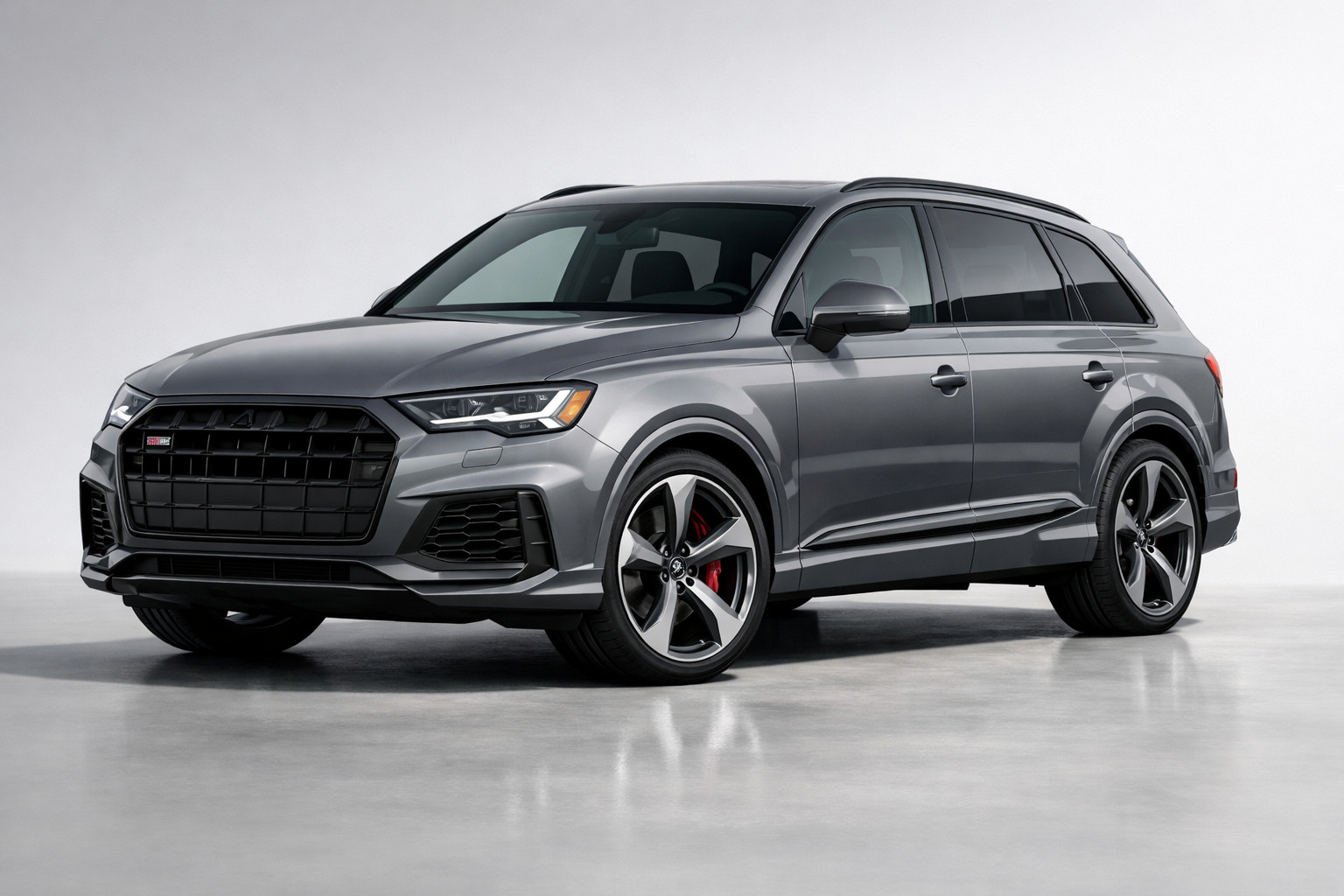
Audi SQ7 facelift 2024 is a big, very fast, yet family-practical version of the Q7. After the update, the model didn’t become technically new, but it did get a fresher look, new lighting graphics and more up-to-date equipment, while the main things stayed the same: a gasoline V8, permanent all-wheel drive, air suspension, and acceleration that, for this size, feels almost unnaturally effortless.
In this SQ7 facelift 2024 review, it’s important to cut off unrealistic expectations right away: this is not an economical long-distance diesel and not a show-off track toy. The SQ7 suits someone who wants the space of a large Audi, a high level of quietness on the move, and torque on tap without pauses—but it won’t suit someone who painfully counts fuel consumption, the price of wide tires, and the cost of big brakes.
The model and its place in the market
The SQ7 occupies a very clear niche: it sits above the regular Q7 versions, yet remains more practical and restrained than more emotional models like the RS Q8. In essence, it’s a large premium crossover for those who need not only status or speed, but true everyday versatility: a spacious second row, a large trunk, an easy seating position, and the ability to cover long distances without effort.
In the market, the SQ7 competes less on raw power and more on the combination of pace and day-to-day usability. If you need a vehicle that carries family and luggage and still doesn’t feel heavy when overtaking, the SQ7 makes sense. If lower running costs, a softer entry price, or smaller city-friendly dimensions matter more, regular Q7 versions or a different class will be the more rational choice.
Generations and model history
As a separate S version, the SQ7 appeared only with the Q7 4M generation. That means its history is shorter than the regular Q7’s, and this matters on the used market: an older Q7 doesn’t automatically mean you’re looking at a real SQ7.
| Period | What to know |
|---|---|
| 2016 | SQ7 debuts based on the second-generation Q7 4M. In Europe it launched with a 4.0 TDI diesel V8 with 435 hp and 900 Nm. |
| 2019 | First Q7 4M facelift: refreshed design, new multimedia, digital interfaces, and revised interior styling. |
| After the facelift | In a number of markets, the SQ7 switched to the 4.0 TFSI gasoline V8 with 507 hp. This is important for imported cars: the engine depends on the market and the year. |
| 2024 | Another update: new headlights, bumpers, trim, lighting graphics, and minor equipment changes. The platform and basic hardware remained familiar. |
Engines and transmissions
For the Audi SQ7 facelift 2024, the key setup is the 4.0 TFSI gasoline V8 with two turbochargers, 507 hp and 770 Nm. It works with an 8-speed Tiptronic automatic and quattro all-wheel drive. In some markets the output may be quoted as 500 hp due to a different rounding method, but the point doesn’t change: it’s a very fast powertrain for a large crossover.
On the used market, another important version also exists—the early SQ7 with the 4.0 TDI diesel V8 rated at 435 hp and 900 Nm. That’s why a used buyer should look not just at the SQ7 badge, but at the year, market of origin, and the full technical spec. For a new or fresh 2024 facelift, the reference is simple: a gasoline V8, a classic torque-converter automatic, and permanent all-wheel drive.
On paper, the current gasoline SQ7 does 0–100 km/h in about 4.1 s and has an electronically limited top speed of 250 km/h. For the owner, what matters more is this: the gearbox shifts smoothly, torque is available at almost any speed, and overtakes don’t require long preparation.
Body, dimensions, and chassis
The SQ7 is a large body with genuinely noticeable width and length, so in a tight city you need to accept its scale right away. At the same time, on the move the car disguises its mass better than you’d expect: the air suspension and chassis tuning keep it composed on the highway, though the difference between comfort on 20-inch wheels and the firmness on larger wheels is clearly felt.
Some parameters may vary slightly depending on the market, tires, and measurement method, but as a reference it’s useful to keep these figures in mind:
| Parameter | Reference for SQ7 facelift 2024 |
|---|---|
| Length | 5072 mm |
| Width | 1970 mm |
| Height | about 1740 mm |
| Wheelbase | 2998 mm |
| Ground clearance | variable due to air suspension, roughly about 190–205 mm depending on position |
| Trunk | about 295/780/1908 L depending on seat configuration and measurement method |
| Engine | 4.0 V8 gasoline biturbo |
| Power | 507 hp |
| Torque | 770 Nm |
| Transmission | 8-speed Tiptronic automatic |
| Drive | quattro |
| 0–100 km/h | about 4.1 s |
The chassis is strong precisely because of its balance: the car doesn’t turn into a soft boat, yet it also doesn’t force you to live with constant harshness if you’re not chasing overly large wheel diameters. For our roads, the key practical nuance is simple: curbs, low-profile tires, and heavy wheels quickly reveal the cost of mistakes.
Interior, comfort, and safety
The SQ7’s interior isn’t about flashy theater—it’s a tightly assembled premium cabin with good ergonomics. The front seats are comfortable over long distances, the digital instrument cluster is easy to read without extra clutter, and the two central screens provide a modern interface, although some drivers prefer the physical buttons of older models.
In terms of comfort, the SQ7 is especially strong at speed: sound insulation is good, seating is high, and the second row is spacious. The third row and the exact cabin configuration can depend on the market and trim, so it’s best to check on the specific car. On safety, the set of driver assists is broad, but some systems can be optional—so when buying used, it’s important to check not only the VIN and engine, but also the actual equipment.
Everyday use
In daily life, the SQ7 is pleasant because it doesn’t force a compromise between speed and convenience. It has a light-for-class throttle response, strong straight-line stability, a comfortable seating height, and real space for family trips. On the highway, it’s one of those cars where 150–200 kilometers go by almost unnoticed.
But the price for this is straightforward. V8 fuel consumption won’t be modest, especially in the city. Tires, brakes, suspension, and insurance also sit in the expensive segment. For short urban routes, the SQ7 often feels excessive, and for someone who values ownership economics above all, there isn’t much point in it.
Strengths and weaknesses
If you look at the SQ7 through an owner’s eyes rather than a catalog, the picture is very simple: it’s a car with a strong character and a very tangible price for that character.
| Strengths | Weaknesses |
|---|---|
| Very powerful and flexible V8 | High fuel consumption |
| Large and practical body | City dimensions require getting used to |
| Good balance of handling and comfort | Expensive tires, brakes, and service |
| Quiet on the highway and strong torque reserve | Complex hardware out of warranty can be costly |
| Premium interior without excessive flash | Some desirable options depend on the trim level |
| Speed without losing versatility | Often excessive for short city trips |
The main practical plus is that the SQ7 doesn’t make you choose between family usefulness and real dynamics. The main minus is that it doesn’t forgive attempts to buy “almost the same, but cheaper”: saving on service history here almost always comes back as big bills.
Tuning and accessories
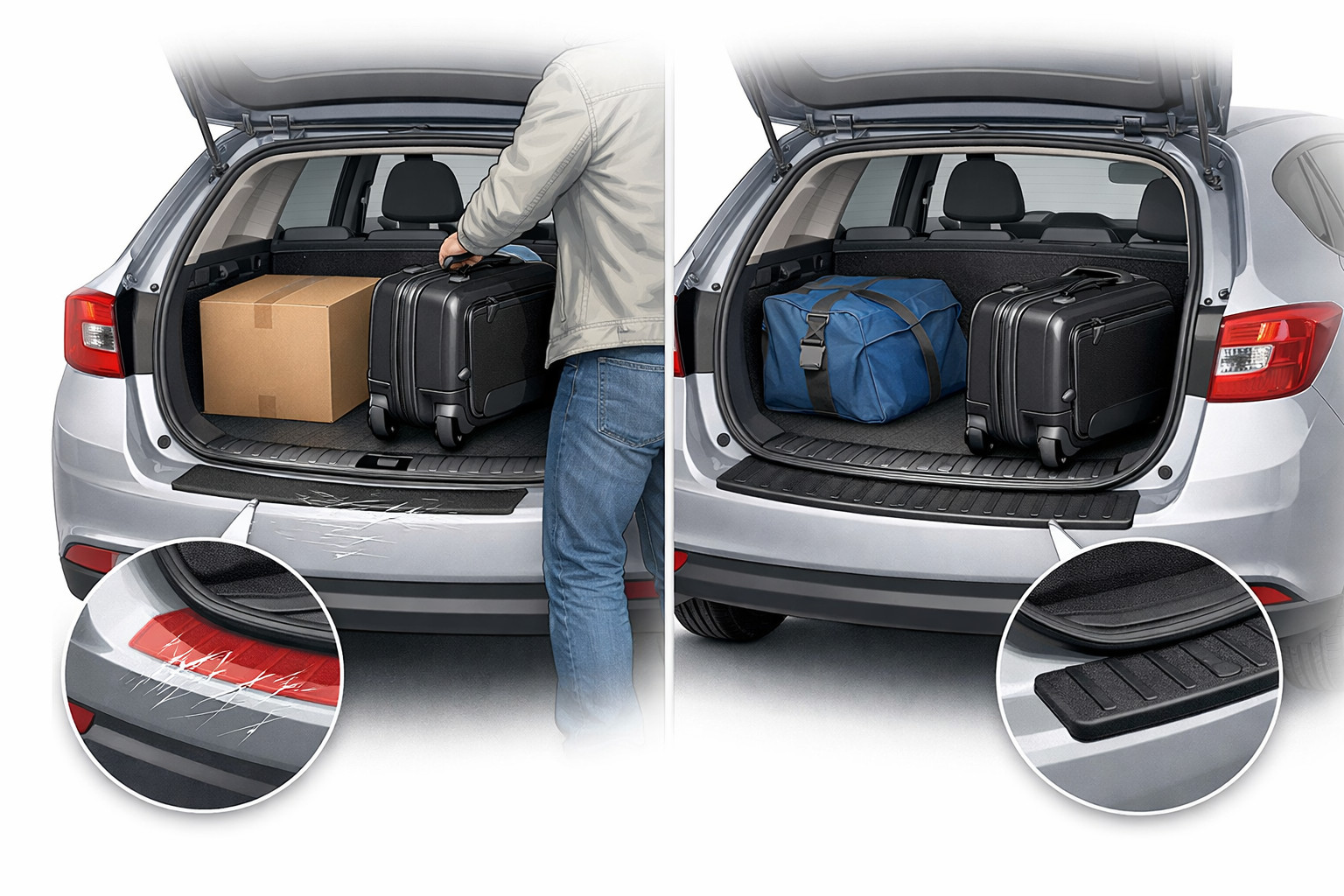
For the SQ7, sensible tuning starts not with chasing peak numbers, but with things that affect convenience every day. On a large, heavy crossover, it really makes sense to immediately look at rubber floor mats for all-season use and quality wiper blades, because the big windshield and expensive interior quickly show the cost of small details.
With performance tuning, it’s worth being restrained. The factory package on the SQ7 is already very tightly balanced in terms of thermal management, brakes, and chassis. So for a daily car, it’s smarter to invest in tires, careful paintwork care, the right wheel size, and practical accessories rather than questionable tunes without a clear service logic.
What to check out for this model
- Rubber floor mats are a basic item for keeping the carpet clean and making care easier in winter and shoulder seasons.
- Wiper blades—on a large windshield, the difference between a fresh and a tired set is noticeable immediately.
- Roof rails or crossbars—make sense if the car actually carries a roof box, skis, or extra cargo.
- Side steps—useful for families with kids or those who often use the roof, but they should be chosen without hurting ground clearance.
Conclusion
Audi SQ7 facelift 2024 isn’t a rational choice in terms of costs, but it’s a very rational car in its role: a big, fast, quiet, and practical premium crossover for those who’ve outgrown a regular Q7 but don’t need an openly harsher and more showy format. If that’s exactly the set of qualities you want, the SQ7 looks very convincing.
This material is based on real selection experience, practice, and real-world usage scenarios: that’s why the main focus here isn’t on promotional numbers, but on how this car behaves in life, who it suits, and where its inevitable expenses begin.
Pros and cons
The powerful 4.0 TFSI V8 gasoline engine with 507 hp and 770 Nm delivers very strong pull in any driving mode. For such a large SUV, 0 to 100 km/h in about 4.1 s is truly impressive.
The SQ7 retains full everyday practicality: a spacious second row, a large trunk, and a comfortable seating position. This makes it usable as a family car without any noticeable loss of comfort.
The air suspension and chassis tuning provide a good balance between comfort and composure. On the highway, the car drives quietly and steadily, without turning into a soft, wallowy crossover.
The cabin is finished in a restrained premium style and is well thought out from an ergonomic point of view. The front seats are comfortable for long trips, while the digital instrument panel and two central screens make the interface feel modern.
At speed, the SQ7 hides its size and weight very well. Overtakes and long-distance trips go smoothly, without the need to constantly plan maneuvers in advance.
Fuel consumption with the V8 will be high, especially in the city. For short daily trips, this can be noticeable and hard to justify.
The car is large, so in a tight city you need time to get used to its dimensions. Parking and maneuvering in dense traffic are not as easy as in more compact SUVs.
Maintaining the SQ7 is expensive: tires, brakes, suspension, and insurance are all in the expensive segment. In addition, the complex technology can lead to high out-of-warranty costs.
Some important equipment depends on the market and trim level. This means that a specific car may differ significantly in its feature set, even if the model name is the same.