09.08.2026
89
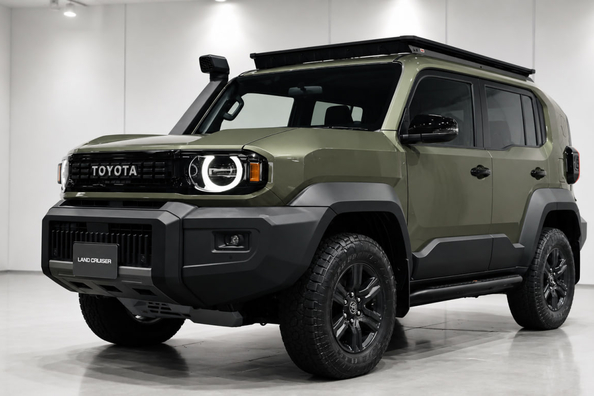

Toyota Land Cruiser FJ 2026 — is a compact 5-seat body-on-frame SUV that sticks to a simple, straightforward formula: a naturally aspirated 2.7L gasoline engine, a 6-speed automatic, part-time four-wheel drive, and a low-range transfer case. In size it sits below the Prado 250, but is noticeably larger than the Jimny—so it’s not a mini off-roader, but rather a shorter, more maneuverable Land Cruiser for daily duties and getting off the asphalt.
The key question here isn’t the trend for boxy design, but who actually needs a vehicle like this. If you want an honest, body-on-frame vehicle for the city, dirt roads, fishing trips, travel, and gear—the FJ makes sense. If your priorities are fuel economy, a quiet highway ride, and crossover-like softness, there will be too many compromises.
The Land Cruiser FJ sits below the Prado 250 in Toyota’s 4x4 family and fills the niche of a compact body-on-frame SUV. In the Japanese specification at launch, it comes as a single VX grade, 5 seats, and a starting price of 4,500,100 yen. So this is not a budget utilitarian model, but a fully modern SUV focused on a tough foundation rather than premium flash.
Its market logic is simple: give the buyer a real frame, a shorter wheelbase, good maneuverability, and a proper cargo area without stepping up to the larger Prado footprint. That’s why the FJ shouldn’t be seen as a competitor to small crossovers. It’s a tool for those who care about ground clearance, geometry, low range, and serviceability.
At the start of sales, we’re talking about the first generation Land Cruiser FJ, which officially launched on the Japanese market on May 14, 2026. At launch, one VX trim is announced, and the sales plan in Japan is 1,300 vehicles per month.
In practical terms, the model’s history is only just beginning, so there’s no long-term owner data yet. This matters: for now, the FJ has to be judged by factory specs, design, and first short driving impressions, not by years of accumulated real-world use.
At launch in Japan, the FJ is offered with one engine: the naturally aspirated 2TR-FE gasoline unit with a displacement of 2.693 L. It produces 163 hp at 5,200 rpm and 246 N·m at 3,900 rpm. The gearbox is a 6-speed automatic; the drivetrain is part-time 4WD with a 2.566 low-range ratio.
This powertrain isn’t about sharp overtakes. Its strengths are predictability, simple architecture, and straightforward servicing. Its weakness is modest pull on the highway under load and fuel consumption that, by 2026 standards, offers little margin. There’s no diesel or hybrid at launch.
| Parameter | Value |
|---|---|
| Years produced | 2026–present |
| Generation | first, at launch one VX version |
| Engine | 2.7 L naturally aspirated gasoline 2TR-FE |
| Power | 163 hp |
| Torque | 246 N·m |
| Transmission | 6-speed automatic |
| Drivetrain | part-time 4WD, low range available |
| Fuel tank | 63 L |
| WLTC fuel consumption | around 11.5 L/100 km combined |
| Tires | 265/60 R18 |
FJ dimensions are 4,575 × 1,855 × 1,960 mm, with a 2,580 mm wheelbase. Official ground clearance in the Japanese specification is 250 mm. Sometimes other sources quote 245 mm, but it’s better to stick with the official 250 mm as the baseline. A 5.5 m turning radius is a strong argument on narrow streets, in parking lots, and in forest ruts.
Structurally, it’s exactly what you expect from a smaller Land Cruiser: the IMV body-on-frame platform, double wishbones up front, and a rigid 4-link rear with a lateral rod. There’s a rear differential lock, downhill assist and hill-start assist, and underbody protection for key components. Toyota doesn’t publish exact approach and departure angles for the Japanese version, so there’s no point chasing random figures from different markets.
Another practical plus is the segmented bumpers that can be replaced in sections. For a vehicle that will actually drive beyond smooth asphalt, this is only a “small thing” on paper.
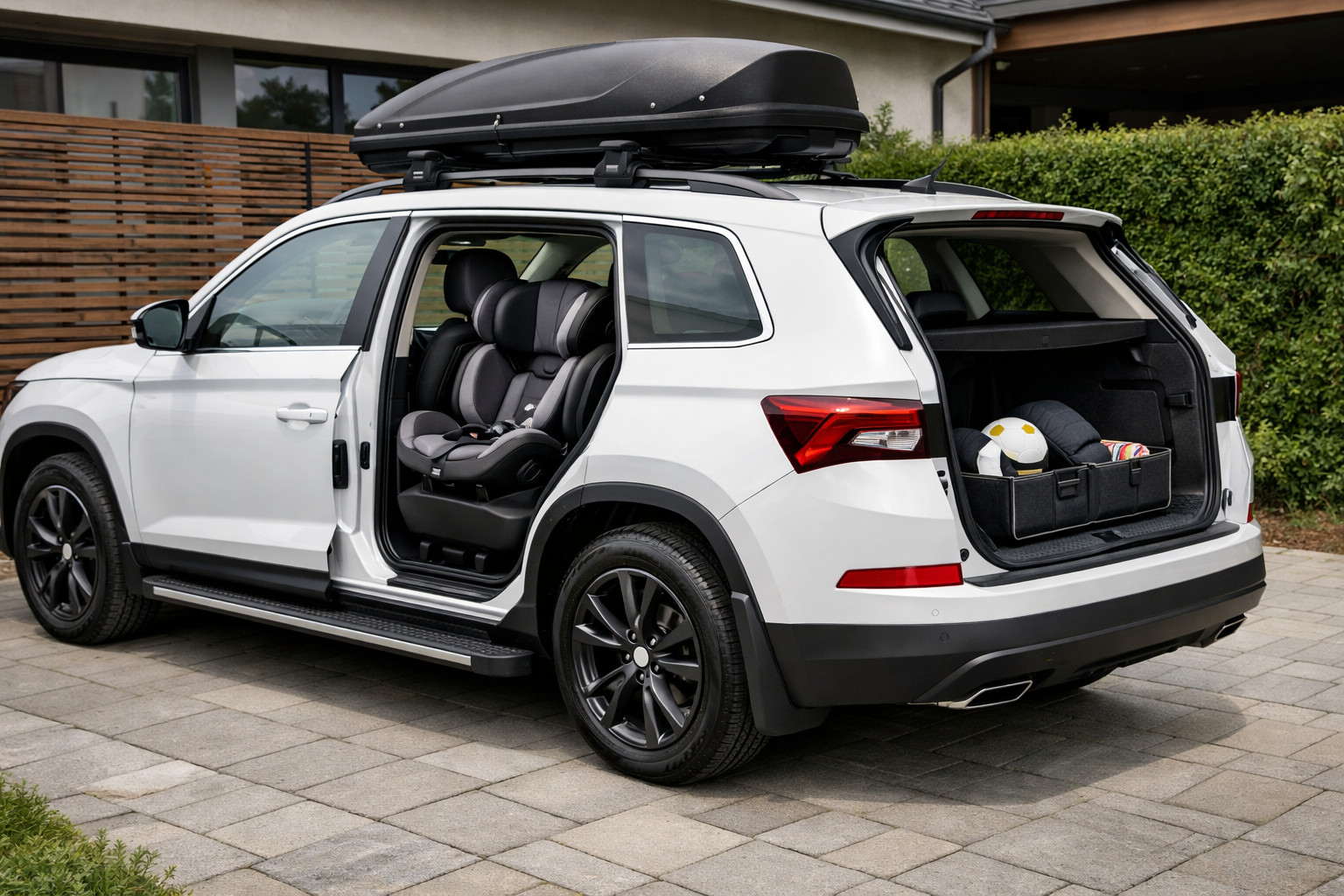
Inside, the FJ is a five-seater with cabin dimensions of 1,735 × 1,510 × 1,240 mm. The second row is adjustable, and the cargo area is large for this format: 795 L claimed, and up to 1,607 L with the second row folded. For a short body-on-frame vehicle, this is one of the key trump cards: gear, boxes, kids’ items, or camping equipment fit without constantly playing Tetris.
In terms of comfort, the FJ doesn’t pretend to be a crossover, but a lot is done for daily driving: a low window line, good visibility, an easy driving position, a 12.3-inch multimedia system with connected navigation, a 360-degree view, blind-spot monitoring, and the modern Toyota Safety Sense safety suite. Connected services are also available to check vehicle status, locate the car, lock the doors, and start the climate control.
A typical weak spot for the class: second-row legroom doesn’t look record-breaking, especially with tall people up front. For everyday family use that’s fine, but for very long trips with four adults, the Prado will be the calmer option.
In the city, the FJ wins not on efficiency, but on maneuverability and the seating position. The shorter wheelbase, high seating, and 5.5 m turning radius make it feel more compact than its nearly 2-meter height suggests. At the same time, that height is exactly what you need to keep in mind in older parking structures and low garages.
On the highway and under load, the powertrain’s character shows: the engine is simple but not quick, and noise is noticeable under hard acceleration. Official consumption is about 11.5 L/100 km combined, and higher in the city. The suspension can feel a bit firm on rough surfaces—a normal trade-off for body-on-frame architecture and off-road capability. Look at the FJ realistically and its everyday strength is versatility, not business-crossover comfort.
The FJ’s main advantage is that it doesn’t try to be everything at once. It’s a focused vehicle for specific tasks: short, body-on-frame, with low range and a proper cargo area. But that honesty also means clear limitations.
| Aspect | Pros | Cons |
|---|---|---|
| Design | Frame, 250 mm clearance, locking and low range deliver real off-road capability | Ride comfort on undulating surfaces isn’t crossover-like |
| Dimensions | Shorter wheelbase and 5.5 m turning circle are convenient in the city and on narrow trails | Height of 1,960 mm can limit access to some parking garages |
| Engine and transmission | Simple naturally aspirated engine and automatic without complex exotic tech | Passing performance is modest; fuel consumption is high |
| Practicality | 5 seats and a large trunk make it suitable for gear and trips | Second row isn’t as spacious as in larger Land Cruisers |
| Reliability statistics | The design looks conservative and easy to understand | The model is too new to talk about a proven long-term picture |
Who it suits: those who want a real 4x4 without stepping up to a large and expensive Prado. Who it doesn’t: those looking for a quiet highway car, diesel torque, or hybrid efficiency.
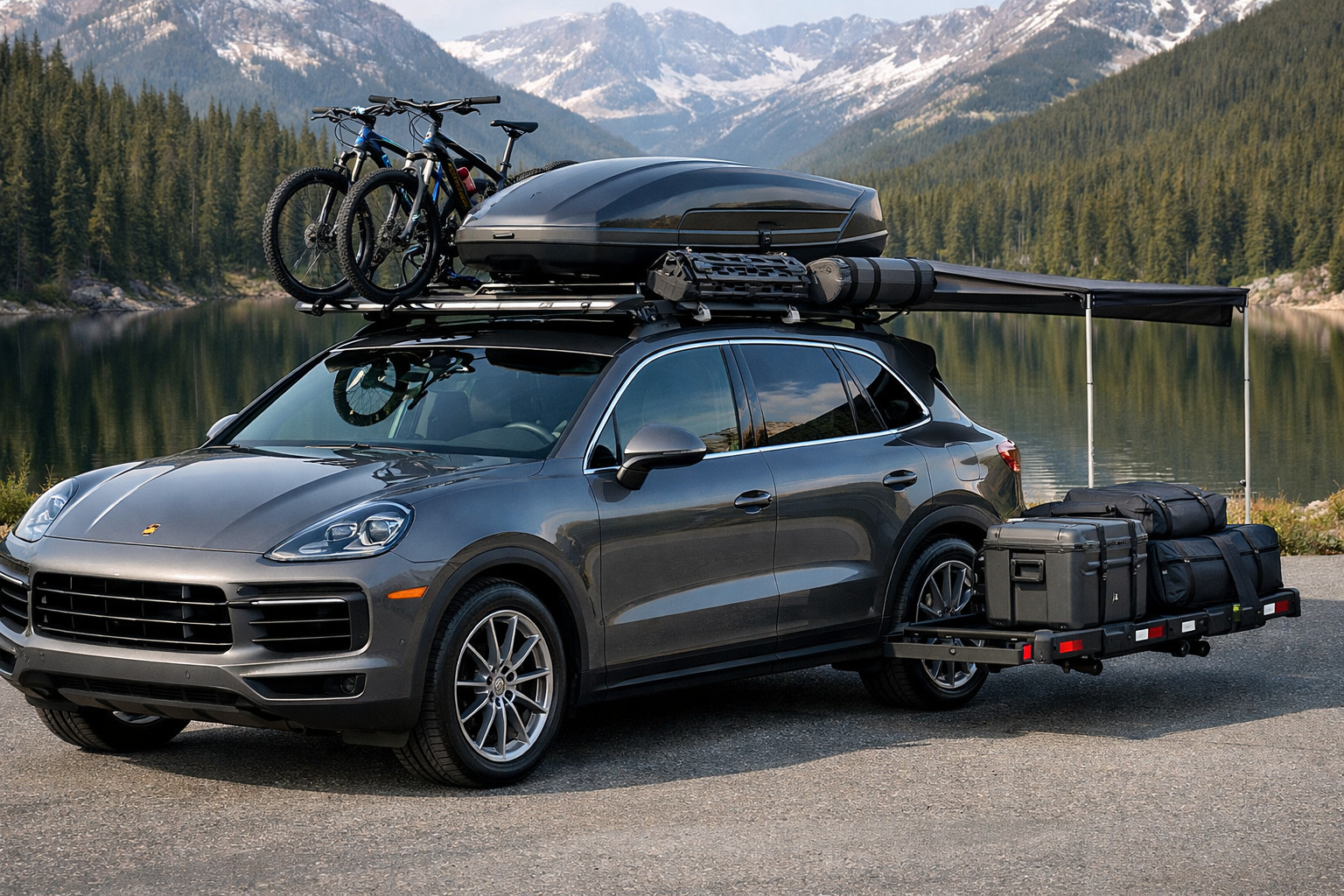
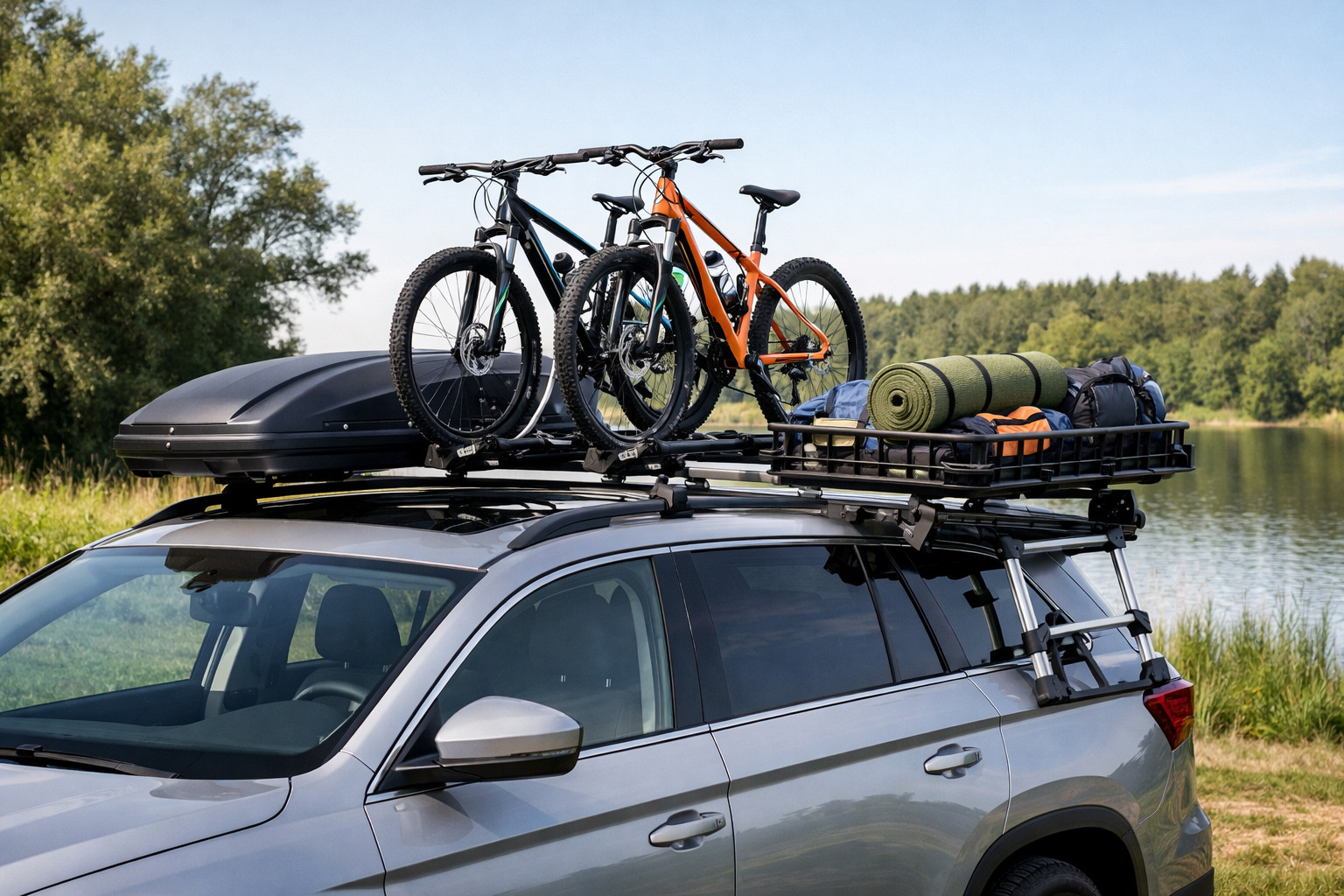
With the FJ, it makes sense to focus not on decoration, but on functional upgrades. Since a dedicated catalog for this model hasn’t been formed yet, it’s worth using the logic of closely related Toyota 4x4s as a guide—but compatibility of specific parts must be checked separately. The first things people usually look at are off-road accessories for protection and gear organization, side steps for daily entry and body protection, and roof racks and roof bars if the vehicle is planned for travel.
A practical approach matters more than looks. With the FJ it’s easy to overdo the weight: heavy wheels, steel armor, exterior kits, and unnecessary bolt-ons quickly eat into the 2.7-liter engine’s performance, add noise, and increase consumption. That’s why the best tuning for this model is what actually works every day: protection, cargo organization, roof access, mud protection, and lighting matched to your use case.
Since a dedicated Land Cruiser FJ catalog is only just taking shape, it’s worth looking at adjacent categories for closely related body-on-frame Toyota models as a reference. This isn’t about automatic compatibility, but about the right order of priorities.
Toyota Land Cruiser FJ 2026 looks like a very well-aimed option for those who need a more compact, yet truly body-on-frame SUV without moving up to the larger Prado footprint. Its strengths are construction, geometry, maneuverability, and practicality; its weaknesses are fuel consumption, modest dynamics, and the still-absent long-term owner statistics. If you look at the model without rose-tinted expectations, it has a clear purpose and a clear audience. This piece is based on real-world accessory selection practice, a technical breakdown of the model, and realistic day-to-day and off-road use scenarios.
| ✔ | Compact dimensions, a shorter wheelbase, and a 5.5 m turning radius make the FJ convenient in the city and on narrow roads. For a body-on-frame off-roader, it feels more maneuverable than larger Land Cruisers. |
| ✔ | The design is well prepared for off-road use: a frame, 250 mm ground clearance, a low-range transfer case, and a rear differential lock provide real capability. This is not a decorative SUV, but a vehicle with a simple and clear 4x4 setup. |
| ✔ | A five-seat cabin and a 795 l trunk make the vehicle practical for gear, trips, and family items. After folding the second row, the volume increases to 1 607 l, which is useful for travel. |
| ✔ | It has a decent set of everyday conveniences: a 12.3-inch multimedia system, surround view, blind spot monitoring, and Toyota Safety Sense. For a body-on-frame model, this noticeably makes daily use easier. |
| ✔ | Segmented bumpers that can be replaced in sections look like a practical solution for real use off pavement. If damaged, there is no need to replace the entire element. |
| ✘ | The 2.7-liter naturally aspirated engine with 163 hp does not provide vivid dynamics, especially during overtaking and under load. On the highway, it feels calm rather than lively. |
| ✘ | The official fuel consumption of around 11.5 l/100 km in the combined cycle for 2026 no longer looks economical. In the city, according to the text, it will be even higher. |
| ✘ | Space in the second row is not record-breaking, especially if tall people are seated in front. For long trips with four adults, the Prado will be more comfortable. |
| ✘ | The suspension on rough surfaces may feel a bit stiff, so ride comfort is not at crossover level. This is a typical trade-off for a frame construction and off-road capability. |
| ✘ | The model is very new, so there is still no long-term reliability statistics or real owner experience. At the moment, durability and typical weak points can only be judged by the specifications and first impressions. |
Shipping to EU
Wholesale and retail
Own warehouse
Опис продукту
Подарунки не надаються при оформленні покупки у кредит під 0,01% або при покупці частинами.