09.09.2026
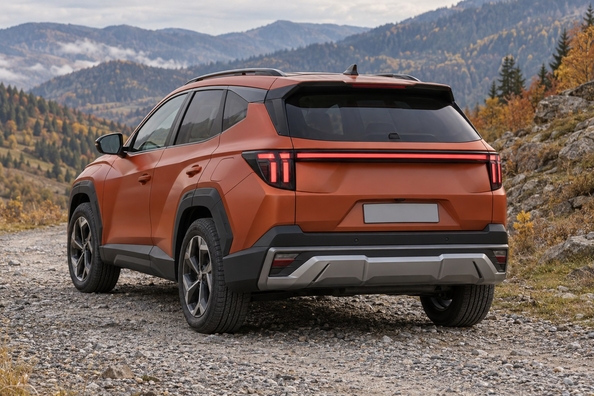
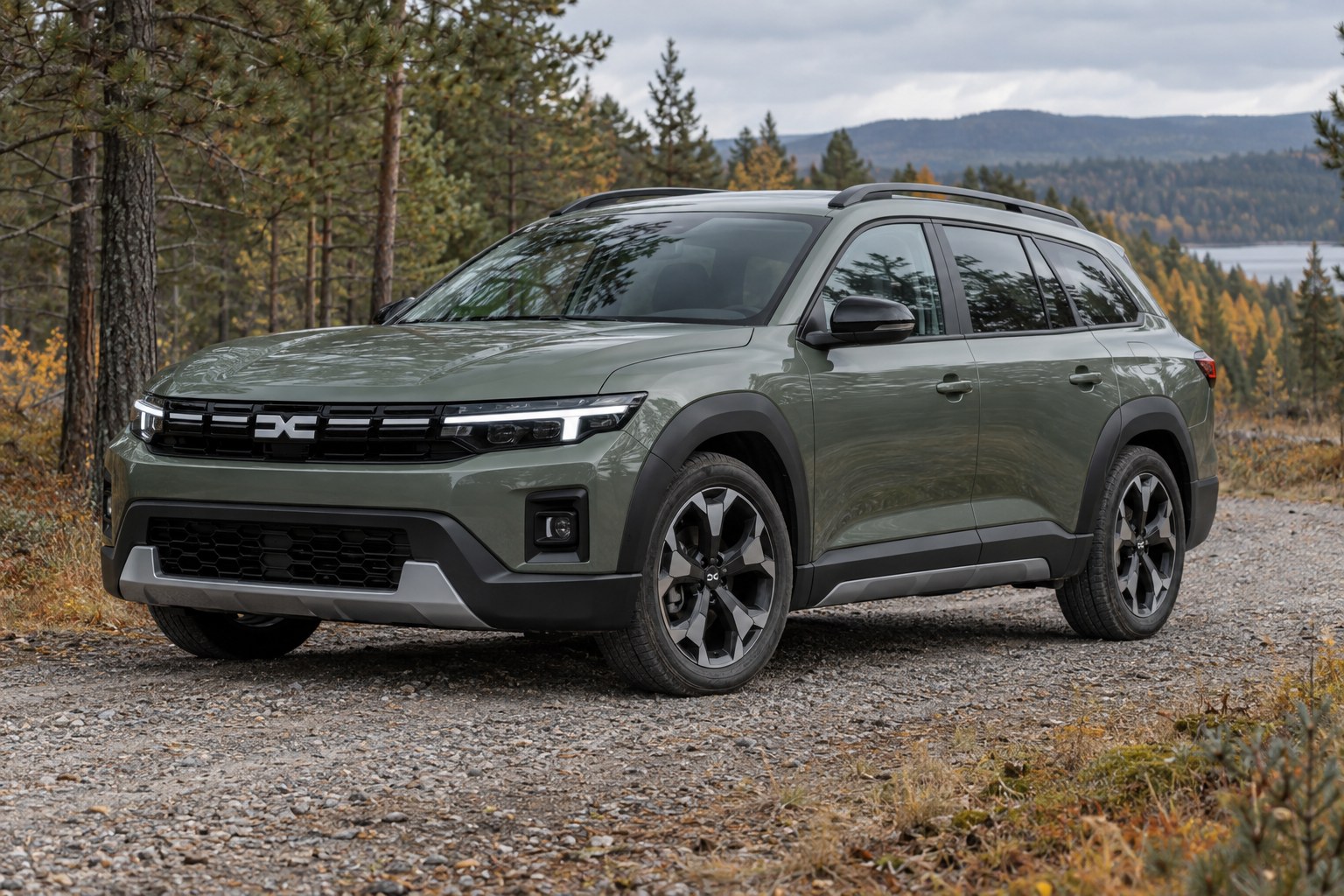
The fourth Hyundai Tucson (NX4) debuted in September 2020, and six years later Hyundai has shown its successor. In August 2026 the company published the design of the fifth generation, and on September 18 held a media day in Korea and announced the first technical details. The press refers to the new model by its internal code NX5. We break down what has already been officially confirmed, what is so far known only from journalists’ reports, and when to expect the newcomer in Europe. The images in the article are illustrations created from the official design description, not factory photos.
Hyundai describes the new exterior through the Art of Steel philosophy — “reimagined tension and the strength of steel.” In practice, that means flatter surfaces, a more upright front end, pronounced fenders and a clear horizontal line running along the entire body. Almost nothing remains of the sharp edges and grille-integrated headlamps like on the NX4: the new Tucson is closer in spirit to the larger Santa Fe.
Up front there are vertical H-Edge daytime running lights, which Hyundai compares to architectural lighting, and a thin horizontal lamp across the center with indirect light that illuminates a pattern inside. Below is a massive grille and a protective bumper garnish. At the rear there are three-dimensional prism-style lamps with a detailed graphic, the same narrow light strip across the center and vertical sections at the edges, plus a substantial bumper with a garnish. The drag coefficient has been reduced from 0.33 to 0.30 — thanks to active grille shutters with sealed edges, a redesigned spoiler and aerodynamic 17-inch wheels.
There are eight colors, five of them new, including the matte Driftwood Gray Matte and Red Rock Orange Matte. For Korea and the U.S. there is the XRT version for those who like to get out of town: a wide rectangular grille, large protective cladding front and rear, black wheel-arch extensions with a forged-carbon look pattern, unique wheels and touch-sensitive LED tailgate lighting.
| Parameter | Tucson NX5 (Korea, 2026) | Difference vs NX4 |
|---|---|---|
| Length | 4 700 mm | +60 mm |
| Width | 1 905 mm | +40 mm |
| Height | 1 685 mm | — |
| Wheelbase | 2 785 mm | +30 mm |
| Second-row headroom | 1 031 mm | +29 mm |
| Rear door opening angle | 83° | was 73° |
These figures apply to the Korean version. According to the UK’s Auto Express, Hyundai is preparing a shorter model for Europe — by about 100 mm — with its own chassis and suspension tuning, as is the case with the current generation. There are no official European dimensions yet.
The dashboard is now “floating,” with separate upper and lower sections. Ahead of the driver is a slim digital cluster above the steering wheel with two cutoffs; in the center is a 12.9- or 17-inch touchscreen in a 16:9 format, and physical buttons remain below it. Practical touches include a concealed nook under the palm, a card holder by the left air vent, a wireless charger for two smartphones at once, a 100 W USB port and the Luggage AddGear mounting system in the trunk. Equipment highlights include a Bang & Olufsen audio system, manual sunshades for the second-row windows and front seats with a relaxation mode.
Tucson became Hyundai’s first crossover with Pleos Connect multimedia. It works like a smartphone: there is the Pleos App Market, split-screen while driving, and the Gleo AI assistant based on a large language model, which understands everyday conversational language and can, for example, plan a trip.
| Version | Power | What else is known |
|---|---|---|
| 1.6 T-GDi, petrol | 193 hp, 27.0 kgf·m | 8-speed automatic, +13 hp vs the predecessor |
| New-generation 1.6 turbo hybrid | 245 hp combined | 17.4 km/l on the Korean cycle (≈5.7 l/100 km) |
The hybrid gained a function that uses navigation data to suggest when to lift off the throttle before slowing down, a Stay Mode in which accessories operate while parked without starting the engine, and an E-Traction system for better grip on slippery or uneven surfaces. Australia’s CarExpert cites 380 N·m for the hybrid and 0–100 km/h in 8.5 seconds.
A plug-in hybrid is not mentioned in the Korean press release. For Europe, Auto Express expects a mild hybrid, a full hybrid and a plug-in hybrid, and there will be no fully electric version — that role is filled by the Ioniq 5. Hyundai will name the final European lineup later.
Standard equipment includes nine airbags and a new-for-Tucson feature that retains power to the door locks after a crash so they can be opened. There is a wrong-pedal press assist, automatic braking for obstacles in front and behind while parking, reverse memory, surround-view cameras with a “transparent” hood and Ground View that shows the area under the vehicle on the screen, as well as remote parking. To improve cabin quietness, Hyundai used new hydraulic engine mounts, additional limiters on the transmission mounts, thicker front door glass and enhanced sound insulation for the engine-bay bulkhead. Suspension mounting points to the body were made stiffer, and the dampers received new valves.
Hyundai Motor Europe has already announced that on October 12, 2026 at the Paris Motor Show it will reveal the European premiere of a “new C-segment crossover.” The company did not specify the name, but the specialist press unanimously expects it to be the Tucson — according to Auto Express — also in an N Line version. Auto Express writes about sales starting in the UK in early 2027, and that the XRT version, according to a Hyundai representative, will not be brought to Europe. So the newcomer will reach Ukrainian dealers at the earliest in 2027, while European engines, dimensions and trim levels will become known after Paris.
The fourth generation will remain one of the most common crossovers on our roads for several more years, and after the successor arrives it will become an appealing option on the used market. We wrote in detail about the strengths and weaknesses of the NX4 in the review of the Hyundai Tucson NX4, and for those considering an even older car, there is material about the 2018 Tucson.
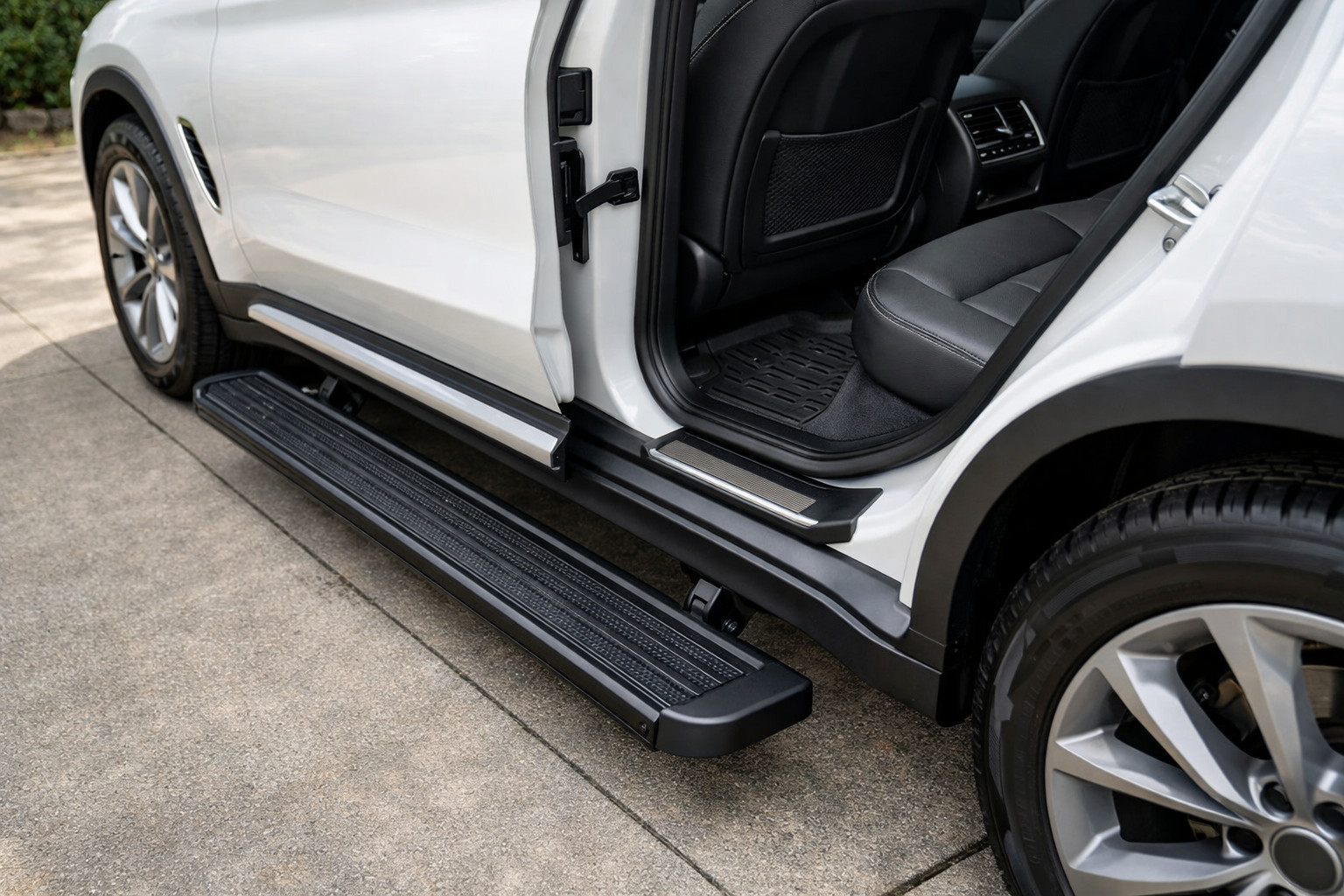
It is important to understand: the NX5 body is completely different, so accessories from the NX4 will not fit the new model. For the current Tucson there is a wide choice: window deflectors for the Tucson NX4 let you ventilate the cabin in the rain and reduce window fogging in autumn, aluminum side steps make entry easier and protect the sills from stones, and EVA mats save the floor from slush. Everything for the model is in the Hyundai Tucson NX4 tuning section.
We deliver via Nova Poshta across Ukraine; orders from 15,000 ₴ are delivered free of charge by our own transport.
Shipping to EU
Wholesale and retail
Own warehouse
Опис продукту
Подарунки не надаються при оформленні покупки у кредит під 0,01% або при покупці частинами.