 Author: Radomskyi Maksym Vasyliovych
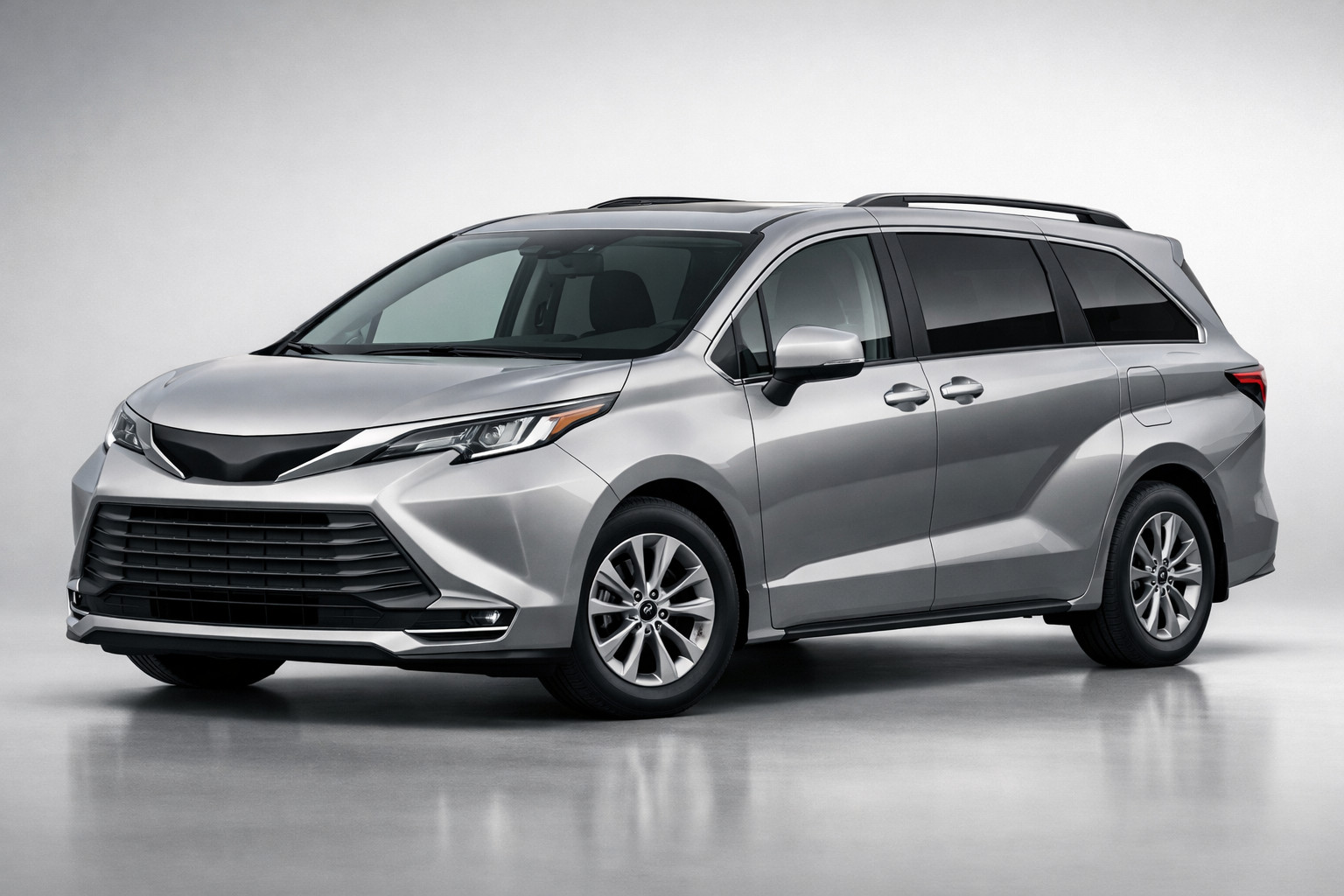
The fourth-generation Toyota Sienna is a large family minivan that, in its current generation, bets not on a powerful gasoline engine but on hybrid efficiency, a spacious cabin, and comfort on long trips. For a family with kids, frequent highway runs, suitcases, a stroller, and the need for 7–8 seats, this is a much more logical format than a large crossover.
For the Ukrainian market, another thing matters: most of these cars come from North America, so people buy the Sienna not for image, but for function. If you need a calm, quiet, roomy vehicle for daily use and travel, it’s a spot-on choice. But if you need compact dimensions, higher ground clearance, or frequent cargo hauling instead of carrying passengers, there are compromises here too.
The model and its place in the market
The Sienna sits in the niche of full-size family minivans. Its main rivals are other large people movers, not crossovers. The key advantage of the model is that it delivers lower fuel consumption than most big gasoline family vehicles without sacrificing interior space.
The fourth generation is especially interesting because Toyota dropped the six-cylinder versions and left only the hybrid setup. In other words, the Sienna is now more about practicality and everyday savings than about performance for performance’s sake.
Generations and model history
The Sienna has been produced since the late 1990s, but it was the fourth generation that marked the most noticeable shift in the concept. The model moved to a more modern car-based architecture, received a different body, and completely changed its powertrain lineup.
| Generation | Years of production | What’s important to know |
|---|---|---|
| First | 1997-2003 | Model launch as a family minivan for the American market |
| Second | 2003-2010 | The car became larger and more practical for a big family |
| Third | 2010-2020 | Common versions with a gasoline V6; many cars on the used market are from this generation |
| Fourth | from 2020 | Sold as a 2021 model-year vehicle, hybrid powertrain only |
Engines and transmissions
With the 4th-generation Sienna, it’s fairly simple: the main and essentially only mass-market powertrain is a 2.5-liter gasoline engine paired with electric motors. Total system output is about 245 hp. Instead of a classic automatic, it uses a hybrid continuously variable transmission tuned for smoothness and efficiency.
There are front-wheel-drive and all-wheel-drive versions. In the AWD setup, the rear axle is driven by a separate electric motor, so such a Sienna feels confident in winter, but it’s not an option for serious off-roading. For used-car buyers, it’s important to check the condition of the high-voltage system, cooling operation, and the absence of hybrid-related errors.
| Parameter | Data for the 4th generation |
|---|---|
| Years of production | from 2020 |
| Engine | 2.5 L gasoline hybrid |
| System power | about 245 hp |
| Transmission | hybrid continuously variable |
| Drivetrain | front or all-wheel |
| Wheelbase | 3060 mm |
| Length | about 5175 mm |
| Width | about 1995 mm |
| Height | approximately 1740-1750 mm depending on version |
| Ground clearance | about 160 mm, slightly more in some versions |
| Trunk | about 950 L behind the third row; over 2100 L with the third row folded per the American measurement method |
Body, dimensions, and suspension
By size, the Sienna pretty much occupies its lane on the road: it’s long, wide, and takes getting used to in parking lots. But those dimensions provide the main bonus—a proper third row without the feeling that passengers were put “in the spare seat.”
The suspension is tuned for a family-focused ride: smooth travel, calm responses, and good highway stability. On rough asphalt, the long wheelbase adds comfort, but the low-for-this-format ground clearance reminds you that this isn’t a crossover. Curbs, deep ruts, and dirt-road exits need a realistic assessment.
Interior, comfort, and safety
The Sienna’s strong point is access and space organization. Sliding doors, a wide opening, a low floor, plenty of legroom, and a proper third row make it very convenient for kids, older passengers, and long drives. Depending on trim, there is a 7- or 8-seat layout.
There’s an important nuance, though: the second row in the fourth generation isn’t designed for regular quick removal, as people sometimes expect from a minivan. The third row folds more easily. In terms of safety, the model is strong: many versions have a suite of active assists, automatic braking, lane keeping, and adaptive cruise control, but with imported cars you should check that everything works without errors.
Everyday use
In the city, the Sienna surprises not so much with agility as with the fact that, for its size, it doesn’t feel heavy on the move. The hybrid system works well in traffic jams and on short trips. In real mixed driving, fuel consumption is often noticeably lower than in large gasoline crossovers or older V6 minivans.
On the other hand, daily use brings its own small points of attention: large doors, a long body, expensive lighting, power actuators, sensors, and the history of previous damage in imported cars. Before buying, it’s worth checking body geometry, door operation, underbody condition, and the quality of repairs after shipping from the USA.
Strengths and weaknesses
| Pros | Cons |
|---|---|
| Very spacious cabin and a comfortable third row | Large dimensions that take getting used to in the city |
| Low fuel consumption for a vehicle in this class | No choice of other engines if you want a simpler gasoline setup |
| Sliding doors genuinely make everyday life with kids easier | Modest ground clearance for bad roads and curbs |
| Good comfort on the highway and on long trips | The second row isn’t very convenient for frequent removal |
| All-wheel drive on some versions is useful in winter | Most cars on the market are imports, so repair history is critically important |
The Sienna suits those who regularly carry people, not those who simply want a big vehicle. It’s not very interesting for buyers who value dynamics, off-road ability, or the versatility of a cargo van. As a long-distance family vehicle, it’s one of the most rational setups in the class.
Tuning and accessories
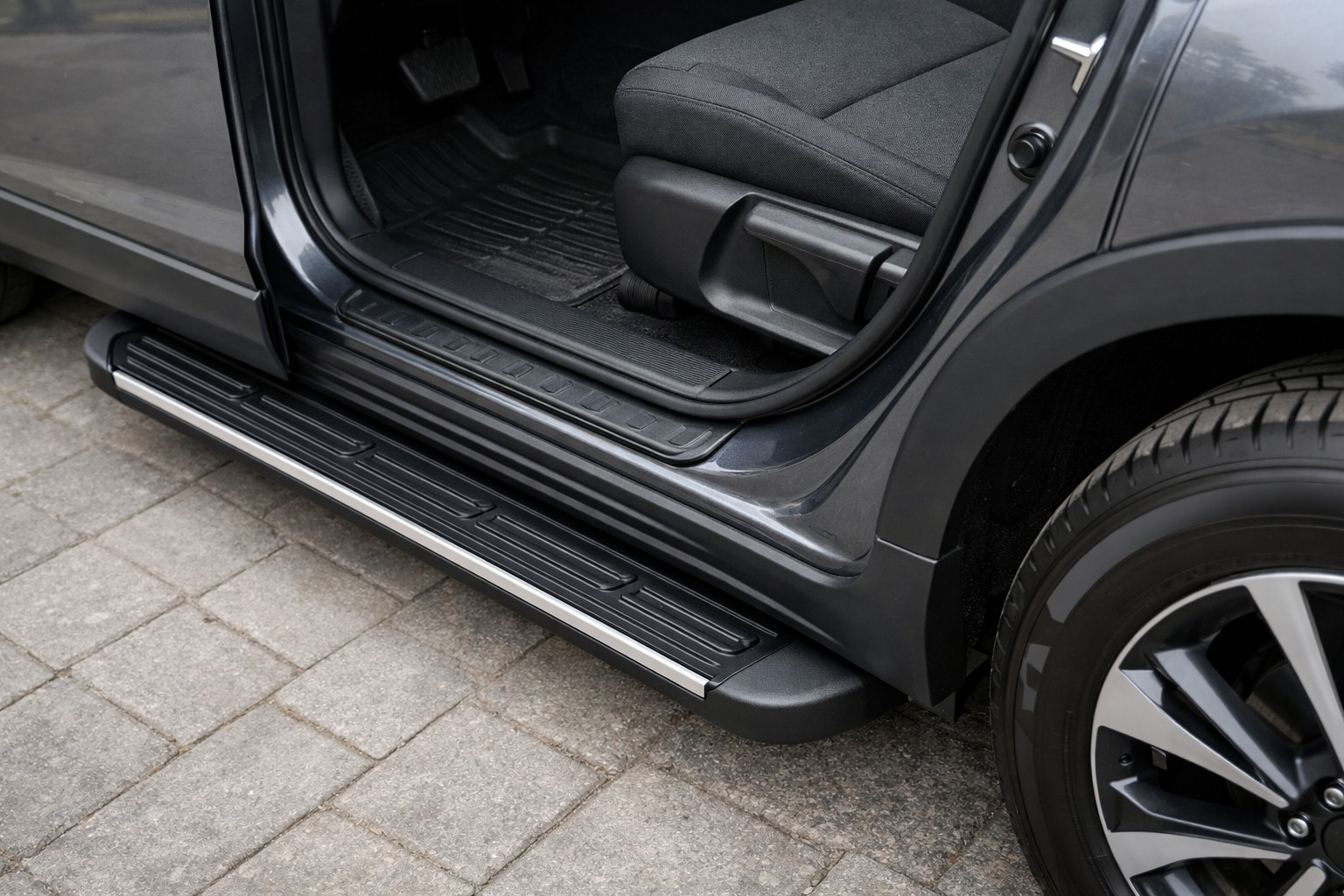
For the Sienna, tuning makes sense when it solves practical tasks. For this kind of model, not decorative parts but accessories that keep the cabin clean, protect the cargo area, and expand travel capability work best.
What to check out for this model
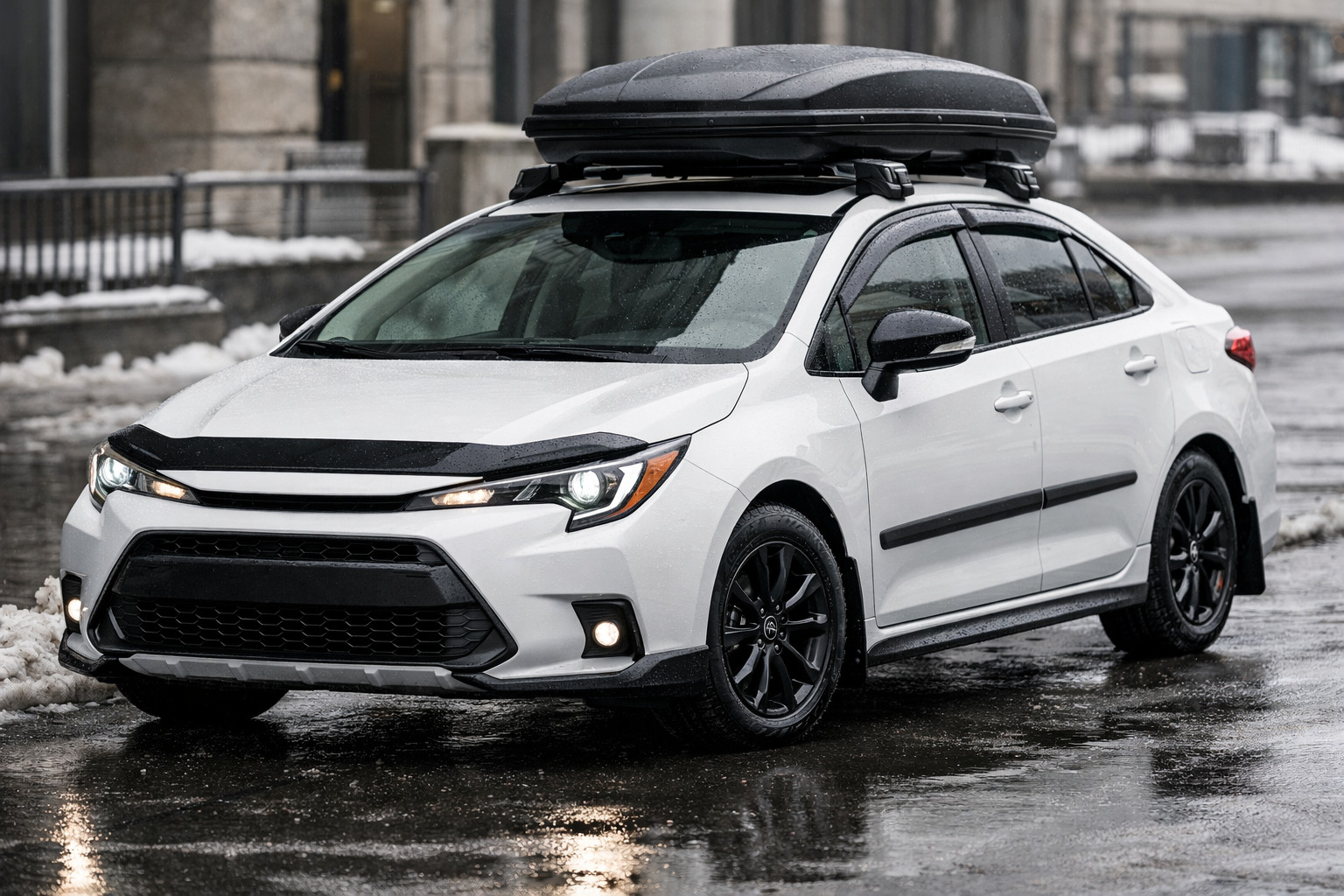
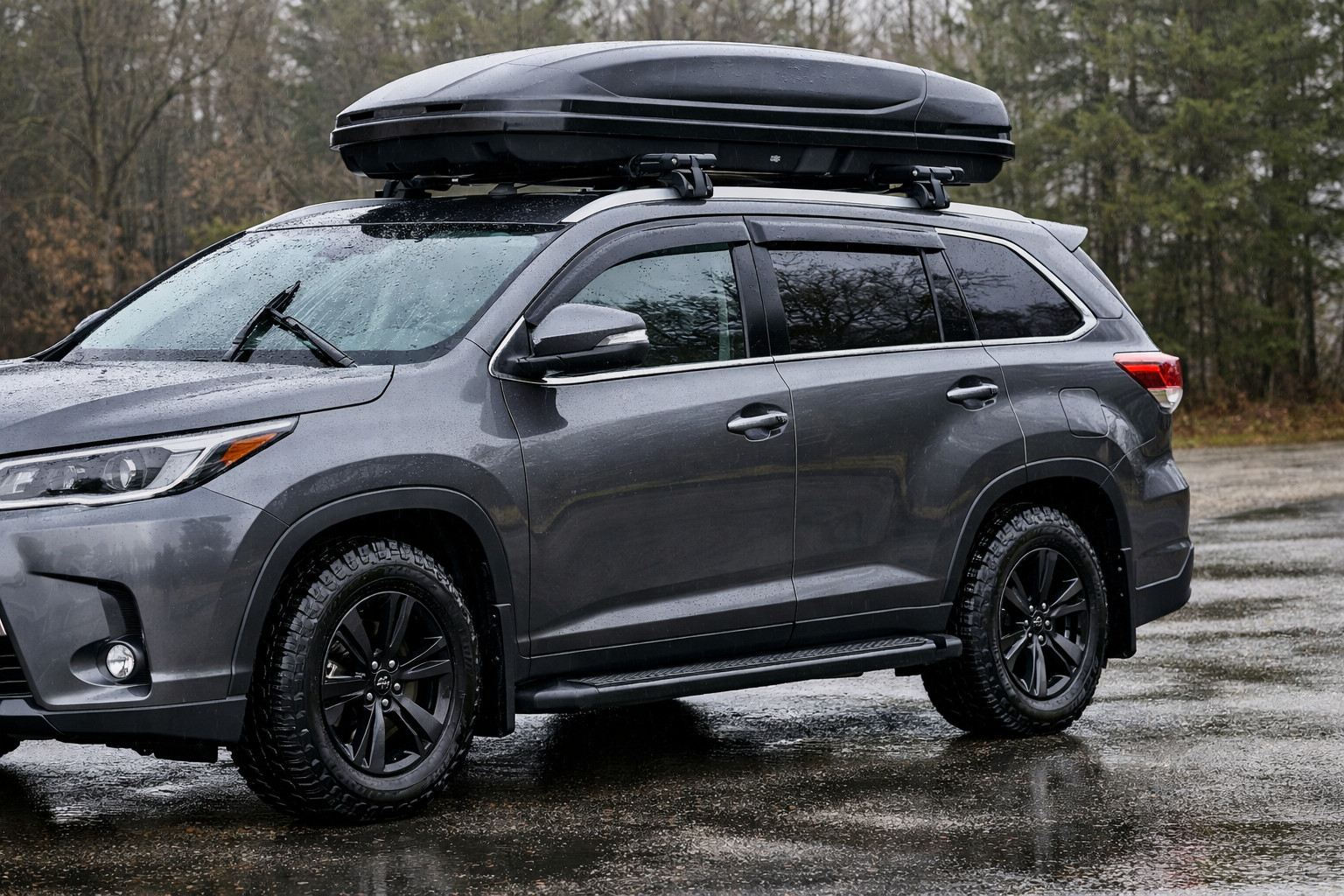
- Roof racks and crossbars — useful if the family travels on vacation with a large set of belongings, kids’ gear, or a roof box.
- Rubber floor mats — a practical way to keep the wide walkway, the area by the sliding doors, and the second-row spaces clean.
- Rubber trunk mat — especially relevant if the third row is often folded and the compartment is used for suitcases, a stroller, or sports equipment.
For this Sienna, it usually makes sense to start with mats, cargo protection, and solutions for carrying gear on the roof, rather than decorative exterior tuning. This kind of set pays off faster in everyday use.
Conclusion
The 4th-generation Toyota Sienna is a strong family minivan for those who need space, quietness, a proper third row, and moderate fuel consumption over long distances. Its weak points are also obvious: large dimensions, low ground clearance, and how dependent the condition of a specific car is on the quality of import repairs.
If you look at the model without romance and from the standpoint of real family use, the Sienna looks very convincing. This material is based on real selection experience, hands-on work with accessories, and real-life usage scenarios—not on abstract impressions.
Pros and cons
The spacious cabin and proper third row make the Sienna convenient for trips with children and several passengers. There is plenty of legroom in the cabin, and sliding doors make getting in and out easier.
The hybrid powertrain delivers moderate fuel consumption for such a large minivan. This is especially noticeable in the city, in traffic jams, and on mixed routes.
The suspension is tuned for comfort on long trips, and on the highway the vehicle behaves stably. The long wheelbase helps smooth out bumps.
Some versions come with all-wheel drive, which adds confidence in winter. For a family vehicle, this is more practical than relying only on front-wheel drive.
It is well suited for transporting people and luggage on trips. The large trunk and the ability to fold the third row make it convenient for suitcases, a stroller, or sports equipment.
The Sienna’s dimensions are large, so you need to get used to it in the city and in parking lots. On narrow streets and in tight courtyards, this can be inconvenient.
The ground clearance here is low for this format, so curbs, deep ruts, and bad dirt roads require caution. This is not an off-road vehicle.
The fourth generation does not offer other engines: only a hybrid setup is available. If you want a simpler gasoline version, this model gives no alternative.
The second row is not designed for frequent quick removal, as is sometimes expected from a minivan. For those who often change the cabin layout, this is inconvenient.
Most cars on the market are imported, so the condition of a specific example depends heavily on the quality of repairs after delivery. Before buying, you need to carefully inspect the body, doors, underbody, and hybrid system.