 Author: Radomskyi Maksym Vasyliovych
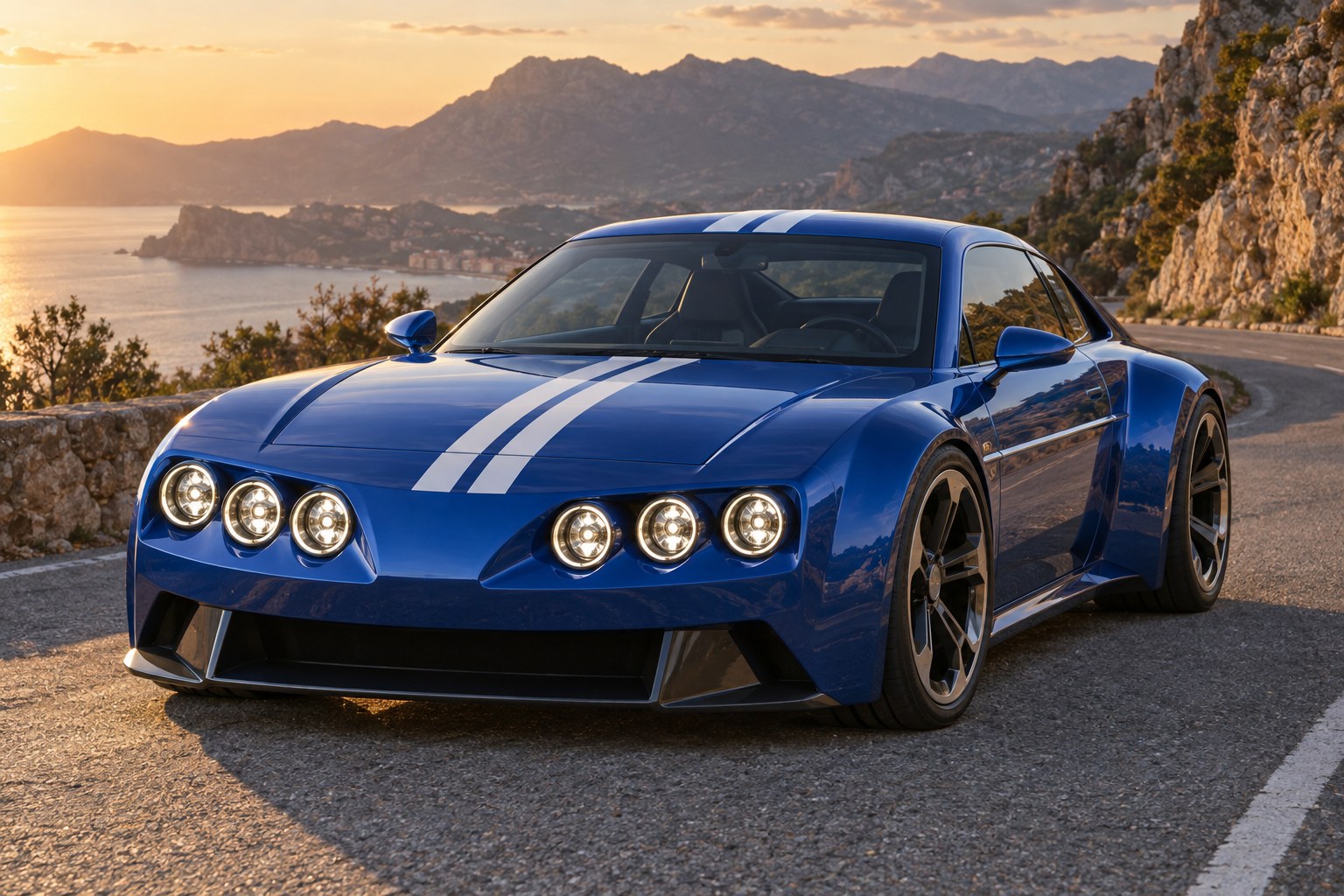
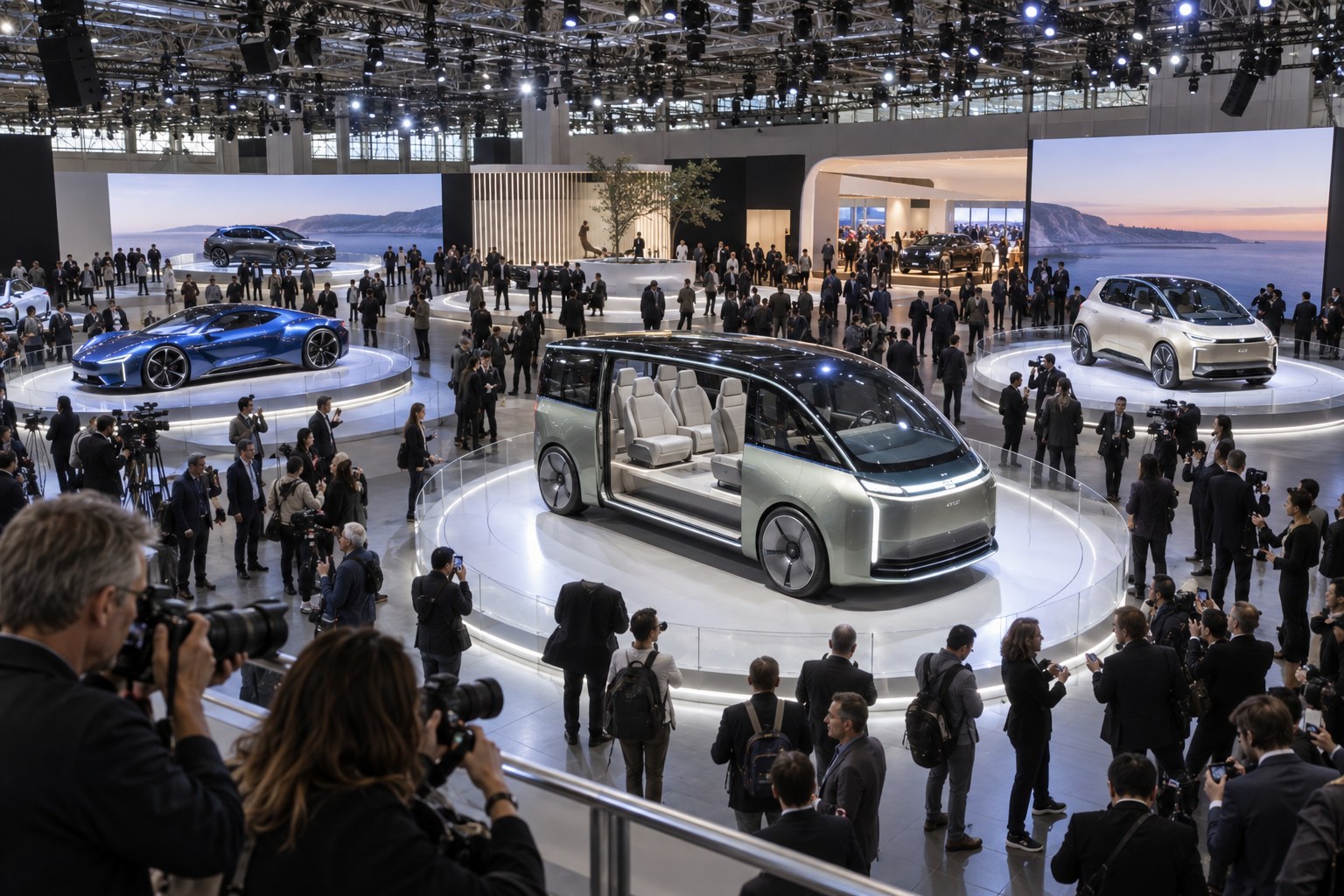
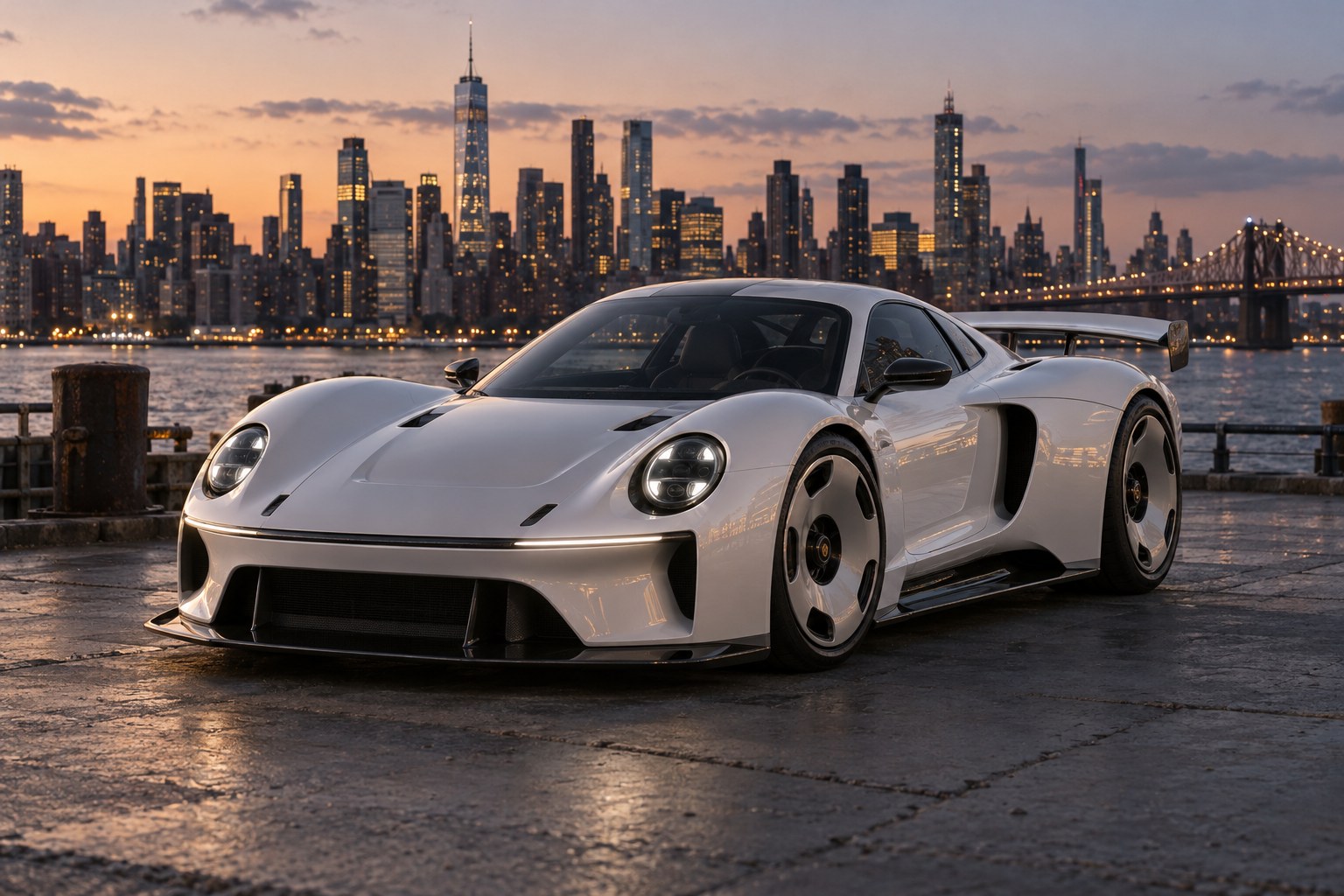
Porsche Mission S is a show car (vision model) of a mid-engined supercar that Porsche unveiled on October 15, 2026, on a pier in Queens, New York. It previews a new platform of mid-engined supercars that will sit above the 911 and, according to CEO Michael Leithers, will not be a one-off hypercar but a permanent part of the model line-up. Porsche has not officially disclosed the engine type, power, dimensions or price; the only confirmed detail is that there will be no electric version on this platform.
What exactly Porsche showed
The location was chosen for a reason: in 1953, the first photos of the mid-engined 550 Spyder were taken on a pier in Queens with Manhattan in the background. Mission S was presented as part of Porsche’s “Sportwagenschmiede '35” strategy as a first look at the brand’s updated design. In the press release, the car itself is described as a vision model — meaning it is not a pre-production prototype, but a direction that Porsche promises to bring to future models “in the near future.”
“A Porsche must be recognizable as a Porsche at first glance,” said Michael Leithers. Tobias Sühlmann, Vice President Style Porsche, called Mission S the result of a “forward-looking holistic design strategy.”
What Mission S looks like and which models it references
Porsche’s designers deliberately combined references to the brand’s classics in a single body:
- round headlights and “torpedo” fenders — from the 911;
- roofline — from the 959;
- a flat front end and a rear end based on the “car within a car” principle — from the GT1;
- cooling solutions reminiscent of the 917 radiator fan;
- a new alloy wheel design based on the 928 “phone dial” wheel;
- body cut lines that flow into the light graphics — from the 911 G-model.
The wide, low body features “floating” sculpted surfaces, a continuous light line connecting the front and rear lighting, and a fully integrated active rear wing. The show car’s colors are Firn White Metallic, Light Red Metallic and Black Chrome; the interior is Special Black.
For owners of regular cars, the Mission S active rear wing is a good illustration of why aerodynamic elements are needed at all; we covered this in detail in articles about what a spoiler is and what a car diffuser is.
What’s inside: five instruments and no central screen
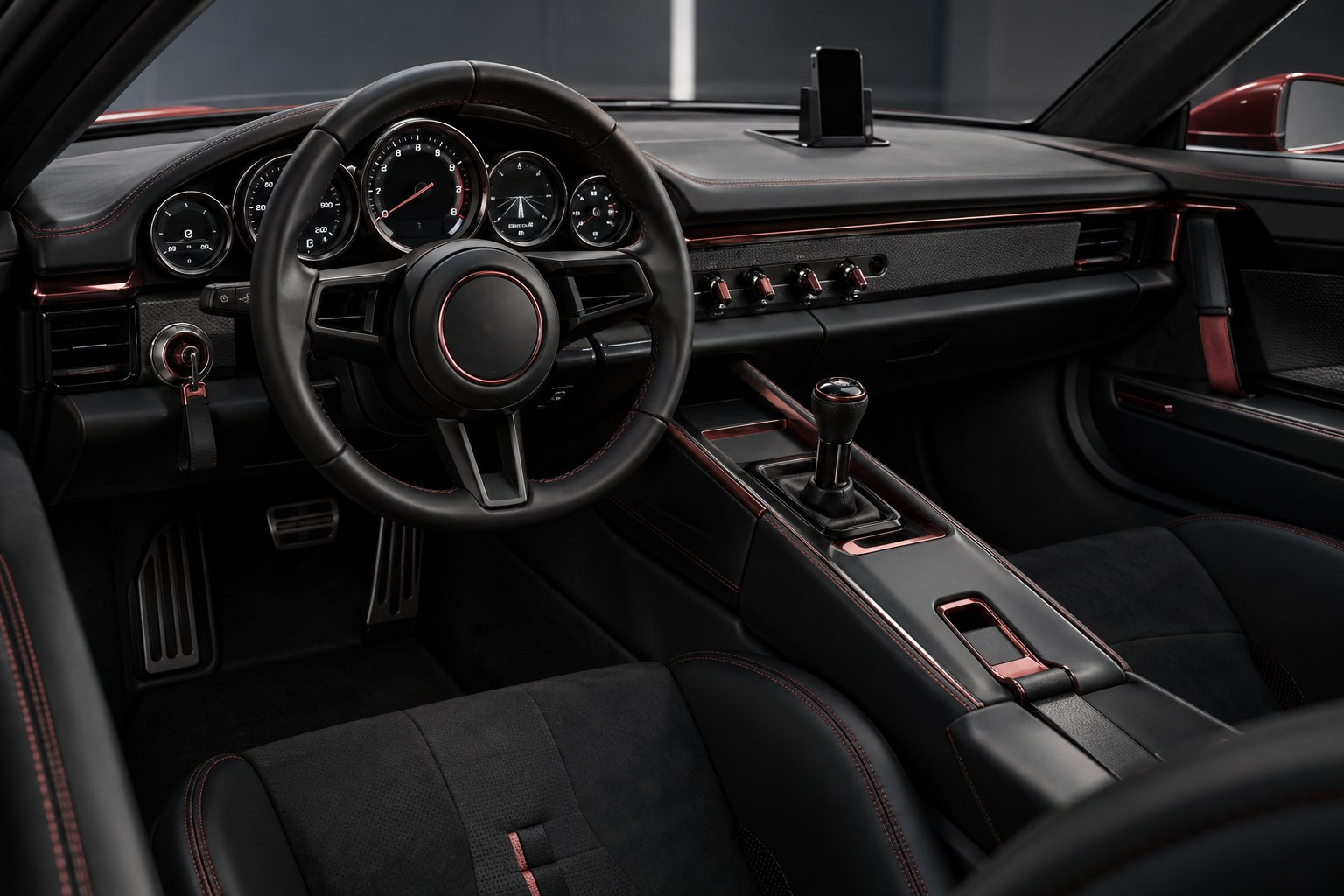
Porsche traces the cabin architecture back to the 550 Spyder and 356. Behind the steering wheel are five round instruments, and the tachometer has an analog needle against a display background; depending on the driving mode, it “moves closer” to the driver, and the instrument layout changes. The key is inserted to the left of the steering wheel — a signature Porsche detail. Comfort and driving functions are controlled by pull-push switches on the panel; there is a reinterpreted Sport Chrono element, and the seat belt buckle is integrated into the center console.
There is no permanent central screen or passenger display at all. Instead, there is a retractable smartphone mount compatible with MagSafe: functions and instruments styled after historic models are available via the My Porsche app.
What is known about the engine and the production version
Officially, not much. The press release only states that the engine is mid-mounted. The rest comes from executives’ comments in the press and rumors, and they don’t align:
- In an interview with Auto Express, Leithers said the platform supports pure gasoline, hybrid and plug-in hybrid versions, but “there will be no EV on this platform: there is no demand for it.”
- Head of development Michael Steiner, according to the same Auto Express, said the engine has not yet been chosen: both a lightweight ICE car and a variant with “performance hybridization” are possible.
- CarExpert, citing Autocar, writes differently — that the car will be ICE-only, without a hybrid.
- In the teaser Porsche released ahead of the premiere, the tachometer went up to 8,000 rpm (according to AutoGuide); whether that is a parameter of the future engine is unknown.
- A flat-eight, a V8, outputs of 700, 850 or over 1,000 hp — these are press assumptions, none of which Porsche has confirmed.
As for the transmission, Leithers reportedly said the platform is designed for both the PDK dual-clutch and a manual, and what goes into production will be determined by demand. Porsche has not announced a release date or pricing for the production car. Auto Express writes that Porsche is aiming to compete with Ferrari and wants to move the brand and prices higher; the publication’s forecast is a production model by the end of the decade.
As a reminder, the most powerful production 911 today is the Porsche 911 Turbo S T-Hybrid; Mission S is meant to sit a step above. Products for existing models of the brand are in the Porsche tuning section, and universal aerodynamic elements are in the universal spoilers category.
We deliver with Nova Poshta throughout Ukraine.