































































 Author: Radomskyi Maksym Vasyliovych
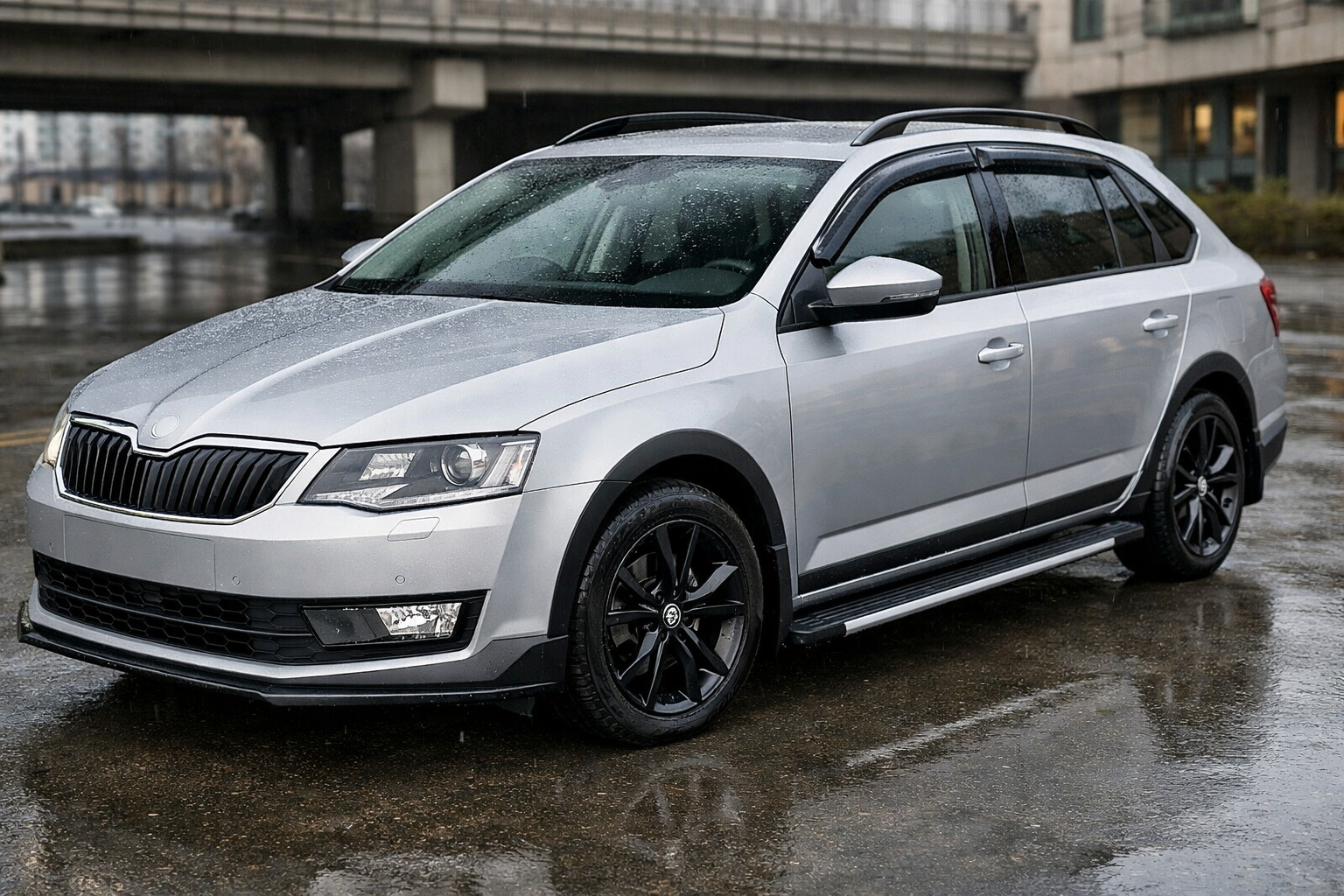
This starter upgrade plan is for a Skoda Octavia A7 owner who drives in the city every day, often gets caught in the rain, and wants less dirt on the sides, in the cabin, and on the sills. The key here isn’t to “decorate” the car, but to solve three practical tasks: reduce spray from the wheels, stop dragging water into the cabin, and avoid scuffing the paint with your shoes.
For Octavia III the logic is simple: first install what actually catches dirt and water, then what takes the scratches, and only after that think about small comfort add-ons. Important nuance: some accessories depend on body style, model year, and trim/version. Combi and liftback require different trunk solutions, and rear mud flaps plus sill covers should be checked against VIN and equipment level—especially if it’s an RS, Scout, L&K, or a car with factory-installed trims.
What this upgrade should accomplish
In this scenario, the upgrade shouldn’t make the Octavia clinically clean, but it should noticeably reduce wet sand, salt residue, and small shoe marks during typical city driving. That means less dirt on the lower part of the doors, less water on the floor mats, and fewer scuffs on painted sills.
Another task is not to create new problems. If you install universal mud flaps with poor fitment or decorative trims instead of protective ones, you may end up with noise, play, weak adhesion, or a part that looks bright but barely works for your use case.
What to upgrade first
Top priority is front mud flaps. The front wheels are the ones that most actively throw dirt onto the sills and lower body. For Octavia A7 this is a basic upgrade for rain and city use, but it must be installed carefully: with OEM-style solutions, correct mounting and protective elements matter, and on lowered cars some clearance-related trimming is sometimes needed.
Second step is rubber interior floor mats. If you drive in wet shoes, they bring more everyday benefit than any exterior decor. The raised edge keeps water and dirt contained, so the cabin doesn’t turn into a constantly damp zone around the pedals and front sills.
Third step is sill protection. If your main complaint about the Octavia is shoe marks when getting in, sill covers make sense right after the mats. But it’s important not to confuse protective sill covers with purely decorative ones: the first protect paint durability, the second are more often bought for looks.
The fourth item in the first wave is a trunk mat. Liftback and Combi need different solutions, and the format should match your habits: if you regularly carry wet items, a rubber one is better; if the trunk is used both for everyday stuff and for cargo, a reversible mat is more practical.
Upgrade, why it’s needed, who benefits (table)
| Upgrade | Why it’s needed | Who truly benefits |
|---|---|---|
| Front mud flaps | Reduce spray, sand, and small stones along the lower body and around the sills | Those who drive in the city every day in the rain, park near curbs a lot, and don’t want to constantly wash the sides |
| Rear mud flaps | Add protection for the rear arches and lower body | Those who often drive on wet roads—but only after checking compatibility by model year and car version |
| Rubber interior floor mats | Keep water, dirt, and slushy snow within the mat | Anyone who gets into the car in wet shoes or often carries passengers in the shoulder seasons |
| Rubber or reversible trunk mat | Stops moisture and sand from spreading through the trunk, makes cleaning easier | Those who carry kids’ items, bags, tools, shoes, sports gear; especially relevant for Combi |
| Sill covers | Take the contact from shoes and protect the paint in the most scuffed area | Those who genuinely want cleaner, less scratched sills—not just a different look for the door opening |
| Trunk lip protector | Prevents scratches when loading items over the bumper edge | Primarily Combi owners and those who often load boxes, a stroller, or heavy bags |
DD Tuning expert comment: the most common mistake on Octavia A7 is buying something “for rain” without matching it to your body style and version. This especially applies to rear mud flaps and sill covers: without a VIN check, people often guess compatibility. The second typical mistake is starting with decorative elements while the cabin still has textile mats and the painted sills are already scratched.
What makes sense to add as a second stage
Once the basics are covered, the second stage should include items that don’t work every minute but do work regularly. If you started with only front mud flaps, then it’s logical to add rear ones—provided exact compatibility with your car. It’s not a revolution, but overall body cleanliness in the wet season becomes better.
For Combi, a smart second stage is a trunk lip protector. It doesn’t affect sill cleanliness, but it performs well in real city life, when shopping bags, crates, a stroller, or luggage are constantly going into the trunk. For the liftback, the second stage is more often not a film, but a better trunk mat—if you postponed that decision at first.
If the car is used in a mixed way—office, shopping, family trips—a reversible trunk mat is often more practical than a purely rubber one. The textile side is fine for daily use; the rubber side is for when you carry wet or dirty items.
What’s more about comfort or looks
An umbrella in the car, an ice scraper, neat interior trim pieces—these are convenient small things, but they don’t solve the main task of this scenario. Consider them after mud flaps, mats, and sill protection are installed.
Decorative sill covers also fall into this category. If you need a styling accent, that’s a separate motivation—but don’t expect the same result as from protective covers. Also, for adhesive parts, installation temperature, a clean surface, and a waiting period before washing are important.
Window wind deflectors aren’t a priority for this scenario. They don’t keep sills clean, and on Octavia A7 the benefit is often lower than expected—especially if extra noise appears or fitment is questionable.
What people often buy for nothing
Most often, people waste money on universal mud flaps when trying to save on model-specific fitment. In the best case they work mediocrely; in the worst case they sit crooked, rub the surface, or wear out faster from impacts and temperature changes.
The second typical mistake is buying decorative sill covers instead of protective ones if the goal is to preserve the paint. They change the look, but they don’t address the “city, rain, clean sills” scenario as directly as regular protective covers.
The third mistake is overpaying for exterior shine before basic cabin protection. If the car still has textile mats and water regularly runs under your feet, chrome and deflectors are simply avoiding the main problem.
What to install first, what to postpone, what’s optional (table)
| Install first | What you can postpone | What isn’t mandatory |
|---|---|---|
| Front mud flaps | Rear mud flaps after VIN verification | Universal mud flaps with questionable fit |
| Rubber interior floor mats | Trunk mat if the trunk is almost always empty | Textile mats for rainy city use |
| Protective sill covers | Trunk lip protector if you rarely load items | Decorative trims if you’re looking specifically for paint protection |
| Basic compatibility check by body style and equipment | Reversible trunk mat as a more flexible solution | Window wind deflectors for this specific scenario |
A ready upgrade plan for this scenario
- Check the body style, model year, version, and presence of factory elements so you don’t miss on compatibility.
- Install front mud flaps as basic protection from city dirt and water along the lower body.
- Switch to rubber interior floor mats right away if the car sees wet shoes every day.
- Add protective sill covers if you want to preserve the paint in the entry/exit area.
- After that, solve the trunk: for regular dirt—a rubber mat; for mixed use—a reversible one.
- If compatibility is confirmed, add rear mud flaps to complete the exterior protection.
- Only then buy comfort add-ons and decorative elements.
When it makes sense to choose more expensive options
Paying extra is justified where precise fitment, proper durability, and no unnecessary compromises matter. If you want minimal surprises with mounting and geometry, it makes sense to look at OEM mud flaps. If the car brings moisture into the cabin every day, it’s better not to save on rubber floor mats. And when the main pain point is scuffed entry areas, then it makes sense to buy sill covers rather than spending on minor decor.
There’s less reason to pay extra for things that don’t change how the car is used. For example, wind deflectors or decorative sills won’t replace mud flaps, and expensive exterior tuning won’t make the cabin cleaner after a week of rain.
From a customer’s experience: an Octavia A7 liftback owner came in with a simple complaint—after every rain the lower doors and sills were sandy, and the driver’s mat was constantly wet. We started with front mud flaps, rubber floor mats, and protective sill covers, and added a trunk mat later. In the end, he didn’t get a “magically clean body,” but everyday dirt in the entry area became less, and cleaning the cabin became noticeably easier.
Conclusion
For a Skoda Octavia A7 used in the city, in the rain, with a goal of cleaner sills, the right start looks like this: first front mud flaps, rubber interior floor mats, and sill protection; then a trunk solution for your body style; and only after that secondary items. If compatibility is confirmed, rear mud flaps neatly cover the second stage, and for Combi a trunk lip protector has its own clear value.
The main thing is not to buy on impulse what should be bought for your scenario. This material is based on real selection experience, hands-on practice, and real use cases where what matters isn’t a flashier picture, but less dirt, less water in the cabin, and fewer scuffs on a daily driver.
How it works
- Check vehicle compatibility First, verify the body, model year, version, and the presence of factory-installed elements. For the Octavia A7, this is especially important for the rear mud flaps and sill trims so you don’t choose a part “by eye” instead of a compatible one.
- Install front mud flaps This is basic protection against city dirt, water, and stones along the lower body and sill area. The front wheels are the main source of dirt spray, so this step has the highest priority.
- Replace the interior mats with rubber ones Rubber mats hold back water, sand, and slush, preventing moisture from spreading across the floor. If you often get into the car with wet shoes, this gives a quick practical effect.
- Add protective sill trims If the main issue is scuffs from shoes when getting in, install protective trims rather than decorative ones. They take the contact themselves and help preserve the paint in the most rubbed area.
- Choose a trunk solution For regular wet or dirty cargo, a rubber trunk mat is suitable, and for mixed use, a double-sided one. For the Combi, edge protection for the trunk opening also makes sense if you often load items over the bumper edge.
- Add rear mud flaps if needed They should only be installed after checking compatibility by VIN and trim level. This is a logical finish to exterior protection, but not the first step in such a scenario.
Pros and cons
Front mud flaps really reduce splashes, sand, and stones along the lower body and around the sills. For everyday city driving in the rain, they are the most practical way to keep the sides cleaner.
Rubber cabin floor mats do a good job of keeping water, dirt, and slush within the mat. This is especially useful if people often get into the car with wet shoes or if you carry passengers in the off-season.
Protective sill covers take the impact of shoes when getting in and out of the car. They make sense precisely when you need to protect the paint from constant scuffs.
A trunk mat makes cleaning up after wet items, packages, or tools easier. For mixed-use driving, the double-sided version is convenient because it has a textile and a rubber side.
Rear mud flaps can add protection to the rear arches and lower body. They become a logical second step if the first layer of protection is already installed and compatibility has been confirmed.
Universal mud flaps often fit worse than model-specific solutions. Because of this, they can sit unevenly, rub against the surface, or wear out faster.
Rear mud flaps and sill covers need to be checked against the VIN and trim level. Without verification, there is a risk of buying a part that won’t fit a specific version of the car.
Decorative sill covers do not protect the paint as well as protective ones. They change the look, but do little in situations with constant shoe marks.
Window deflectors are not a priority for this scenario. They do not keep the sills clean, and on the Octavia A7 their benefit may be lower than expected, with a risk of extra noise.