16.09.2026
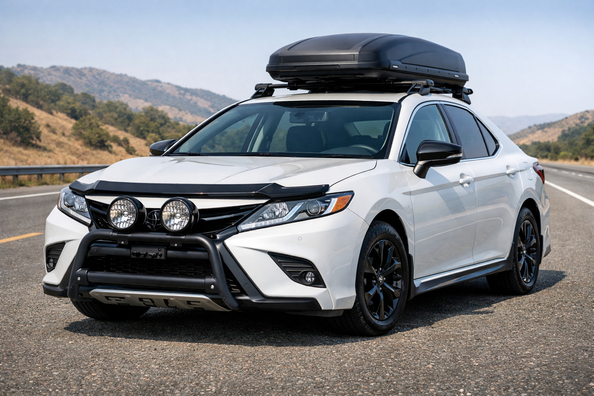

This upgrade plan is for a Toyota Camry owner who regularly drives on highways and wants not to “decorate” the car, but to actually reduce the number of stone chips, sandblasting, and minor front-end damage. The logic is simple: first, cover the areas that catch stones and abrasive debris first, then protect the lower body, and only after that look at secondary accessories.
An important compatibility nuance: the 2017 Camry and the 2018–2023 Camry are different generations, so parts can’t be carried over between them automatically. The upgrade scenario is the same, but you should always verify the exact item for your model year.
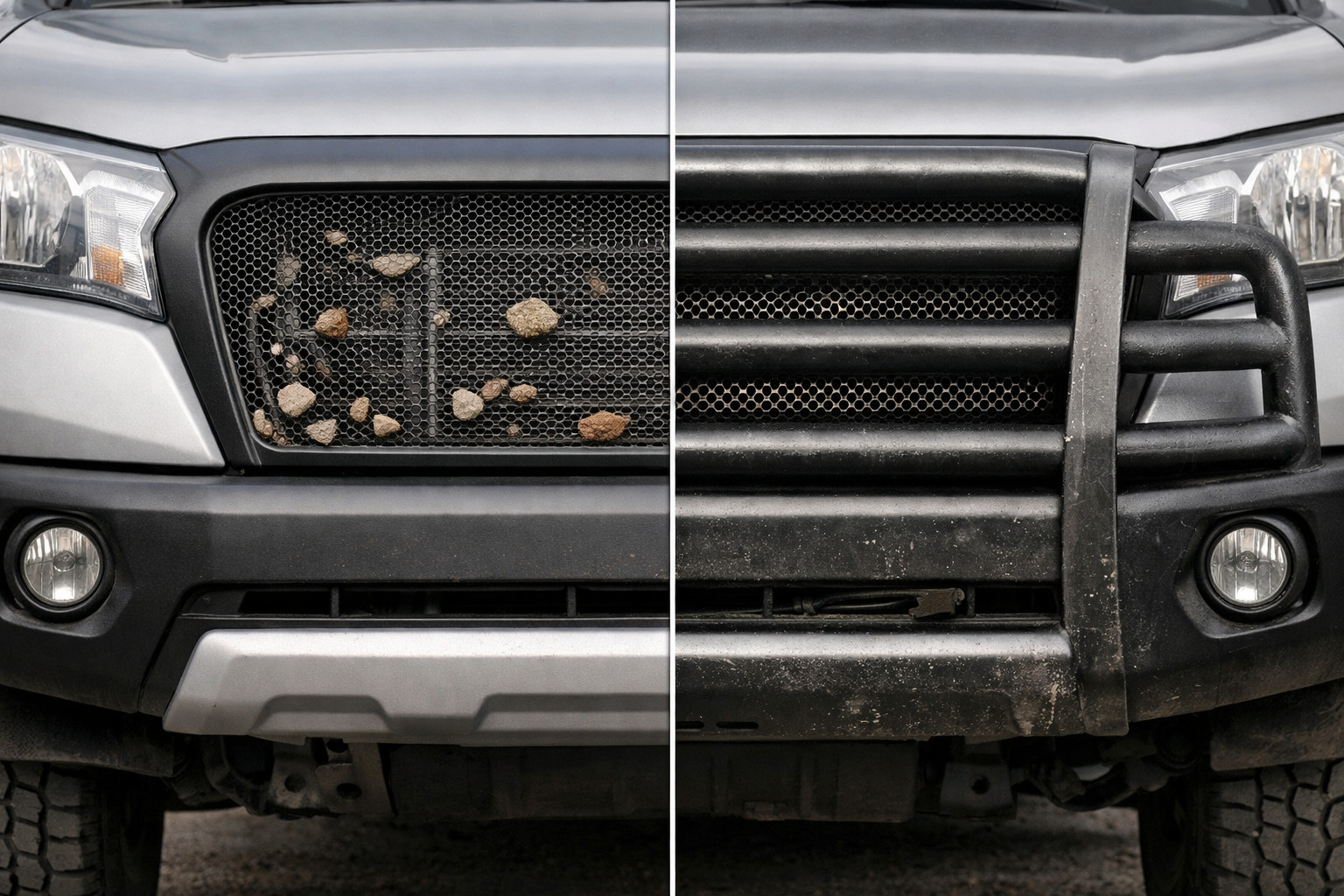
For highway driving, the main issue isn’t that the car gets dirty quickly, but that the front end constantly takes hits from small gravel, sand, water with abrasive particles, and debris thrown up by other vehicles. On a Camry, this most often affects the bumper, the front edge of the hood, parts of the fenders, the mirror areas, and the lower sections of the sides.
So the right upgrade must solve two tasks: reduce the number of front-end chips and lower the day-to-day wear of the lower body. If the car is mostly used in the city, then door-edge protection moves up in priority; if it’s mostly intercity driving, front-end protection is priority number one.
Top priority is a full front-end paint protection film package. This is what works for the highway scenario, because it covers the most vulnerable zones, rather than just adding a piece on the hood edge. Separately check whether the front bumper is included: in some kits it’s a separate item, and it’s not worth saving money on it.
Second step: mud flaps. They don’t replace front-end protection, but they noticeably help with the lower part of the doors, the sills, and the sides—especially if you often drive in rain, over patched pavement, through roadworks, or behind trucks. This is exactly the case where a small upgrade gives a practical effect every day.
In this logic, a hood deflector shouldn’t be your first purchase. It can be an add-on, but not a replacement for film, because it doesn’t cover the bumper and doesn’t fully solve the chip problem across the front-end area.
| Upgrade | Why it’s needed | Who it really benefits |
|---|---|---|
| Full front-end paint protection film package | Takes minor stone impacts and reduces the number of chips on the front end | Those who drive a lot on highways, especially with a clean or freshly painted body |
| Mud flaps | Deflect water, dirt, and small gravel away from the lower body panels | Those who often drive in rain, on gravel, between cities, or on roads under repair |
| Door edge protection | Reduces the risk of chips and dents along the door edges | Those who park in tight spaces, carry passengers, often open doors near walls or other cars |
| Lower side protective molding | Takes daily scuffs on the lower part of the body | Those whose sills and lower doors wear quickly, or who have a lot of dirt along their route |
| Hood deflector | Adds localized protection along the hood edge and changes the look of the front end | Those who have already covered the basic protection and knowingly want this exact type of add-on |
DD Tuning expert comment: The most common mistake is treating a hood deflector as the main highway protection and postponing film until later. As a result, the bumper, hood edge, and parts of the mirrors still keep getting chips. For a 2017 Camry, verify the generation separately, because 2018+ items can’t be ordered without checking.
After protecting the front end and installing mud flaps, it makes sense to move on to things that don’t directly “save” you on the highway, but do help preserve the body in daily use. First of all, door edge protection: it’s especially relevant if the car is parked in a narrow garage/parking space or if passengers use it often.
As a second stage, the lower side protective molding also makes sense. It isn’t more important than film, but in real life it works well where scuffs build up from shoes, sand, wet dirt, and small debris along the lower body.
In this group I’d put all-weather floor mats, window deflectors, rear bumper protectors, spoilers, and some decorative trim pieces. They can be useful in everyday life, but they don’t address the main highway problem—chips on the front end and abrasive wear on the lower body.
If the car often drives in rain, floor mats and window deflectors can add everyday comfort. But in a front-end protection scenario they come after film, mud flaps, and basic body protection—not instead of them.
The first typical mistake is buying what’s visible from afar, not what actually works for the task. On a Camry it often looks like this: they install a hood deflector, but postpone paint protection film, and after just one season chips still appear on the bumper and hood edge.
The second mistake is overpaying for looks too early: body kits, chrome, bulky trim pieces, spoilers. If the front end isn’t protected and the lower body is already taking sand and dirt, such purchases solve nothing except the visual.
The third mistake is buying parts not matched to your model year. For 2017, compatibility checks are mandatory, and large opaque deflectors also aren’t for everyone from a practical standpoint: sometimes they provide more visual effect than real benefit.
| What to install first | What can be postponed | What is not mandatory |
|---|---|---|
|
|
|
If your budget is limited, don’t scatter it across small decorative items. One strong front-end upgrade and proper mud flaps are better than a set of accessories that don’t cover the main problem.
More expensive solutions make sense when the Camry does a lot of intercity driving, the body is in good condition, and you want to keep it that way for a long time—not just make it through a season. The extra cost is justified if it delivers precise fitment, good material longevity, and fewer compromises during installation.
If you’re looking at model-specific options for this Camry, it’s logical to start with mud flaps, for the lower body consider body moldings, and take a hood deflector only after the basic front-end protection is in place. Premium original solutions make particular sense on a new car, when warranty considerations still matter and you don’t want to experiment with compatibility.
From a customer’s experience: a Camry owner who does weekly intercity trips initially wanted to limit it to a hood deflector because it’s faster and more noticeable. In the end, he started with front-end protection and mud flaps, postponed the deflector, and after the first season saw the biggest difference precisely on the bumper, the hood edge, and the cleanliness of the lower part of the doors. Later he separately added door edge protection, because the car is parked daily in a narrow parking space.
For a Toyota Camry in a highway/front-end protection scenario, the correct order is: first paint protection film on the front zones, then mud flaps, then door edge protection and protection for the lower side sections. A hood deflector is not the first step, but only an additional element once the basic protection is covered.
This approach helps you avoid overpaying for looks and buying items outside the scenario. The material is based on real selection experience, practical know-how, and real use cases, so the main idea is simple: first protect what truly suffers on the highway, and only then choose secondary accessories.
| ✔ | A full front-end protective film package really covers the bumper, hood edge, parts of the fenders, and mirror areas, meaning it works specifically against highway chips and sandblasting. For a Camry that often travels between cities, this is the most practical first step. |
| ✔ | Mud flaps provide a noticeable effect on the lower body: less dirt, water, and small gravel get thrown onto the sills, doors, and side panels. They are especially useful in the rain, on roadworks, and in traffic behind trucks. |
| ✔ | Door edge protection and the lower side trim help preserve the body in everyday use when there are tight parking spaces, passengers, or a lot of road abrasive. They are not a replacement for film, but they are a good second stage after basic front-end protection. |
| ✔ | The article clearly separates what is basic protection and what are secondary accessories, so it is easier not to spend the budget on decorative items. This order of upgrades reduces the risk of buying something that looks good but does not solve the chip problem. |
| ✔ | It separately emphasizes checking compatibility for Camry 2017 and Camry 2018–2023, which is important to avoid mistakes when selecting parts. It is practical advice, because the generations really are different. |
| ✘ | The hood deflector here does not solve the main task on its own: it does not cover the bumper and does not replace film across the front end. If you rely on it alone, chips on the highway will still appear. |
| ✘ | The scenario barely considers those who drive more in the city, because the focus is entirely on the highway and front-end protection. For urban driving, some priorities change; for example, protecting the door edges may become more important. |
| ✘ | Some useful solutions depend on budget and operating conditions, so without it, it is easy to put truly needed items aside in favor of small accessories. The article explicitly says that decorative trims, chrome, and body kits do not address the basic problem. |
| ✘ | For a Camry 2017 owner, there is an additional inconvenience: parts cannot be transferred automatically between generations, so the model year must be checked separately before purchase. This makes selection more difficult and increases the risk of error. |
Shipping to EU
Wholesale and retail
Own warehouse
Опис продукту
Подарунки не надаються при оформленні покупки у кредит під 0,01% або при покупці частинами.