11.08.2026
157
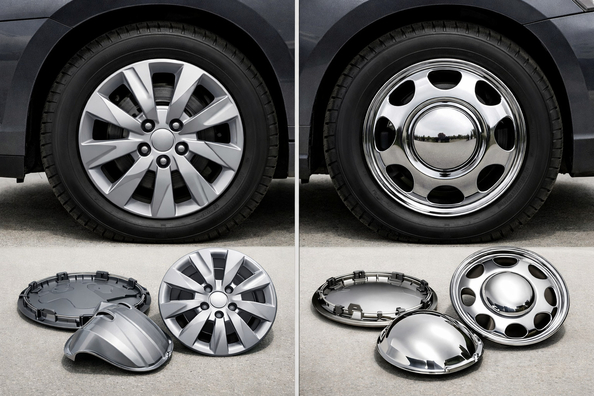
For everyday driving, the more practical choice is usually quality ABS plastic hubcaps. They’re lighter, cheaper, easier to install, and with a proper fit they calmly cover the basic needs of a city car. Stainless-steel hubcaps make sense not “because metal is better”, but when you need higher durability, a more solid look, and exact compatibility with the wheel.
The key mistake here is looking only at the material. In real use, what matters is compatibility with the wheel type, the mounting method, the condition of the clips, and the precision of the fit. That’s why hubcaps either serve quietly for a long time, or start rattling and flying off after the first pothole.
The difference between plastic and stainless hubcaps isn’t just “cheap versus expensive”. ABS plastic is more often fitted to regular passenger cars where price, quick installation, and easy replacement matter. Stainless steel is commonly found as wheel simulators or covers for steel wheels on vans, minibuses, and vehicles with high mileage.
A hubcap won’t solve wheel problems, but it does shield the center part of the wheel from dirt, salt, and moisture. For a daily driver, the question is: do you need maximum longevity with a heavier, pricier set, or is a lighter solution enough—one that’s easier to match and cheaper to refresh.
| Option | Strengths | Weaknesses | Best for |
|---|---|---|---|
| ABS plastic | Lightweight, cheaper, easy to install, convenient for everyday replacement or seasonal use | Cheaper models scratch faster, may crack or lose shape in harsh conditions | Passenger cars, city driving, drivers who don’t need to overpay for “extra” durability |
| Stainless steel | Better resistance to abrasion, impacts, and corrosion, longer service life, more expressive appearance | Heavier, more expensive, often fits only steel wheels; with worn mounting hardware it can be noisy | Vans, minibuses, commercial use, high mileage |
DD Tuning expert comment: Most often the mistake isn’t the material—it’s the fit. People order a hubcap by diameter only, don’t check the wheel type and the condition of the retainers, and then blame the noise on plastic or stainless. If the clips are already worn or the wheel has worn grooves, even an expensive set won’t run quietly.
For everyday driving, this is the healthiest compromise. Quality ABS plastic is light, isn’t afraid of normal weather, doesn’t rust, and doesn’t force you to overpay for something you won’t use daily. If the car lives in the city, parks near curbs, and occasionally gets cosmetic scratches, cheaper replacement is often more practical than an “eternal” set.
The weak point of plastic isn’t the material itself, but budget execution. Thin models scratch faster, can crack on impact, or hold shape worse in cold and heat. That’s why in the plastic segment what matters isn’t a pretty pattern or gloss, but thickness, molding quality, and a proper retaining ring.
Stainless hubcaps or simulators make sense where the vehicle drives a lot and the appearance needs to stay neat for a long time. Stainless has a higher strength reserve, better abrasion resistance, and with normal use its service life can be measured in years. For commercial transport, this is often justified.
But there are two limitations. First is price: the premium is significant. Second is compatibility: these solutions are often designed specifically for steel wheels and a particular mounting scheme. If the wheel is different, the fit is imprecise, or the clips are worn, metal can also squeak or rattle.
For a regular passenger car that drives around the city every day, sits in the yard, occasionally touches a curb, and has no commercial load, the logic is simple: quality ABS plastic covers the need without unnecessary expense. It’s lighter, easier to install, and if damaged it’s cheaper to replace the set or a single piece.
Stainless is better when the vehicle drives a lot, for a long time, and in a tougher mode: delivery work, intercity routes, a van, a minibus, steel wheels, frequent washing, and a requirement that the look doesn’t get “tired” after a season. In these scenarios, the higher upfront price may pay off through lower replacement losses.
If you have alloy wheels, the metal option needs especially careful checking: many stainless solutions simply aren’t designed for that wheel type. In that case, plastic often turns out not to be a compromise, but the only correct path.
| Scenario | Best choice | Why |
|---|---|---|
| Daily city passenger car | Quality ABS plastic | Lower weight, lower price, easier replacement after minor damage |
| Car with alloy wheels, where the hubcap model allows it | ABS plastic | Stainless is often not designed for this wheel type |
| Van or minibus on steel wheels | Stainless steel | Handles high mileage, frequent washing, and longer intensive use better |
| Daily winter driving with salt and dirt | Quality ABS plastic | Sufficient weather resistance plus cheaper refresh if cosmetic damage appears |
| High-mileage vehicle where a neat look for years matters | Stainless steel | Higher service life and better abrasion resistance justify the premium |
Paying extra for stainless isn’t always justified—only in fairly specific cases: high daily mileage, commercial use, steel wheels, a requirement for long service life, and not wanting to change the set often due to scuffs. If these conditions don’t describe you, it’s smarter to invest not in “metal for the sake of metal”, but in better fitment and a proper set.
To narrow the choice, it’s worth separately looking at stainless hubcaps, comparing them with plastic hubcaps, and checking the basic criteria in the article which hubcaps are better for a car.
From a customer’s experience: an owner of a passenger car for daily trips initially wanted stainless “to last longer”. After checking, it turned out his wheels weren’t designed for that type of solution, and his use was purely urban without high mileage. In the end, he took a quality set of ABS hubcaps with proper fitment and got quiet operation, fast installation, and cheaper replacement in case of a scratch.
If we’re talking specifically about everyday driving, in most cases quality ABS plastic wins: it’s cheaper, lighter, and more practical with no noticeable downsides provided the fit is correct. Stainless steel is a strong option for steel wheels, high mileage, and a commercial scenario where longer service life and higher durability matter.
The main rule is simple: compatibility and mounting first, material second. That’s how you eliminate noise, play, and losing a hubcap while driving. This article is based on real selection experience, practice, and real-world use scenarios—not on an abstract “plastic versus metal” comparison.
| ✔ | ABS plastic is lighter, cheaper, and easier to install, so for everyday city driving it is more convenient to fit and quicker to replace after minor damage. |
| ✔ | A quality plastic hubcap normally covers the basic needs of a regular passenger car: it does not rust, is not afraid of ordinary weather, and does not create extra costs. |
| ✔ | Stainless steel has higher resistance to wear, impacts, and corrosion, so it is better suited for high-mileage vehicles and commercial use. |
| ✔ | For steel wheels in heavier-duty use, stainless hubcaps can last longer and keep a neat appearance better over several years. |
| ✔ | The choice is simpler if you look not only at the material, but also at compatibility with the wheel and the mounting method: then the hubcaps work quietly and do not come off. |
| ✘ | Stainless steel is more expensive, and the price premium is noticeable, especially if the car is driven in normal city conditions without heavy loads. |
| ✘ | Metal hubcaps often fit only steel wheels and a specific mounting pattern, so problems may arise with alloy wheels or an imperfect fit. |
| ✘ | Cheap plastic models scratch faster, may crack on impact, and hold their shape worse in frost or heat. |
| ✘ | Both plastic and stainless steel start to rattle not so much because of the material, but because of worn clips, fasteners, or worn spots on the wheel, so without checking the mounting you can end up with rattling and lose the hubcap. |
Shipping to EU
Wholesale and retail
Own warehouse
Опис продукту
Подарунки не надаються при оформленні покупки у кредит під 0,01% або при покупці частинами.