04.08.2026
146
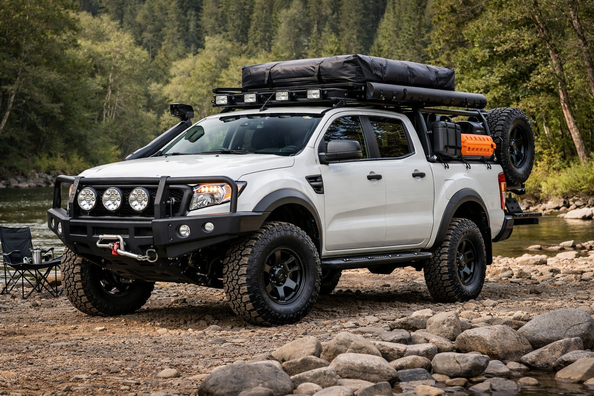
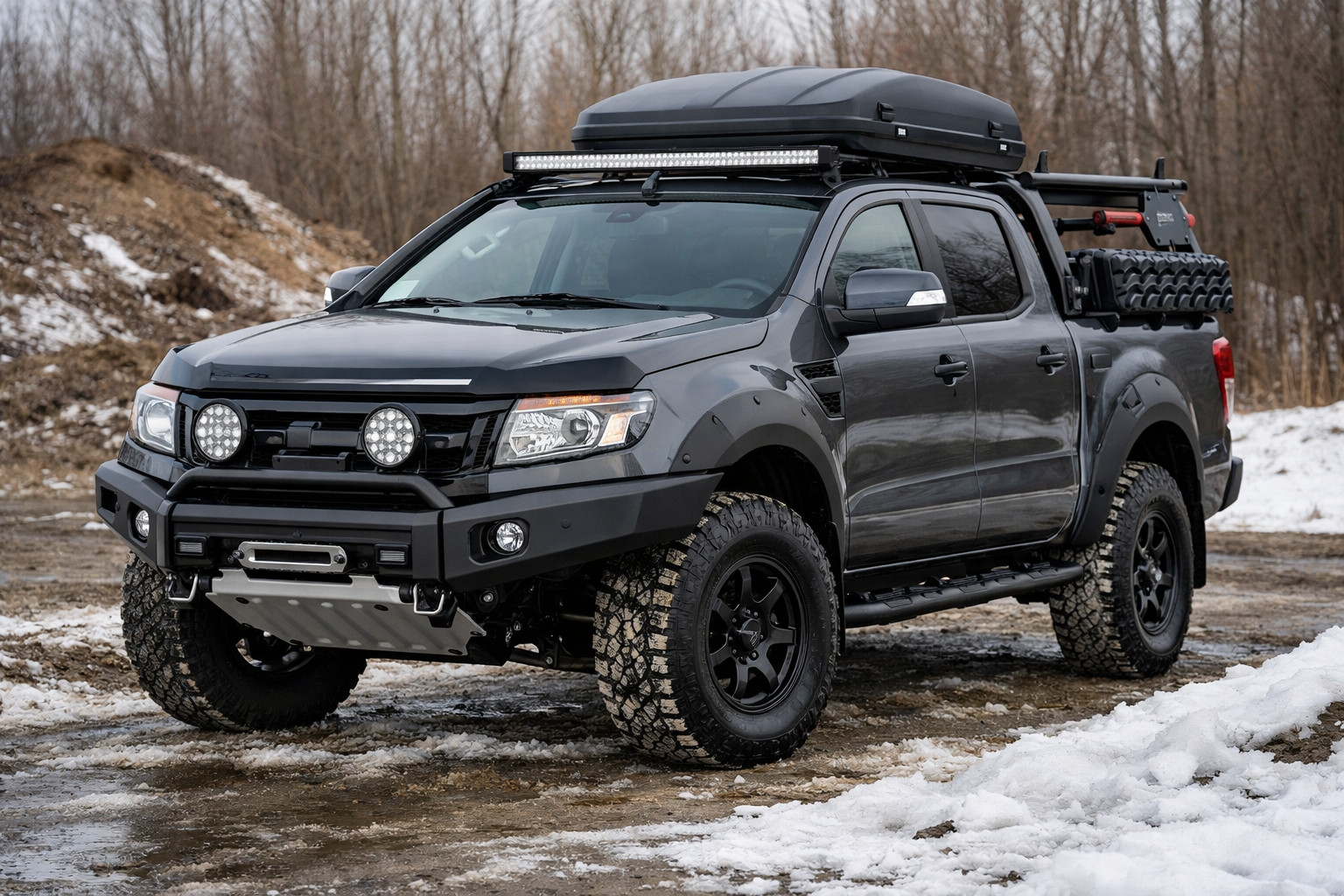
This upgrade plan is for a Ford Ranger 2011–2022 owner who hauls tools, consumables, or gear on weekdays, and heads out on weekends for fishing, into the woods, or for a short camping trip. The main goal isn’t to build an “expedition show car”, but to get a pickup where the cargo stays dry, secured, easy to access quickly, and doesn’t get in the way of day-to-day work.
For this use case, a staged approach works best: start with the bed and cargo organization, then power and camp comfort, and only after that move to tires, suspension, and heavier off-road solutions. It’s important to verify compatibility right away by model year, cab type, and trim: across this Ranger range, mounting points, roof systems, and some parts of the electrical prewiring differ.
The Ranger has a large, practical bed: a standard pallet fits between the wheel arches, and there are enough tie-down points to avoid throwing everything in a pile. But for the “work + outdoors” scenario, that’s not enough. You need the tools to stay dry, boxes not to slide around, and the ability to switch from work mode to weekend mode without fully unloading the truck.
The second task is not to kill your payload capacity with nice-looking but heavy add-ons. A canopy, drawer system, fridge, roof rack, spare wheel, a towbar with tongue load—all of that adds up into one big mass. That’s why the right Ranger build doesn’t start with a lift; it starts with cargo control, bed protection, and smart packing: heavy items low and closer to the cab, light items higher.
Top priority is to cover the bed from rain and prying eyes. If the truck works daily with tools and boxes, the most practical options are usually a hard tonneau cover or a roll-top shutter. If you often carry tall items, sleep on trips, or want to keep a camping kit in the bed permanently, then it makes sense to look at a canopy.
Second step is to protect the cargo area itself. A bed liner, mat, or other floor-and-sides protection reduces wear, and also makes daily loading less stressful. For a working Ranger, this is one of the most practical upgrades: it won’t look dramatic in photos, but it saves your bed every single day.
Third step is to sort out cargo tie-downs. The factory anchor points in the Ranger already provide a base, but without ratchet straps, a net, boxes, or even simple zoning in the bed, it will still be chaos. If you don’t do this, even an expensive cover won’t solve the problem: items will just bang into each other inside.
| Upgrade | Why it’s needed | Who it really benefits |
|---|---|---|
| Hard tonneau cover or roll-top shutter | Protects cargo from weather, dust, and casual access | Those who haul tools, equipment, purchases, and trip gear every day |
| Canopy | Provides a closed tall volume and better day-to-day comfort on trips | Those who often carry tall cargo or are building a sleeping/camping setup in the bed |
| Bed liner or mat | Takes scratches, impacts, and dirt, reduces cargo sliding | Builders, service techs, anglers, hunters—anyone who regularly throws heavy items into the bed |
| Tailgate protection and proper tie-down straps | Makes loading easier, reduces damage and chaos in the bed | Those who often work with boxes, a generator, tools, fuel jerry cans |
| All-terrain tires for pavement and dirt | Improves traction on gravel, wet grass, and rough access roads without a sharp drop in daily drivability | Those who actually drive beyond asphalt, not just want an “off-road” look |
| Second battery and power for a fridge and lighting | Lets you run equipment while parked without risking a dead starting battery | Those who sleep on trips, work from the vehicle, or often go out for 1–2 days |
DD Tuning expert comment: the most common Ranger mistake is buying heavy exterior add-ons before the bed and cargo tie-downs are sorted. In the end, the truck looks “adventure-ready”, but it’s inconvenient to work with every day. The second common mistake is not tracking weight: a canopy, drawers, fridge, and roof load quickly eat up the reserve the owner planned to use for gear or a trailer.
Once the bed is covered and organized, the second stage depends on how often your Ranger leaves the pavement. If that means dirt roads, forest access tracks, wet fields, or boat ramps, the biggest gains usually come from all-terrain tires and a moderate leveling setup or suspension correction. That’s more logical than lifting the body with spacers right away: that kind of lift doesn’t add suspension travel and isn’t a good first step for capability.
If your trips are less about mud and more about self-sufficiency, then stage two is electrical: dedicated power for a fridge, lighting, charging tools, or pumps. On newer vehicles within this range, there can be better factory prewiring for additional equipment, but you should confirm it for the specific year and version. For those towing a trailer, the priority isn’t cosmetics but correct weight distribution—and remembering that the towball load also counts toward the overall limit.
These are items that can be useful, but aren’t the foundation for this scenario. Side steps, wind deflectors, floor mats, seat covers, bed-rail caps, a rear step—these are convenient if the truck works daily and gets dirty often. They make getting in easier, cleaning simpler, and access to the bed better, but they don’t replace a covered bed or proper cargo restraint.
Roof solutions are also often seen as a universal answer, though in practice they aren’t for everyone. If you carry long items, light kayaks, or gear you don’t want in the bed, a roof rack makes sense. But heavy items up top are a bad habit: the center of gravity rises, noise increases, and the allowable dynamic roof load is limited and depends on the version.
The most typical unnecessary purchase is a body lift with spacers as the first upgrade. The look changes quickly, but in daily work it doesn’t deliver what the owner expects from an “off-road” vehicle. If the tires are weak, the bed load isn’t secured, and tools get wet, this upgrade simply sidesteps the main problem.
The second common mistake is fitting heavy drawer systems, large roof baskets, or aggressive tires for rare trips. If 80% of the Ranger’s life is on asphalt and at work, these things add cost, weight, and noise, but don’t provide meaningful returns. The third mistake is overpaying for looks: chrome, bars, covers, and decorative pieces don’t make the bed drier, the cargo safer, or the trip more self-sufficient.
| Install first | Can be postponed | Not required |
|---|---|---|
| Bed cover: a tonneau, roll-top shutter, or canopy matched to your cargo type | All-terrain tires, if outdoor trips aren’t weekly | Chrome trims and other purely decorative add-ons |
| Bed protection: liner, mat, bed-rail protection | Second battery, if overnights are rare and there’s no constant power draw | Body lift spacers as a “quick way” to make the truck more capable |
| Straps, net, boxes, clear order in the load | Roof rack, if you don’t regularly carry long items or light camping gear | Large drawer systems, if the bed is often needed for tall or dirty work cargo |
| Weight check: passengers, cargo, accessories, trailer | Moderate suspension upgrades, if the stock behavior is sufficient | Aggressive mud tires on a truck that mostly drives in the city and on highways |
A more expensive pickup bed cover or canopy is justified when the bed constantly carries tools, expensive gear, or items for two-day trips. Here you’re paying not for image, but for a dry, enclosed volume that works every day.
A roof rack makes sense if you regularly carry long or light items that are awkward to keep in the bed. And off-road accessories are only justified when the Ranger truly goes into deeper mud, forest ruts, or longer remote trips where recovery, protection, and additional equipment matter. In all other cases, it’s better to spend that money first on the bed, tires, and order in the cargo.
From a customer’s experience: the Ford Ranger owner initially planned to lift the truck and install big bars and a roof basket because he wanted to “prepare for the outdoors”. After breaking down the real use case, it turned out the main load was daily tools and fishing gear on weekends. In the end, he chose a bed cover, cargo-area protection, boxes, and all-terrain tires—and that delivered the biggest benefits without overloading the truck or losing convenience.
For a Ford Ranger 2011–2022 in a “work + outdoors” scenario, the smartest upgrade package looks like this: first cover and protect the bed, then organize the load, then either tires or auxiliary power—and only after that heavier off-road solutions. This order delivers the most value in daily life and avoids overpaying for parts that only get used a few times a year.
The key is to choose upgrades not by photos, but by real routes, cargo type, and the available weight margin of your specific vehicle. This material is based on real selection experience, hands-on practice, and real use cases, so the logic is simple: useful first, desirable second, and only at the end the things you can absolutely live without.
| ✔ | First, closing the bed, protecting the tailgate, and securing the load really solves the everyday problems of wet, spilled, and unsecured tools. For a work Ranger, this is more practical than starting with external “off-road” modifications. |
| ✔ | A hard lid, roller cover, or canopy lets you quickly adapt the vehicle for work or a trip into nature without fully unloading it. This is convenient for those who carry work gear on weekdays and camping equipment on weekends. |
| ✔ | A bed liner or mat reduces scratches, impacts, and load slippage, which means it extends the life of the cargo bed in daily use. It is not a flashy modification, but it is the one that saves the bed most over the long term. |
| ✔ | All-terrain tires deliver real benefits where the Ranger actually leaves paved roads: on dirt roads, wet grass, or broken access ways. At the same time, they do not turn everyday driving into a compromise. |
| ✔ | Separate power for the fridge and lights is useful for short overnight stays and 1–2 day trips, because it does not drain the starter battery. This makes the vehicle more autonomous without unnecessary risk to engine starting. |
| ✘ | Heavy upgrades quickly eat into the payload reserve: a canopy, drawers, fridge, roof rack, and tow hitch add up to a significant mass. If you do not account for the weight, the vehicle can lose the practicality it was bought for. |
| ✘ | Raising the body with spacers is directly described here as a weak first step: it changes the look, but does not add suspension travel or solve clearance issues. For this scenario, it is more cosmetics than a useful upgrade. |
| ✘ | Large roof baskets, aggressive tires, and heavy drawers may be unnecessary if most of the time the Ranger drives on asphalt and works. In that case, they add noise, weight, and costs without a noticeable return. |
| ✘ | Roof solutions have limitations: heavy items up top raise the center of gravity, and the permissible roof load depends on the vehicle version. In other words, they are not a universal solution and require careful selection for a specific trim. |
Shipping to EU
Wholesale and retail
Own warehouse
Опис продукту
Подарунки не надаються при оформленні покупки у кредит під 0,01% або при покупці частинами.