04.08.2026
185
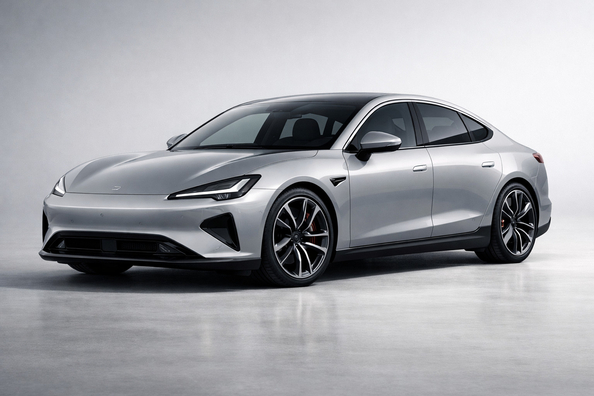
Xiaomi SU7 2026 is a large electric sedan fastback that’s not trying to be “just another Chinese EV,” but rather to sit between the Tesla Model 3 and more expensive driver-focused models like the Porsche Taycan. The key here isn’t only acceleration, but the mix of size, equipment, a 700 TOPS computing platform, standard LiDAR, and up to 902 km of range on the CLTC cycle.
For the buyer, the idea is simple: the SU7 is for those who want a tech-forward, quiet EV with strong long-distance battery endurance and the feel of a well-built car. It’s not for those who need transparent European range standards, an official global service network right now, and clearly confirmed ground clearance for rough roads.
In terms of positioning, the SU7 2026 sits above a typical mass-market sedan. Price-wise, the entry version is noticeably more affordable than the Porsche Taycan, while in size and ambition it’s clearly larger than the Tesla Model 3: the wheelbase here is 3000 mm, so the cabin and rear-seat seating don’t feel cramped.
The SU7’s strongest argument isn’t one single number, but the overall package. Even the base trim includes an advanced driver-assistance suite, fast electronics, a large multimedia system, and a big body. So it makes sense for those who drive a lot in the city and on highways but don’t want to overpay just for a badge. If, however, you want a purely sporty character or polished branded service outside China, the SU7 isn’t the most obvious choice yet.
The SU7’s history is still short, so it’s too early to talk about long generational changes. Public sources include early specifications for the 2024 model, and on March 19, 2026 Xiaomi officially launched an updated SU7 with revised equipment and a stronger focus on driver-assistance systems. Some materials call this an updated generation, but in essence it’s a young model line still in its first major development cycle.
What matters for the market is this: the 2026 version feels more mature. Standard LiDAR appeared across all trims, the strong battery side was retained, and pricing remained aggressive: from 219900 yuan for Standard to 303900 yuan for Max. In other words, evolution here isn’t about changing the body shape, but about rapidly adding technology and equipment.
The SU7 has no gasoline or hybrid options, so the usual ICE item “engine displacement” doesn’t apply. All versions are pure EVs with a single-speed reduction gear transmission: Standard and Pro have one rear electric motor, while Max uses a dual-motor AWD setup with a front asynchronous and a rear synchronous motor.
| Version | Drive | Powertrain | Power | Torque | Battery | Range | 0–100 km/h |
|---|---|---|---|---|---|---|---|
| Standard | Rear | 1 rear electric motor | 235 kW, 315 hp | 505 N·m | 73 kWh, LFP | 720 km, CLTC | 5.3 s |
| Pro | Rear | 1 rear electric motor | 235 kW, 315 hp | 505 N·m | 96.3 kWh, LFP | 902 km, CLTC | 5.7 s |
| Max | AWD | 2 electric motors | 508 kW, 681 hp | 866 N·m | 101.7 kWh, NMC | 835 km, CLTC | 3.1 s |
In practice, the choice looks like this: Standard is for those who want a lower entry price without the feel of an “empty” trim; Pro is for maximum distance; Max is for those who truly need AWD and a very fast launch. It’s important to understand that the range figures are given under the Chinese CLTC cycle, so in real mixed driving consumption will be higher than the official numbers.
Formally, it’s a 5-seat 4-door sedan fastback with a unibody structure. In proportions the SU7 is long, wide, and low, so it’s closer to large electric sedans than compact city models. That’s good for stability and space, but it demands more attention in tight parking garages and on steep ramps.
| Parameter | Value |
|---|---|
| Body type | 4-door sedan fastback, 5 seats |
| Dimensions | 4997 × 1963 × 1460 mm for Standard; 4997 × 1963 × 1445 mm for Pro and Max |
| Wheelbase | 3000 mm |
| Main trunk | 493 L |
| Front trunk | 105 L |
| Tires | 245/45 R19 front, 265/45 R19 rear |
| Chassis | On Pro and Max — dual-chamber air suspension with adaptive dampers |
| Ground clearance | Not officially confirmed in publicly available factory materials |
A separate nuance is ground clearance. For 2026 Xiaomi doesn’t provide a clear official figure in open factory materials, so it’s worth being cautious when judging the car’s suitability for very rough roads. If high speed bumps, unpaved access roads, or steep ramps are critical for you, this point should be checked on the actual vehicle, not by hearsay.
The SU7’s interior is designed for everyday use, not just a wow-effect at first glance. The central display is 16.1 inches with 3K resolution; there’s also a 7.1-inch instrument panel and a large head-up display. Standard and Pro get 14 speakers, Max gets 25, and small practical touches are well thought out: 29 storage areas and a built-in 4.4 L fridge with cooling and heating modes.
On safety, the set is strong: a steel-aluminum safety cell body, 9 airbags, 25 active safety and driver-assistance functions, LiDAR, a 4D millimeter-wave radar, and a single powerful computing base shared across all versions. But there’s an important caveat: a recall of a large batch of Standard cars due to extreme scenarios in highway assist operation showed that the electronics here are very ambitious, yet still not beyond criticism. That’s not a reason to reject the model, but it’s also not a case where you can trust the assistants blindly.
In daily driving, the SU7 comes across convincingly as a big everyday EV. The 493 L trunk plus the 105 L front compartment provide solid practical capacity, and the long wheelbase helps with second-row comfort. Based on real-world ownership feedback, the car is quiet, well put together, and doesn’t wear the driver down with small irritations.
The main thing to read correctly is energy consumption. The official 11.7–13.4 kWh per 100 km looks very optimistic, while in a real long-distance case an SU7 Pro owner recorded about 18 kWh per 100 km. That’s not a failure—just the normal gap between a lab cycle and real life. The upside is that battery longevity looks promising: in a known long-term scenario, after 265757 km the battery health remained at 94.5%. It’s also useful to consider the warranty: 60 months or 100000 km for the car and 96 months or 160000 km for the battery, electric motor, and controller.
The weaker point in the everyday scenario is the market context. The car is still primarily aimed at China, so for buyers outside that market, service, voice assistant language, and feature localization may matter as much as dynamics or the screen.
If you look at the SU7 through an owner’s eyes rather than marketing slogans, the balance is very strong—though not without caveats.
| Aspect | Strength | Weakness |
|---|---|---|
| Range and charging | Very large official range, especially on Pro; 752/897-volt architecture adds real value for long routes | Official figures are given under CLTC, so real-world consumption is noticeably higher |
| Driving feel | Comfortable, quiet, and composed daily driving without fatigue | Steering may feel too light, and the softer suspension modes slightly “floaty” |
| Interior | Quality materials, fast interface, lots of space and useful storage | Part of the ecosystem works best specifically within the Chinese environment |
| Electronics and safety | Rich equipment even from the base trim: LiDAR, radars, 9 airbags, a broad set of assistants | There were questions about highway assist behavior in extreme scenarios |
| Practicality | Decent trunk, front compartment, good suitability for city and highway | Official ground clearance isn’t transparent, so rough-road suitability must be checked separately |
For the SU7, the logical approach isn’t aggressive tuning but practical add-ons. The car is already packed with electronics and has a distinctive body, so the first priorities should be items that protect the interior and trunk, plus a second set of wheels for a different driving scenario. This is especially relevant for a low-slung model, where extra decorative experimentation can be less useful than proper everyday preparation.
In short, the SU7 doesn’t need “rescue” tuning. It needs the right everyday accessories and a careful wheel selection more than an attempt to turn an already finished large electric sedan into a show car.
Xiaomi SU7 2026 turned out far more mature than you’d expect from a young model: it’s big, fast, well equipped, has a strong battery foundation, and looks convincing not only on paper. The most rational choices are Pro if range is the priority, or Max if you need AWD and very high performance. At the same time, buyers should realistically assess real-world range, service questions outside China, and the absence of clearly confirmed ground clearance. This material is based on real selection experience, hands-on practice, and real use cases, so the main takeaway is simple: the SU7 is worth considering not as a fashionable gadget on wheels, but as a serious electric sedan with a very strong spec sheet and a few important ownership nuances.
| ✔ | A 3000 mm wheelbase and fastback body provide a noticeably spacious second row and a comfortable seating position for daily driving and highway trips. |
| ✔ | The Pro version is claimed to offer a range of up to 902 km on CLTC, and overall the model has strong battery credentials and a 752/897-volt architecture, which is useful for long-distance travel. |
| ✔ | Rich equipment from the base trim: a 16.1-inch central 3K display, a 7.1-inch instrument cluster, a head-up display, 9 airbags, and 25 active safety functions. |
| ✔ | Practicality is on point: 493 l of main trunk space, a 105 l front compartment, 29 storage spots for small items, and even a built-in 4.4 l refrigerator. |
| ✔ | In real-world use, the car is described as quiet, well-balanced, and comfortable, and after extensive mileage the battery health is stated to remain at 94.5%. |
| ✘ | The official range is given according to the CLTC cycle, so in real mixed driving the consumption will be higher than in the spec sheet. |
| ✘ | The officially unconfirmed ground clearance makes it harder to assess suitability for rough roads, tall speed bumps, and steep ramps. |
| ✘ | The electronic assistants are not flawless yet: the article mentions a recall of a large Standard batch due to extreme highway-assist scenarios. |
| ✘ | The model is still primarily aimed at China, so outside this market there may be questions about service, voice assistant language, and function adaptation. |
Shipping to EU
Wholesale and retail
Own warehouse
Опис продукту
Подарунки не надаються при оформленні покупки у кредит під 0,01% або при покупці частинами.