 Author: Radomskyi Maksym Vasyliovych
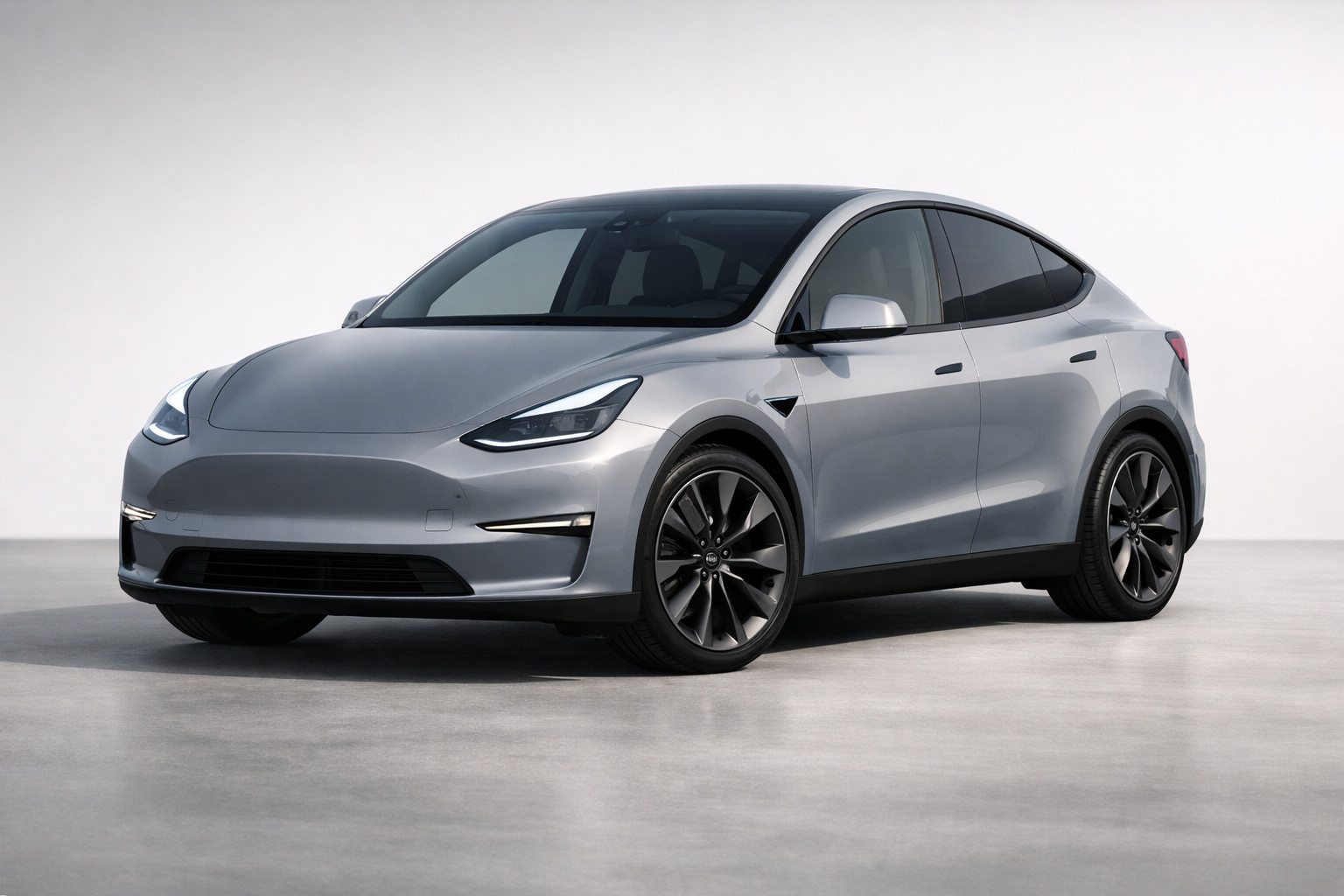
Tesla Model Y Juniper 2026 is a deeply revised version of the already familiar electric crossover, not a simple facelift. It’s not just the look that changed: the manufacturer claims a quieter cabin, a stiffer body, revised suspension geometry, new dampers, and noticeably better day-to-day comfort.
This model suits those who want a spacious electric crossover for family life, the city, and long trips without compromising on performance. It won’t fit everyone equally well: if you need physical buttons, a very soft ride on broken roads, or flawless build consistency, you should approach the Model Y without illusions.
The model and its place in the market
Model Y remains one of the strongest players in the midsize electric crossover class. Its main arguments are straightforward: a large trunk, quick acceleration, good aerodynamic efficiency, and convenience as a family car. After the Juniper update, the focus also shifted toward quietness and comfort—exactly where the previous version was criticized most often.
In practice, this is a car for people who drive a lot and want one body style “for everything”: the office, child seats, highway trips, big grocery runs, and occasionally a trailer. But it’s still a Tesla with its screen-centric control logic, and for some drivers that will be an annoyance rather than a benefit.
Generations and model history
Juniper does not launch a new generation; it deeply updates the first one. An important point for the used market: early Model Y and Juniper feel different primarily in sound insulation, ride smoothness, and cabin details.
| Period | Version | What matters |
|---|---|---|
| 2020-2024 | First iteration of Model Y | Feels firmer, simpler in acoustic comfort, different suspension tuning |
| 2025-... | Updated Juniper, in some markets — 2026 model year | Reworked body, interior, and chassis, better cabin quietness, new rear screen, comfort-focused |
Motors and transmissions
Model Y has no internal combustion engines, so displacement is not applicable as a class. It’s more accurate to talk about the electric motor configuration: rear-wheel-drive versions use one rear permanent-magnet synchronous motor, while all-wheel-drive versions add a front induction motor. The gearbox is the same for all variants—single-speed, with a fixed 9:1 ratio.
Tesla does not officially disclose horsepower for most standard versions, so you have to ориент by drivetrain type, acceleration, and range. The exception is the performance version, which is rated at 460 hp.
| Version | Motors | Displacement | Power | 0-100 km/h | WLTP range |
|---|---|---|---|---|---|
| Base rear-wheel drive | 1 rear electric motor | No ICE | Not officially disclosed | 5.9 s | 500 km |
| Rear-wheel drive with extended range | 1 rear electric motor | No ICE | Not officially disclosed | 5.6 s | 603 km |
| All-wheel drive with extended range | 2 electric motors | No ICE | Not officially disclosed | 4.8 s | 600 km |
| Performance version | 2 electric motors | No ICE | 460 hp | 3.5 s | 580 km |
Body, dimensions, and chassis
In body terms, it feels compact but is very roomy. Up front it has an independent double-wishbone suspension; at the rear, a multi-link setup. For Juniper, new suspension geometry and different dampers are claimed, and that’s what should deliver a more composed ride without excess noise and harshness.
| Parameter | Value |
|---|---|
| Length | 4 790 mm |
| Width with mirrors | 2 129 mm |
| Height | 1 624 mm |
| Wheelbase | 2 890 mm |
| Ground clearance unladen | 164-167 mm depending on version |
| Ground clearance laden | 119-122 mm |
| Turning radius | 12.13 m |
| Trunk | 822-835 L with seats up, up to 2 138 L total space, front trunk 114-116 L |
Interior, comfort, and safety
The interior remains minimalist but feels more grown-up. The main screen is now 16 inches, and an 8-inch display has been added for the second row. The manufacturer claims a noticeable reduction in road noise, wind noise, and suspension impact noise—and that’s what makes Juniper more interesting not in photos, but in everyday use.
Safety remains one of the model’s key arguments. At the same time, it’s important to separate the car’s passive safety from the operation of electronic assistants: the vehicle itself is strong, but the driver-assistance system still isn’t for blind trust. Another comfort point is the glass roof: it adds a sense of space, but in hot weather without extra protection it can heat the cabin more than you’d like.
Everyday use
In daily driving, Juniper looks very rational. Official WLTP range is from 500 to 603 km depending on version, and DC fast charging is supported up to 250 kW. In 15 minutes you can add roughly 238-266 km of range, if the battery and conditions allow sustained high power.
For the city, it’s not just the spec-sheet numbers that matter but also maneuverability: a 12.13 m turning radius helps here. For a family, the trunk and second row are decisive, and for travel—the ability to tow a trailer up to 1 588 kg. The weak spot is typical for EVs: on fast highways and in winter, real-world range will be noticeably lower than the lab figure, so you need to plan charging along the route in advance.
Strengths and weaknesses
After the update, Model Y’s strengths became clearer, but the old compromises didn’t disappear. Below is what an owner actually feels, not what looks good in the configurator.
| Side | What it is | What it means in practice |
|---|---|---|
| Plus | Quieter cabin and revised chassis | Less tiring on the highway; the car feels more expensive and calmer |
| Plus | Large trunk and front compartment | Easy to carry kids’ items, suitcases, charging cables, and small daily cargo separately |
| Plus | Good performance and efficiency | Moves quickly even in standard versions and doesn’t scare you with energy use |
| Minus | Many functions are tied to the screen | Not everyone finds it convenient to manage climate, modes, and small settings without physical buttons |
| Minus | Not-perfect build quality on some cars | Before buying, you should carefully check panel gaps, paint, and small defects on the конкрет unit |
| Minus | On big bumps, comfort isn’t benchmark | Great in the city, but on bad asphalt some competitors ride softer |
| Minus | Real-world range strongly depends on pace and weather | On highways you need to plan range realistically, especially in winter |
Tuning and accessories
For Model Y, it makes sense to start not with exterior styling, but with things that genuinely make life easier: interior protection, underbody protection, and organizing everyday mud, water, and sand. On a heavy electric crossover, it quickly becomes clear where saving on small items later turns into scuffs, wet carpet, and clogged door sills.
What to consider for this model
- Accessories for Tesla Model Y — a convenient entry point if you want to immediately see what’s actually available for this model.
- EVA mats for Juniper — a practical solution for everyday city use, when water, sand, and snow regularly get into the cabin.
- Mud flaps — useful for protecting the lower part of the doors and sills from sandblasting and dirt, especially in winter and on the highway.
In short, the smartest scenario for Juniper is to protect the interior and body first, and only then think about decorative extras. This is exactly the case where accessories make sense not “for looks,” but to keep the car in good condition.
Conclusion
Tesla Model Y Juniper has become not just fresher, but more mature. It’s quieter, more comfortable, and better prepared for the role of the only car in a family, while not losing the main things: space, performance, and long-distance capability. But it’s still a car for those who are ready to live with screen-based controls and carefully inspect a specific vehicle before purchase.
If you need a practical electric crossover with a large trunk and quick throttle response, Juniper is truly worth considering. If your top priorities are a мяг ride, classic ergonomics, and consistently even build quality, alternatives also make sense. The material is based on real selection experience, practical know-how, and real-world usage scenarios.