
How to check a car ground: step-by-step guide for drivers

«Ground» in a car is a reliable electrical connection between the battery «negative» terminal and the body and engine. A poor ground connection is often the cause of mysterious issues: from weak starting to flickering headlights and onboard computer errors. Many drivers spend thousands of hryvnias replacing the starter or alternator when the real problem may be an oxidized ground. To make your car more functional and advanced, you can use tuning accessories, a huge selection of which is available in our online store.
Why is it important to check the ground connection?
A bad ground creates excessive resistance in the circuit. This leads to:
- Rapid battery discharge.
- Overheating of electrical connections.
- Incorrect sensor operation (especially the ECU).
- Error messages on the instrument cluster.
- Engine starting problems.
How to check the ground yourself with a multimeter
The most accurate method is measuring voltage drop under load.
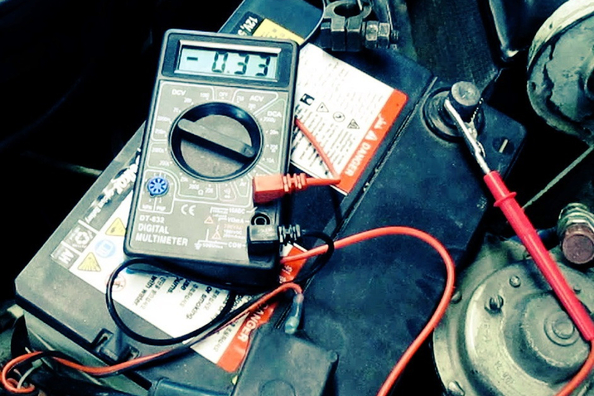
- Set up the meter. Switch the multimeter to DC voltage measurement (up to 20 V).
- Create a load. Start the engine and turn on high-draw consumers (high beams, rear window defroster, blower fan).
- Check «Battery–body». Place one probe on the battery negative terminal and the other on a clean bare-metal part of the body.
- Check «Battery–engine». Repeat the measurement between the negative terminal and a metal part of the engine.
- Analyze the results. Normally, the reading should be as close to 0 as possible. An acceptable value is up to 0.1–0.2 V. Higher readings indicate poor contact or corrosion.
What to do if the ground is bad?
Don’t rush to replace parts. Try the following:
- Cleaning: Remove the ground wire, clean the mounting point and terminal with sandpaper until shiny.
- Protection: Use a special conductive grease to prevent corrosion.
- Replacement: If the wire is oxidized inside or damaged, install a new one with a sufficient or slightly larger cross-section
Clean the contacts regularly (every 6–12 months) and check the ground — it will save you nerves and money. If the problem doesn’t go away after cleaning, contact an auto electrician.