14.05.2026
752
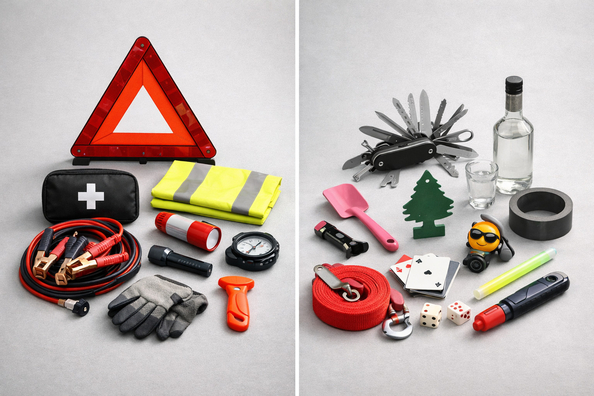
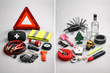
A proper emergency kit for your car isn’t a big bag stuffed with dozens of small items—it’s a short list of things that genuinely help in two scenarios: you need to be seen on the road, and you need to wait safely or get the car started without panic. For most drivers, the basics are simple: a certified safety vest, warning triangle, flashlight, phone power, a first-aid kit, and either jump leads or a jump starter.
The unnecessary stuff starts where people buy a kit by the number printed on the box. If the set is packed with tiny bandages, random tools, and items you don’t check for months, it’s not a safety reserve—it’s dead weight. Choose based on practicality, compatibility with your car, seasonality, and whether you can actually use it on the roadside.
The point isn’t to collect the maximum number of items, but to cover the key risks. The first block is visibility and communication: vest, triangle, flashlight, a charged phone or a power bank. The second is basic help for you and the car: a first-aid kit and a way to start the engine. The third is wheel support and seasonal items if you drive far, at night, or in winter.
So in practice there are four options: a compact city basic kit, a basic kit plus a starting solution, a road kit for wheel issues and highway trips, and a winter add-on. Everything else only makes sense for a specific scenario—not “just in case.”
Installation and placement. For an emergency kit this isn’t classic installation—it’s access speed and connection ease. The triangle and vest should be stored so you can grab them before getting out of the car. For cables, access to the terminals matters; for a jump starter, clear connection logic and reverse-polarity protection; for a compressor, a decent power cable and hose.
Noise. This criterion mainly applies to the compressor. If you often top up a tire at night or in a tight courtyard, cheap models can be very loud and slow. For a vest, triangle, first-aid kit, or jump starter, noise doesn’t matter.
Service life. Almost everything ages in a kit: flashlight batteries, jump starter charge, expiration dates for the first-aid kit, sealant and fire extinguisher, and pressure in the spare. If you’re not ready to check the kit a few times a year, it’s better to have fewer items—but ones you’ll actually maintain.
Practicality. The most useful items are the ones that help in your driving conditions. City winter driving and highway travel require different kits. Sealant is practical only as a temporary solution for a small tread puncture—not for a sidewall cut.
Price. It’s worth paying extra for certification, autonomy, and compatibility—not for the number of items. A quality vest, a solid triangle, and a working jump starter are more useful than an “86-piece kit” with random contents.
| Option | Strengths | Weaknesses | Best for |
|---|---|---|---|
| Basic city | Compact, inexpensive, covers visibility and communication | Doesn’t solve engine starting or a wheel issue | Those who drive in the city and close to help |
| Basic plus start | Gives a chance to drive off after a dead battery | Cables depend on another car; a jump starter needs charging | Those who often drive alone or have an older battery |
| Wheel & highway kit | Better prepared for long trips and minor road issues | Takes more space; compressor is noisy; sealant has limitations | Those who drive highways, rough roads, or far from service |
| Extended winter | Built for surviving cold and getting unstuck | Takes space and is often carried in summer for no reason | Those who drive in winter, outside the city, in snow, and at night |
DD Tuning expert comment: Most mistakes aren’t in the item list, but in the kit’s logic. People buy a big kit, but the vest is buried under luggage, the jump starter is discharged, and the sealant is expired. Better to have 6–7 working essentials within quick reach than 20 random items in the far corner of the trunk.
This should include only what delivers immediate safety: a certified reflective vest, triangle, flashlight, first-aid kit, and a cable or power bank for your phone. This is the minimum you truly need even in the city, because the main risk when you stop is being seen and being able to call for help.
Here the choice is between jump leads and a jump starter. Jump leads are cheaper and don’t need charging, but without another car they’re useless. For a passenger car, a practical guideline is about 3–6 m length and thickness in the 4–6 range; for a diesel, crossover, or a car with a larger engine, thicker is better. A jump starter is more convenient because it’s autonomous, but it must be recharged regularly; as a rough guide for most passenger cars, look at around 10 000 mA·h capacity and 400–600 peak amps.
If you don’t have a full-size spare, at least a compressor or sealant starts to make sense. But sealant isn’t a tire repair—it’s a temporary chance to reach a tire shop after a small tread puncture; it won’t fix a sidewall cut or serious damage. For those who often drive far, in winter, or on poor roads, a spare with a jack and lug wrench is more practical than sealant alone. A compressor is useful, but it’s noisier than other kit elements and takes more space.
In winter, add a blanket, warm gloves, a hat, an ice scraper, a brush, a small shovel, and something to provide traction under the wheels. This isn’t overkill if you can realistically get stuck or wait a long time for help. In a summer city routine, though, this block often just rides along unused. A fire extinguisher and basic tools aren’t mandatory for everyone either: they make sense if you understand the limits of their use and keep them in proper condition.
If your car is mostly used in the city and parked near home or the office, a basic kit is enough. If you often drive alone, leave the car for long periods, or have a not-so-fresh battery, adding a jump starter is more practical. If you take long highway trips, drive at night, or frequently travel to other regions, you’ll need the wheel block and more autonomy. For winter trips outside the city, a dedicated add-on isn’t a luxury—it’s normal preparation.
Also consider your skills. If you’re not ready to change a wheel on the roadside, having a jack alone doesn’t solve the problem. In that case it’s more logical to have a solid signaling minimum, a jump starter, phone power, and a clear plan for calling assistance.
| Scenario | Best choice | Why |
|---|---|---|
| Daily city driving | Basic city kit | Compact, doesn’t take up the trunk, covers the main risks |
| Night highway trips | Basic plus start and a flashlight, water, blanket | On the highway, visibility and autonomy matter—not lots of small items |
| Car with a weaker battery | Jump starter or quality cables | Starting issues are the most likely here |
| Car without a full-size spare | Compressor plus sealant as a backup | Provides at least a temporary way to keep moving if there’s no replacement wheel |
| Winter trips outside the city | Extended winter kit | Warmth and traction aids matter more than extra small tools |
| Family trips with passengers | Basic kit, vests for multiple people, blanket | If more than one person may need to get out, one vest is a weak solution |
A pricier kit is justified when it provides not “more items,” but better autonomy and compatibility. That includes a jump starter with protection against incorrect connection, thicker cables for a diesel or heavier vehicle, a quality compressor for cars without a spare, and a vest and triangle you can trust at night.
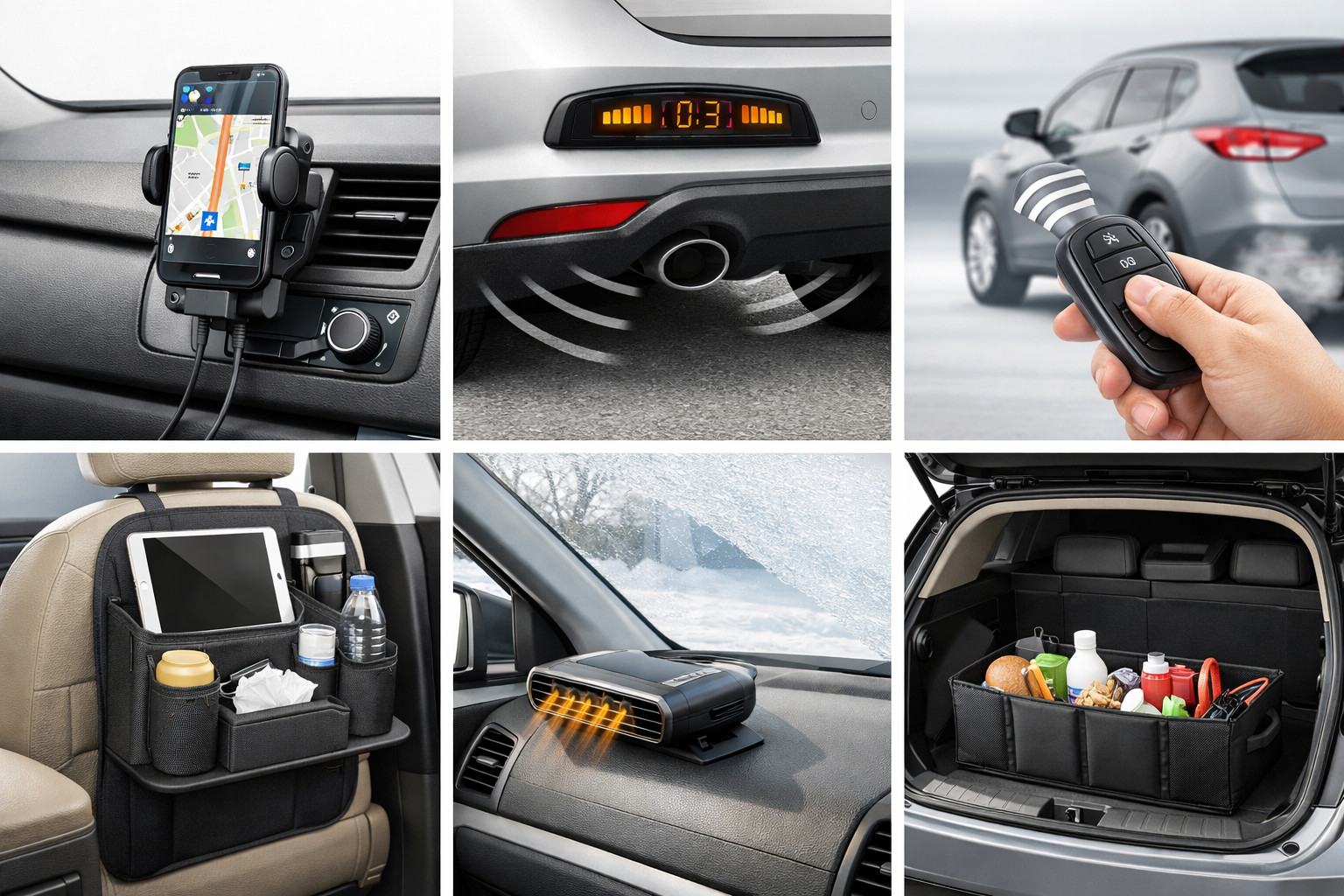
If you want to double-check the basic list separately, see useful accessories for a car. To choose an autonomous start solution, the article on choosing a jump starter will help, and for cars without a spare—our breakdown of an car compressor.
From a customer’s experience: a driver was looking for a “full emergency kit” because he often drives alone on highways between cities. In the end, he skipped the big bag of small items and put together a short kit: vest, triangle, flashlight, jump starter, first-aid kit, and compressor, because the car didn’t have a full-size spare. He was happy specifically because the kit works without extra add-ons and doesn’t require a second car to start.
For most drivers, what you really need isn’t a “deluxe” kit but a well-thought-out base: vest, triangle, flashlight, phone power, first-aid kit, and either cables or a jump starter. After that, it all depends on your route: for highways add a wheel solution; for winter add warmth and traction; and a large tool kit or a fire extinguisher only makes sense for a specific scenario.
The main principle is simple: pay for certification, autonomy, and compatibility—not for extra bulk. This material is based on real selection experience, practice, and real-world use cases, so the takeaway is practical too: better less, but working and checked, than more, but random.
| ✔ | The kit focuses on things that really help in two critical situations: when the car needs to be made visible on the road and when you need to wait for assistance or start the engine. This makes the basic kit practical rather than just formally complete. |
| ✔ | For city trips, a compact base is enough: a vest, a warning triangle, a flashlight, a first aid kit, and power for the phone. Such a kit doesn’t take up much space and covers the main risks without unnecessary cargo. |
| ✔ | There is a clear choice between jumper cables and a booster, so you can pick the solution for your own scenario. Jumper cables are cheaper, while the booster is autonomous and does not depend on another car. |
| ✔ | For highway and winter trips, the author separately highlights additional items that really change the situation: a compressor, a spare wheel or sealant, a blanket, gloves, a scraper, and a shovel. This is useful for those who often drive far or outside the city. |
| ✔ | The article directly advises evaluating not the number of items, but certification, autonomy, compatibility, and access in the trunk. This approach reduces the chance of buying a large but useless kit. |
| ✘ | The sealant is presented only as a temporary solution for a small puncture in the tread. It will not help in the case of a side cut or serious wheel damage. |
| ✘ | Jumper cables have a major limitation: without another car, they do not work. This makes them less convenient for those who often drive alone. |
| ✘ | The compressor is useful, but it is noisy and takes up more space than other kit items. For some drivers, this can be inconvenient, especially at night or in a tight yard. |
| ✘ | An expanded winter kit in the warm season is often just carried around for nothing and takes up trunk space. It makes sense only when you really can get stuck or have to wait for help for a long time. |
Shipping to EU
Wholesale and retail
Own warehouse
Опис продукту
Подарунки не надаються при оформленні покупки у кредит під 0,01% або при покупці частинами.