13.03.2026
625
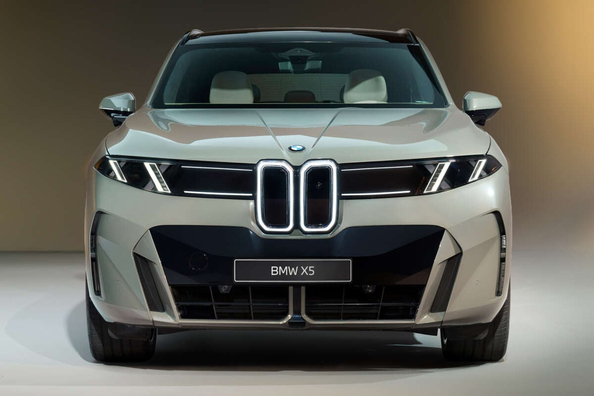
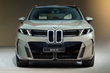
BMW X5 G65 is important right now not as a car you can already buy, but as the next generation of one of BMW’s key models. There is already official confirmation of five drivetrain types for the new X5, as well as the first leaks about the entry-level 40 xDrive version, but there has been no production debut yet.
So the main rule is simple: facts about the G65 must be separated from assumptions. To understand what to expect from the new X5 in real life, for now you have to rely on the current BMW X5 G05—because it’s the one that shows what comfort, dynamics, practicality, and typical ownership costs are like.
The BMW X5 is a large premium crossover for those who need one vehicle for everything: city driving, highways, family trips, long routes, towing a trailer. In its class it is most often compared with the Mercedes-Benz GLE, Lexus RX, and Genesis GV80, but the X5 traditionally leans more toward a driver-focused character than soft detachment.
G65, based on what’s known so far, should keep this role but expand the choice for different markets and use cases. The model will suit those who want a large, fast, and tech-heavy crossover without moving up into an even bigger class. It’s not the best option for anyone looking for максимально simple hardware, cheap running costs, or class-leading second-row space with no compromises.
The X5 has long followed a clear line: from a more mechanical and simple SUV to a big digital crossover with an extremely broad range of powertrains. That’s why the transition from G05 to G65 matters: it signals not just a body change, but a change in the model’s entire logic.
| Generation | Years | What matters |
|---|---|---|
| E53 | 1999–2006 | The first X5, focused on on-road handling |
| E70 | 2007–2013 | Larger body, more complex electronics, a broader family role |
| F15 | 2013–2018 | A step toward modern driver assistance and a digital cabin |
| G05 | 2019–2026 | The current generation with gasoline, diesel, and hybrid versions |
| G65 | expected from the 2027 model year | A new generation with five drivetrain types, including a hydrogen version later |
According to early information, the G65 debut could be shown in summer 2026, with production starting later that same year. But this is not a final official schedule yet, so all dates should be treated as preliminary.
For the new G65, BMW has officially confirmed only the lineup architecture: a battery-electric model, a plug-in hybrid, gasoline, diesel for certain markets, and a hydrogen fuel cell. Specific production engines, gearboxes, and the full range have not been disclosed yet. Rumors mention an entry-level gasoline 40 xDrive version.
| Version | Status | Powertrain | Power and torque | Transmission |
|---|---|---|---|---|
| X5 G65 40 xDrive | rumor | 3.0-liter inline-six B58 with a 48-volt mild-hybrid system | 394 hp, 540 N·m; electric assist adds another 17 hp and 200 N·m | not confirmed yet |
| X5 40i G05 | current version | 3.0-liter inline-six with mild hybrid | 381 hp, 520 N·m | 8-speed automatic |
| X5 xDrive50e G05 | current version | plug-in hybrid based on a 3.0-liter inline-six | 489 hp, 700 N·m | 8-speed automatic |
From a practical standpoint, the most interesting thing about the G65 is not so much one entry version, but the sheer breadth of the future lineup. For city driving and short routes, a plug-in hybrid or the electric version will make the most sense; for long highway runs and towing—gasoline or diesel, if it’s offered in your market.
As for the G65 body, there are only early figures so far. If the leaks are confirmed, the new X5 will be slightly longer than the G05, get a longer wheelbase, and slightly higher ground clearance. That’s good news for the second row and rough roads, but there is still no official data on cargo volume.
| Parameter | X5 G65 40 xDrive | X5 40i G05 | X5 xDrive50e G05 |
|---|---|---|---|
| Length, mm | 4994 | 4935 | 4935 |
| Width, mm | 2000 | 2004 | 2004 |
| Height, mm | 1751 | 1765 | 1755 |
| Wheelbase, mm | 3035 | 2975 | 2975 |
| Ground clearance, mm | 226 | 221 | 211 |
| Curb weight, kg | 2290 | 2420 | 2495 |
| Trunk, l | not disclosed yet | 650–1870 | 500–1720 |
| Towing, kg | not disclosed yet | up to 3500 | up to 2700 |
For everyday use this matters: the regular 40i has a larger trunk, while the plug-in hybrid 50e gives up some volume to the battery. If the G65 keeps or improves the cabin and trunk packaging, it will be a strong argument in favor of the new generation.
The most logical expectation for the G65 is a switch to BMW’s new digital architecture with Panoramic iDrive and Operating System X. For the driver, this means a different way of presenting information, more integration into the forward field of view, and less reliance on deep menus in the central display.
With the current G05, the picture is already clear: owners most often praise cabin quietness, ride smoothness, seating comfort, and strong pulling power. Weak spots are an overloaded interface and not class-leading rear-seat space. As for G65 safety, there’s still little specifics: the assistance suite hasn’t been revealed yet, so it’s better to wait for the official premiere rather than guess.
The current X5 is good where an expensive large crossover should be good every day: it cruises calmly on the highway, doesn’t wear you out with noise, overtakes quickly, and offers solid cargo practicality. The 40i looks like the most all-around choice for those who don’t want to depend on charging. The X5 xDrive50e is strong in the city and suburbs if you have home or workplace charging: up to 101 km of electric range by the test cycle covers a large share of daily trips.
But the X5 is never cheap to own. For the G05, typical issues are already known—leaks, cooling system concerns, and certain electronic components—along with generally high service costs. For the G65, there’s no such statistics yet, so early buyers of the new generation will essentially be the ones building the first pool of real-world experience.
| Strengths | Weaknesses |
|---|---|
| A wide choice of powertrains in the new generation | The full official technical spec sheet for the G65 is not available yet |
| A very successful balance of comfort and dynamics in the current X5 | Complex electronics and a not-always-user-friendly interface |
| Large trunk and strong towing capability | Ownership and repairs are not cheap |
| Likely longer wheelbase and better space reserves in the G65 | Real second-row space in the X5 has never been the class benchmark |
| Strong potential for accessories and upgrades | Accessory compatibility for the new generation still needs to be confirmed |
Simply put, the X5 suits those who want one big vehicle with a premium ride, strong torque, and decent practicality. It’s less suitable for those who want the simplest possible hardware with minimal risk of expensive minor issues after the warranty.
For the G65 it’s still too early to talk about exact accessory fitment: trunk geometry, bumper shapes, small mounting points, and interior specifics haven’t been confirmed yet. But the selection logic for a large BMW doesn’t change: start with protection and everyday practicality, then move to exterior styling or larger wheels. The current G05 already has serious power upgrades, lowering kits, and aero parts, but in real life the first purchases are much simpler items.
While the new-generation catalog is only taking shape, it’s worth following the BMW X5 G65 page and checking the basic categories that X5 owners most often need from the very first weeks.
The BMW X5 G65 looks like a logical and strong next step for the model: more drivetrain choices, a new digital architecture, and likely a slightly better space-efficient platform. But for now it’s not yet a fully formed production product—rather a set of confirmed directions and early technical leaks.
So the practical takeaway is this: if you need a car now, you should primarily evaluate the current BMW X5 G05 with its real engines, trunk space, comfort, and known weak points. If you’re waiting specifically for the G65, it makes sense to wait for official data on the engine lineup, trunk volume, pricing, and trims. This material is based on real selection experience, hands-on practice, and real-world usage scenarios.
Shipping to EU
Wholesale and retail
Own warehouse
Опис продукту
Подарунки не надаються при оформленні покупки у кредит під 0,01% або при покупці частинами.