11.05.2026
245
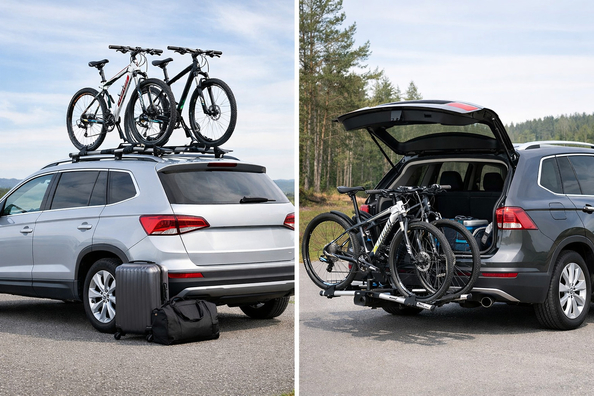
If we’re talking about regular trips rather than a one-off weekend bike haul, a towbar-mounted carrier is usually the more practical choice. It sits lower for loading, works better for 2–4 bikes and heavy e-bikes, affects fuel consumption or driving range less, and is typically less tiring on the road. A roof setup makes sense when there’s no towbar, the car isn’t tall, the bikes are light, and you need access to the trunk without any extra steps.
The biggest mistake here is looking only at the price of the carrier itself. In reality, the decision comes down to loading height, vehicle type, bike weight, whether you have roof bars or a towbar, highway noise, garages, and how often you’ll install and remove the system.
In essence, you’re not choosing a place for the bike—you’re choosing the routine of every trip. On the roof, you’ll be lifting the bike above shoulder height and keeping track of vehicle height, noise, and consumption. On the towbar, loading is much lower, but the platform itself is heavier, takes up space at the rear, and requires a compatible towbar.
That’s why for one or two light bike trips without a towbar, the roof still makes sense. For family outings, long highway drives, two or more bikes, or e-bikes, the advantage typically shifts to a towbar system.
| Option | Strengths | Weaknesses | Who it’s for |
|---|---|---|---|
| Roof-mounted carrier | No towbar needed, full access to the trunk, convenient for light bikes and lower vehicles | You have to lift the bike high, more noise and drag, risk of forgetting overall height in a garage | Those without a towbar who carry 1–2 light bikes and don’t want to block the rear of the car |
| Towbar-mounted carrier | Low loading height, better capacity, more convenient for 2–4 bikes and e-bikes, less impact on the highway | Heavier platform, higher price, requires a compatible towbar, sometimes limits access to the trunk | Those who travel long distances often and carry multiple bikes or heavy models |
DD Tuning expert comment: the most common mistake is buying a roof carrier for a tall crossover and then realizing after the first trip that lifting a bike every day is inconvenient. Another typical story is looking only at the rack’s rated weight but not checking the vehicle, crossbar, or towbar limits. Before buying, it’s worth modeling one real action: who exactly will load the bike, and how many times per season.
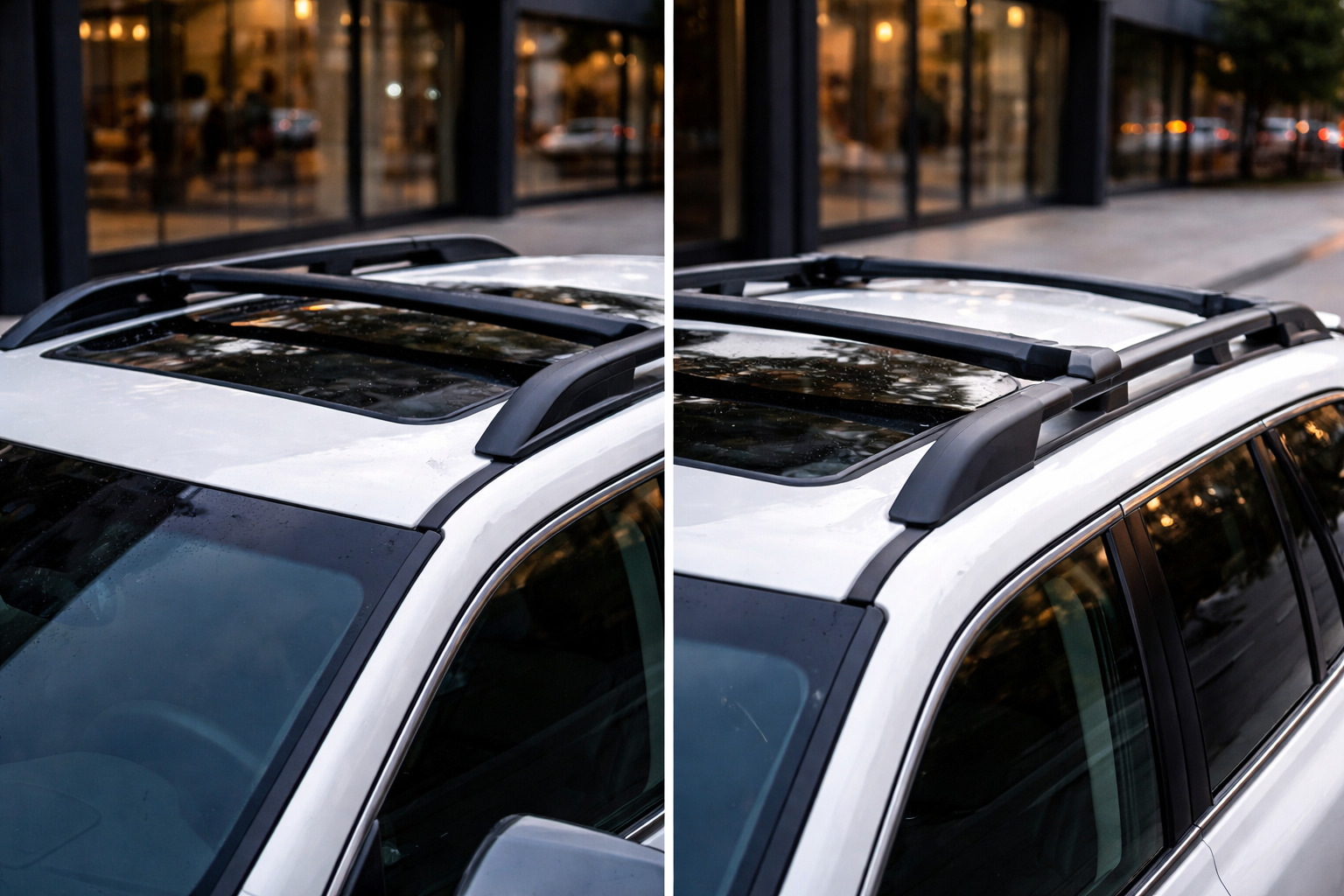
The roof’s strong point is versatility for cars without a towbar and decent access to the trunk. On a low sedan or wagon with one light bike, this can be a perfectly workable option. Some models don’t touch the frame or don’t require complicated handling, which matters for delicate frames.
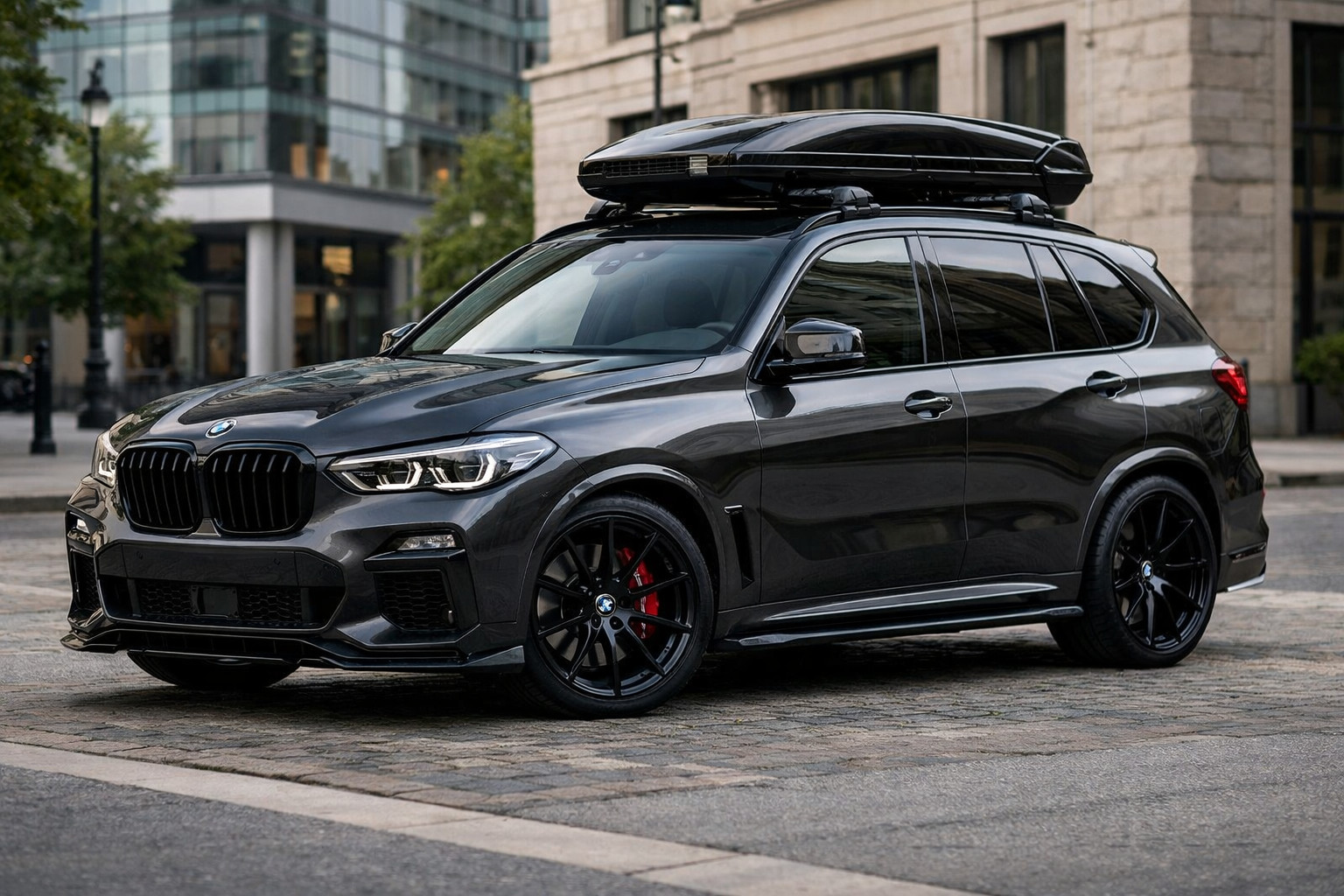
But on trips, the roof quickly shows its downsides. The bike has to be lifted high; on large crossovers, that becomes uncomfortable. On the highway, noise and aerodynamic drag increase, and with a bike on the roof the losses are more noticeable than with rear mounting. You also have to live with the car’s new height: garages, barriers, branches, ferries—everything becomes a real risk factor.
Compatibility is not always simple either. You need crossbars, and the bike mount must match tire width, wheelbase, and bike weight. For many models, the upper limit per bike is roughly in the 18–20 kg range, so for e-bikes this is often not the best scenario.
A towbar platform wins where trips are regular. Bikes sit lower, loading is faster, and the allowed weight is usually much higher: on serious systems it’s around 27–36 kg per bike and 60+ kg total. That’s exactly why a towbar is more practical for families, two to four bikes, and heavy e-models.
Another plus is less impact on aerodynamics. On the highway, that means less noise and less loss of driving range or fuel compared to a roof setup. For long trips, the difference is felt not only in numbers but in overall comfort.
There are downsides too. The platform itself is heavy, sometimes 22–25 kg, so not everyone likes taking it off often. You need to check towbar compatibility, the system’s real load rating, and the vehicle’s limits. Also, not every model offers equally convenient trunk access, and on steep exits or uneven roads it’s important to consider ground clearance and rear overhang length.
For highway driving, vacations, and family trips, a towbar setup usually works better. Less hassle when loading, calmer vehicle behavior at speed, and easier to carry two or more bikes. If you have e-bikes, the question is almost always settled in favor of a towbar platform.
A roof carrier looks sensible when the car isn’t tall, the bikes are light, and there’s no towbar and you don’t plan to install one. It’s also convenient when the towbar is already used by other equipment, or you don’t want a bulky platform at the rear.
If you constantly need trunk access on the road, it’s not so clear-cut. The roof gives immediate access without conditions, while a towbar system will require a tilt or fold mechanism. So here it’s not theory but habit: are you ready to do an extra step every time.
| Scenario | Best choice | Why |
|---|---|---|
| 1 light bike, a few trips per season | Roof | Less reason to invest in a heavy towbar platform if you don’t do regular long routes |
| 2–4 bikes for a family trip | Towbar | Lower loading height, better day-to-day practicality, higher capacity |
| E-bikes | Towbar | Roof systems often run into weight limits, and lifting a heavy bike onto the roof is inconvenient |
| Low sedan without a towbar | Roof | With a low vehicle height, loading is still manageable, and adding the setup is simpler |
| Frequent highway drives and range matters | Towbar | Rear mounting hurts aerodynamics less than bikes on the roof |
| Constant trunk access without tilting the platform | Roof | The rear of the car remains unobstructed |
Paying more is justified when it removes a real daily inconvenience. For towbar setups, that’s frequent trips, heavy e-bikes, the need for a tilt mechanism, higher capacity, better locks, and faster installation. For roof setups, it’s when careful handling of a delicate frame matters, you want more precise clamps, better compatibility with modern wheels, and less hassle during installation.
If you’re still narrowing down your options, start with bike carriers. For a roof setup, separately consider the impact of a roof rack on fuel consumption, and before buying a platform it’s useful to realistically assess whether you need a towbar and what it adds in everyday use.
From a customer’s experience: the most common switch is from roof to towbar after the first season of long trips. Someone needed a solution for two bikes and initially chose the roof due to a lower starting budget, but got tired of lifting the bikes and the highway noise. After switching to a towbar platform, they were happy mainly because of faster loading and a calmer drive, even though the platform itself turned out to be heavier.
For travel in most real-world scenarios, a towbar-mounted carrier is more practical: it’s easier to load, better suited to multiple or heavy bikes, and is less punishing on the highway in terms of noise and consumption. Don’t write off a roof carrier—it makes sense without a towbar, on lower vehicles, for light bikes, and when you need permanently free access to the trunk. This choice should be made not by a pretty picture, but by bike weight, vehicle height, trip frequency, and the everyday reality around loading. The material is based on real selection experience, hands-on practice, and real use cases—not abstract catalog descriptions.
| ✔ | Tow hitch mounting is more convenient for regular trips: the bicycle sits lower, so it’s easier to load and unload, especially when this is done often. |
| ✔ | A tow hitch system is better suited for 2-4 bicycles and heavy e-bikes, as it has a higher permissible load and fewer weight restrictions. |
| ✔ | On the highway, a tow hitch carrier affects aerodynamics less, so it usually produces less noise and lower fuel or range consumption. |
| ✔ | Roof mounting is useful if there is no tow hitch or it is not planned to be installed: it does not take up the rear of the car and leaves full access to the trunk. |
| ✔ | For low cars with one or two light bicycles, a roof-mounted option remains practical and can be easier to fit out later. |
| ✘ | Roof mounting requires lifting the bicycle high, which quickly becomes inconvenient in everyday use on crossovers and tall cars. |
| ✘ | A roof system requires crossbars, and the setup itself has a greater impact on noise and fuel consumption on the highway than rear mounting. |
| ✘ | With roof mounting, there is a higher risk of not accounting for the car’s new height — this creates problems with garages, barriers, branches, and other low obstacles. |
| ✘ | A tow hitch platform is heavy, more expensive upfront, and requires a compatible tow hitch, and sometimes also limits access to the trunk. |
Shipping to EU
Wholesale and retail
Own warehouse
Опис продукту
Подарунки не надаються при оформленні покупки у кредит під 0,01% або при покупці частинами.