09.04.2026
895
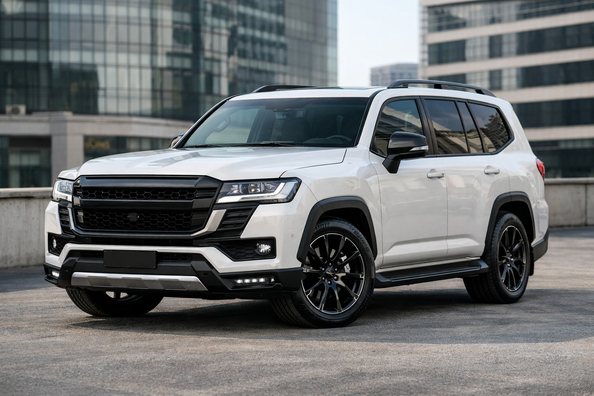
An urban style package for the Toyota Land Cruiser 300 makes sense not when it “looks more expensive,” but when it adds what truly takes a beating every day: stone-chip scratches, dirt buildup, overheating in hot weather, glare, and minor damage to the headlights and interior. Anything that boils down to an aggressive body kit and very large wheels mostly works for the picture — and often takes away comfort and money.
Below is a practical order of upgrades for the city: what to do first, what brings real benefits, and what most often is simply overpaying for looks, even if the kit looks impressive. If you’re aiming specifically for a visual “urban” scenario, start with a basic understanding of the kit using this reference: Wald urban body kit for Land Cruiser 300.
The point of an urban style package is to turn the LC300 into a neat daily SUV that looks premium even after a week of city driving and doesn’t require constant “fighting the consequences.” In the city, the most typical issues are: small chips on the hood and bumpers, scratches on the front end, grime and dirt along the lower doors, cabin overheating, and fatigue from windshield glare.
That’s why an “urban” package should work as a combination of protection + small conveniences + controlled exterior elements. Meanwhile, big wheels with low-profile tires and total body kits without a practical need usually don’t deliver an “urban upgrade,” but a compromise: higher maintenance costs, worse ride over potholes, and often extra nuances with the view of cameras and driver-assistance systems if you install a heavy-duty body kit.
First priority is protecting the paintwork and headlights where the city hits most often: the hood, front bumper, and headlight area. This can be polyurethane film (PPF) or other protection options, but the logic is the same: not to “touch up” the consequences, but to reduce the chance of defects appearing.
Second priority is glass and cabin temperature: tinting or IR-cut film, and also window deflectors if you actually drive with the windows cracked in the heat. This is not only comfort, but also practicality: less overheating and easier ventilation without extra dust/rain.
Third priority is the interior and everyday cleanliness: rubber floor mats (so you don’t “kill” the factory carpets), and a dashcam (in the city this is often more important than decorative small items). And only after that — exterior elements that change the look.
| Upgrade | Why it’s needed | Who it really benefits |
|---|---|---|
| Protective film/coating for the front end (hood, bumper, headlights) | Reduces the risk of chips and scratches from stones and fine abrasive | Those who drive in the city regularly, park in high-traffic areas, and don’t want to constantly restore the paint |
| Tinting or IR-cut film | Less overheating, less glare, more comfort in hot weather | Owners who drive a lot in sunny seasons or value passenger comfort |
| Window deflectors | More convenient to use “half-open” windows without direct rain getting in | Those who often drive with ventilation while moving (coffee on the go, short stops, trips in the heat) |
| Rubber floor mats | Protects the floor from water/dirt/salt and makes cleaning faster | Anyone who actually uses the car daily, not just keeps it “for show” |
| Dashcam | Records disputed situations in the city and helps monitor parking/traffic | Those who often drive in dense traffic and worry about incidents |
| Neat “urban” exterior accents (spoilers/trim pieces/moderate tint) | Changes the look without sharply worsening handling and comfort | Those who care about appearance but don’t want to trade comfort for the picture |
| 21-inch wheels and other “performance” styling | Adds a premium look and a “wider” silhouette | Only if comfort/rough pavement are secondary for you; otherwise the benefit is questionable |
After you’ve protected what takes the first hits of the city, it’s logical to move toward “looks noticeably better — but doesn’t break daily use.” These are moderate exterior elements: light tint, neat trim pieces, small spoilers that don’t create extra issues with aerodynamics/wind and don’t require complex installation modifications.
In the second stage, wheels within reason are also appropriate: switching to larger wheels or other “urban” options makes sense only if you’ve matched the tires to real roads and accept that comfort over potholes often gets worse with a low profile. For example: in the context of premium LC300 styling, 21-inch options do change the visual perception, but come with higher costs and potentially a less cushioned ride.
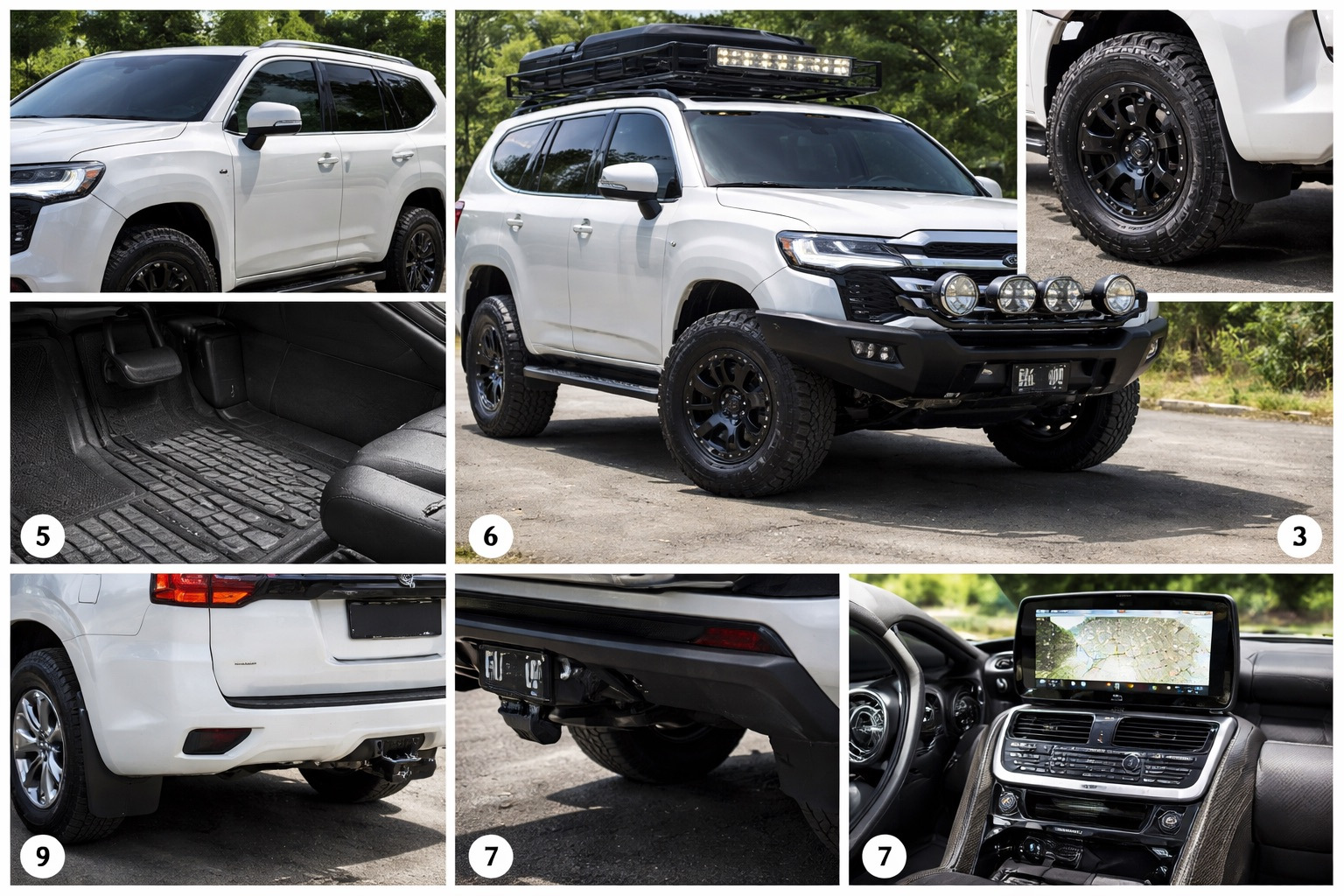
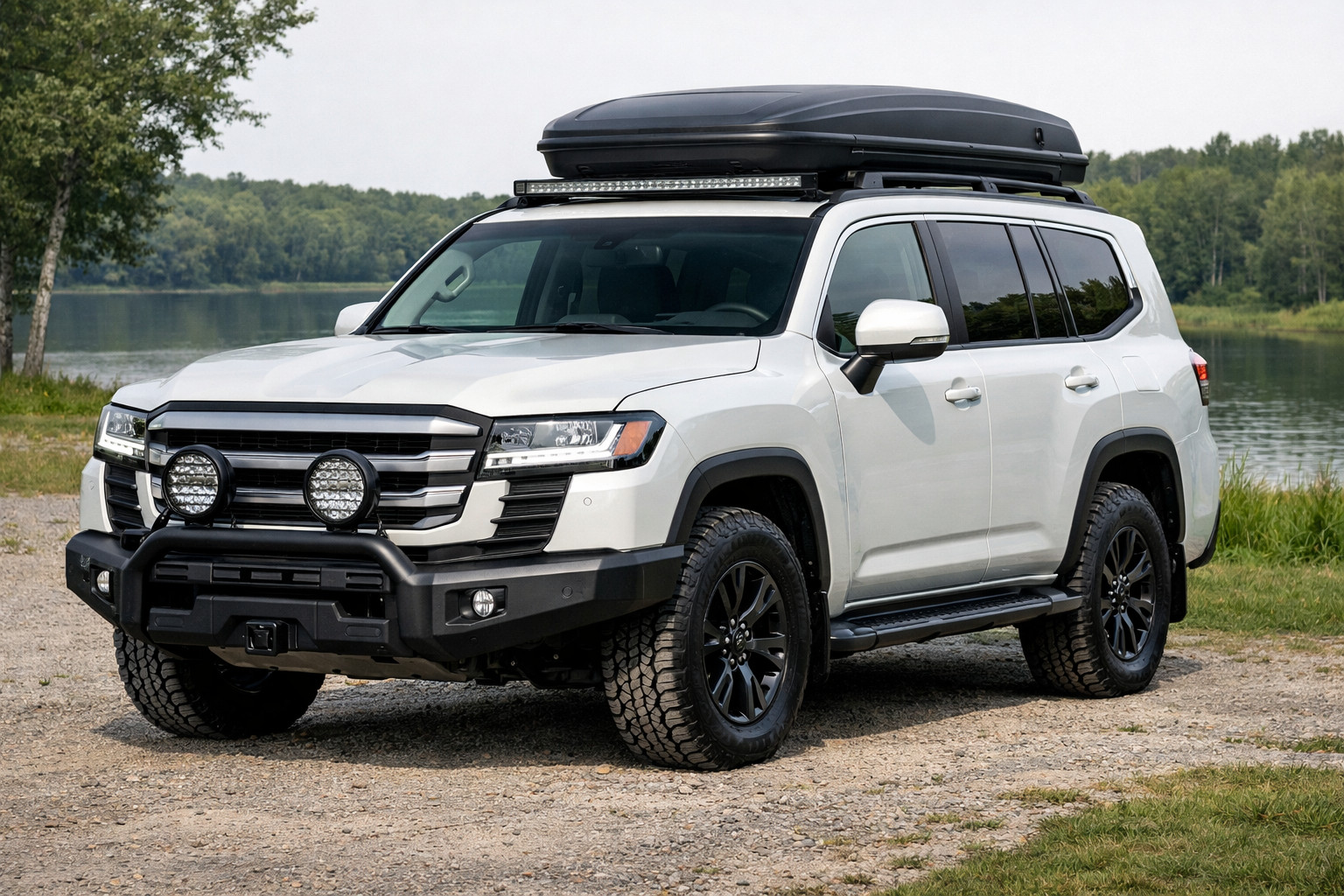
If the vehicle actually goes outside the city, a roof rack, auxiliary carrying elements, and a practical heavy-duty tow kit can be justified as a compromise between city use and trips. But for a purely urban package, they often turn into “decor with weight.”
Split purchases into two queues within the scenario: “comfort” and “appearance.” Comfort in the city usually includes: IR-cut/tinting, window deflectors, a dashcam, proper floor mats, and also careful tuning of small things that reduce daily fatigue (visibility, cleanliness, ease of getting in/out).
Appearance includes moderate bumpers/trim pieces/spoilers and color accents. Here it’s important not to cross the line from “city + protection” to “city + sporty body kit.” On an LC300 used as a family/daily vehicle, big body kits and the most aggressive sets easily turn into expenses without noticeable day-to-day benefit.
Separately: heavy-duty add-ons (bars, bull bars, crossbars) can affect how cameras work and what driver-assistance systems can see. So if the package is aimed specifically at an urban scenario, such items are installed last or skipped.
The most common overpayment for “looks” is a body kit that doesn’t add protection, and big wheels without understanding how they’ll fit real roads. Such solutions are expensive to install and maintain, and they often reduce comfort over potholes and increase sensitivity to curbs.
The second typical mistake is buying heavy-duty elements without a need for trips “where the city pavement ends.” If the car doesn’t go to places where extra mechanical durability is required, you just get more weight and bulk, with almost no benefit for the city.
The third mistake is overpaying for “everything at once.” If the paint and headlight protection isn’t done, any expensive body kit quickly loses its point: you’ll still get chips/scratches in the most vulnerable areas. And vice versa: properly selected “urban” protective solutions often keep the “like new” look through a season better than decorative sets.
| Install first | Can be postponed | Not mandatory |
|---|---|---|
| Protection for the hood/front bumper/headlights (PPF or equivalent) | Small exterior accents (partial tint, trim pieces) | Flashy “visual” add-ons that don’t protect and don’t affect comfort |
| Tinting or IR-cut film + window deflectors | Expanding styling around the exhaust/small bumper elements | Decorative inserts that require frequent care or complex installation |
| Rubber floor mats | Improving the look via wheel setup/small body kit pieces | “Show-car” options if you still drive mostly in the city |
| Dashcam | Switching to a larger wheel diameter if comfort and budget allow | Solutions that increase the risk of visibility/camera issues and add heavy bulk |
| If you need trips — practical carrying elements | Temporarily unnecessary components of heavy-duty body kit | Heavy-duty bumpers/bars/crossbars if your scenario is purely urban |
More expensive solutions make sense when they either directly reduce time/nerve costs (frequent driving + dirt/chips) or perform a real function beyond “beauty.” In practical city logic, this is usually: quality protection for the front of the body, as well as glass/films if there’s a lot of sun and overheating.
If you’re looking for a “premium look” through body kits and wheels, evaluate not only the kit price, but also the side effects: larger-diameter wheels often mean higher running costs and less comfort on uneven surfaces. In this logic, options like high-cost aero packages (for example, Modellista) are better considered after the basic protective and functional upgrades are already done. Also use this material as a reference for what an “urban package” looks like in a real approach: urban body kit set.
One more boundary: if more expensive solutions include heavy-duty body add-ons, check how they affect cameras and driver-assistance visibility. For many urban scenarios, that means “better to postpone or skip” if there is no official guarantee of correct operation.
An urban style package for the Toyota Land Cruiser 300 is first and foremost protection and practical small things: PPF/front-end protection, IR-cut or tinting, window deflectors, rubber floor mats, and a dashcam. This way, the car stays tidy longer and doesn’t “lose its look” from everyday city conditions.
Visual spending on a maxed-out body kit and very large wheels only makes sense after you’ve covered the basic needs — and only if comfort isn’t a priority for you. If your scenario is truly urban, the most rational strategy is to reduce damage to the body first, and only then add controlled styling without unnecessary compromises.
| ✔ | Reduces daily paint restoration costs thanks to protecting the hood, front bumper, and headlight area (PPF/analog) from chips and scratches. |
| ✔ | Improves comfort in hot weather and reduces fatigue from glare thanks to tinting or an IR-cut film. |
| ✔ | Makes city use easier: rubber floor mats help keep the floor clean faster, and a dash cam provides control in typical urban situations. |
| ✔ | Adds a neat "urban" look without a sharp drop in handling, if you go with moderate exterior accents after basic protection. |
| ✘ | A body kit “to the max” and very large wheels often work more for appearance than for everyday use, and can take away comfort and money. |
| ✘ | Switching to larger wheels/low-profile tires usually means more expensive maintenance and a less comfortable ride over potholes. |
| ✘ | Power elements (a massive body kit) can create problems with visibility and the operation of cameras/driver-assist systems, so for a purely city setup they are often recommended to be installed last or skipped. |
Shipping to EU
Wholesale and retail
Own warehouse
Опис продукту
Подарунки не надаються при оформленні покупки у кредит під 0,01% або при покупці частинами.