22.03.2026
223
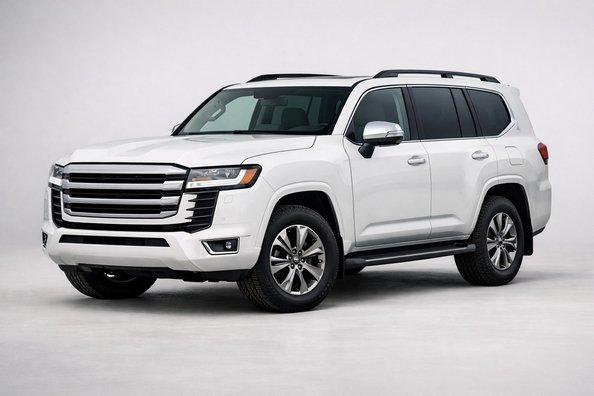

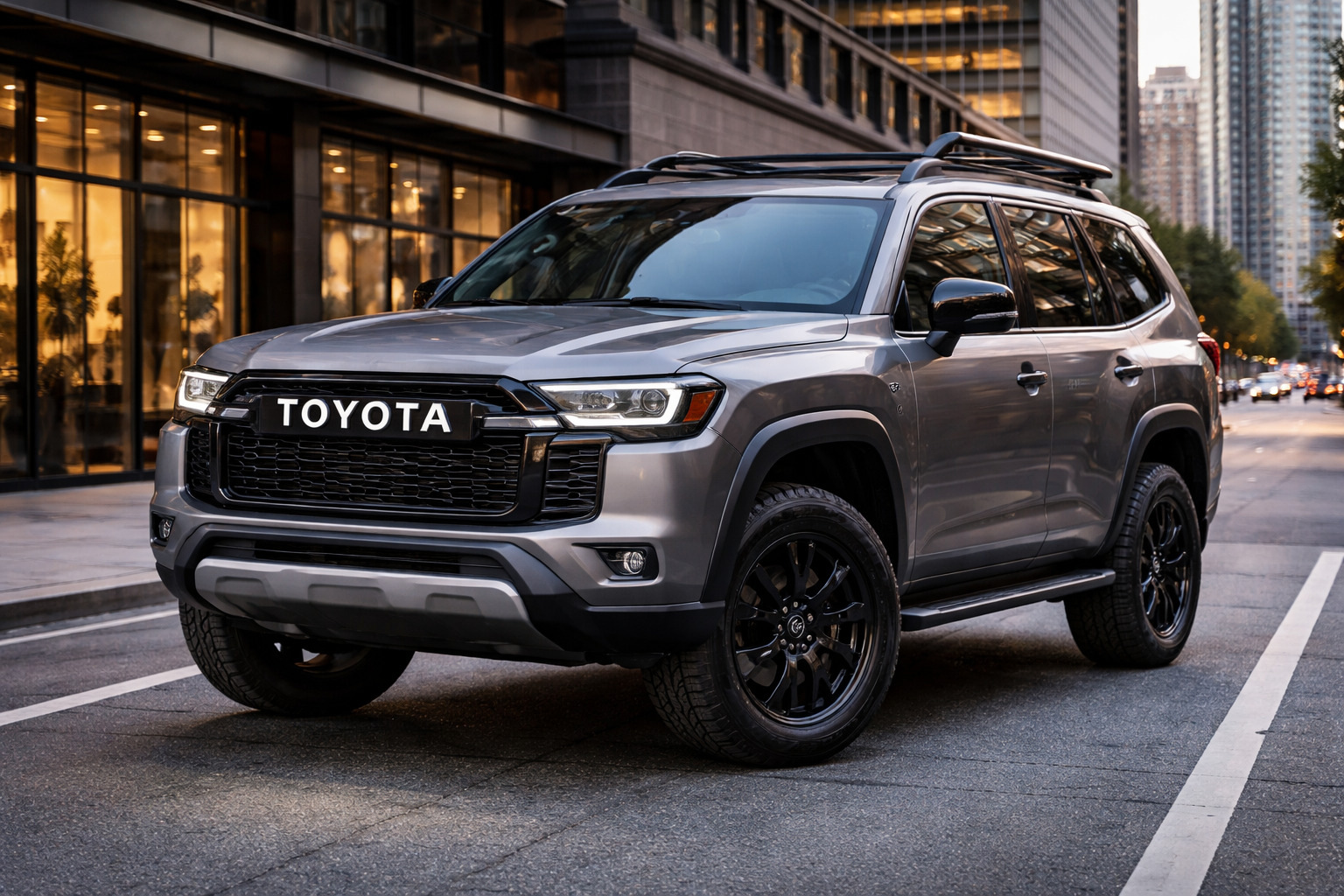
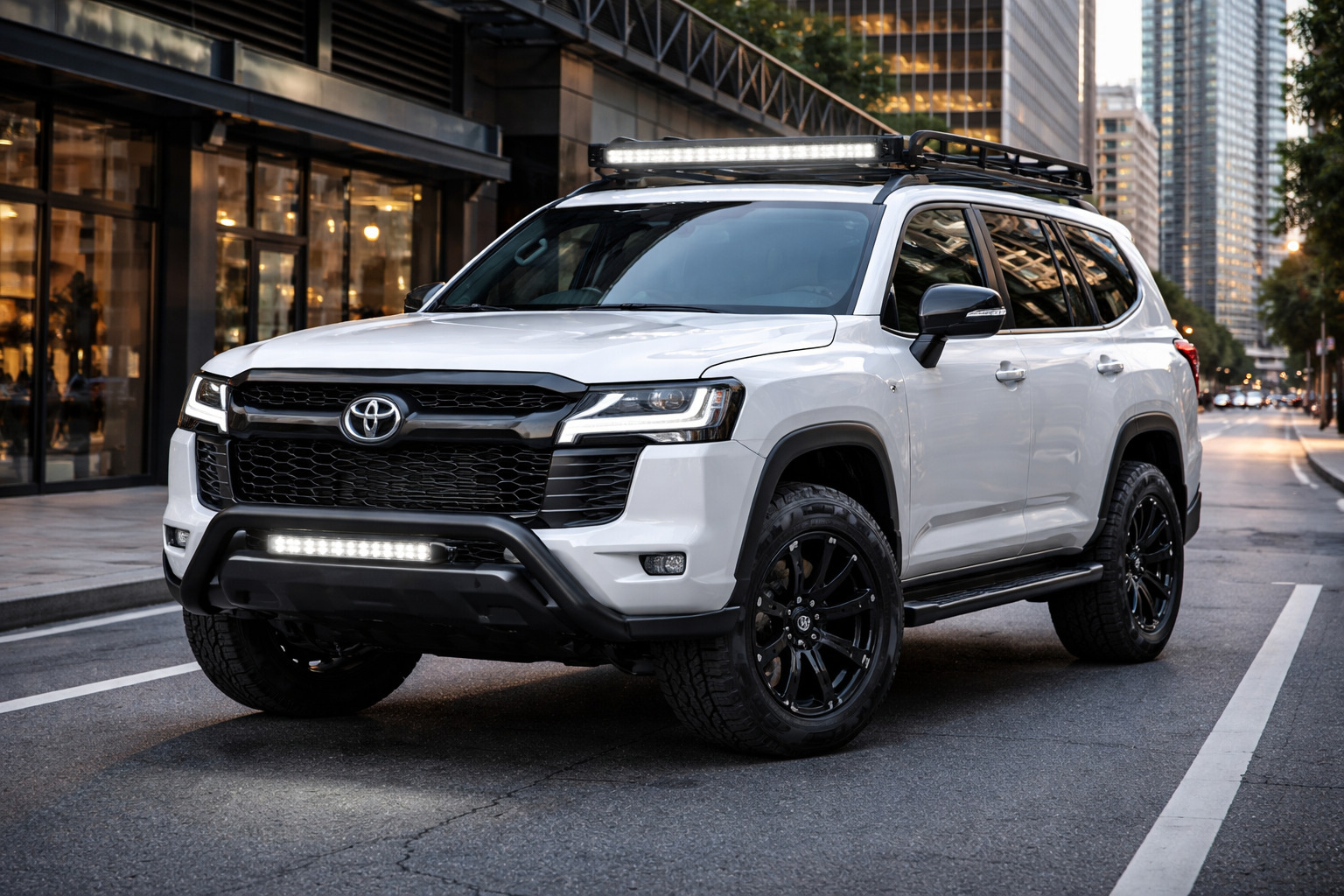
Toyota Land Cruiser 300 (J300 series) is a full-size body-on-frame SUV that thinks like a “work tool” and like a family long-distance vehicle. Its strengths show up where you need strong low-end pull, straightforward 4WD logic, and a solid margin of strength in the body/frame platform.
This review will help you decide whether the Land Cruiser 300 is right for you: we’ll break down the generation and production years, real-world powertrains, dimensions/ground clearance/cargo space, common real-life pros and cons, and what tuning upgrades actually make sense.
The Land Cruiser 300 is a flagship body-on-frame SUV among “full-size” 4x4s, focused on combining off-road capability with comfort. Its logic differs from crossovers: weight, frame, HI/LOW transfer case, and locks create the feel of machinery designed for sustained work—not occasional “after the rain” trips.
At the same time, the model isn’t only about off-road use. The practical side is cabin and cargo capacity, a full set of safety systems, and readiness for long-haul operation—where quietness, high-speed stability, and predictable drivetrain behavior matter.
J300 is the modern Land Cruiser generation that replaced the previous series. The key focus of this new stage is the development of the 4WD system and transmission control electronics, plus a redesigned logic of auxiliary modes for different surface types.
In short about the generation’s “character”: the Land Cruiser 300 is more about controlled, heavy-duty off-roading (with HI/LOW, modes for different conditions, and water crossings) and stable long-distance behavior than about sportiness. That’s why it’s often chosen as an all-around vehicle “for everything,” not as a second city car.
The Land Cruiser 300 is available in diesel and gasoline versions. In both cases, the design is geared toward torque and speed control across different modes.
Real powertrains (for markets with confirmed specifications):
Transmission: a 10-speed automatic with manual mode and a transfer case with HI/LOW and full-time 4WD. For off-road use, it’s not just the torque numbers that matter, but the fact that the gearbox/transfer case provide predictable “gear geometry”—from slow crawling in low range to normal highway speeds.
| Parameter | 3.3 V6 twin turbo diesel | 3.5 V6 twin turbo gasoline |
|---|---|---|
| Displacement | 3346 cm³ | 3445 cm³ |
| Power | 306 hp (227 kW) | 415 hp (305 kW) |
| Torque | 700 N·m (1600–2600 rpm) | 650 N·m (2000–3600 rpm) |
| Gearbox | 10-speed automatic + manual mode | |
| 4WD logic | Full-time 4WD + HI/LOW transfer case | |
| Locks | Locking center differential; front and rear differential locks are available (depending on version specification) | |
The Land Cruiser 300 is a full-size body-on-frame vehicle, so its behavior is defined by mass and wheelbase, not “lightness” like in crossovers. It’s big, but its off-road geometry is also up to par: approach/departure angles and wading capability are engineered as part of the design, not as a marketing add-on.
Dimensions and key off-road geometry parameters (for confirmed specifications):
Ground clearance and angles: Toyota Australia lists ground clearance at 245 mm. Other catalogs sometimes show a minimum of 235 mm—usually due to trim/measuring differences. Angles: approach 32° (some versions show 24°), departure 25°, ramp-over 21°. Wading depth: 700 mm.
For everyday use, this means: it doesn’t just “clear” curbs thanks to ground clearance—it has a healthy margin in geometry, but its size demands careful parking. Turning circle is about 11.8 m, so in tight courtyards you’ll need to plan ahead.
The Land Cruiser 300 works well as a family vehicle for long trips. Toyota Australia specifications mention 5 seats in some versions and 7 seats in many other trims—depending on market and configuration.
On safety, 10 airbags are listed (including curtains for the 3rd row in the safety equipment list). This matters in practice: in a large SUV with 2–3 passenger rows, protection should be comprehensive, not “budgeted.”
Comfort in the Land Cruiser class usually comes from the combination of body-on-frame construction, a suspension tuned for the job, and sound insulation. Practically, you should evaluate something else: whether the driving position suits you, how the noise environment is on your roads, and how easy it is to use the large steering wheel/screen interface in daily routine.
In daily use, the Land Cruiser 300 is valued for being manageable in “city chaos” while retaining genuine off-road capability as a reserve. But there are two points often underestimated before buying: fuel consumption and loading/unloading behavior due to the rear-end design.
Fuel consumption: the official/lab figure for the diesel is listed as a combined 8.9 L/100 km (city 11.1, highway 7.6)—laboratory conditions. One test review mentions 12.8 L/100 km in a mode with a large share of low-range 4WD. In other words, “traffic lights + active 4WD logic” quickly changes the picture.
Cargo space: usable volume in 5-seat versions is 1131 L. For 7-seat versions (with the 3rd row up/folded) the volume is smaller by about 126 L—details depend on the folding method. The review also notes that the tailgate in a certain design opens downward so low you can hit your head; it also mentions the lack of a split rear glass/tailgate like in previous generations.
Another practical plus is smart trip preparation. For some versions, a 220 V, 100 A outlet is listed in the cargo area, which is useful if off-grid capability matters to you.
Below is not a “marketing list,” but the points that реально affect the purchase decision and ongoing ownership.
| Pros | Cons |
|---|---|
| Ground clearance up to 245 mm (Toyota Australia) and wading depth 700 mm | Real-world consumption can be significantly higher than lab numbers: the test mentioned 12.8 L/100 km with some low-range use |
| Strong torque: the diesel delivers 700 N·m in the 1600–2600 rpm range | Cargo-area design: the review noted inconvenience with the tailgate (low swing) and differences versus previous generations |
| 10-speed automatic + HI/LOW: predictable behavior across different speeds | Factory tires can be a compromise for serious off-roading (the test compared them to more suitable AT tread patterns for rock/mud) |
| High towing capacity: up to 3500 kg braked | For certain years/markets there are mentions of recalls due to an issue in the 10-speed automatic control module (risks are described in reports about the TCM) |
| Large cargo space: 1131 L in 5-seat versions | Possible increased wear/oil consumption on some used vehicles (per reviews—as a factor to monitor, not a guaranteed issue) |
Practical owner-focused pros and cons:
Tuning the Land Cruiser 300 makes sense to start not with “looks,” but with preparation for your scenarios: off-road (rock/mud), regular towing, or long-distance comfort. What to install depends on whether you drive mostly on asphalt or actually use the 4WD capability.
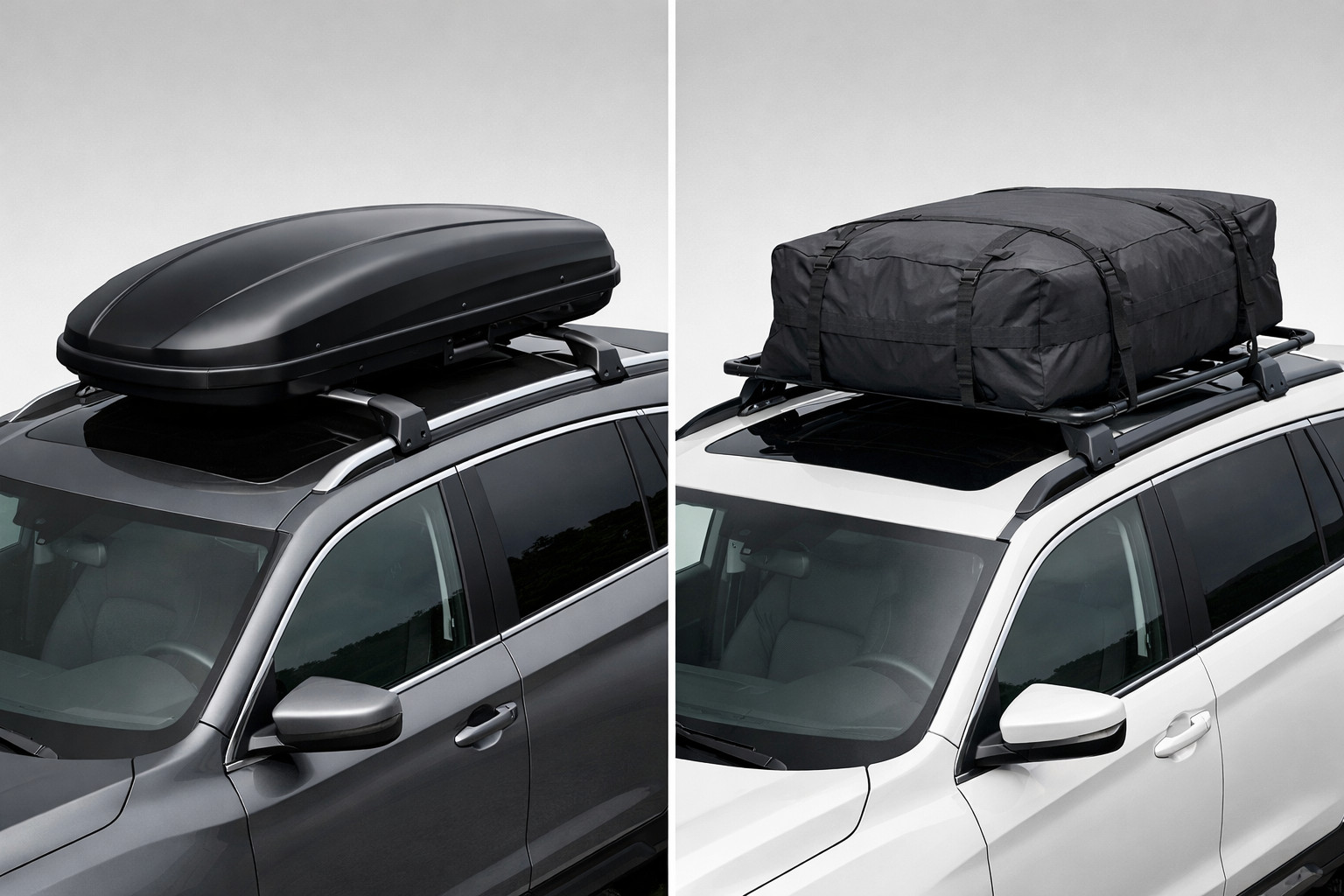
In practice, most people start with:
If you want a basic reference for where it’s logical to start tuning this vehicle, see the piece about tuning the Toyota Land Cruiser 300. It will help you set priorities and avoid spending your budget on upgrades that won’t affect the result.
Important: any interventions in the drivetrain/control systems (especially if there is a history of software errors in modules) are best coordinated with a service center and not “tuned” to one symptom. The right starting point is protection, recovery, tires—and only then electrics/cargo systems.
The Toyota Land Cruiser 300 suits those who buy a full-size body-on-frame SUV not “for status,” but for specific scenarios: towing a trailer, regular off-asphalt trips, long-distance travel under load, and the desire to have a reserve in geometry (ground clearance/wading) and HI/LOW traction logic.
If you need a more compact city vehicle or expect consumption to stay consistently at lab numbers, the Land Cruiser 300 may disappoint. The practical verdict is simple: buy it if you’re ready for the size and real-world use, and tune it only to match your routes; to clarify the direction, start with Land Cruiser 300 tuning.
| ✔ | Permanent all-wheel drive and a transfer case with HI/LOW provide clear handling on different surfaces, from slow driving in low range to normal speeds on the highway. |
| ✔ | Torquey engines with high torque in their operating ranges (700 Nm at 1600–2600 rpm for the diesel, 650 Nm at 2000–3600 rpm for the petrol) handle everyday loads well. |
| ✔ | Strong “off-road geometry”: the specifications mention ground clearance of up to 245 mm, approach angle of 32° and ramp angle of 21°, as well as a wading depth of 700 mm. |
| ✔ | Practical cargo space: 1131 l in 5-seat versions, and some versions also include 220 V, 100 A power in the trunk. |
| ✔ | Predictable behavior for long-distance use thanks to the ladder-frame platform and an emphasis on high-speed stability, plus a full set of safety systems (10 airbags). |
| ✘ | Fuel consumption in real-world conditions can differ significantly from lab figures: the test mentioned 12.8 l/100 km with a substantial share of low-range 4WD. |
| ✘ | Inconveniences in practical cargo use: the review noted a problematic rear door design (low opening, risk of hitting your head) and the lack of split rear glass/doors. |
| ✘ | For serious off-road use, the standard tires may be a compromise: in the test they were compared with more suitable AT patterns for rock/mud. |
| ✘ | Some used vehicles may carry risks related to recalls over an issue in the control module of the 10-speed automatic (TCM), so it is important to check the history. |
Shipping to EU
Wholesale and retail
Own warehouse
Опис продукту
Подарунки не надаються при оформленні покупки у кредит під 0,01% або при покупці частинами.