03.05.2026
810

For a crossover or a large SUV, the best roof rack is not the “strongest” one, but the one that matches the roof type exactly. If you have standard raised rails with a gap, the easiest option is to mount the system on them. If the rails are integrated or the car often drives on highways, low-profile aero crossbars are more practical: they sit lower, are usually quieter, and get in the way less in parking garages. If there’s a panoramic roof, compatibility must be checked separately even when the mounting looks formally suitable.
The main mistake is looking only at the load rating of the rack itself. In reality, the lower of two limits applies: the car’s roof rating or the rack kit’s rating. For a tall vehicle, this is especially important, because extra centimeters of height, highway noise, and inconvenient loading are felt every day, not just on vacation.
The logic is simple: first determine the roof type, then your real usage scenario. If you travel 3–4 times a year, you don’t need a heavy expedition system. For highway driving and daily use, a lower aerodynamic setup works better. For long or heavy cargo, noise matters less than stiffness reserve—but only within the vehicle roof limit.
A panoramic roof adds one more condition: you need to check whether the rack restricts sunroof opening, whether the mounts sit in the glass area, and whether the manufacturer has separate load restrictions. The mere presence of rails doesn’t mean any kit will fit without nuances.
| Option | Strengths | Weaknesses | Who it suits |
|---|---|---|---|
| On standard raised rails with a gap | Easiest installation, quick removal, a good option for seasonal use | Often higher profile, more chance of noise, you need to check rail thickness and shape | Those who already have factory rails and don’t need a rack every day |
| Low-profile system on integrated rails | Lower fit, neat look, usually less highway noise | Requires an exact vehicle-specific kit, load is often limited to around 75 kg | Those who drive highways often, have a tall vehicle, or use low parking garages |
| Fixed points or bare roof | Very precise fit, minimal extra play, a good base for an OEM-like look | Selection is more complex, installation takes longer, without the right kit the advantages disappear | Those who want a tidy system for a specific vehicle |
| Reinforced crossbars or a platform | Better for heavy, work-type cargo, higher strength reserve of the system itself | More noise, more height, often unnecessary weight for daily trips | Those who actually carry ladders, tools, or heavy gear |
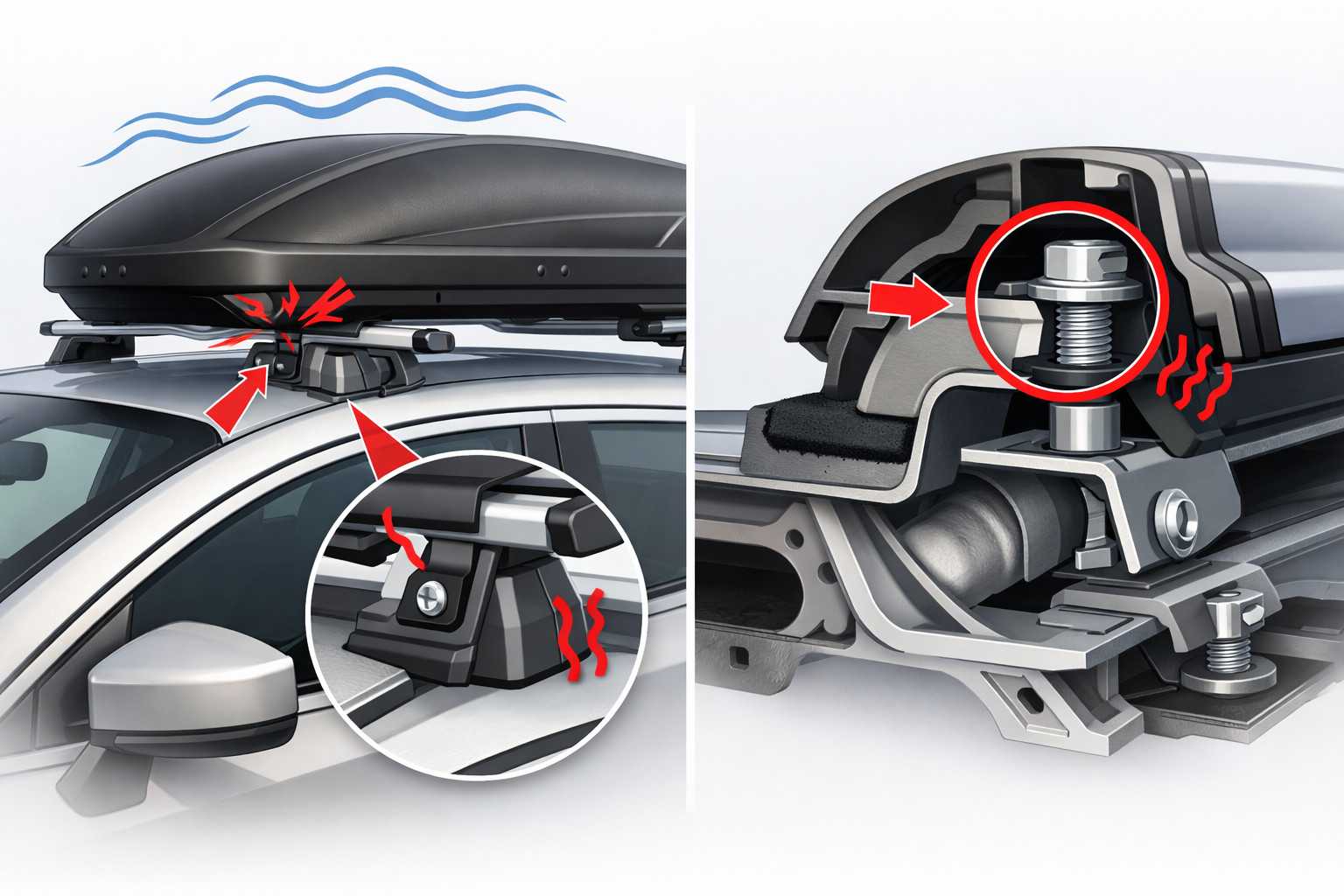
DD Tuning expert comment: Most often, an owner only sees the rails and orders the first universal kit without checking rail thickness, the gap, and crossbar length. On cars with a panoramic roof, the second typical mistake is not checking whether the mounts interfere with the sunroof area and whether it can be opened after installation. On a tall vehicle, even a 1 cm difference in support height is often felt more than the price difference between two systems.
This is the most convenient format for most crossovers: the feet clamp directly onto the factory rails, installation takes minimal time, and removal doesn’t turn into a separate procedure. For family trips with a roof box or ski rack, this is often enough.
The downside is that such systems often sit higher. For a large vehicle, that means more noise and less height clearance in a garage. Plus, not all rails are the same: wide or non-standard rails may not accept a standard foot.
For highway driving, this is usually the smartest choice. With low-profile systems, the support height can be around 5.4 cm versus about 6.2 cm in more typical solutions for the same roof type. On paper the difference is small, but on a tall vehicle it affects noise, parking access, and loading convenience.
Keep in mind that many such kits have a limit of around 75 kg. For a roof box, bicycles, or standard camping gear this is usually enough, but don’t apply the logic “the more expensive, the more you can load without limits.”
This option is for those who want the most precise fit without geometry compromises. If the kit is selected correctly, the system sits very neatly and has no unnecessary play. For cars with a panoramic roof, this format can sometimes be safer in terms of fit accuracy, but compatibility checking is still mandatory.
There’s one drawback: mistakes in selection aren’t forgiven. The wrong mounting kit or trying to “adapt something similar” quickly cancels all the benefits.
This solution is for those who truly carry heavy or long cargo. The stated reserve of the crossbars themselves can be very high, but on a crossover you still hit the vehicle roof limit. So such a system makes sense not because of a pretty catalog number, but because of the real task.
For everyday driving on a tall vehicle, this is the least universal option: more noise, a higher setup, harder loading. If the goal is family trips rather than work, a reinforced system is often simply unnecessary.
If the vehicle often drives on highways, a low-profile aerodynamic system works best. It’s the one that irritates less with noise and creates fewer height issues.
If you already have standard raised rails with a gap and install the rack only a few times a year, overpaying isn’t always necessary. Here it’s more important to choose decent aero crossbars with correct fit than to chase the most expensive kit.
If there’s a panoramic roof, compatibility becomes the priority—not load rating. A low system with precise mounts is usually better than a tall universal one, but the final decision is made only after checking the specific vehicle.
For work loads or expedition tasks, reinforced crossbars or a platform make sense. For city use, vacations, and daily driving, they rarely deliver as much benefit as they take away in comfort.
| Scenario | What to choose | Why |
|---|---|---|
| Panoramic roof, frequent highway driving, low parking garage | Low-profile system on integrated rails or fixed points | Less noise, lower overall height, easier to avoid conflict with the sunroof |
| Standard rails present, rack needed a few times per season | Aero crossbars on standard rails | Easier to install, easier to remove, no sense in overpaying for a more complex system |
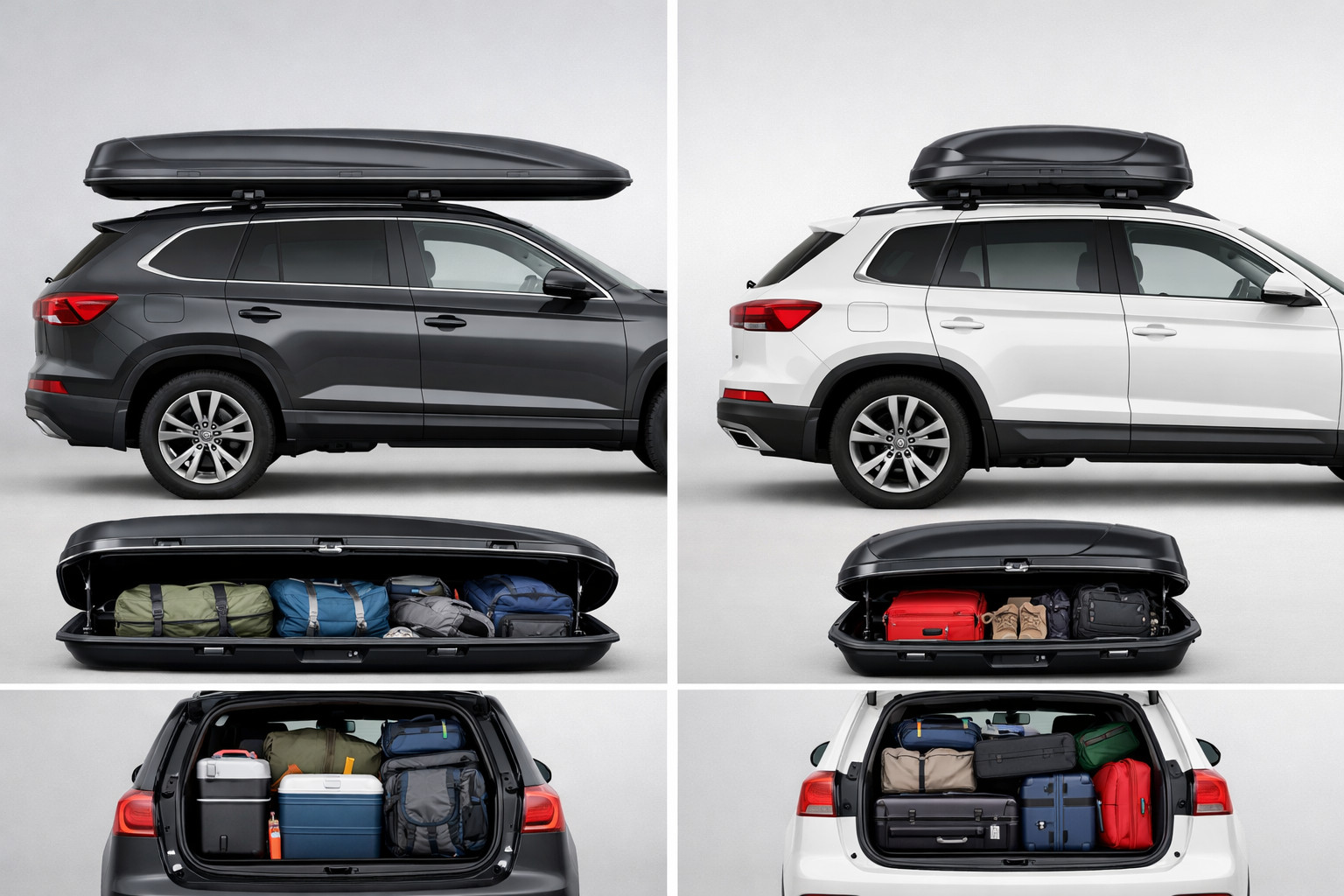
| Often carry a roof box for family trips | A low aero system matched to the specific roof type | Behaves better on the highway and doesn’t add as much height to a tall vehicle |
| Bare roof without rails | A kit for fixed points or a precise set for a bare roof | Only this gives the correct fit without play |
| Work cargo, long items, heavy gear | Reinforced crossbars or a platform after checking the roof limit | You need system rigidity, but the vehicle roof limit still remains the main constraint |
Paying extra is justified when the rack actually lives on the vehicle rather than sitting in the garage. For frequent highway driving, a tall body, underground parking, and a panoramic roof, a more expensive low aero system usually earns back the price difference through lower noise, reduced height, and more precise fit. If you’re choosing specifically for integrated rails, it’s worth looking at багажник на інтегровані рейлінги.
If the car has standard rails, a more expensive kit makes sense not on its own, but when it provides better aerodynamics, locks, more precise feet, and less hassle with installation. For this roof type, it’s logical to compare багажник на звичайні рейлінги, and if you want to quickly validate the overall approach to choosing, it’s useful to review розбору підбору для позашляховика.
A reinforced system only makes sense when you truly can’t do without it: work tools, long items, expedition gear. Buying one “just in case” for vacations and the city is usually not cost-effective.
From a customer’s experience: the owner of a crossover with a panoramic roof initially wanted a tall basket because it seemed more universal. After checking parking height clearance and real load needs, he chose low aero crossbars on factory mounting points and a separate roof box for long trips. As a result, the vehicle became quieter on the highway and he stopped removing the system before every entry into the underground garage.
For most crossovers and large SUVs, the best choice is a low-profile aerodynamic system selected for the specific roof type. Standard rails win on simplicity; integrated rails and fixed points win on lower fit and cleaner looks; and reinforced systems are needed only for truly heavy tasks. If there’s a panoramic roof, the final decision should be made only after checking compatibility for the specific vehicle.
This material is based on real-world selection experience, practice, and real usage scenarios: what makes noise on the highway, what gets in the way in parking garages, what turns out to be unnecessary in the city, and what is truly needed for cargo. That’s why there is no universal “best” roof rack for everyone—there is the right option for your roof, your vehicle height, and how you use it.
| ✔ | On standard roof rails, a roof rack is the easiest to install: mounting and removal take minimal time, which is convenient for seasonal use. |
| ✔ | Low-profile aero crossbars are better suited for highway driving and tall vehicles: they sit lower, are usually quieter, and are less likely to get in the way in parking garages. |
| ✔ | Systems for fixed points or a smooth roof provide a very precise fit and minimal play if the kit is selected correctly. |
| ✔ | Reinforced crossbars or a platform are useful for heavy and long cargo when rigidity and a working strength reserve are needed. |
| ✔ | For cars with a panoramic roof, a low system with precise mounting can be more practical because it is less likely to create issues with height and sunroof opening. |
| ✘ | A universal kit does not always fit specific roof rails: thickness, shape, and clearance matter, and these need to be checked separately. |
| ✘ | Tall or reinforced systems often add noise and extra height, which is especially noticeable on the highway and in low parking garages. |
| ✘ | Many low-profile systems have load limits, so they should not be chosen for heavy platforms or tents without checking the roof limit. |
| ✘ | For a panoramic roof, compatibility must be checked very carefully: the mount may fall into the glass area or interfere with sunroof opening. |
Shipping to EU
Wholesale and retail
Own warehouse
Опис продукту
Подарунки не надаються при оформленні покупки у кредит під 0,01% або при покупці частинами.