16.06.2026
409
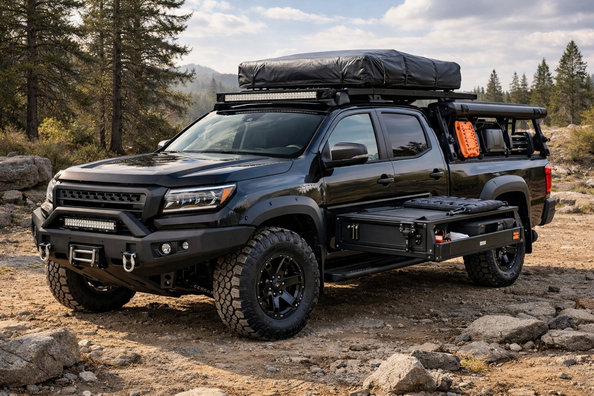
This plan is for a pickup owner who has just bought the truck and wants to cover the practical needs first, rather than burn the budget on good-looking but secondary mods. The scenario is simple: protect the cabin and body, make hauling more convenient and safer, and only then decide what’s truly worth paying extra for.
For most pickups, the order is the same: start with floor mats, bed protection, a roll-up cover or tonneau cover if you actually carry stuff; then — a spare wheel, underbody rust protection, towing equipment, or tires for the season and surface. A lift, big wheels, aggressive tires, and extra lighting are better left for later unless you have a clear use case.
The first pickup upgrades should solve not one, but several basic tasks at once: protect the interior from dirt and road salt, keep the body from being destroyed by abrasive cargo, protect items from rain, and make the truck ready for your usage pattern.
If the pickup is a city or family vehicle, the focus is on comfort, a clean interior, and a closed bed for groceries, tools, or gear. If it’s a work truck, the priority shifts toward full bed protection, towing, and organizing small cargo. If your region is snowy and roads are salted, early rustproofing and the right seasonal tires matter more than any exterior tuning.
The most universal first purchase is all-weather floor mats. They don’t add a “tuning effect,” but they genuinely save the interior from water, sand, snow, and salt. It’s the kind of upgrade you feel every day, and it works whether the pickup goes to a jobsite, fishing trips, or just around town.
Second priority is bed/body protection. If you toss bags, boxes, gear, or garden tools into the bed, a bed mat is often enough. If you haul tools, boards, metal, bags of materials, or other hard cargo, you’ll need more complete protection: a bed liner or another solution that takes impacts not only on the floor, but also on the sides.
The third logical step is a roll-up cover or tonneau cover if items regularly stay in the bed. It doesn’t replace bed protection, but it covers a different task: rain, dirt, and unwanted attention to your cargo. At the same time, check the spare: if it’s a temporary spare or it hasn’t been inspected under the bed for a long time, that’s also a first-priority issue.
| Upgrade | Why it’s needed | Who it truly benefits |
|---|---|---|
| All-weather floor mats | Trap water, sand, salt, and dirt; make cleaning easier | Pretty much every pickup owner, without exception |
| Bed mat | Protects the bed floor; reduces sliding of boxes and bags | Those who carry household items, supplies, gear |
| Full bed liner or durable bed coating | Takes scratches and impacts on the floor, sides, and front wall | Work pickups; those who carry tools, lumber, abrasive cargo |
| Roll-up cover or tonneau cover | Keeps cargo out of the rain and makes the bed less accessible to outsiders | Those who often leave items in the bed or drive in any weather |
| Full-size spare | Provides a proper wheel replacement without the limits of a temporary “donut” | Those who drive highways, out of town, on mixed surfaces |
| Underbody rust protection | Slows rust in salty and humid conditions | Regions with snow, de-icers, frequent winter driving |
| Towing package | Makes the truck trailer-ready without improvised solutions | Only those who actually tow a trailer, boat, or equipment |
DD Tuning expert comment: The most common mistake after buying a pickup is ordering an expensive roll-up cover, a lift, or big wheels before the owner understands their real usage pattern. The second typical issue is not accounting for compatibility between accessories and with bed length: what fits one bed doesn’t always fit another. If your scenario hasn’t been proven in practice yet, start by covering protection and seasonal needs, not looks.
The second stage starts where a specific use case appears. If you tow, then it makes sense to install a hitch, wiring, and if needed, trailer brake control. If the main problem is winter, the priority shifts to a dedicated set of winter tires, not “universal” aggressive tires that are simply louder on asphalt.
For those who work with the bed in the evening or use a closed bed daily, bed lighting and small-cargo organization become useful. But that’s the second layer of functionality: first you need to decide how the bed is protected and how exactly you’re closing it.
If the pickup operates in a region with a lot of salt, sometimes it’s worth swapping stage two with stage one and quickly doing underbody rust protection. For such a vehicle, it delivers more value than any decorative accessory.
Side steps and running boards don’t always make sense. They’re truly useful if the pickup is tall, already lifted, or if kids, older people, or passengers who find it hard to climb into the cab use it often. On a stock-height truck, it’s often not a first necessity.
This also includes more expensive types of bed covers, decorative wheels, additional exterior trim elements, and some lighting accessories. They may look good, but they don’t solve a basic task as effectively as mats, bed protection, a spare, or rustproofing.
Comfort upgrades are best bought after one or two months of real use. Then you can clearly see whether getting into the cabin is actually inconvenient, whether you lack light in the bed, or whether the main issue was something else entirely.
Most often, what’s bought for nothing is anything not tied to a scenario. For a city pickup, that’s usually a very expensive roll-up cover instead of a simpler solution, mud tires for constant asphalt, a lift kit right after purchase, or bright auxiliary lighting without night work and off-road use.
Another common overpayment is “just in case” protection of the wrong type. If you mostly carry bags, boxes, and sports gear, a full rigid bed protection system can be overkill, while a regular bed mat already solves the problem. And vice versa: with work loads, saving on bed protection quickly comes back as scratches and scuffs.
Big wheels and lifting the suspension deserve a separate mention. Without a clear task, they bring more risks than benefits: more expensive tires, different vehicle behavior, and after changing height or tire size you still need to check alignment; otherwise you can burn through the tread very quickly.
| What to install first | What can be postponed | What is not required |
|---|---|---|
| All-weather floor mats, spare check, rustproofing for a salty region | Bed lighting, organizers for small cargo | Decorative lighting, trim pieces without a practical function |
| Bed mat or full bed protection for your cargo type | A more expensive solution in the same class if the basic one already does the job | Overly complex protection for occasional household hauling |
| Roll-up cover or tonneau cover if you often carry items and leave them in the bed | A hard or retractable system instead of a simpler folding one | An expensive bed cover if the bed is almost always empty |
| Towing package if you have a trailer or a work task | Running boards if the truck is stock height | A lift, big wheels, and mud tires for a city use case |
More expensive upgrades are justified when the truck earns money every day, constantly carries tools, or regularly sits outside with cargo. In that scenario, rigid roll-up bed covers make more sense than a simple soft cover: you’re paying not for effect, but for easier frequent access, better protection, and longer service life in daily work.
If you need to fully enclose the bed in height, carry bulky gear, or turn the pickup into something closer to an expedition or service vehicle, it’s more logical to look toward a canopy rather than overpay for a complex cover that still won’t solve the tall-cargo problem. Here the model, year, and bed length are critically important.
Side steps are also worth buying not “for looks,” but when you truly need them every day: on a tall or lifted pickup, for frequent passengers, or for active in-and-out use. If the truck is stock height and used mostly solo, it’s almost always a second- or third-tier upgrade.
From a customer’s experience: after buying a pickup for a mixed city-plus-country-house routine, the owner first looked at big wheels and steps. In the end, he started with mats, bed protection, and a roll-up cover, and in winter he separately bought seasonal tires. The biggest impact came from the basic upgrades: the cabin is easier to clean, items in the bed don’t get wet, and money didn’t go to accessories that wouldn’t deliver noticeable day-to-day value.
After buying a pickup, the simplest logic works best: protection and functionality first, scenario-driven upgrades second, and only then comfort and appearance. For most owners, the right start is mats, bed protection, a roll-up cover or bed cover, checking the spare, and rust protection where it’s relevant.
This order helps you avoid overpaying for marketing junk and buying accessories that don’t match the truck’s real usage pattern. The material is based on real selection experience, practical know-how, and real use scenarios, so the main advice is one: install not what looks the loudest, but what solves your task every day.
| ✔ | All-weather mats immediately protect the cabin from water, sand, salt, and dirt, and they really make daily cleaning easier. For a pickup, this is a basic purchase that works regardless of how it’s used. |
| ✔ | Bed protection helps keep the platform from getting damaged by abrasive or heavy cargo. For household items, a simpler mat is enough, while for tools, metal, or building materials, a full liner already makes sense. |
| ✔ | A tonneau cover or bed cover shields cargo from rain, dirt, and prying eyes. This is especially practical if items are regularly left in the bed during trips or while parked. |
| ✔ | Checking and, if needed, replacing the spare tire provides proper readiness for a puncture without the limitations of a temporary spare. This is especially relevant for highway trips, out of town, or mixed road surfaces. |
| ✔ | Underbody anti-corrosion protection makes direct sense in snowy regions and where roads are often treated with de-icing agents. It really slows the appearance and spread of rust, rather than just improving the car’s appearance. |
| ✘ | An expensive tonneau cover, a big lift, or large wheels are often bought without understanding the actual use case. In city or mixed driving, this easily turns into unnecessary expenses without daily benefit. |
| ✘ | Full hard bed protection is not always justified if you mostly carry bags, boxes, or sports gear. In that case, it can be overkill when a simpler mat would already be enough. |
| ✘ | Side steps and running boards are not useful for everyone: on a pickup with standard ride height, they are often not a top priority. Their benefit is noticeable only on a tall or lifted truck, or when regularly carrying passengers who have trouble climbing in. |
| ✘ | Large wheels and a suspension lift without a clear purpose add risks: more expensive tires, different vehicle behavior, and the need to check wheel alignment. If that is not done, the tread can wear out quickly. |
Shipping to EU
Wholesale and retail
Own warehouse
Опис продукту
Подарунки не надаються при оформленні покупки у кредит під 0,01% або при покупці частинами.