 Author: Radomskyi Maksym Vasyliovych
If your door sills are already scratched, the key question isn’t what to rub them with, but how deep the defect is. Light scuffs in the top layer can still be removed with gentle polishing. If your fingernail catches, and you can see the base coat, primer, or especially bare metal, you won’t fully restore the coating without paintwork — at best you’ll carefully hide the marks and stop further wear.
So the sensible approach here is simple: first distinguish minor abrasion from a deep scratch or corrosion, and only then choose between polishing, a clear protective film, an opaque cover, or repair with touch-up paint. It’s at the diagnostic stage that people most often waste money for no reason.
Why this problem happens
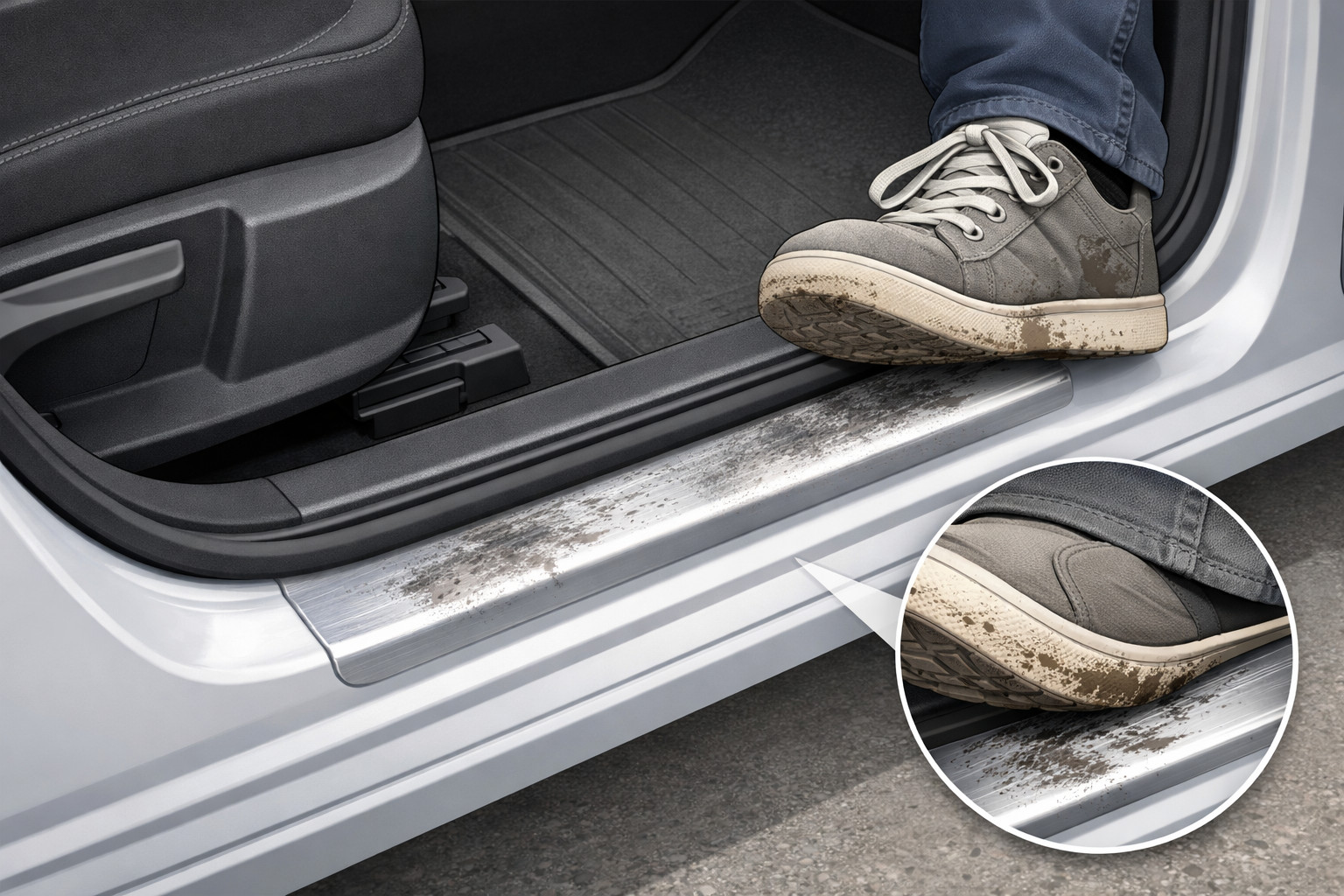
The sill is one of the most heavily stressed areas of the body. Shoe soles constantly slide over it, and sand, small stones, dirt, and moisture get onto it. Because of this, even a careful driver eventually ends up with a dull worn patch or localized scratches where the foot touches the body when getting in.
The problem gets worse in winter and during the shoulder seasons, when there’s more abrasive on footwear. On crossovers and cars with a high sill, the friction is often stronger because the foot moves along the same path. Once damage appears, every next contact wears through the coating even faster.
Main causes
- Shoe rubbing — the most common scenario, especially with a stiff or dirty sole.
- Sand, salt, and dirt on shoes — they act like an abrasive and quickly remove the clear coat.
- Impacts on the sill edge — when you don’t slide along it but actually hit the lip with your foot or a hard object.
- Rubbing against the edge of old protection or a seal — sometimes the protective element itself, or its edge, leaves a mark.
- Ignoring the first scuffs — while the damage is small, it can still be polished; once neglected, it turns into a deep defect.
How to figure out the cause in your case
- Wash and dry the sill thoroughly. On a dirty surface, small marks often look deeper than they really are.
- Look at the area under an oblique light. A wide matte band usually means clear-coat wear, while a narrow, sharp groove more often points to a deeper scratch.
- Do the fingernail test. If your nail doesn’t catch, the chances of a good polishing result are high. If it catches, the defect is already deeper.
- Assess the color of the damage. If you see only haze or fine light lines, that’s one scenario. If another layer shows through, a dark base, primer, or metal — that’s no longer a polishing story.
- Check the lower edge for bubbling, rust spots, or roughness. You can’t hide corrosion for long: it needs to be treated, not masked.
- Measure the width and length of the worn strip. This matters if you plan a cover or film: the protection must fully overlap the damaged area, not just part of it.
DD Tuning expert comment: the most common mistake is buying a clear film right away when there are already deep scratches or early corrosion underneath. The second typical mistake is not matching the protection width to the real wear zone: as a result, part of the scratches remains exposed, and the accessory edge only emphasizes the defect. Before buying, always look not only at the length, but also at the working width of the element.
Symptoms, causes, and what to do (table)
| Symptom | Likely cause | What to do |
|---|---|---|
| Matte wear with no deep grooves | Surface clear-coat wear from shoes and dirt | Gentle polishing, then clear protection |
| Your nail barely catches, but no metal is visible | A scratch deeper than the clear coat or localized heavy wear | Polishing may only improve the look; for masking, an opaque cover is better |
| Another layer, primer, or metal is visible | Deep damage to the coating | Not fully solvable without touch-up paint; temporarily you can only cover it after preparation |
| Bubbles or rust spots under the film or near the edge | Early corrosion or moisture under old protection | Remove the old protection, repair and repaint, then install new protection |
| The mark runs as an even strip along one path | Constant shoe friction when getting in | After restoring or masking, be sure to add protection to that zone |
| After cosmetic treatment it looks better for a few days | Temporary darkening of the surface, not a real repair | Don’t spend money again if you need a stable result |
What actually helps
Gentle polishing works when the damage is superficial: there’s no distinct catch with a fingernail, no primer or metal is visible, and the issue looks like dullness, fine micro-scratches, or transferred marks in the clear coat. It’s a good option for the first stage, but afterward the area should be covered with protection right away, otherwise the wear will come back quickly.
Clear protective film is useful when you need to preserve the result after polishing or protect a sill that’s still in decent shape. It’s almost invisible, but it doesn’t remove the defect’s texture. If there’s a deep scratch underneath, it won’t go anywhere.
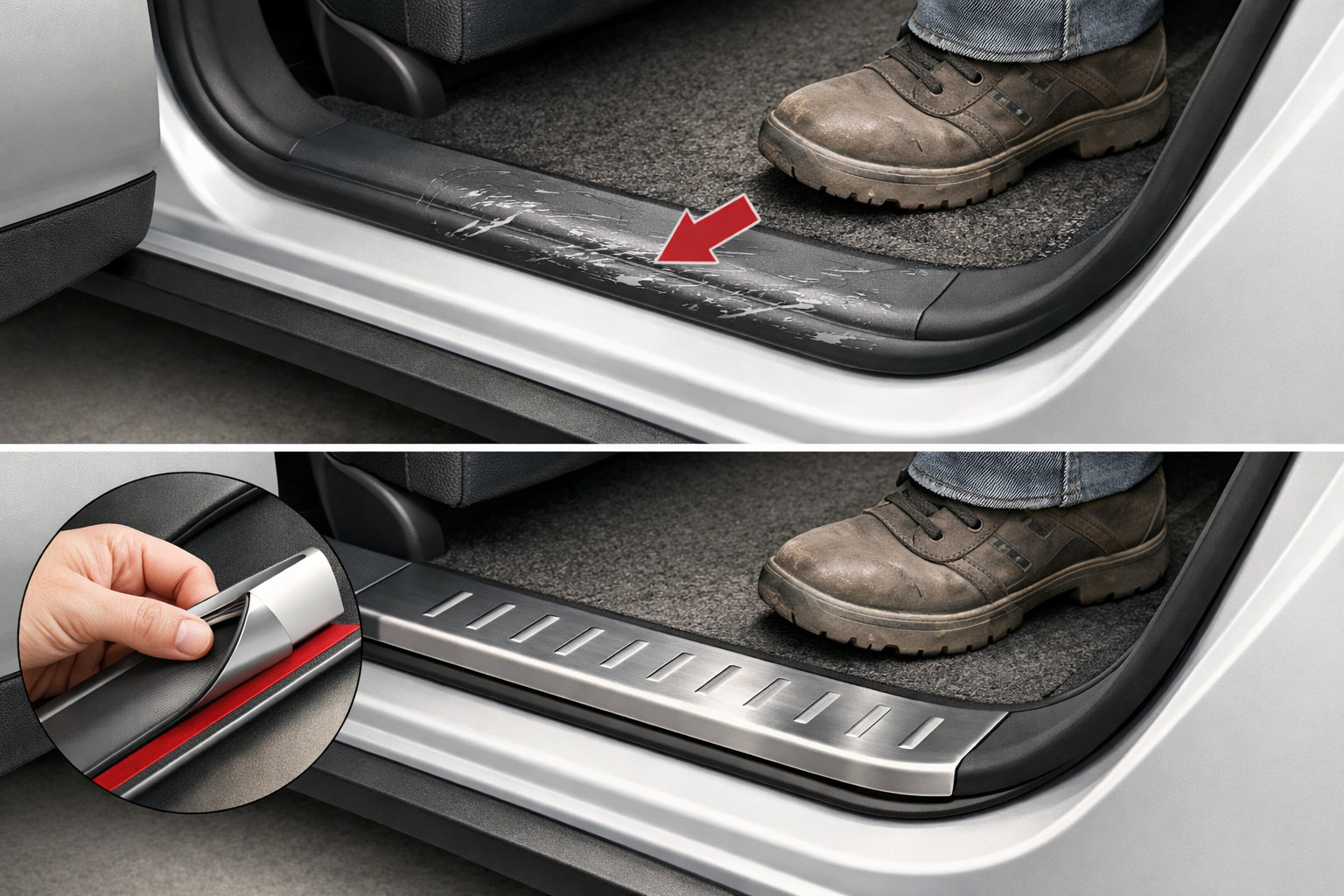
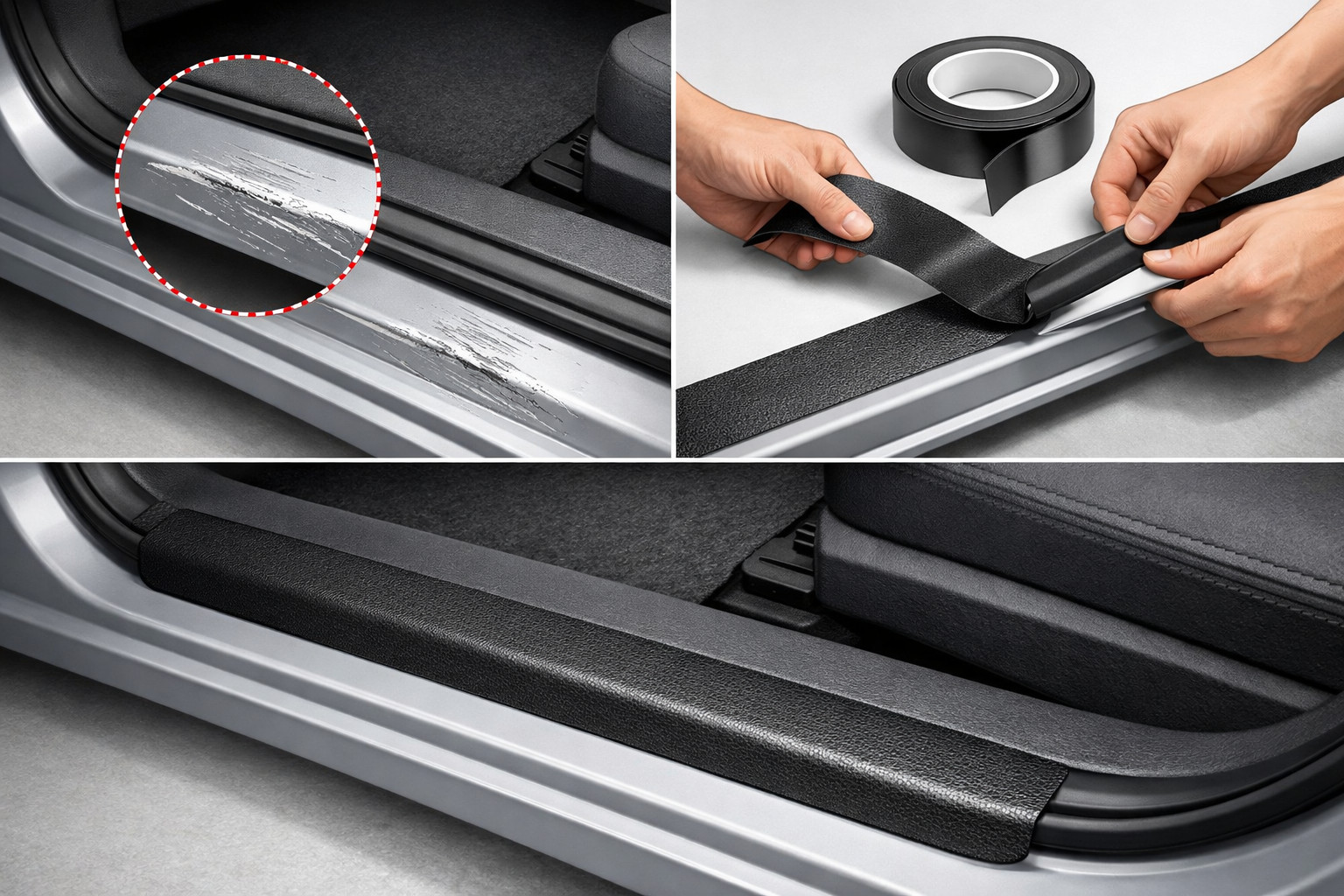
An opaque cover or dense protection is the best option when the paint is already damaged and you don’t want to repaint. Such an element doesn’t “heal” the sill, but it genuinely covers the marks and takes the ongoing wear. For installation, it’s important to stick it to a clean, dry surface in warm conditions, and after installation let the adhesive stabilize properly.
If you already have corrosion, bubbling, or exposed metal, only repairing the base will help. Any film or cover applied over rust is a postponed problem, not a solution.
What almost doesn’t work or helps only briefly
Masking chemicals for black plastic, glossy care products, or attempts to “revive” the surface with heat can give a short visual effect, but they don’t remove deep marks. On a painted sill this is almost always cosmetic for a few washes.
Don’t expect miracles from polishing if the groove is felt with a fingernail. In this situation, polishing at most will soften the edges and make the defect a bit less noticeable. You won’t fully hide it without opaque protection or repainting.
Vinyl on an uneven, battered, or poorly touched-up surface also often disappoints. The film follows the base texture, so on pronounced scratches and chips it can even highlight the problem. Another common mistake is applying protection to a sill that hasn’t fully dried: dirt and moisture underneath quickly ruin the result.
When accessories or part replacement make sense
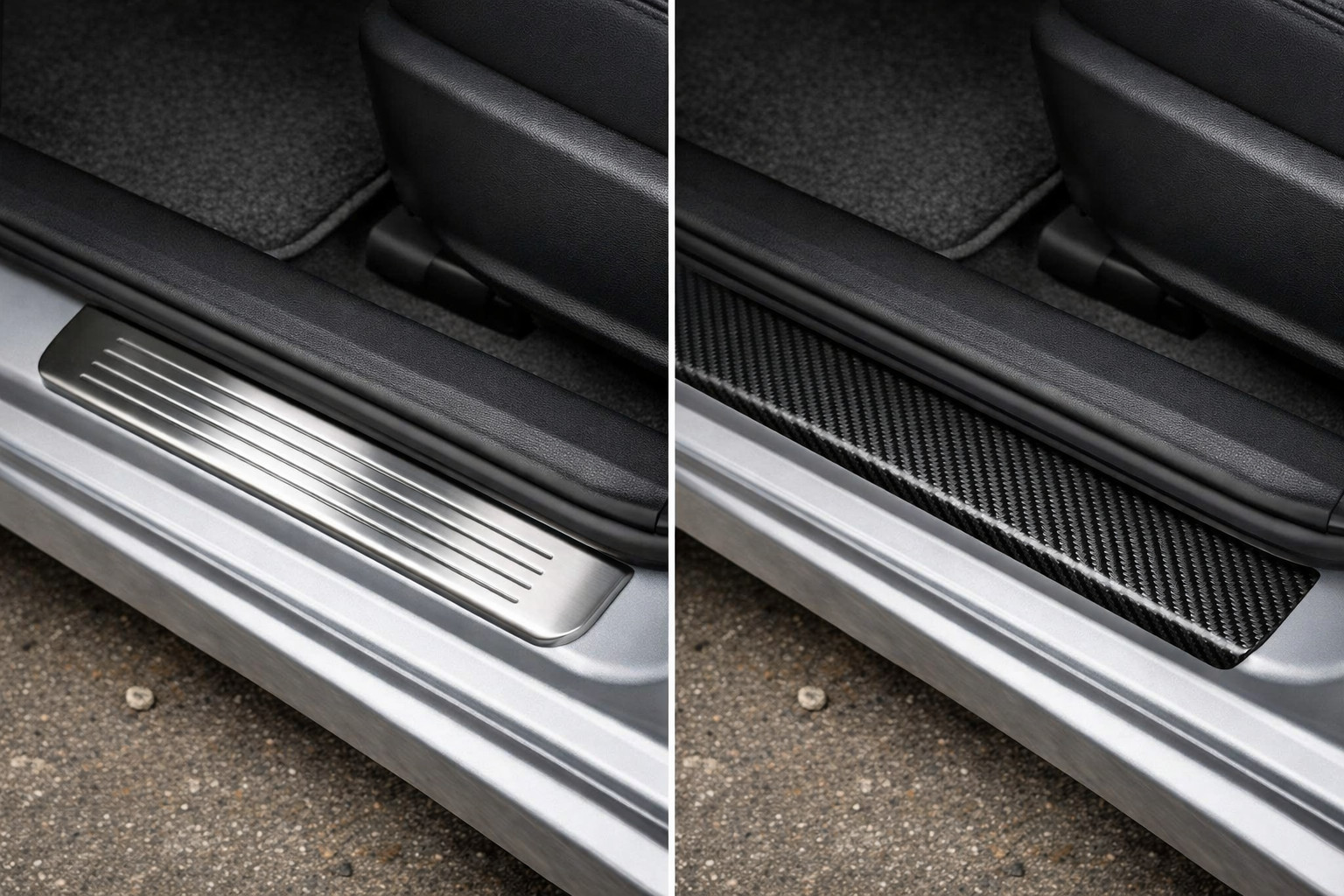
Accessories make sense when the base is still sound or already prepared, and your goal is either to cover old marks or prevent new ones. If the wear zone is typical and straight, Carmos door sill covers will work: it’s a self-adhesive set of 4 pieces, 43 mm wide, that covers the most vulnerable strip without repainting. As a universal solution it’s a practical format, but you must match the dimensions to your own sill.
If you want to compare different formats and materials, it makes sense to start with the door sill cover category. It’s easier there to understand whether you need masking or just protection from future scuffs. If the sill isn’t worn out yet and looks fine after light polishing, protective film for door sills works better — it draws almost no attention, but it isn’t designed to hide deep scratches.
Replacing a part makes sense if it’s not the painted sill itself that’s scratched, but a separate removable decorative or plastic piece that’s already cut up, deformed, or doesn’t hold well. In that case, a new piece often looks neater than trying to mask the old one.
Solutions: when they work and when not to waste money (table)
| Solution | When it works | When it’s not worth spending money |
|---|---|---|
| Gentle polishing | Light scuffing, fine scratches in the top layer, fingernail doesn’t catch | Deep groove, another layer or metal is visible |
| Clear protective film | After polishing or on an intact sill for prevention | When you need to hide pronounced texture and old deep marks |
| Opaque door sill cover | There’s already noticeable wear but you don’t want paintwork; you need to cover the working zone | Corrosion or paint bubbling under the cover, or incorrectly selected width |
| Vinyl | Only on a smooth and well-prepared surface to change the look | On deep scratches, chips, and unevenness |
| Cosmetics to darken the surface | When you need a short visual effect before a sale or photos | If you expect a long-lasting result and real protection |
| Touch-up paint or repainting | Primer or metal is visible, there are chips or corrosion | When the problem is limited to light clear-coat scuffing only |
From a customer’s experience: the most common scenario is this — a person tries polishing, sees that the dullness only partially goes away, and doesn’t want to go into paintwork because it’s just one entry zone. In the end they choose a cover sized to the worn strip, hide the marks, and at the same time stop new wear. The satisfaction here isn’t about “new shine”, but about the sill no longer looking neglected and not wearing further.
Conclusion
In short: superficial scuffing means polishing plus subsequent protection; a deep scratch means masking with an opaque cover or repair with repainting; corrosion means only base repair. Clear film protects well but doesn’t hide texture. Opaque protection hides marks better, but requires a clean, dry, and healthy surface underneath.
This material is based on real experience selecting sill protection, installation practice, and real usage scenarios. That’s why the main advice here is simple: first honestly determine the depth of the damage, and only then spend money on a solution that truly works in your case.
How it works
- Assess the depth of the scratch First, wash and dry the sill to see the true condition of the surface. Look under angled light and do a fingernail test: if your nail does not catch, the damage is likely superficial.
- Distinguish wear from deeper damage A matte streak without grooves usually means clear coat wear that can still be removed by polishing. If you can see primer, base coat, or metal, the coating cannot be fully restored without repainting.
- Polish only light scuffs Gentle polishing makes sense only when the damage is in the top layer. After that, it is advisable to protect the area right away, otherwise the mark will quickly return.
- Choose the right protection for masking Clear film is suitable for preserving an already good surface after polishing, but it does not hide deep scratches. If you need to cover marks without repainting, it is better to install an opaque trim or dense protection matched to the width of the worn area.
- Do not apply protection to a damaged base If there are blisters, rust spots, or exposed metal, the base needs to be repaired first. A film or trim over corrosion will only delay the problem, not solve it.
- Install protection on a clean, dry surface Before installation, the sill should be clean, dry, and warm so the adhesive bonds properly. After fitting, let the element settle, then it will hide the marks better and stop further wear.