04.04.2026
226
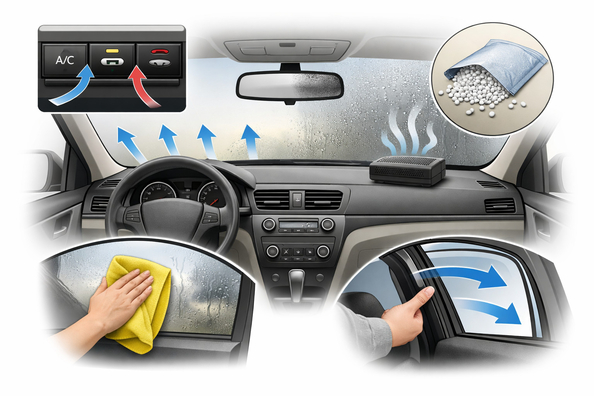

Car windows fog up not because the car is “just like that”, but due to a specific imbalance: there’s too much moisture in the cabin, the glass is cold, and the ventilation either doesn’t dehumidify the air or blows too weakly. In most cases, the quick action plan is the same: turn off recirculation, switch on the A/C, direct airflow to the windshield and side windows, and crack a window slightly.
If that helps only for a few minutes, the issue isn’t climate settings but a moisture source, dirty glass, weak airflow, or a leak. Below is how to tell one from another—without myths or unnecessary spending.
Fogging is normal condensation. Warm, humid air inside the cabin meets cold glass, and when the glass temperature drops below the dew point, water settles on the surface as a mist.
That’s why it almost always gets worse in autumn and winter, during rain, after a car wash, when passengers get in wearing wet clothes, or when snow from shoes melts on the mats. A separate case is outside fogging in hot, humid weather: then it’s not the cabin side but the outer side of the glass that fogs, and the tactics are different.
The first cause is excess moisture in the cabin. Wet mats, snow on soles, damp fabric, and items drying in the car quickly raise humidity.
The second is recirculation without dehumidification. If the system keeps circulating the same humid air and the A/C isn’t running, the windows fog up noticeably faster.
The third is weak airflow. A clogged cabin filter or a blocked air intake at the base of the windshield prevents proper airflow across the glass.
The fourth is a dirty inner glass surface. An oily film, fingerprints, and household cleaners create a layer that lets condensation cling more easily.
The fifth is a cabin leak or a leaking heater core. If you have a wet carpet, a sweet antifreeze smell, greasy residue on the glass, or mist coming from the vents, this is no longer about HVAC mode.
Start with a simple test. Turn on defrost (airflow to the glass), switch off recirculation, turn on the A/C, and let the system run for 2–3 minutes. If the glass clears quickly but then fogs up again, there’s a steady moisture source in the cabin.
Next, check how strong the airflow is from the vents. If it’s weak even at high fan speed, inspect the cabin filter and the air intake under the windshield: leaves, slush, and ice often reduce airflow.
Also inspect the mats and the floor. Moisture after rain or a car wash suggests you should look at door, window, sunroof seals, or drains. If there’s a sweet smell, an oily film on the inside of the glass, and wetness on the passenger side, suspicion falls on the heater core.
DD Tuning expert comment: the most common mistake is leaving recirculation on because the cabin warms up faster, then wondering why the windshield “turns milky”. Another typical mistake is changing anti-fog products without checking the mats, filter, and air intake. If the problem repeats every day, look not for chemicals but for a moisture source or weak airflow.
| Symptom | Likely cause | What to do |
|---|---|---|
| Windows fog up almost immediately after people get in | High cabin humidity, recirculation | Turn off recirculation, turn on the A/C, direct airflow to the glass, crack a window slightly |
| Airflow is weak even at maximum speed | Clogged cabin filter or air intake | Check the filter, clean the air intake area near the windshield |
| Glass is constantly covered with a greasy haze | Dirty inner surface, fingerprints, residue | Wash the inside of the glass with microfiber and an ammonia-free cleaner |
| After rain or a car wash it gets noticeably worse | Water enters the cabin through seals, sunroof, or drains | Check the mats, floor, seals, and drain channels |
| There’s a sweet smell, the passenger mat is wet | Possible heater core leak | Don’t mask the issue—go for a heating system diagnosis |
The best results come from a combination, not a single trick. First: turn off recirculation. Second: turn on the A/C—even if it’s cold outside, it dehumidifies the air. Third: direct airflow specifically at the glass, not at your feet or into the cabin.
If the car is damp inside, slightly opening a side window for a short time also helps—it quickly lowers humidity. Cleaning the inside of the glass also works: clean glass fogs less and clears faster.
When the problem returns regularly, replacing the cabin filter and cleaning the air intake bring real benefits. And if the mats are wet, they need to be dried—not just left for the climate system to “pull it out”.
Wiping fogged glass with a sleeve, a tissue, or a random rag is temporary. Visibility seems to return, but a greasy layer remains on the glass, and it fogs up even faster afterward.
Anti-fog products can be useful only as an add-on on clean, dry glass. If there’s water in the cabin, a clogged filter, or a leaking heater core, no product will fix it.
Likewise, constantly running maximum heat without A/C in humid weather is not very effective. Heat alone helps, but without dehumidification the result is often unstable.
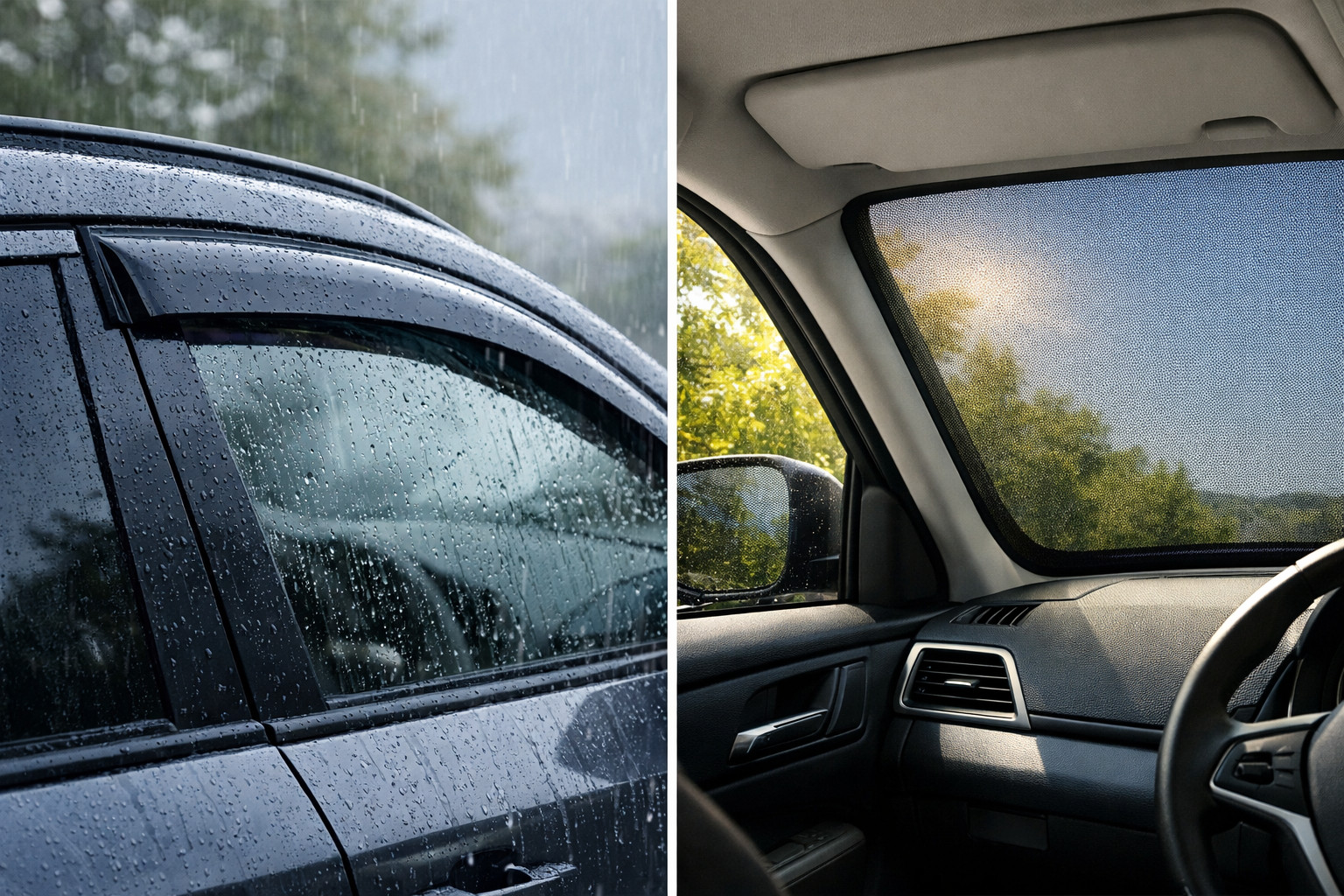
Accessories make sense when they solve a specific part of the problem. If you often crack a window to dump moisture, wind deflectors are useful: they make it easier to ventilate the cabin in rain and damp weather without letting extra water in.
If the main moisture source is water and dirt underfoot, practical rubber floor mats often help more than any chemical. They don’t absorb moisture and are easier to shake out, wash, and dry.
Replacing parts also makes sense if diagnostics have already identified the issue: the cabin filter for weak airflow, seals for leaks, heating components when there are signs of leakage. Sometimes it also helps to organize wet items in the cabin—car organizers are handy so you don’t keep carrying wet clothes, towels, or shoes.
| Solution | When it works | When it’s not worth spending money |
|---|---|---|
| Turn off recirculation and turn on the A/C | When the issue is humid cabin air without a technical fault | If there’s a leak, a wet carpet, or very weak airflow |
| Cleaning the inside surface of the glass | When there’s an oily film, streaks, fingerprints on the glass | If the cabin is actually taking on water or there’s an antifreeze smell |
| Replacing the cabin filter | When airflow has weakened and the glass clears slowly | If airflow is normal and the cause is clearly a leak |
| Anti-fog product | As additional prevention on clean, dry glass | If you expect it to remove cabin moisture or fix ventilation |
| Wind deflectors and short airing-out | When you need to regularly lower humidity while driving or in the rain | If the car already has a technical leak or faulty heating |
From a customer’s experience: a typical situation—one driver complained about a constantly fogged windshield in winter and had already tried various glass products. In the end the problem turned out to be simple: wet textile mats, a clogged cabin filter, and the habit of driving with recirculation on. After replacing the filter, drying the cabin, and switching to normal airflow settings, the improvement was noticeable within the first days.
If your windows fog up, start not with “magic” products but with logic: disable recirculation, turn on the A/C, check airflow strength, glass cleanliness, and whether there’s moisture in the cabin. In most cases, the cause is moisture, weak airflow, or an incorrect climate mode.
When there’s an antifreeze smell, wet carpets, or fogging gets sharply worse after rain, you need not a trick but a repair or replacement of a specific part. This material is based on real selection experience, practical know-how, and real usage scenarios—so the main advice is simple: first identify the cause correctly, and only then spend money.
Shipping to EU
Wholesale and retail
Own warehouse
Опис продукту
Подарунки не надаються при оформленні покупки у кредит під 0,01% або при покупці частинами.