05.04.2026
180
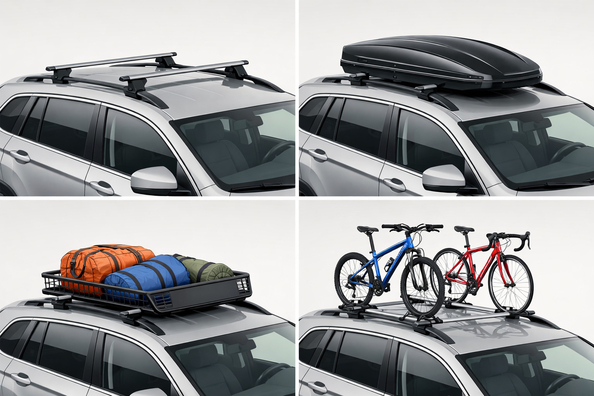
People buy the wrong roof rack not because they don’t understand accessories, but because they confuse the very foundation: bare roof, raised rails, flush rails, fixed mounting points, and gutters all require different mounts. From the outside, systems often look similar, but the mistake quickly shows up as whistling, play, leaks, or paint scuffs.
The right choice doesn’t start with crossbar length or a store photo—it starts with an exact understanding of the roof type, body style, model year, and permitted load. Only then does it make sense to choose crossbars, a platform, a basket, or a cargo box.
There is virtually no universal roof rack that fits all cars equally well. Even within the same model, roofs can differ by generation, trim level, or market: some have factory mounting points, some have only rails, and some have a completely smooth roof.
The second reason is that people judge compatibility “by eye.” If the mount looks similar or a seller says “it should fit,” that still doesn’t mean a correct fit. For the roof, not only width matters, but the edge shape, support height, contact angle, and the correct fitting kit.
If doubt remains, do a simple check without cargo: install the system, drive a short distance, then check tightening, play, and any contact marks on the clearcoat or seals. That’s usually how an error in mount type is discovered.
DD Tuning expert comment: Most often, people bring back not a “bad roof rack,” but a kit that was selected for a different roof. A typical mistake is ordering crossbars for raised rails for a vehicle with flush rails, or trying to remove play by tightening harder. If the system installs under tension, sits crooked, or touches the door rubber, the issue must be solved by selecting the correct kit—not by force.
| Symptom | Likely cause | What to do |
|---|---|---|
| Whistling or howling after 70–90 km/h | Poor crossbar profile, incorrect positioning, or an incompatible mount type | Check kit compatibility, crossbar position, and the tight fit of all end caps |
| Rack vibration without a large load | Play in the feet, incorrect roof fitment, or insufficient tightening | Remove the system, confirm roof type, reinstall with the correct tightening torque |
| Paint scuffs near the feet | The foot sits at the wrong angle, clearance is too low, or the kit isn’t for this vehicle | Stop using it and replace the fitting kit with a compatible one |
| Water in the cabin after rain | Incorrect clamping in the door-jamb area or an installation error | Check the installation diagram, seals, and stop using the incompatible clamp |
| Load shifts, crossbars “move” | Exceeding the permitted weight or too weak a base for the specific use case | Reduce weight, switch to a stronger system or a platform |
| Doors close harder, seals deform | Incorrectly selected bare-roof mount | Do not continue using it; choose a kit specifically for the body style and model year |
If you still haven’t figured out what type of base your car has, first check types of roof racks. It’s faster than returning an unsuccessful kit after installation.
When the car has flush rails, it makes sense to look not for universal clamps but for a roof rack for integrated rails. This option is worth it if you need a correct fit without twisting and extra noise.
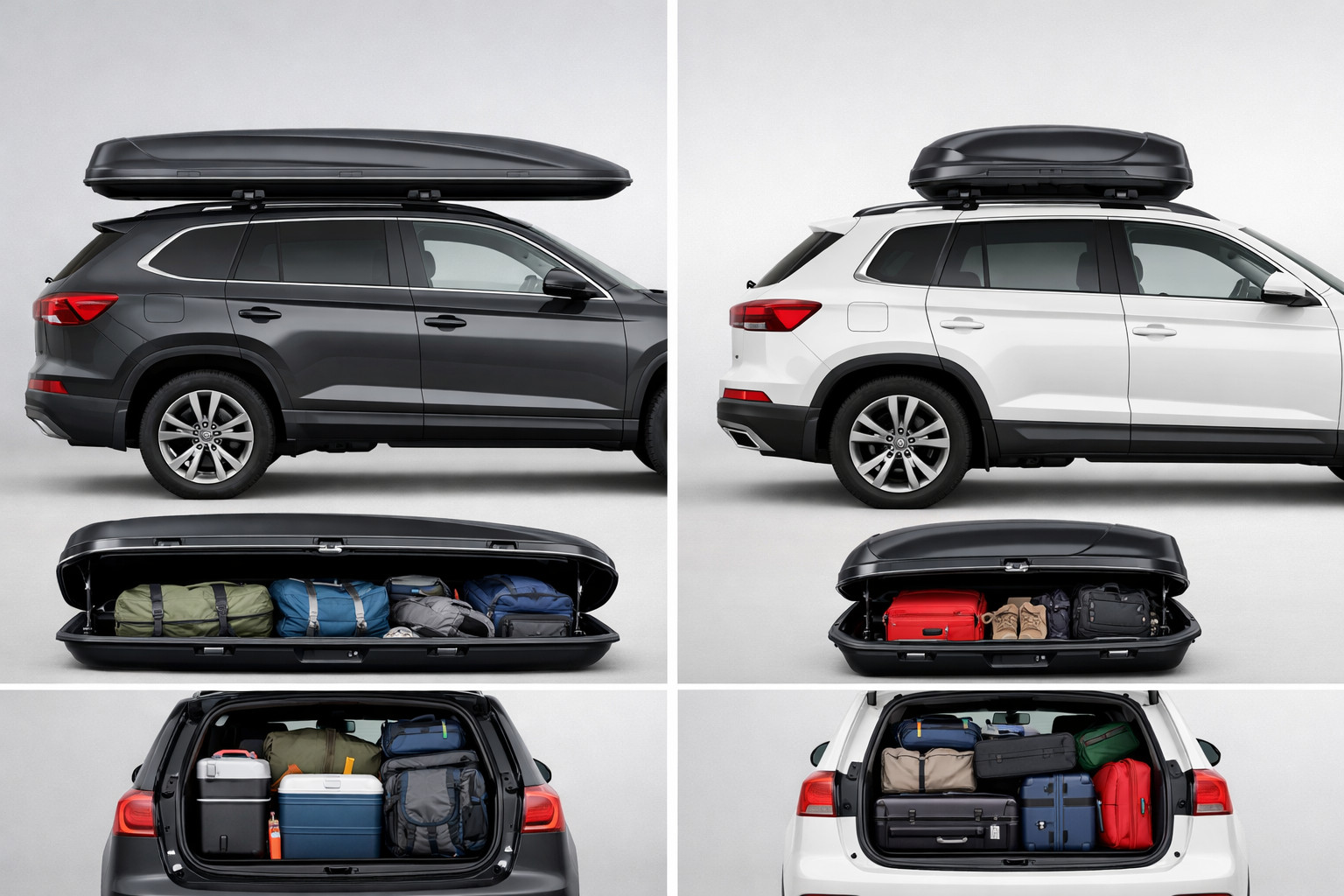
If the goal is family trips, a stroller, suitcases, or seasonal gear, it’s often smarter to switch not to a basket but to roof boxes. They protect items better from dirt and usually behave more calmly at speed.
| Solution | When it works | When it’s not worth spending money |
|---|---|---|
| Replacing only the fitting kit | When the crossbars are compatible and the mistake is in the feet or adapters | When the system type itself doesn’t fit your roof |
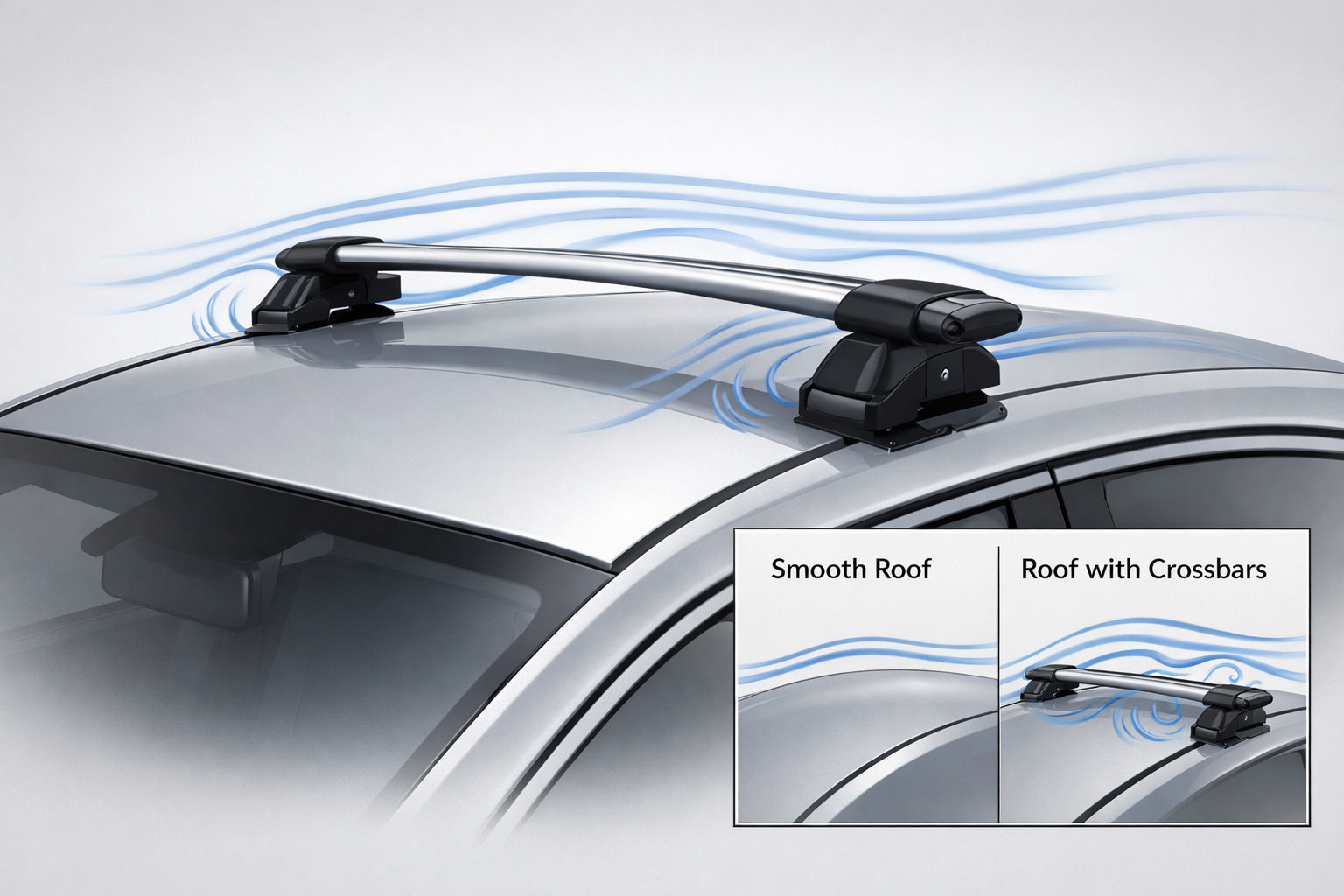
| Aerodynamic crossbars | When you need less noise and a proper base for a box or bike carriers | When the problem isn’t the profile but the wrong mounting |
| A platform instead of simple crossbars | When you need to carry bulky or non-standard cargo | When the vehicle has a low load limit and the platform uses it up with its own weight |
| A roof box instead of an open basket | When quietness, clean gear, and highway trips matter | When you need to carry tall, dirty, or oversized cargo |
| Adding rails | When there is a factory or proven solution for installation on that specific car | When it’s a DIY job without a clear mounting and sealing method |
| DIY spacers and pads | Almost never as a primary solution | When the system already doesn’t sit correctly or rubs the body |
From a customer’s experience: a crossover owner was looking for crossbars for a vacation and first ordered a kit for raised rails because in the photo the roof looked exactly like that. After a test fit, it turned out the rails were flush and the rack sat skewed. After switching to a vehicle-specific mount and choosing a box instead of a basket, noise decreased and opening the tailgate no longer interfered with loading.
In most cases, people buy the wrong roof rack because of confusion between roof type, mounting method, and the real usage scenario. If you first identify the roof design, verify compatibility by body style, and calculate the permitted load, the chance of a mistake drops sharply. This material is based on real selection experience, hands-on practice, and real usage scenarios—not on choosing “by photo” or promises of universality.
| ✔ | The right choice starts with the roof type, body style, model year, and allowable load, so there is less chance of making a mistake before buying. It’s a practical algorithm, not a guesswork-based selection. |
| ✔ | The article clearly explains that bare roofs, raised rails, flush rails, and factory mounting points require different attachments. This helps quickly narrow down the choice and avoid buying an incompatible set. |
| ✔ | There are specific signs of a poorly matched roof rack: whistling, vibration, paint scuffs, water in the cabin, play, and deformed rubber seals. These make it possible to identify the problem without complex diagnostics. |
| ✔ | The author recommends checking vehicle compatibility and then rechecking the tightening after the first trip. This is useful because a new set often reveals its issues only while driving. |
| ✔ | The article divides the solution by use case: a cargo box for quiet and protection of items, a platform for bulky cargo, and aerodynamic crossbars for less noise. This makes it easier to choose a system for a specific task without overpaying for unnecessary features. |
| ✘ | There is effectively no universal roof rack that fits every car equally well. Because of this, even visually similar kits are often incompatible. |
| ✘ | The mounts may look similar, but a mistake in the fit angle, support height, or installation method quickly leads to play or paint damage. In other words, external similarity does not help here. |
| ✘ | Homemade pads, rubber bands, and spacers can only temporarily reduce noise, but they do not fix the incorrect geometry. The article states directly that this does not solve the problem at its core. |
| ✘ | Tightening harder is not a normal way to eliminate play and can lead to deformed mounts, marks on the paint, or problems with the seals. This is a dangerous “quick fix” instead of proper selection. |
Shipping to EU
Wholesale and retail
Own warehouse
Опис продукту
Подарунки не надаються при оформленні покупки у кредит під 0,01% або при покупці частинами.