01.12.2025
513
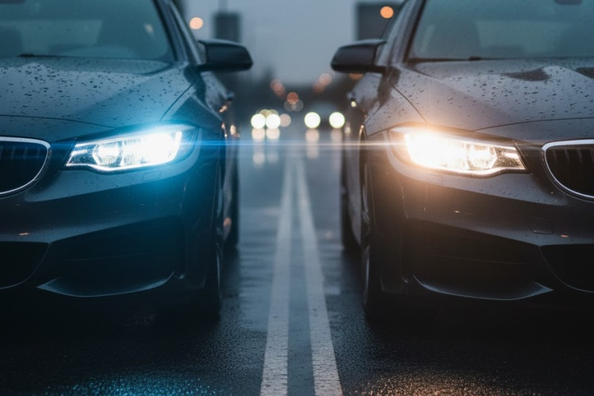

The choice between xenon (HID) and LED headlights is a relevant topic for many car owners who want to improve nighttime road visibility. Xenon was long considered a premium option, but LED technology is rapidly taking over the market thanks to its efficiency and durability. Let’s compare them by key parameters to understand which performs better in real conditions. To make your car more functional and comfortable, we recommend using tuning accessories, widely available in our online store.
Xenon provides powerful and long-range illumination:
LEDs lead in modern vehicles:
LEDs perform better in most scenarios thanks to brightness, efficiency, and reliability — they are the choice of new cars. Xenon performs better in rain and fog due to its spectrum. If your car is factory-equipped with LED headlights, that’s the optimal choice. When retrofitting, it’s important to consider the type of optics and safety requirements.
Key takeaway: Any technology reveals its full potential only with quality optics and proper headlight adjustment.
Shipping to EU
Wholesale and retail
Own warehouse
Опис продукту
Подарунки не надаються при оформленні покупки у кредит під 0,01% або при покупці частинами.