01.05.2026
454
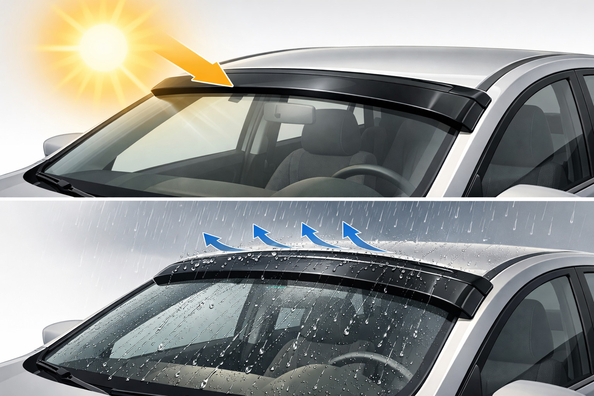
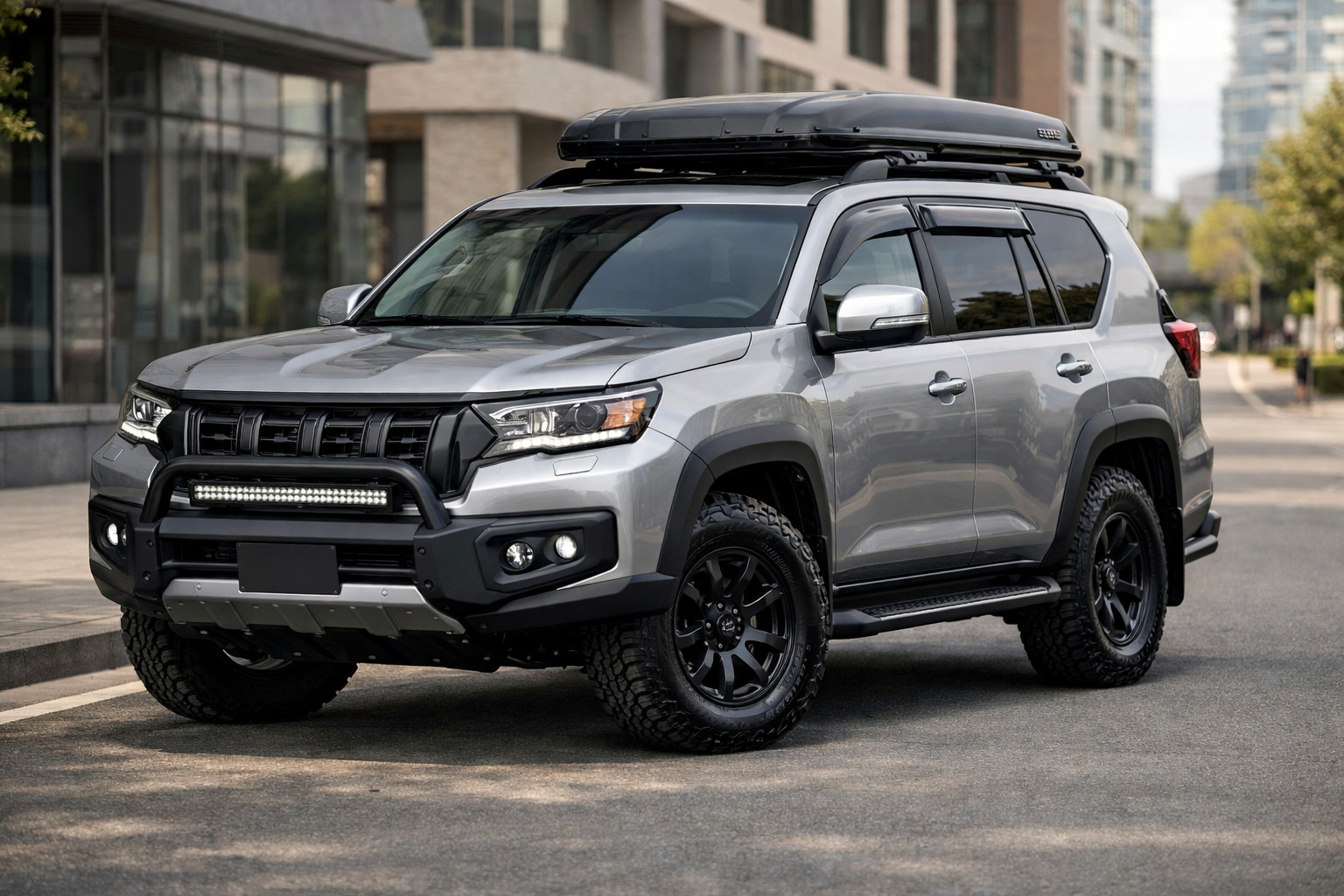
If by a windshield deflector you mean an external visor above the top edge of the glass, it’s worth installing only as an auxiliary solution. In the rain it can slightly divert the water flow from above and give a small benefit at speed, but it does not fully eliminate low morning or evening sun.
In most everyday situations, the problem isn’t that the car has no deflector, but the condition of the windshield itself, the wiper blades, and the sun angle on a specific route. So the right question is: what exactly is blocking your view — glare, a water film, wiper streaks, or an unfortunate direction of travel.
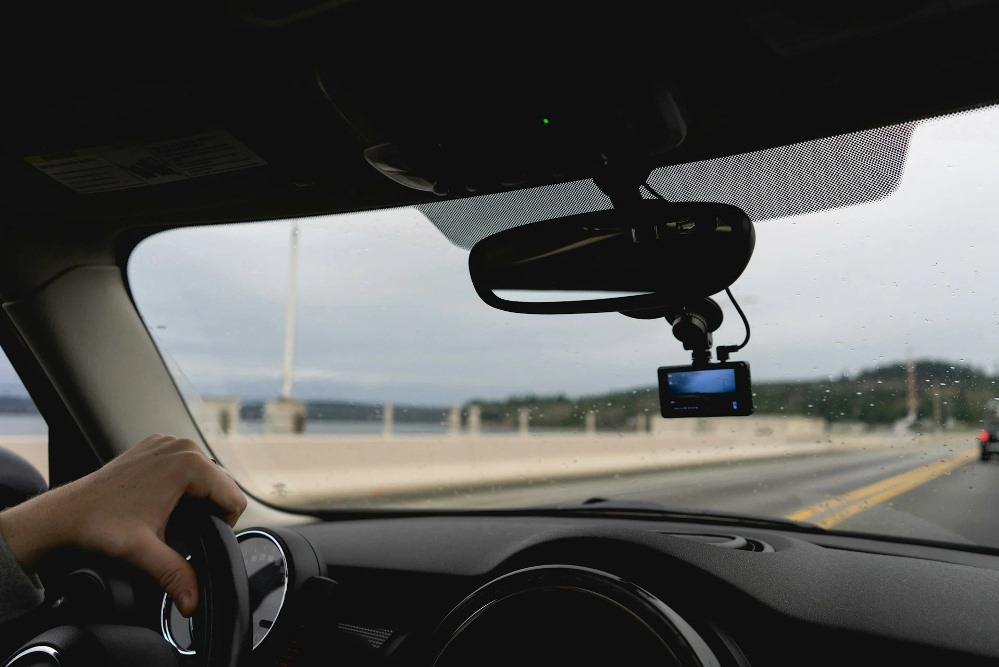
The sun becomes an issue when it enters your direct line of sight through the upper or middle part of the windshield. It feels worst in the morning and evening, especially in winter and on roads that run east or west. After strong dazzling, your vision doesn’t recover instantly, so even a short flash is dangerous.
Rain works differently: visibility is spoiled not by the fact of precipitation itself, but by water that lays on the glass as a film, old wiper blades, micro-scratches, and dirt. An external deflector works only along the upper edge and is more noticeable on the highway, when there’s sufficient airflow. In the city at low speed, the difference is often minimal.
DD Tuning expert comment: The most common mistake is buying a deflector when the real cause is an oily inner film on the glass or wiper blades that have long been due for replacement. The second typical story is expecting an external visor to block low sun the same way the factory interior visor does. In practice, the accessory makes sense only after a basic check of the windshield, wipers, and route conditions.
| Symptom | Likely cause | What to do |
|---|---|---|
| Severe glare only in the morning or evening on one route | Low sun angle, unfortunate direction of travel | Use the factory sun visor, polarized sunglasses; if possible, shift departure time or route |
| In the rain, water smears as a solid film | Glass without a water-repellent effect, dirty surface | Clean the glass, apply a rain repellent, check wiper performance |
| After the wipers pass, streaks and haze remain | Worn wipers or a hazed windshield | Start by replacing the wipers; if the problem remains, assess the glass condition |
| At night and against the sun you see halos and scattered light | Oily film on the inside, micro-scratches | Deep-clean the glass on both sides; with severe haze, think less about accessories and more about the windshield itself |
| After installing the deflector, whistling or vibration appeared | Poor installation or an accessory shape mismatch | Reinstall or отказаться from it; the benefit shouldn’t come at the cost of noise and the risk of it coming off |
First — a clean windshield on both sides. The inner film often makes sun glare more aggressive than it really is. Second — properly working wiper blades that don’t drag water in waves and don’t leave gaps.
In rain, a combination of clean glass, good wipers, and a water-repellent coating works well. At speed it’s noticeably better because water sheds faster in droplets. If the main issue is low sun, the most effective things are simple: the factory visor, correct seating position, polarized sunglasses, and, when possible, adjusting departure time.
The windshield deflector itself makes sense as an add-on, not as the main tool. The most logical scenario is a tall windshield, frequent highway driving, rain or wet snow, when any extra protection for the upper part of the glass matters.
Start with what truly affects your day-to-day visibility, and only then add an accessory for your specific use case.
If the windshield is already so hazed that it glares even after a quality wash, accessories won’t do much. In that case it’s more разумно to assess the condition of the glass itself.
| Solution | When it works | When it’s not worth spending money |
|---|---|---|
| Deep cleaning of the glass inside and out | Almost always, if there is glare, haze, an oily film | Won’t fully solve the issue if the glass is already heavily hazed |
| New wiper blades | There are streaks, skipping, noise, chattering in the rain | Useless if the cause is the sun itself or scratched glass |
| Rain repellent | Clean glass, rainy driving, especially at speed | Limited value on dirty glass and with old wipers |
| Factory sun visor and polarized sunglasses | Low sun, morning and evening driving | Won’t help with a water film and bad wipers |
| External windshield deflector | As an auxiliary tool in rain, with a tall windshield and frequent highway driving | If you expect it to solve low-sun glare or replace windshield maintenance |
| Changing departure time or route | When glare repeats in one direction at one hour | Not suitable if your schedule is rigid and the problem is mainly the car’s technical condition |
From a customer’s experience: A minivan owner came in specifically because of morning sun and rain, planning to immediately install a visor above the windshield. After a check, it turned out the main part of the problem came from old wipers and an inner film on the glass; after replacing them and treating the glass, visibility improved noticeably. He still installed a deflector later, but as an additional element for highway trips in bad weather, not as the primary solution.
Installing a windshield deflector doesn’t make sense for everyone. If what bothers you is rain at speed, the upper edge of the glass is often wet, and the car spends a lot of time on the highway, the accessory can provide a moderate but real benefit. If the main problem is low sun, you first need to work on the glass, the wipers, the factory visor, and your route.
In short: a deflector is an addition, not a magic fix. This conclusion is based on real selection experience, практикe, and real use cases, where the best result comes not from one accessory but from the right sequence of actions.
| ✔ | Helps as additional protection in rain on the highway: reduces the flow of water along the upper edge of the glass and can give a small boost at speed. |
| ✔ | Can be useful for cars with a tall windshield and frequent driving in bad weather, when the partial aerodynamic effect is what matters. |
| ✔ | Works as a supplement to other solutions — clean glass, working wipers, and rain repellents, so it can improve overall visibility in difficult conditions. |
| ✔ | If the problem occurs mainly during wet highway driving, the accessory can take some of the load off the upper area of the glass. |
| ✘ | Practically does not solve the problem of low sun: the visor above the windshield is too high and covers only a small part of the glare area. |
| ✘ | In the city and at low speed, the effect is often minimal, because the deflector needs sufficient airflow to work. |
| ✘ | Does not remove the main causes of poor visibility, such as a dirty interior film, worn wipers, or scratched glass. |
| ✘ | With poor installation or an unsuitable shape, whistling or vibration may appear, meaning the accessory adds noise without guaranteed benefit. |
Shipping to EU
Wholesale and retail
Own warehouse
Опис продукту
Подарунки не надаються при оформленні покупки у кредит під 0,01% або при покупці частинами.