27.03.2026
267
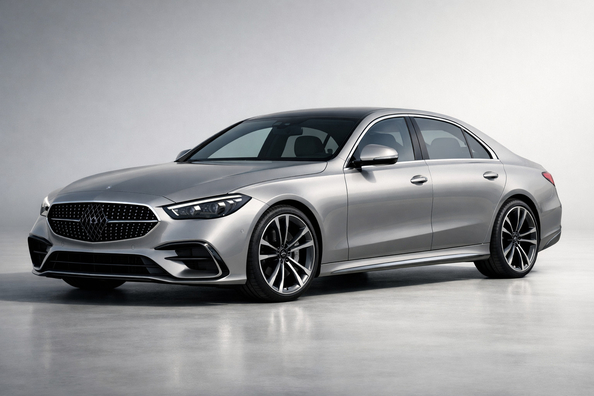
Mercedes W224 is not a production car at the moment, but a conditional designation for the likely successor to the S-Class, which the media expect around 2030. Officially, Mercedes has so far shown only a very heavily updated current S-Class in 2026, so talk about the W224 is not a review of a finished car, but a sober assessment of where the brand’s flagship sedan is headed.
For the reader, what matters is something else: if you’re looking at the future Mercedes flagship, you can already understand its market role, the technical format, strengths, and typical risks. And also which accessories and upgrades for this class actually make sense—and which don’t.
If the W224 appears as the next S-Class, it will be a large executive sedan for those who need quiet highway cruising, lots of rear-seat space, sophisticated electronics, and a broad choice of powertrains. Its direct arena is the BMW 7 Series, Audi A8, Genesis G90, and on the electric side buyers also look at big, fast sedans like the Tesla Model S or Lucid Air. This kind of car suits someone ready to pay not only for the vehicle itself, but also for service, tires, electronics, and expensive options. It doesn’t suit someone looking for a simple design, minimal touch controls, and a rational cost of ownership.
There is no official W224 generation yet. The real starting point is the current S-Class W223, produced since 2020 and given a major update in 2026. After that, the market expects an all-new generation toward the end of the decade, likely with separate internal-combustion versions and electric derivatives.
| Generation | Years | What matters |
|---|---|---|
| W116 | 1972–1980 | the first official S-Class |
| W126 | 1979–1991 | a sharp leap in safety and comfort |
| W140 | 1991–1998 | a focus on size, quietness, and heft |
| W220 | 1998–2005 | more electronics, less weight |
| W221 | 2005–2013 | emphasis on technology and handling |
| W222 | 2013–2020 | digitization and modern interior design |
| W223 | since 2020 | current generation, major update in 2026 |
| W224 | not confirmed, target around 2030 | for now only an expected successor |
There are no official engines for the W224, so the only reference is the current S-Class lineup, which differs by market. In Europe there are 2.9-liter inline-six diesels: the S 350 d with 313 hp and the S 450 d with 367 hp, both with mild hybrid. Gasoline versions are 3.0-liter inline-sixes: the S 450 with 381 hp and the S 500 with 442–449 hp depending on the market. Above that sits a 4.0-liter V8 in the S 580: 496 hp in the US or up to 537 hp in certain European specifications. The plug-in hybrid S 580e combines a 3.0-liter gasoline engine with an electric system and delivers 503 hp total. The AMG S 63 E PERFORMANCE has a 4.0-liter V8 with hybrid assistance and 791 hp total, while the Maybach S 680 retains a 6.0-liter V12 with 621 hp.
Gearboxes are mostly the 9-speed 9G-TRONIC automatic; the hottest AMG version uses its own 9-speed transmission. Key trims feature 4MATIC all-wheel drive. If the W224 makes it to production, the range logic is unlikely to get simpler: base inline-sixes, expensive hybrids, powerful V8s for top versions, and possibly a separate electric lineup.
Based on the current S-Class, you can already understand the format of the future model: a very large sedan with a 3 216 mm wheelbase, 5 321 mm length, 1 920 mm width without mirrors, and 1 504 mm height. Suspension is adaptive AIRMATIC air suspension, with E-ACTIVE BODY CONTROL active chassis available on some versions. Turning circle is quoted as 11.6 or 12.8 m depending on specification. There is no official ground clearance data specifically for the W224, and even for the current S-Class these figures are not always presented consistently across markets.
| Parameter | Reference based on the current S-Class | What it means for the W224 |
|---|---|---|
| Model status | there is no production W224 | all conclusions are preliminary |
| Expected debut | around 2030 | after the major 2026 update |
| Body | large sedan | the class format is unlikely to change |
| Dimensions | 5 321 × 1 920 × 1 504 mm | a reference point for parking and garage fit |
| Wheelbase | 3 216 mm | focused on second-row space |
| Trunk | from 229 to 510 L depending on version and market | noticeably smaller on hybrids |
| Ground clearance | not confirmed | too early to quote a number |
| Suspension | AIRMATIC, active chassis in some cases | ride comfort is the priority |
| Weight | approximately 2 130–2 645 kg | a heavy, tech-packed car |
This is where the S-Class sells itself best: an extremely quiet cabin, generous space, high-quality materials, serious personalization, and a large set of digital features. The current car has already received MB.OS, the next-generation MBUX, the MBUX Superscreen, dedicated rear-passenger multimedia solutions, and a very wide choice of trims. From a safety perspective, the direction is also clear: more system redundancy, more driver-assist electronics, and preparation for a higher level of automation. But there’s a flip side—more screens and menus increase the odds of minor software issues, touch-control annoyances, and more expensive out-of-warranty electronics repairs.
In daily life, this kind of Mercedes shines best on the highway and on long trips. That’s where the quietness, smoothness, and strong high-speed support come together. In the city, the size, weight, and the cost of minor damage get in the way, although cameras, electronic assistants, and air suspension partly compensate. The gasoline inline-sixes are the most sensible compromise, diesels are interesting for high mileage, the plug-in hybrid only makes sense with regular charging and a willingness to sacrifice trunk space, and the V8 and AMG options are no longer about saving money. The fuel tank also varies: about 75–76 L on regular versions and 67 L on the S 580e.
If the W224 inherits the philosophy of the current S-Class, its strengths and weaknesses already read quite clearly.
| Item | Owner advantage | Owner drawback |
|---|---|---|
| Comfort | very quiet cabin and a smooth ride on long trips | a complex chassis means expensive repairs out of warranty |
| Interior | lots of space, strong finish quality, rich equipment | touch controls aren’t convenient for everyone |
| Technology | a wide selection of engines for different needs | electronics and software can be temperamental |
| Hybrids | you can drive quietly and economically on short routes | the trunk on plug-in versions is very modest |
| Ownership status | a high level of comfort for driver and passengers | a high entry price and expensive service |
In summary for an owner: the model suits those who often drive on the highway, carry passengers in the second row, and aren’t afraid of complex technology. It doesn’t suit those who want a simple interface, a large trunk in a hybrid, and predictable costs for every service visit.
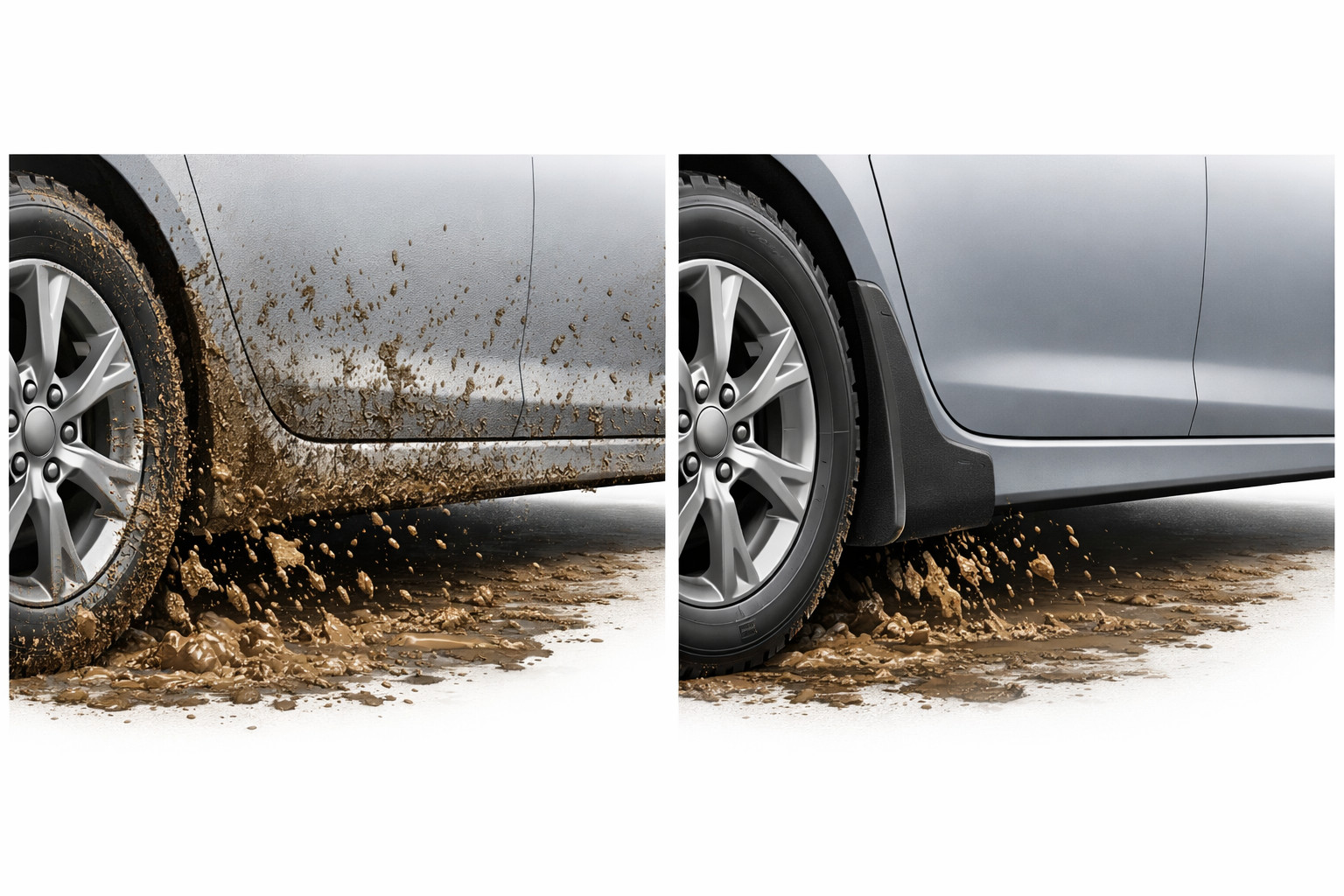
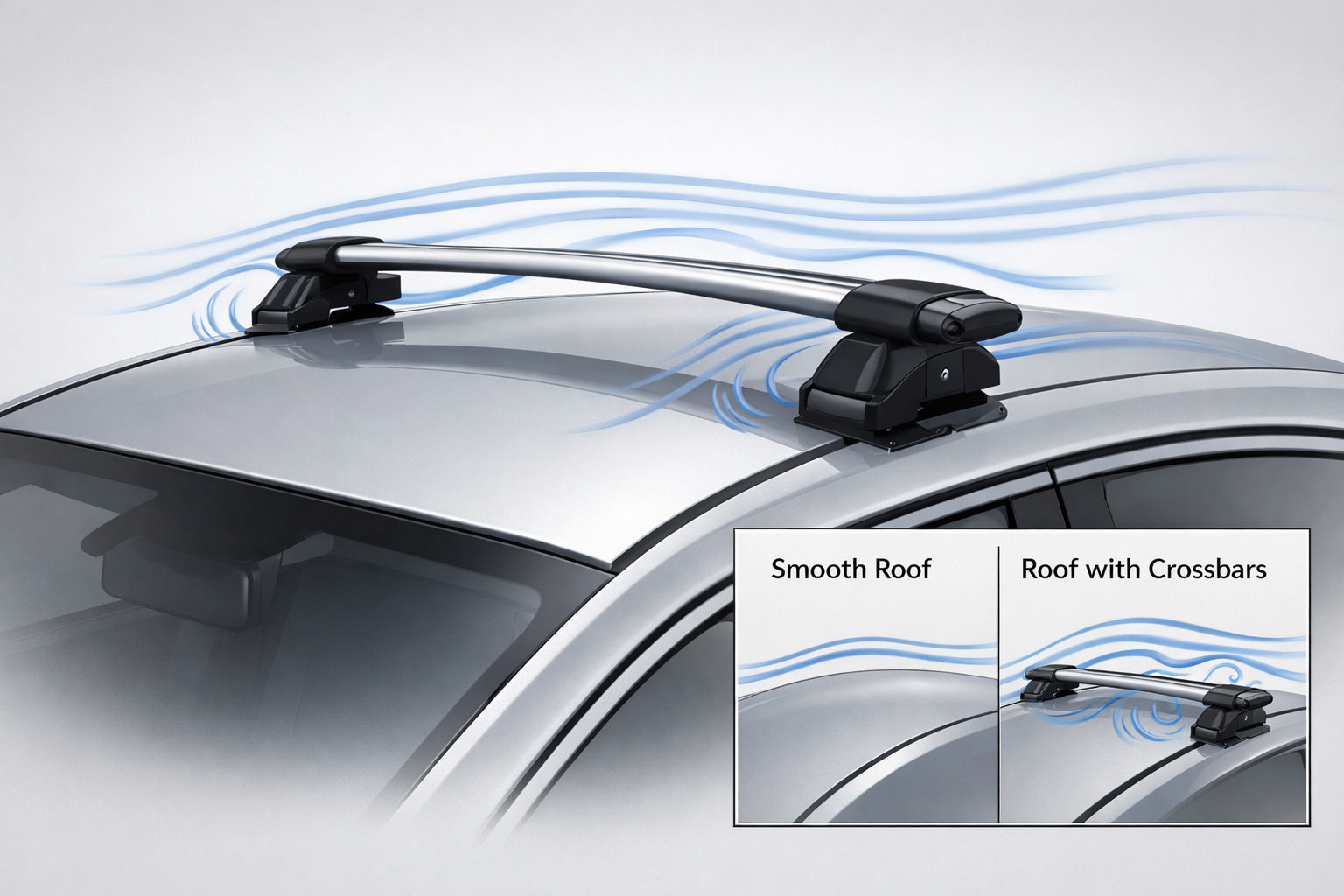
Since the W224 does not yet exist as a production car, it makes more sense to talk not about power tuning but about practical items: interior floor protection, a trunk liner, door-sill plates, small-item organization in the trunk, protective film for high-risk areas, and neat solutions for caring for a light-colored interior. If you want to understand why there’s so much attention around this model, check out the W224 review.
For this class, the most sensible choices are not loud modifications but tidy accessories that keep the interior and body in marketable condition. It helps to look not only at the specific future model, but also at accessories for Mercedes in general and separately at solutions for the S-Class, because that’s usually where you can see what actually works in everyday use.
Mercedes W224 remains a rumor for now, but the direction is already clear: the next S-Class will most likely keep its role as a large, technology-heavy sedan with very high comfort, complex electronics, and a broad range of powertrains. It’s worth waiting for if you value quietness, space, and expensive engineering solutions. If your priorities are simplicity, stable electronics, and moderate running costs, you should look elsewhere. Accessories for such a Mercedes should also be practical: protection, care, and preserving the interior matter more than showy upgrades.
| ✔ | The model is positioned as a large executive sedan with an emphasis on cabin quietness and comfort on long trips. For this format, these are exactly the qualities for which the S-Class is chosen. |
| ✔ | The car is expected to offer a wide range of powertrains: from inline sixes to V8s, hybrids, and, likely, electric versions. This makes it possible to choose a configuration for different scenarios — from daily highway driving to the most powerful versions. |
| ✔ | The current platform reference already hints at a very spacious second row and large body dimensions. For rear passengers, this means plenty of space and comfort on long trips. |
| ✔ | The suspension with AIRMATIC, and on some versions also with an active chassis, is focused on ride smoothness. This gives the car an advantage where calm and soft motion matters most. |
| ✔ | The interior and electronics are designed for a high level of equipment: quality materials, personalization, multimedia solutions for rear passengers, and a modern control architecture. In this class, this matters for those who regularly use a chauffeur-driven car or often sit in the second row. |
| ✘ | The W224 does not yet exist as a production model, so all conclusions are based on expectations and the logic of the current S-Class. It is currently impossible to assess the real picture in terms of technology, equipment, and reliability. |
| ✘ | From the outset, the car looks complex and expensive to own: service, tires, electronics, and options for this class will not be cheap. This is not an option for those looking for predictable and moderate costs. |
| ✘ | The large body and weight make everyday use in the city more difficult, especially parking and maneuvering in tight spaces. Minor damage for such a sedan will also be noticeably expensive. |
| ✘ | The extensive electronics and large number of touch functions can create usability inconveniences and increase the risk of software issues. After the warranty ends, repairing such technology can be expensive. |
| ✘ | The plug-in hybrid has a limited trunk, and its advantages depend on regular charging. If the car is charged infrequently, the point of this version is much less. |
Shipping to EU
Wholesale and retail
Own warehouse
Опис продукту
Подарунки не надаються при оформленні покупки у кредит під 0,01% або при покупці частинами.