27.07.2026
1839
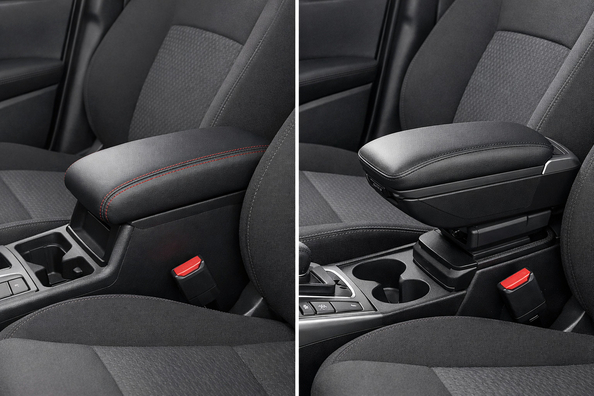
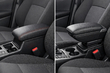
For daily driving, in most cases it’s worth choosing a vehicle-specific armrest: it fits the interior more precisely, is less likely to wobble, and interferes less with the handbrake. A universal one makes sense when your budget is tight, you need quick installation, or you want to move the accessory to another car.
The key difference isn’t in the name itself, but in how well the armrest matches the geometry of your console. If you have one car, drive every day, and don’t want squeaks and constant tightening of fasteners, the extra cost of a model-specific solution is usually justified. If you need a temporary or максимально cheap option, a universal one can work—but only after measuring.
Essentially, you’re choosing between precise fit and flexibility. A vehicle-specific armrest is made for a particular body and production years, so it better accounts for the width of the center area, the height of the elbow support, and the handbrake position. That’s why for city driving, rough roads, and daily use it usually wins.
A universal armrest isn’t tied to one model, but because of that it varies a lot in design: some install without tools, others are screwed in, and others rely on clamping force or tape. A well-chosen universal option can be comfortable, especially on the highway, but a sizing mistake quickly turns the purchase into a source of play, rattles, or awkward access to the handbrake.
| Option | Strengths | Weaknesses | Who it suits |
|---|---|---|---|
| Vehicle-specific armrest | More precise fit, fewer chances of wobble, better handbrake compatibility, cleaner look, often has adjustments and a proper compartment | Higher price, strictly tied to body and year, not always easy to move to another car | For those who drive daily, plan to keep one car for a long time, and want stability without modifications |
| Universal armrest | Lower price, broader compatibility, sometimes quick installation, can be moved to another car | Inconsistent mounting quality, higher risk of noise, weaker hinge durability, possible handbrake interference or poor height | For those who need a budget or temporary solution and are willing to measure everything before buying |
DD Tuning expert comment: The most common mistake is looking only at the housing width and not checking the handbrake travel and the real elbow height relative to the seat. The second mistake is assuming that no-drill installation automatically means a rigid fit: with some universal solutions, without additional фиксации, play appears at the first potholes. If you have one car and drive every day, it’s usually easier to pick a vehicle-specific option right away than to fix the fit of a universal one later.
Its main advantage is that it’s designed for a specific car, not an average interior geometry. Because of this, it fits better in height and length, interferes less with the handbrake, and loosens less often. In better versions, there’s height and angle adjustment, a compartment of about 1 L, a softer top, and small details like a non-slip insert.
The weak point of a vehicle-specific option isn’t quality—it’s compatibility. You need to verify the body, year, and trim level precisely. Also, sometimes such an armrest installs via an adapter or requires careful installation at specialized points, so it’s less suitable for those who change cars often.
This is a mixed category, not a single standard. One version may have a 320 × 100 × 185 mm housing and be mounted with screws, another may work with a minimum gap of 79 mm, and another may simply be a soft overlay with no drilling. In other words, the word “universal” by itself says nothing about rigidity, height, or longevity.
Its strong side is price and the ability to adapt the solution to different cars. But this is also where measurements matter most: if you get the height wrong, your elbow will sink; if you don’t account for the handbrake, it will become inconvenient to use; if you choose weak mounting, noise will appear. For highway driving, a properly selected universal armrest can be genuinely comfortable, but for daily city use the risk of a mistake is higher.
If you have one car, drive regularly, and your routes include city streets, traffic jams, courtyards, and less-than-perfect roads, it’s more practical to choose a vehicle-specific armrest. It’s less annoying in the little things: it doesn’t shift, doesn’t rattle, and doesn’t make you искать a comfortable hand position all over again every time.
A universal option is worth considering when the car is older, the budget is limited, or you need the accessory not “for years,” but as a functional upgrade here and now. But in that scenario you need to measure not only the space between the seats, but also the reach to your elbow, the height from the seat cushion, and the clearance for the handbrake.
| Scenario | What’s better to choose | Why |
|---|---|---|
| One daily car, city driving and rough roads | Vehicle-specific armrest | Less chance of wobble, noise, and handbrake interference; higher stability over long-term use |
| Need to spend as little as possible | Universal armrest | Lower initial budget, but only if measurements are done beforehand |
| Planning to change the car soon | Universal armrest | Easier to move over, or no big loss if you leave it as a temporary solution |
| Frequent highway trips, arm support matters | Depends on fit, but priority goes to vehicle-specific | A universal one can also be comfortable, but only with the correct height and angle |
| Want a quiet cabin and a no-compromise look | Vehicle-specific armrest | This is where the extra cost is most noticeable every day |
A more expensive vehicle-specific armrest makes sense when you plan to keep the car for a long time, drive every day, and don’t want to revisit the topic in a month. The extra cost is usually justified by a quieter ride, stability, a better fit around the handbrake, and a more proper feel in the cabin. If you want to browse the general category, the armrests section will work; if you need an example of a vehicle-specific подбор, you can check solutions for Ford Focus III or Renault Logan MCV.
There’s no point overpaying if the car is the second one in the family, is being sold soon, or you care more about being able to переносить the accessory between different cars. In that case, it’s better to spend time not on a pricier model, but on accurate measurements and verifying the mounting method.
From a customer’s experience: The owner of a compact sedan was looking for an inexpensive universal option for the city, but after a test fit it turned out the housing interfered with the handbrake and the elbow rested below a comfortable point. In the end, he chose a vehicle-specific armrest for his body because he has one car and uses it daily; the result was a quieter ride and proper arm support without constant adjustments. In the opposite scenario, when a car is bought as a temporary one, such a switch to a more expensive solution isn’t always justified.
For daily trips, a vehicle-specific armrest most often wins: it’s more stable, quieter, and better matches the interior of a specific car. A universal option is worth buying when price, quick installation, or the ability to move it is critical—but only after accurate measurements. This conclusion is based not on fancy descriptions, but on real подбор experience, practice, and real use cases where small нюances of fit, noise, and day-to-day comfort decide everything.
| ✔ | A model-specific armrest usually fits a specific car interior better, so it rattles less and interferes less with the handbrake. For everyday driving, that means fewer minor inconveniences in use. |
| ✔ | It usually has a more stable fit over bumps and less rattling, which is important for city driving and bad roads. This is noticeable in regular use, not just during installation. |
| ✔ | Model-specific solutions more often take into account the elbow support height, console width, and handbrake position. As a result, your hand rests more naturally, and the armrest does not interfere with the basic controls. |
| ✔ | For one car over the long term, a model-specific option is usually more practical and cost-effective, since it does not require spacers, modifications, or constant tightening of the mounts. In the end, it is less demanding in daily use. |
| ✔ | In better versions, model-specific armrests have height and angle adjustment, as well as a proper compartment for small items. This adds convenience without sacrificing mounting stability. |
| ✘ | A model-specific armrest costs more than a universal one. If you do not plan to keep the car for long, that extra cost may not be very justified. |
| ✘ | It is rigidly tied to a specific body, model year, and sometimes trim level. Because of this, choosing the wrong one can make the purchase pointless. |
| ✘ | Such an armrest is less convenient to move to another car. If you change cars often, its practical value decreases noticeably. |
Shipping to EU
Wholesale and retail
Own warehouse
Опис продукту
Подарунки не надаються при оформленні покупки у кредит під 0,01% або при покупці частинами.