11.06.2026
355
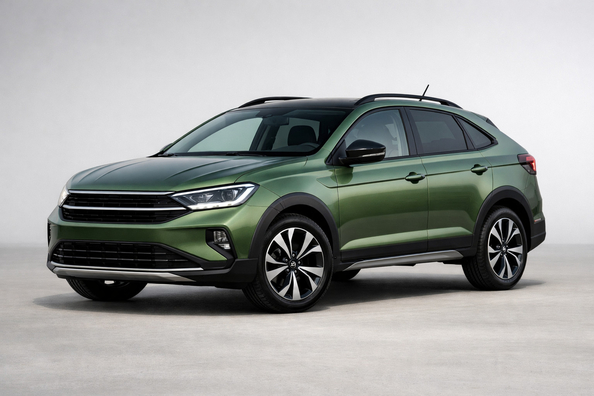

Volkswagen Taigo is a compact front-wheel-drive B-segment crossover coupe built on the MQB A0 platform. Its idea is simple: provide a higher seating position, a more expressive silhouette, and solid day-to-day practicality without moving up into a larger and more expensive class.
This model suits those for whom a regular hatchback feels too small, but who don’t need a full-size family crossover with a максимально flexible cabin. It’s not the best choice for bad roads, frequent trips with a fully loaded car, or for those who want the smoothest automatic in traffic jams.
Taigo arrived as a more emotional alternative to more practical classmates such as the Volkswagen T-Cross. Technically it’s a close relative of the Polo and T-Cross, but with a lower roofline, different design emphasis, and the same front-wheel drive.
In the market it sits between a regular city crossover and a hatchback with a raised driving position. That’s why people choose it not for off-road ability, but for a balance of size, safety, efficient petrol engines, and a trunk that in real life doesn’t feel like a sacrifice to the coupe-like body.
For Europe, the Volkswagen Taigo debuted on July 29, 2021 as the brand’s first crossover coupe in this market. As of today, it remains a single generation with no change in platform or concept: a five-seat body, front-wheel drive, and petrol engines.
When choosing a car, it’s worth considering nuances by year and market. Early materials mentioned a 2 566 mm wheelbase, a 438 l trunk, and a 1.0 TSI engine with 110 hp, while later official tables more often list 2 554 mm, 440 l, and a 1.0 TSI version with 115–116 hp. This isn’t a different model, but a difference in model years, specifications, and measurement methodology.
Taigo has no diesel, mild hybrid, or all-wheel drive. The lineup is straightforward: TSI turbo petrol engines, manual gearboxes or a 7-speed DSG dual-clutch. For the city, the base 1.0 TSI is enough, while the 1.5 TSI makes more sense for highways, frequent overtakes, and driving with a full cabin.
| Engine | Power | Torque | Gearboxes | Practical use case |
|---|---|---|---|---|
| 1.0 TSI | 95 hp | 175 N·m | 5-speed manual | City driving, relaxed pace, minimal extra cost |
| 1.0 TSI | 110 hp on early versions or 115–116 hp on later ones | 200 N·m | 6-speed manual or 7-speed DSG | The most versatile option for daily driving |
| 1.5 TSI | 150 hp | 250 N·m | 7-speed DSG | Highway use, quicker acceleration, less strain under load |
On paper, 0–100 km/h acceleration varies by version and sits roughly between 11.1 and 8.2 s. Official combined fuel consumption also looks restrained—around 5.3–5.9 l/100 km—but on used cars it’s worth separately checking DSG behavior in traffic jams and the operation of electronic driver aids.
Taigo measures 4 266–4 271 mm in length, 1 757 mm in width, and 1 518 mm in height. It’s a compact format that’s easy to live with in the city, and the 10.7 m turning circle directly supports maneuverability in courtyards and tight parking spaces.
The suspension is set up without sporty ambitions: the model is more about calm control and acceptable everyday comfort. Ground clearance isn’t clearly fixed in pan-European tables; in some official specifications 168 mm appears, but the value may vary depending on market and wheels.
| Parameter | Value |
|---|---|
| Body length | 4 266–4 271 mm |
| Body width | 1 757 mm |
| Wheelbase | 2 554 mm, early data sometimes shows 2 566 mm |
| Height | 1 518 mm |
| Trunk | 440 l, 1 222 l with the second row folded |
| Trunk floor length | 943 mm or 1 634 mm with the row folded |
| Ground clearance | Around 168 mm in some specifications, depends on market |
| Permissible roof load | 75 kg |
| Braked trailer towing | 1 000–1 200 kg |
Inside, Taigo leans on familiar Volkswagen ergonomics: digital instruments, sensible control logic, and modern equipment depending on trim. Matrix headlights, a large digital cluster, panoramic roof, higher-power audio system, and other options are available, but the perceived materials aren’t premium everywhere—below eye level there’s plenty of hard plastic.
The second row doesn’t feel like a penalty for the sloping roof: rear headroom is officially 964 mm, front is 1 019 mm. Safety is strong: 5 stars in Euro NCAP, 94% adult protection and 84% child protection. Standard equipment includes autonomous emergency braking in the city and lane keeping, while semi-automated driving is available depending on version.
In daily use, Taigo is strong where a car simply needs to be convenient: a compact body, efficient engines, a sufficiently large trunk, and decent quietness at speed. The 440 l format lets you carry suitcases, shopping, or a stroller without stress, and folding the second row already gives you a genuinely usable cargo bay.
The limitations are also obvious. This isn’t a car for off-road driving, and the coupe-like body doesn’t make it more practical than a T-Cross with its more flexible second row. If you’re looking at a used example, the smartest move is to check for electronic fault codes, multimedia stability, sensor operation, and gearbox behavior during slow driving.
| Pros in everyday use | What to keep in mind |
|---|---|
| Expressive body without a major loss of practicality | Less versatile cabin than more boxy competitors |
| 440 l trunk is genuinely useful for the class | The sloping body style doesn’t improve rear visibility |
| Efficient petrol engines and a simple lineup without complex hybrids | No diesel, all-wheel drive, or bad-road versions |
| Calm, comfortable ride for city and highway | DSG can feel jerky in traffic jams or less than ideal on descents |
| Strong safety package even on base versions | Some cars have minor quirks with electronics and multimedia |
For Taigo, not aggressive exterior tuning works best, but practical items for everyday use. If you need a quick refresh on the base specs and trims, it’s convenient to have this Taigo overview at hand.
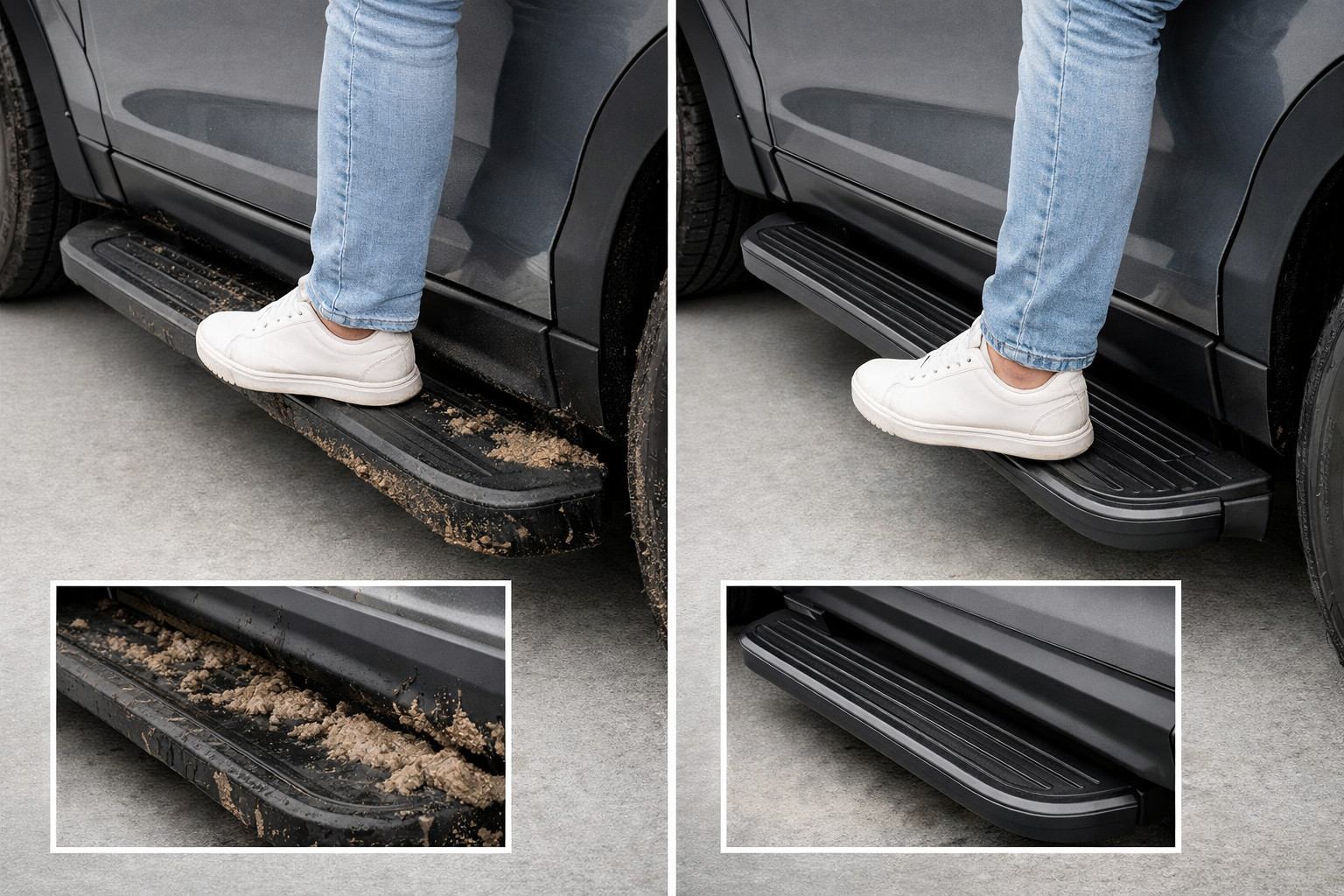
The most logical accessories here are interior protection and trunk-area protection. The car is often used as urban family transport, so dirt from shoes, bags, boxes, and strollers leaves marks faster than you run out of power.
If the car often goes on vacations or carries gear, roof solutions can also make sense. But mats and bumper protection usually bring the most benefit from the very first weeks.
Volkswagen Taigo is a solid choice for those who want a compact crossover with a more distinctive silhouette, without giving up basic practicality. The healthiest pick in the range is the mid-level 1.0 TSI for the city, or the 1.5 TSI if highway driving and torque reserve are the priority.
Before buying, it’s important not to romanticize the body: Taigo is better on asphalt than on broken roads, and it isn’t as versatile as more rectangular competitors. The material is based on real selection experience, practice, and real-world use cases, so the main takeaway is simple: it’s not a model for everyone, but in its role as a calm urban crossover coupe it’s put together quite sensibly.
| ✔ | Compact dimensions and a 10.7 m turning circle make the Taigo convenient for the city, courtyards, and tight parking spaces. It’s a practical plus for everyday trips without unnecessary hassle. |
| ✔ | The 440 l trunk is very useful for this class, and with the second row folded down, the volume increases to 1,222 l. That’s usually enough for suitcases, shopping, or a child’s stroller. |
| ✔ | The engine lineup is simple and economical: only petrol TSI engines, with no diesel and no complex hybrid systems. In the combined cycle, fuel consumption is stated at around 5.3–5.9 l/100 km. |
| ✔ | The Taigo has a strong safety package: 5 Euro NCAP stars, 94% adult protection, and 84% child protection. Standard equipment also includes automatic city braking and lane assist. |
| ✔ | For daily driving, the model offers familiar Volkswagen ergonomics and a calm, comfortable suspension. This makes it predictable in the city and on the highway. |
| ✘ | The Taigo is not a good option for bad roads and off-road use, because it is a front-wheel-drive crossover without all-wheel drive. In this sense, it is inferior to more versatile models. |
| ✘ | The sloping roof does not add versatility to the cabin, so in practicality it loses out to more boxy crossovers like the T-Cross. If you often carry passengers and large items, this may be noticeable. |
| ✘ | The 7-speed DSG may not behave perfectly in traffic jams and during slow driving. For city use, this is an important nuance worth checking during a test drive. |
| ✘ | Not all interior materials are premium, and there is a lot of hard plastic below eye level. So the sense of quality does not always match the exterior appearance. |
| ✘ | For used cars, it is recommended to check the electronics, multimedia system, and sensors separately, because some examples have minor issues. This adds extra work before purchase. |
Shipping to EU
Wholesale and retail
Own warehouse
Опис продукту
Подарунки не надаються при оформленні покупки у кредит під 0,01% або при покупці частинами.