31.07.2026
109
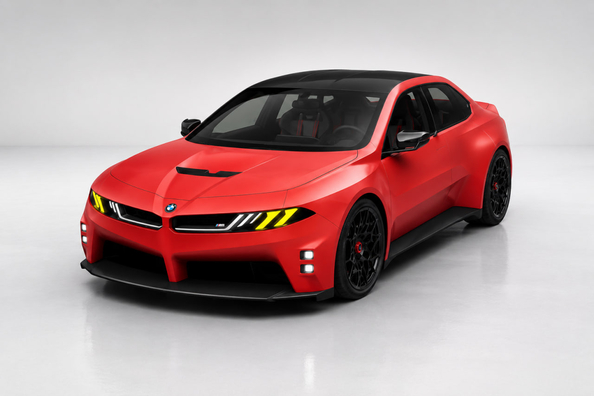
BMW M Concept Neue Klasse — is an officially unveiled concept preview of future electric BMW M models, which debuted on 12 June 2026 at the «24 Hours of Le Mans» and was later re-presented in Monterey. It’s important to understand the status correctly: this is not a production BMW M3 and not a pre-production car intended for sale, but a demonstration of how BMW envisions the first fully electric M sedan of a new era.
That’s why the name «electric M3» is already being used around the model, but officially only the BMW M Neue Klasse concept and the start of the BMW M Neue Klasse production era from 2027 have been confirmed. Everything else — power, exact range, production name, weight, and price — is either not yet announced or exists only as market estimates.
As of today, the model’s status can be described as: a concept with a full official unveiling. It’s no longer a teaser and not a randomly photographed test mule, but it’s also not pre-production in the usual sense because the production specification hasn’t been disclosed. BMW has openly shown the design direction, the electric drive architecture, and part of the technical logic of the future M car.
It has been officially confirmed that the concept itself is not intended for sale. A four-motor idea, an 800-volt architecture, a battery over 100 kWh, and a new traction control system have also been confirmed. Rumors suggest the production car could launch as an M3, iM3, or under another designation, but the manufacturer hasn’t announced this yet.
| What is known | What is expected | What is unknown |
|---|---|---|
| An official concept unveiled in June 2026 | A production electric M sedan in 2027 | Whether the production version will be called M3 |
| Neue Klasse Gen6 platform | A dedicated EV architecture not tied to the old ICE format | Exact curb weight and weight distribution |
| A four electric motor layout shown for the concept | Several power levels depending on the version | Official hp, torque, and acceleration time |
| 800 V and a battery over 100 kWh | Very fast charging and strong thermal stability | Real charging power and driving range |
| The start of the BMW M Neue Klasse production era is planned for 2027 | Sales launch in key markets in late 2027 | Exact ordering dates by country |
Technically, this is one of the most interesting points in the entire story of the model. This isn’t about adapting an old «3 Series» to a battery, but about the Neue Klasse Gen6 platform designed for electric drive. An 800-volt architecture, a new generation of control electronics, a large-capacity battery, and a dedicated M approach to torque distribution have been officially confirmed.
Another important nuance is the control logic. BMW talks about the Heart of Joy system, M Dynamic Performance Control, and four powerful computing units, as well as the ability to completely disconnect the front axle in certain modes. For the Gen6 platform itself, the manufacturer also claims up to 30% faster charging, up to 30% more range, and up to 20% higher energy density compared to the previous generation of its own electric drive. In the author’s view, it will be the chassis, battery cooling, and traction algorithms that determine whether this car feels like a true M, and not just a very fast electric sedan.
Here the split is simple: within this project, a fully electric setup has been officially confirmed. BMW has not announced any ICE or hybrid configuration for this concept. The show car is said to use a four-motor layout, effectively one motor per wheel, and for future production M Neue Klasse models the company talks about configurations up to four motors.
So far, BMW hasn’t stated official peak power, torque, or even a basic hierarchy of versions. Based on early market data, you can expect a starting point somewhere above 600 hp, with higher trims likely moving into the 700 hp range or even more. But that is expectation, not a confirmed specification. If BMW truly retains independent control of each wheel in production, the main advantage won’t be the raw power figure, but how the car puts it down on asphalt.
DD Tuning expert comment: The most common mistake with concepts like this is to read them as a finished production car and draw conclusions solely from the number of motors. For an electric M, it’s far more important how long it can sustain the claimed output after several hard accelerations, how the battery is cooled, and what tires can handle the high mass without losing precision. Those are the points worth waiting for in the production spec, rather than relying only on attractive rumors about hp.
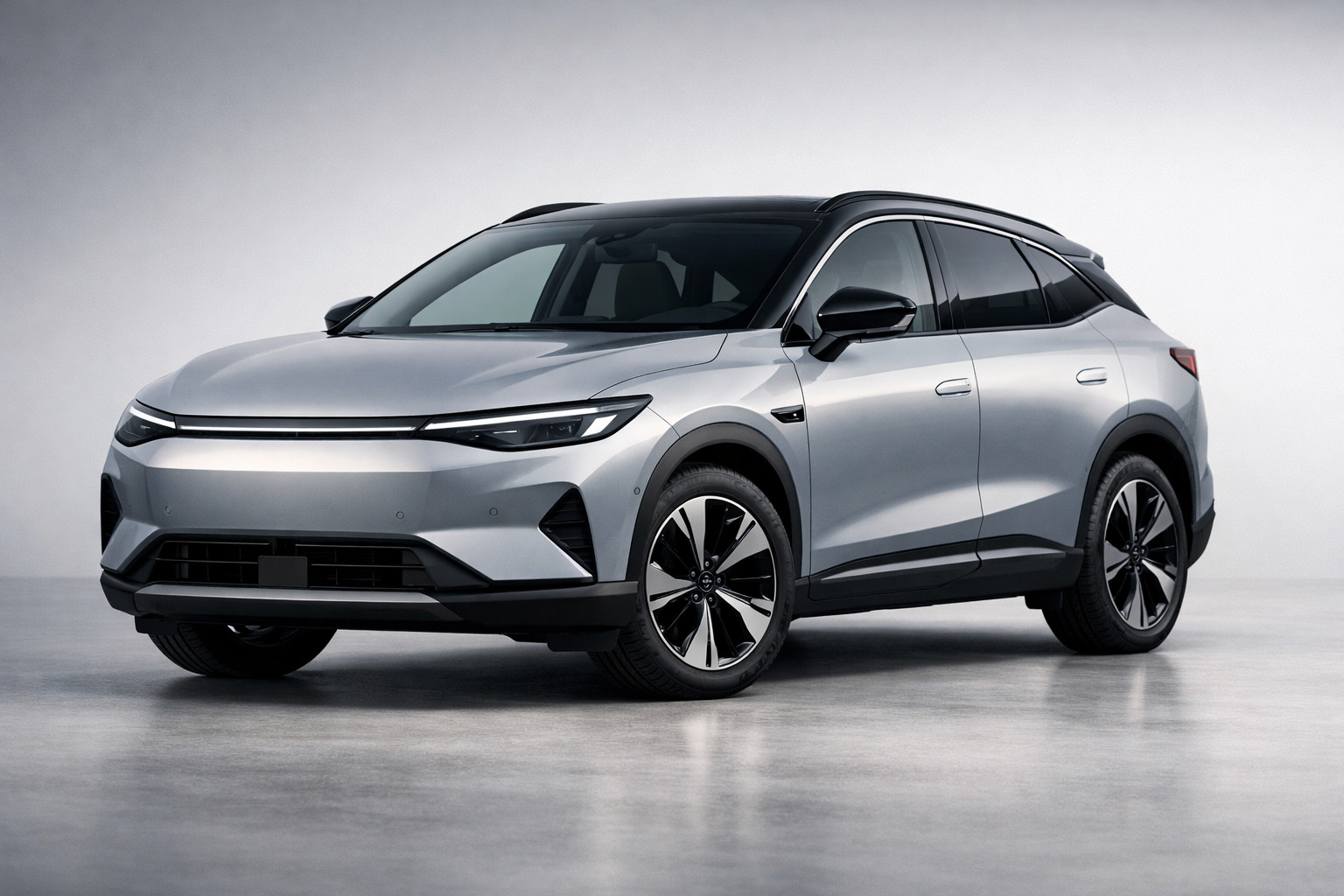
On the outside, BMW has already shown its new M design language without excessive camouflage. The concept has a very low and wide silhouette, short overhangs, pronounced arches, slim lighting, an aggressive front end, and an integrated rear spoiler. All of this looks like an attempt to combine the clean geometry of Neue Klasse with a tougher, track-oriented image of the M division.
The show car interior should be taken cautiously. Four bucket seats, five-point harnesses, black nubuck, and natural-fiber trim have been officially confirmed, but the production sedan is unlikely to remain this radical inside. The road-going version will probably keep the overall cabin architecture and sporty driving position, but get calmer seats, a more practical second row, and less extreme trim details.
The strongest part of the project is its baseline technical package. 800 V, a battery over 100 kWh, new M control electronics, and a four-motor concept are officially confirmed. That means the model’s potential should be judged not only by launches from a standstill, but also by the consistency of repeated acceleration, chassis behavior, and the ability to maintain pace for a long time without overheating.
No official range, acceleration time, top speed, or weight has been announced. In the author’s view, BMW will likely focus not on segment-leading range, but on a balance between traction, handling, and fast charging. In other words, the production car most likely won’t be a long-distance cruiser in the style of calm executive sedans, but it should deliver strong output during spirited driving.
In positioning, this is a future high-performance premium electric sedan. It makes sense to compare it not with mass-market EVs, but with models where handling, thermal resilience, and chassis character matter. If you need a reference point in the brand’s current gasoline benchmark, it’s worth revisiting the review of the current BMW M3 Sedan. Below is not an official BMW list, but market competitors that already exist in series production.
| Model | Format | What’s already on the market | How BMW could respond |
|---|---|---|---|
| Porsche Taycan | Premium electric sedan | Strong chassis, fast charging, well-developed architecture | More precise torque metering with four motors, if retained in production |
| Audi RS e-tron GT | High-power electric grand tourer | High power and strong pace on track | A more pronounced character of a true M sports sedan |
| Tesla Model 3 Performance | Compact fast electric sedan | Sharp acceleration and a lower entry price | Higher premium feel, a more finely tuned chassis, and likely better load durability |
| Mercedes-AMG EQE 53 4MATIC+ | Premium AMG electric sedan | Comfort, straight-line pull, and a strong segment image | Less emphasis on heft and more emphasis on response precision |
If BMW doesn’t burden the production car with excessive mass, controllable torque distribution could become its main differentiator. And that looks more realistic than trying to win the segment purely on peak power numbers.
BMW’s official reference point is 2027 for the first BMW M Neue Klasse models. That’s why the most realistic scenario looks like this: the production version of the future electric M sedan debuts in 2027 and reaches key markets in late 2027 or already in 2028. For the US, the manufacturer has already explicitly tied the future electric M3 to this time window.
As for pricing, there are no official figures yet. Market estimates suggest a starting point around USD 100,000, but that’s only a guideline. If a large battery, complex power electronics, and a top four-motor version really go into production, upper trims can easily move noticeably higher.
Separately, it’s still unknown how closely the production body will mirror the show car. In the author’s view, BMW will keep the proportions, light signature, and the overall front-end idea, but will simplify some aerodynamic details, the seats, and parts of the interior trim. This is a normal path from concept to real car.
From a customer’s experience: we were contacted by a driver who planned to replace his gasoline M sedan with the future electric counterpart and wanted to understand whether it made sense to wait for this model specifically. After breaking down his use case, it became clear that what mattered more to him than rumors about peak power were the vehicle’s mass, tire wear, and real charging speed on trips. In the end, he decided to postpone the decision until production figures appear, and that’s a very typical, rational strategy for such new platforms.
The main expectation from the BMW M3 2027 in Neue Klasse form is not just a loud switch to electric power, but preserving the M character itself within a new technical architecture. The officially confirmed foundation is strong: 800 V, a battery over 100 kWh, new traction control, and a four-motor concept. If BMW brings these solutions into production without excessive weight and without losing lively responses, the model could become one of the most interesting electric sedans in its class.
For now, this car should be treated as a serious concept with a very close production subtext. Some conclusions already rely on officially confirmed manufacturer data, while others are based on expectations, market practice, and typical pathways from show car to production. This piece is based on real selection experience, hands-on practice, and real-world usage scenarios, so the main guideline here is not the rumors themselves, but which characteristics will truly matter once the production car arrives.
| ✔ | The officially confirmed 800-volt architecture and a battery of over 100 kWh give reason to expect fast charging and better thermal stability during dynamic driving. |
| ✔ | The Neue Klasse Gen6 platform is designed specifically for electric drive, rather than adapted from an older ICE architecture. This increases the chances of a well-balanced chassis, cooling, and component placement. |
| ✔ | The four-motor setup with separate torque control at each wheel can deliver very precise performance on corner exit and better traction control. For a sports sedan, this is a more practical advantage than just high peak power. |
| ✔ | BMW has already shown a clear design direction: a low, wide body, short overhangs, and pronounced wheel arches. This helps indicate that the production car will retain sporty proportions. |
| ✔ | The start of the BMW M Neue Klasse production era is scheduled for 2027, so the model has a clear launch window. This makes it possible to focus on a real waiting horizon, rather than an abstract "someday". |
| ✘ | The official specifications of the production version have not yet been announced: there is no data on power, torque, acceleration, or top speed. Because of this, it is hard to assess how much faster the car will be than the current M models in practice. |
| ✘ | The weight and the real driving range of the M version are unknown. For a sporty electric sedan, this is critical, because weight will directly affect handling, tire wear, and cornering behavior. |
| ✘ | The four-motor layout has so far been confirmed only for the concept, not guaranteed for all production versions. If it is simplified in production, part of the torque-vectoring potential may be lost. |
| ✘ | The show car's interior is very radical, but the production version is almost certainly going to be simplified. This means that some striking features, such as bucket seats or five-point harnesses, will not make it to the regular road car. |
Shipping to EU
Wholesale and retail
Own warehouse
Опис продукту
Подарунки не надаються при оформленні покупки у кредит під 0,01% або при покупці частинами.