20.08.2026
214
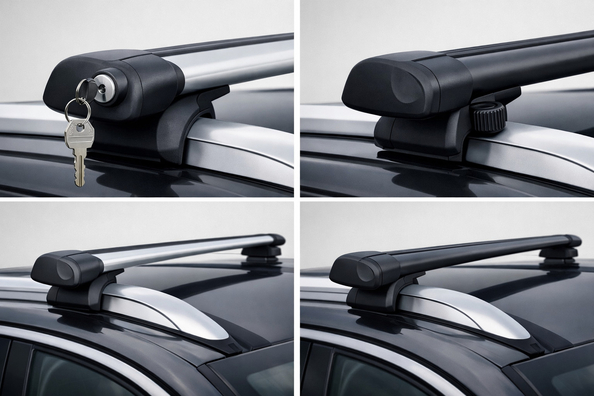
If crossbars stay on the car almost every day, a keyless option is usually more convenient in everyday use: no separate key, no small routine when removing and installing, and less chance of losing something. The keyed version wins not in comfort, but in basic protection against quick removal—when the car often stays outside or expensive accessories are carried on it all the time.
The main mistake here is simple: people often think a lock makes crossbars quieter, stronger, or more “premium.” In reality, noise, service life, and highway behavior depend much more on the crossbar profile, installation accuracy, support spacing, and regular torque checks.
Choosing between keyed and keyless crossbars comes down to one question: what matters more to you day to day—speed and simplicity, or an extra anti-theft barrier. If the rack is installed seasonally, removed after a trip, and the car spends nights in a garage or a secured parking area, paying extra for locks often brings no real benefit.
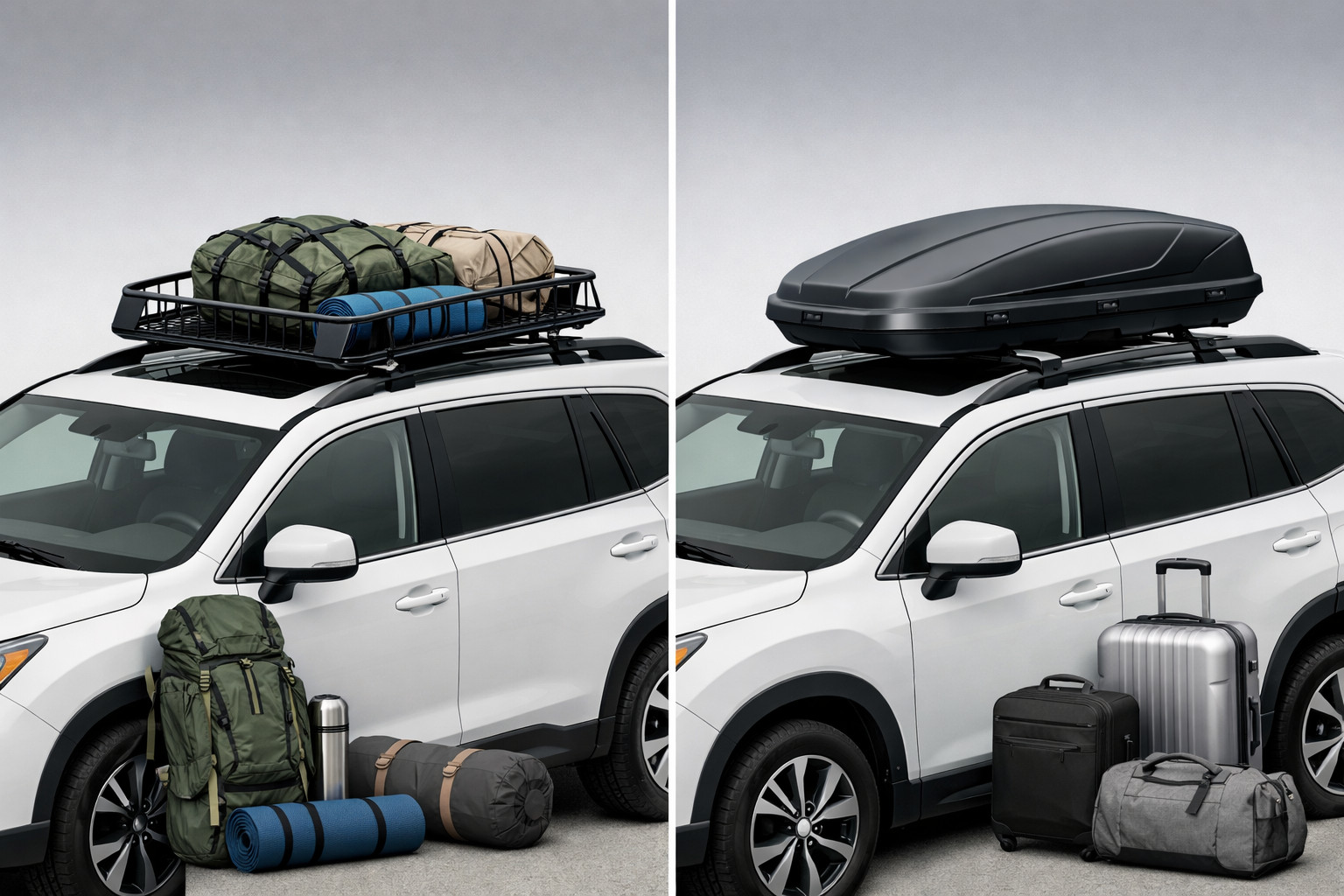
If the crossbars live on the roof permanently, the car is parked in the yard, and there’s regularly a roof box, bike mount, or another not-cheap accessory on top, the keyed version looks more logical. But it’s important to understand: across different brands, “with a key” can mean different things—lockable end caps, locks in the feet, interchangeable lock cores, or security bolts. You should compare the specific system, not just the wording in the name.
Installation. Keyless solutions are faster in daily life: install, tighten, drive. With keyed systems, there’s one more step—open, close, and check that everything is locked. If you remove the rack often, this small thing quickly becomes annoying.
Noise. The key itself has almost no effect on acoustics. On the highway, the crossbar shape is what matters: an aero profile is usually quieter, while a rectangular or tall profile more often whistles. Roof clearance, end caps, installed accessories, and even whether a wind deflector is fitted also matter.
Durability. A keyless system has fewer small parts that suffer from dirt, salt, and icing. In a keyed system, the additional mechanism needs cleaning and should not be neglected, especially in winter. But overall durability depends more on the crossbar material, foot quality, and whether you re-check tightening after the first trips.
Practicality. If all locks across all components work with one key, a keyed system becomes noticeably more convenient. If there are several keys and the rack is also removed irregularly, it’s no longer comfort—it’s extra small-scale logistics.
Price. A simple solution without a lock is almost always cheaper. The extra cost for locks in branded systems can be significant: a 4-point set often costs about the same as a separate budget accessory. For those who use a rack rarely, this isn’t always rational.
On-road use. For any crossbars, it’s not only locks that matter, but also user discipline: after installation you need to check tension, avoid hitting large bumps at speed, and remember that roof loads change handling. In brand instructions, the upper limit with a load is often restricted to 130 km/h, and large bumps are recommended to be taken very slowly.
| Option | Strengths | Weaknesses | Who it’s for |
|---|---|---|---|
| Keyed crossbars | Basic protection against quick removal, better for a permanently installed rack, convenient if all locks use one key | More expensive, risk of losing the key, locks are sensitive to dirt and salt, more small daily actions | For those who often leave the car outside, travel frequently, and carry a roof box or expensive mounts |
| Keyless crossbars | Easier to use, cheaper, fewer parts to maintain, faster to remove and install | No separate anti-theft barrier, less peace of mind when street-parking, more important not to leave the system on unnecessarily | For those who install the rack occasionally, remove it after a trip, or keep the car in a safer place |
DD Tuning expert comment: most often, the buyer overpays for locks and then doesn’t use them, because the rack is on the car two weeks a year. The second typical mistake is choosing a lock but ignoring the type of roof rails and the crossbar shape. As a result, the person gets not more security, but more noise and extra hassle.
Their main advantage isn’t “premium feel,” but a deterrent effect. A lock doesn’t make the system invulnerable, but it removes the scenario of quick hand removal in a few minutes. For trips with a roof box, ski carrier, or bicycle, this is a practical plus—especially on journeys with frequent stops.
In daily life, everything depends on implementation. If the whole system works with one key, it’s fine to use. If separate keys are needed for the crossbars, the box, and another accessory, convenience drops very quickly. Add the risk of losing the key—and the advantage is no longer so obvious.
A lock doesn’t doom the system’s lifespan by itself, but it does require care. In winter, after washes and exposure to road salt, the mechanism should not be neglected. Also, in keyed systems users more often forget a basic thing: if the design has locking, you should actually lock it—not just carry the key in the glovebox.
This is the most convenient everyday format for those who don’t want a permanent roof rack. Install before a trip, remove after you’re back—no searching for a key, no extra small routine. For most city owners, this is exactly the scenario where the system doesn’t irritate.
The downside is obvious: if the crossbars stay on the car permanently, there’s no separate barrier to removal. Then the user’s peace of mind depends not on the design, but on where the car is parked and what’s mounted on top. Also, in simpler systems it’s worth looking at the quality of end caps and the retention of small parts, because a lost end cap is a small thing that easily spoils the overall impression of the rack.
In terms of noise and highway behavior, keyless crossbars don’t have an automatic advantage if the profile is poorly chosen. An aerodynamic crossbar without a lock can be quiet, while a simple tall crossbar can be loud. What matters here isn’t the presence of a key, but the shape and installation.
For city use, where crossbars aren’t needed every day but for specific tasks, the keyless option looks more sensible. It’s cheaper, simpler, and demands less attention. If you remove the rack after the weekend, there’s little point in paying just for the mere fact of a lock.
For long-distance driving, the picture is different. If a roof box or gear mounts regularly live on the roof, a lock becomes less about “convenience” and more about psychologically justified protection. In this mode, the extra cost looks reasonable—especially when the car is left near a hotel, at a resort parking lot, or simply outside overnight.
For commercial work, service calls, and frequent transport of equipment, the keyed version is usually better. Here it’s not just about the hardware, but also time: there’s less risk you’ll have to look for a new crossbar or mount due to a simple theft.
Separately, it’s worth mentioning noise and durability in daily use. If you drive a lot on the highway, spend your budget first on a proper aero profile, correct installation, and torque checks. That’s what you’ll hear and feel every day—not the mere presence of a lock.
| Scenario | What to choose | Why |
|---|---|---|
| City, weekend trips, rack is removed after use | Keyless | Less fuss, lower price, no point paying to protect something you remove anyway |
| Car sleeps outside, crossbars stay on permanently | Keyed | An additional barrier against quick removal and less anxiety with daily street parking |
| Travel with a roof box or expensive mounts | Keyed | When there’s an expensive accessory on top, locking becomes a practical—not just formal—advantage |
| Seasonal transport of skis, fishing rods, or cottage loads | Keyless or keyed depending on parking | If the system is removed after the trip, a simple option is enough; if it stays on the roof for weeks, a lock is better |
| Commercial use, frequent stops, equipment on the roof | Keyed | In work mode, the extra cost for locks quickly pays off in peace of mind and lower risk of losses |
| Daily highway driving, sensitive to noise | Either, but with a good aero profile | Here the crossbar shape and installation matter, not whether there’s a key |
A more expensive keyed system makes sense not when you simply want to “get the best,” but when there’s an ongoing risk of leaving the rack on the car. This is relevant for courtyard parking, long trips, work use, and scenarios where there’s also an expensive accessory mounted on top. If the rack is installed for a task and removed afterward, the extra cost often doesn’t pay back.
Another reason to pay more is a convenient ecosystem. When crossbars, a roof box, and mounts can all be locked with one key, the pricier solution stops being a small nuisance and becomes truly practical. If you’re still choosing a kit, take a look at roof crossbars and roof racks, separately check solutions for standard roof rails, and before buying it’s useful to cross-check with the material about integrated and standard roof rails. Often a basic mismatch costs more than the extra you pay for locks.
From a customer’s experience: most often, the satisfied ones are those who honestly assessed their scenario. Someone was looking for crossbars for occasional trips with a boat and initially wanted a keyed version, but it turned out the rack was removed after every outing and the car was kept in a garage. In the end they chose the simpler keyless option, saved the budget, and avoided extra hassle with keys.
For everyday use, keyless crossbars are most often more convenient: less routine, lower price, simpler life. A keyed version is justified where the rack often stays on the car, the vehicle is parked outside, or expensive accessories are regularly mounted on top. Noise, durability, and highway behavior are determined primarily by the crossbar profile, correct installation, care, and operating discipline—not by the mere fact that a lock exists.
So the choice is simple: for occasional use—keyless; for permanent and higher-risk scenarios—with a key. This material is based on real fitting experience, hands-on practice, and real usage scenarios—not the formal logic of “more expensive means better.”
| ✔ | Keyless crossbars are more convenient for everyday use: they are quicker to install and remove, with no need to look for a key or go through extra routine. |
| ✔ | They are usually cheaper, so for occasional use you don’t have to pay extra for protection that may not be needed. |
| ✔ | A simpler design has fewer small parts that can get dirty, freeze, or require winter care. |
| ✔ | Crossbars with a key provide a basic barrier against quick removal, which is useful when the car is often left outside or expensive accessories are mounted on top. |
| ✔ | If the whole system works with one key, it is convenient to use and there is no need to keep separate keys for each element. |
| ✘ | In the key version, everyday use becomes less convenient: extra steps are added during installation and removal. |
| ✘ | The locks can get dirty, be affected by salt and ice buildup, so they need regular cleaning and should not be neglected. |
| ✘ | The key system is more expensive, and losing the key or having several different keys for the trunk and accessories creates unnecessary hassle. |
| ✘ | Keyless crossbars do not have a separate anti-theft barrier if the system stays on the car permanently. |
Shipping to EU
Wholesale and retail
Own warehouse
Опис продукту
Подарунки не надаються при оформленні покупки у кредит під 0,01% або при покупці частинами.