04.06.2026
442
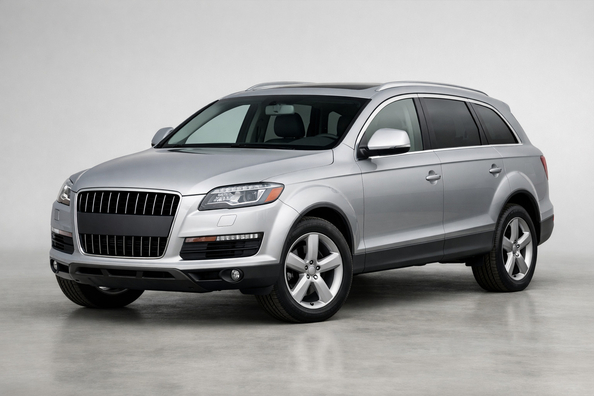
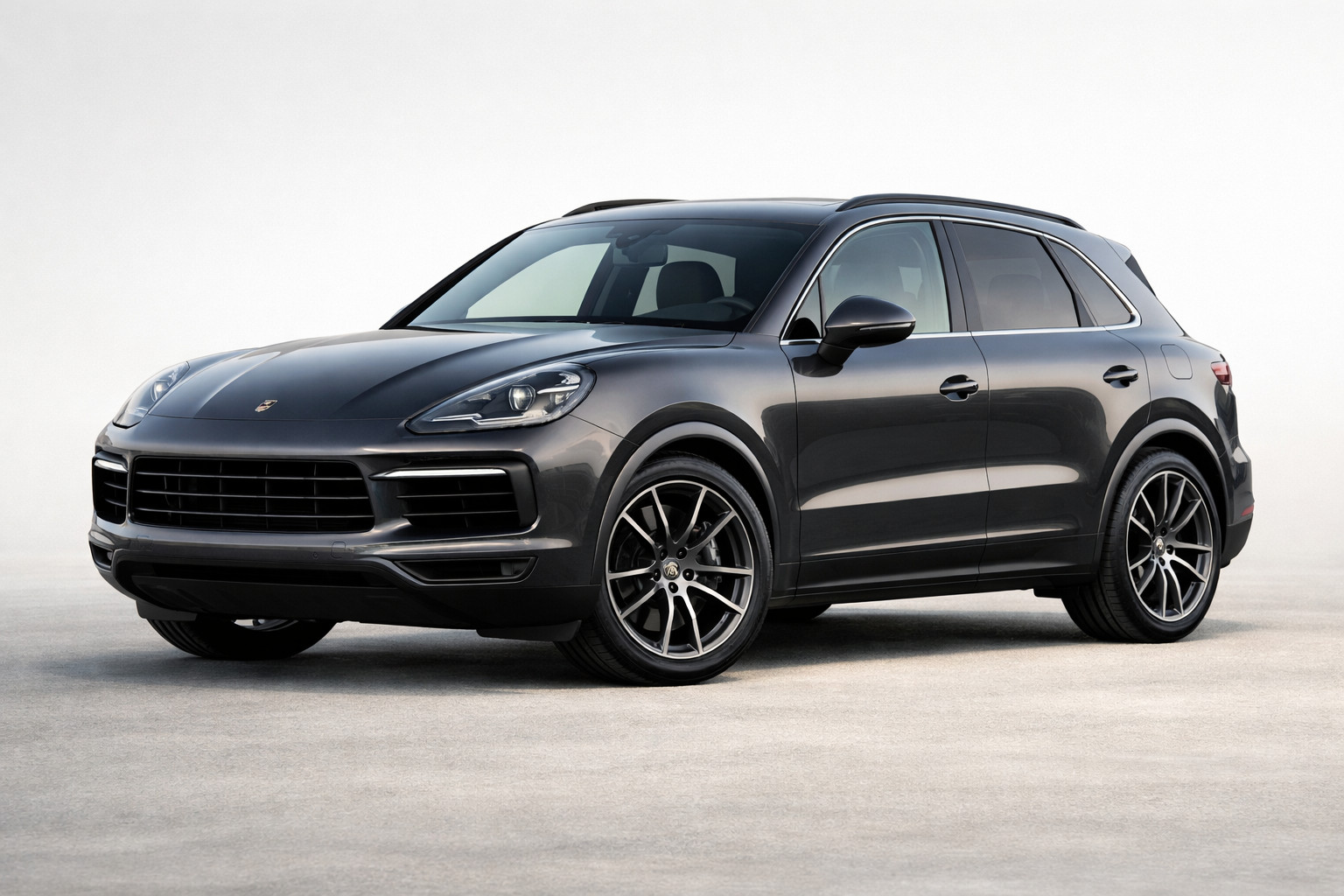
The first-generation Audi Q7, code 4L, is a large 7-seat crossover for family life, long trips, and towing—not a car meant to show off a “sporty character.” Its strengths are straightforward: a quiet cabin, lots of space, permanent all-wheel drive, and the feel of a big road car. Its weaknesses are just as obvious: age, complex engineering, and a high bill on neglected examples.
The Q7 suits those who need a spacious premium vehicle with a third row, a high seating position, and a strong comfort reserve. It won’t suit those who want low running costs, city-friendly compactness, or a true heavy-duty off-roader.
For Audi, the Q7 was a flagship in the large crossover segment. From the start, the model was designed as an expensive 7-seat family car with a big trunk and an emphasis on on-road comfort. In other words, it’s not a “mud jeep,” but a large wagon-like vehicle for bad roads, highways, winter, a trailer, and everyday family routines.
In its day, the Q7 won people over not so much with excitement as with scale, quietness, and a sense of reserve. That’s why today it’s often sought not as an image purchase, but as a roomy vehicle for family use, travel, and carrying lots of things.
When discussing 2005–2015, it’s important not to confuse the debut with actual production. The Q7 was shown publicly in 2005, and the first-generation 4L was produced from 2006 to 2015. In 2015, it was replaced by the second generation. The project itself grew out of the Audi Pikes Peak quattro concept shown earlier.
Over its lifecycle, the model sold in large numbers and was updated several times in terms of engineering and equipment. So when choosing a used Q7, you can’t lump them all together: the selection of engines, gearboxes, and even some characteristics depend on the production year and market.
The Q7 4L had a wide engine range, but for a used-car buyer what matters is not “all versions in general,” but the specific engine–gearbox combination and the maintenance condition. Early cars had a 6-speed Tiptronic automatic, while later versions may come with an 8-speed. In all cases, the drivetrain is permanent quattro.
| Engine | Power | Transmission | What you need to know |
|---|---|---|---|
| 3.6 FSI V6 | 280 hp, 360 N·m | 6-speed Tiptronic, quattro | The base petrol option for early years, but you can’t call it economical |
| 4.2 FSI V8 | 350 hp, 440 N·m | 6-speed Tiptronic, quattro | Pleasant to drive, but fuel use and upkeep are noticeably more expensive |
| 3.0 TFSI V6 | 272 or 333 hp, 400–440 N·m | automatic transmission, quattro | A later petrol engine and the most sensible petrol compromise |
| 3.0 TDI V6 | 240 hp, 550 N·m | 8-speed Tiptronic on some later versions, quattro | For a large Q7, one of the most logical choices for pull and consumption |
| V12 TDI | 500 hp, 1 000 N·m | automatic transmission, quattro | A rare top version—interesting on paper, but very demanding on the budget |
From a common-sense perspective, the most livable options are the 3.0 TDI and the later 3.0 TFSI. The 4.2 FSI—and especially the V12 TDI—are already a story for people who clearly understand the future costs.
The Q7 4L is big even by class standards. A length of 5089 mm and a wheelbase of 3002 mm provide a solid space reserve, but in the city you feel it immediately when parking. In terms of chassis character, the model is closer to a comfortable road car than to a harsh off-roader.
| Parameter | Value |
|---|---|
| Length | 5089 mm |
| Width | 1983 mm without mirrors, 2177 mm with mirrors |
| Height | 1737 mm |
| Wheelbase | 3002 mm |
| Ground clearance | 205 mm, up to 240 mm with air suspension |
| Trunk | 309 l / 1189 l / 2035–2053 l depending on configuration and market |
| Fuel tank | 100 l |
| Turning radius | 12 m |
| Towing | up to 3500 kg |
Air suspension adds versatility: the body can change height over a noticeable range. But on an older premium crossover, it’s not only comfort—it’s also a potential cost item, so the suspension condition must be checked very carefully.
The main day-to-day advantage of the Q7 is the cabin. The first two rows are genuinely spacious, the second row slides and reclines, and the seating is comfortable for long trips. There is a third row, but it’s tight for adults; essentially, these are seats for children or shorter passengers.
A strong point of the model is sound insulation and the overall “quiet” delivery of the car. That’s what the Q7 is valued for more than sharp handling. In terms of safety, for certain years the model received very strong ratings, which also matters for a family format.
In daily life, the Q7 is pleasant on the highway and on trips, but big in the city. A 12-meter turning radius, nearly two meters of width without mirrors, and its mass make tight courtyards not its favorite environment. On the other hand, the large 100-liter tank and comfortable ride work well for long routes.
As for fuel consumption, the picture is simple: the 3.0 TDI diesel is noticeably more logical for this body, the 3.0 TFSI petrol is a compromise, and the 4.2 FSI is already expensive. Official figures for later versions show around 10.7 l/100 km combined for the 3.0 TDI, about 13.1 l/100 km for the 3.0 TFSI, and roughly 15.7 l/100 km for the 4.2 FSI.
The most important thing in ownership is not to buy a good-looking but neglected example. For an older Q7, the service history, the condition of the air suspension, electrics, sunroof drains, and the absence of signs of water ingress into the cabin are critical.
From an owner’s perspective, you like the Q7 when you need a big, calm, comfortable daily driver. It starts to annoy where people expect the cheapness or simplicity of a typical mass-market crossover.
| Pros | Cons |
|---|---|
| Very spacious cabin and a comfortable second row | The third row is more for kids than for full-size adults |
| Quiet and comfortable on the highway | The large body makes parking and maneuvering in the city harder |
| Permanent all-wheel drive and high stability on poor roads | Complex aging hardware: air suspension, electrics, auxiliary systems |
| Can tow a trailer up to 3.5 t and carry lots of luggage | Petrol versions have high consumption, and neglected cars mean high bills |
In practice, it means this: if the car is well cared for, the Q7 covers the role of a large family hauler very well. If the service history is patchy, one or two major failures quickly eat up the price difference between “bought cheap” and “bought properly.”
For the Q7 4L, the smartest tuning isn’t chasing exterior shine, but improving everyday convenience and protecting the body. Yes, the 3.0 TFSI has moderate potential for software upgrades, but on an aging car it’s better to sort out the basics first and only then think about extras.
The Audi Q7 2005–2015 is a good choice for those who need a large, quiet, truly family-oriented premium crossover with all-wheel drive, 7 seats, and a strong comfort reserve. But it’s definitely not a car for people looking for cheap ownership or wanting to buy a “flagship for the price of a compact crossover” without consequences. This material is based on real selection experience, practice, and real-world usage scenarios: in well-maintained condition, the Q7 is still strong today as a family road vehicle; in neglected condition, it quickly becomes an expensive project.
| ✔ | Very spacious cabin in the first two rows, and the second row also has reclining and fore-aft adjustment. This makes the Q7 convenient for long family trips and everyday use. |
| ✔ | Quiet and comfortable on the highway, with the feel of a large road car. The model shines best on long journeys. |
| ✔ | The permanent quattro all-wheel drive and stable behavior on bad roads add confidence in winter and when towing. For a family-oriented vehicle, that’s a practical advantage. |
| ✔ | A large trunk and the ability to tow up to 3.5 t make the Q7 convenient for hauling cargo, trips away, and towing a trailer. It is not just a large crossover, but a truly cargo-friendly everyday car. |
| ✔ | For everyday use, the 3.0 TDI and late 3.0 TFSI look the most balanced. The article directly calls them the smartest compromises in terms of traction, fuel consumption, and the overall sense of the purchase. |
| ✘ | The third row in the Q7 is more child-sized than truly adult-friendly. If you regularly carry six or seven adults, there is not enough comfort there. |
| ✘ | The body is huge even by class standards, so in the city the car is awkward to park and maneuver. The width, weight, and 12 m turning radius are clearly felt in tight courtyards. |
| ✘ | An older Q7 can bring expensive surprises because of complex age-related technology. The article separately mentions the air suspension, electrics, assist systems, and sunroof drains as critical weak points. |
| ✘ | Petrol versions are noticeably thirsty, especially the 4.2 FSI and V12 TDI. For a large SUV, that means high day-to-day running costs even before repairs. |
| ✘ | The worst-case scenario is a neglected example with a patchy service history. In that case, one or two serious faults quickly make the purchase unprofitable. |
Shipping to EU
Wholesale and retail
Own warehouse
Опис продукту
Подарунки не надаються при оформленні покупки у кредит під 0,01% або при покупці частинами.