12.05.2026
324
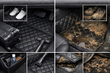
Eco-leather floor mats are worth buying not because they’re automatically better than rubber or textile, but when you truly need a neat cabin, quick cleaning, and a precise fit to the floor. If the car drives through slush every day, goes to construction sites, fishing trips, or works in harsh conditions, their strengths are no longer as convincing: the starting price is higher, requirements for patterns and fasteners are stricter, and mistakes in selection are more annoying.
The key here isn’t the material itself, but the combination of three things: an accurate cut, proper fixation, and your use case. That’s why some owners are happy with eco-leather for years, while others complain after a week about odor, squeaks, or inconvenience near the pedals.
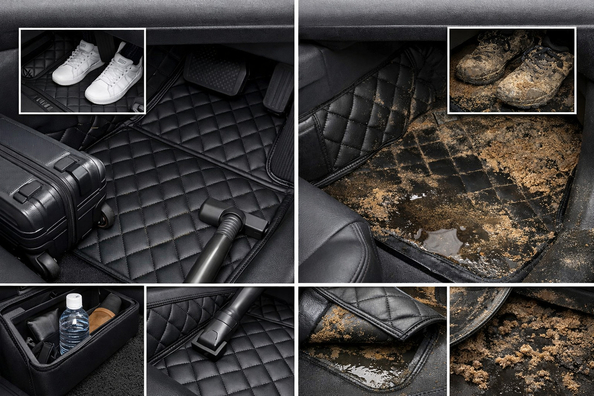
Eco-leather 3D mats work well where you want to keep the interior clean without constant removal, washing, and drying. Dirt and moisture stay on top, it’s often enough to simply wipe the surface, and the cabin looks tidier than with basic rubber mats.
The hassle starts when the set is selected inaccurately or the car is used in overly dirty conditions. If there are gaps, a weak anti-slip base, no OEM fasteners, or no rigid heel pad, an expensive set quickly loses its point. For tough winters, work use, and constantly wet shoes, utilitarian rubber or thermoplastic mats are usually more practical.
| Option | Strengths | Weaknesses | Who it suits |
|---|---|---|---|
| Eco-leather 3D mats | Neat look, easy daily cleaning, large floor coverage | Higher price, dependence on cut accuracy, possible odor and squeaks at first | City driving, family car, interiors where cleanliness and appearance matter |
| Rubber or thermoplastic | Best at handling slush, dirt, and harsh use, easy to maintain | Less tidy cabin look, can feel too rough in a premium interior | Winter, work vehicles, frequent trips through dirt and wet snow |
| Textile | Familiar look, fine for the dry season, without extra rigidity | Absorb moisture and dirt, require drying, weaker for winter | Those who mostly drive in the city during the dry season and want a factory-style format |
If you boil it down to one line, eco-leather wins on cabin feel and quick cleanup, but loses where you need not neatness, but no-compromise durability.
DD Tuning expert comment: The most common mistake is to look at the stitching and color but not check the fasteners, the edge shape, and the heel pad. If the set doesn’t sit tightly in the pedal area or by the left foot, even an expensive option starts to annoy you in the first days. For a daily car, it’s better to take a simpler set with the right fit than a prettier but inaccurate one.
This is an option for those who want to cover the floor almost completely and not spend much time cleaning. When made well, they don’t let water soak into the cabin carpet, can be wiped in place, and look more premium than most practical alternatives. But the whole point depends on the quality of the patterns, base, and seams.
The weak spots are also known: an initial odor in some sets, possible squeaking, and most importantly—quick loss of comfort if the mat moves even a little on the floor. The biggest load is on the driver’s area, so without a proper heel pad, durability drops even with decent material.
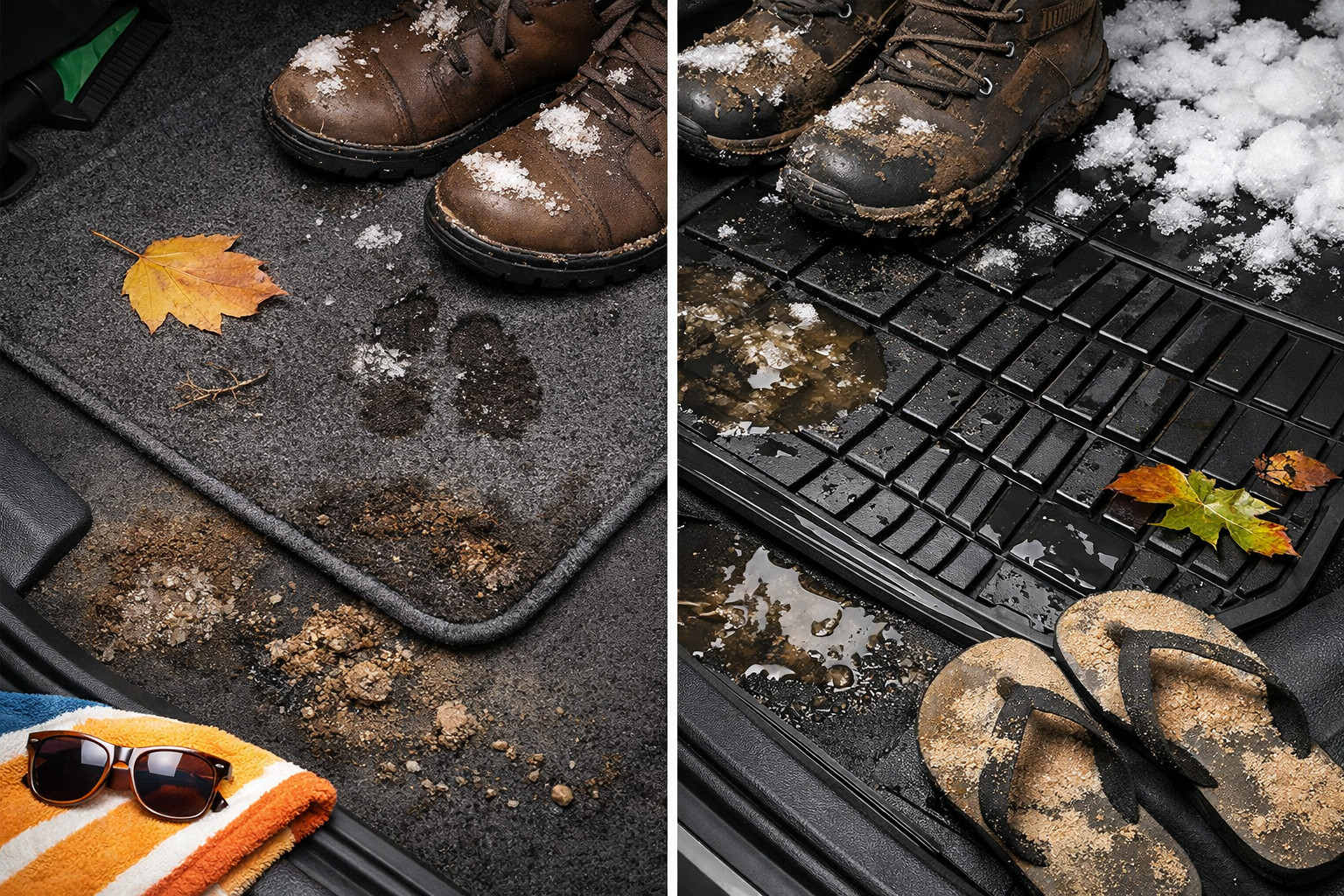
This is the simplest choice for dirty conditions. They make sense where water, snow, sand, soil, or construction dust hit the floor every day. It’s easier to forgive their rough look, because the main thing here isn’t beauty, but the ability to survive constant wet use.
The downside is obvious: in a passenger car or a well-kept family car, this option often looks utilitarian. If it matters how the cabin looks visually, rubber can seem too simple even with full practical superiority.
Textile makes sense where there isn’t constant moisture and dirt, and the owner wants the most familiar, calm interior look. For the dry season it’s a normal compromise without excess stiffness and without the specific nuances of eco-leather.
But in practicality, textile loses to the first two options. It collects dirt faster, requires washing and drying, and in winter creates more hassle than it solves.
For everyday city driving, eco-leather often hits the mark: the interior stays neat-looking longer, and cleaning doesn’t turn into a separate procedure. This is especially noticeable in family cars, where there are crumbs, dust, kids’ shoes, and constant short trips.
For harsh winters, a private house, trips on dirt roads, or work use, it’s better not to complicate your life and choose rubber or thermoplastic. They’re not as visually pleasant, but they honestly withstand scenarios where the mat takes on water and dirt every day.
Textile makes sense as a seasonal or calm city option, but not as a universal answer for every case. If you want one set for the whole year with minimal maintenance, it usually won’t be the best choice.
| Scenario | Best choice | Why |
|---|---|---|
| City car, daily short trips | Eco-leather 3D mats | Wipe quickly, cover the floor well, the cabin looks more put-together |
| Family car with frequent passengers | Eco-leather 3D mats | Convenient for spot cleaning, no need to constantly remove the set for cleaning |
| Heavy slush, wet snow, dirty yards | Rubber or thermoplastic | Handle harsh winter conditions and rough daily load better |
| Work vehicle or commercial use | Rubber or thermoplastic | Less demanding in terms of delicacy, easier to wash, lower risk of disappointment from wear |
| Mostly dry season, gentle use | Textile | Suitable if the priority is a familiar look rather than protection from water and salt |
A more expensive set makes sense when you’re buying it not for the picture, but for everyday comfort: accurate cut, large floor coverage, proper fixation, and quick cleaning without removal. This is justified for cars used daily, for a family cabin, and for owners who care that the interior doesn’t look tired after every trip.
To avoid overpaying for decoration, it’s worth first looking at the breakdown of the pros and cons of eco-leather, then evaluating the eco-leather mats themselves and, for contrast, comparing them with rubber mats. If after that comparison you still care about a clean cabin, quick wiping, and a gap-free fit, the extra cost looks logical. If the main task is to survive snow, water, and dirt with minimal thought, more expensive doesn’t mean better.
From a customer’s experience: the owner of a family crossover was looking for a replacement for rubber because in the city the interior quickly lost its neat look, and he didn’t want to pull the mats out at the car wash every time. He chose model-specific eco-leather mats with a heel pad and fasteners and was satisfied именно in city use: crumbs and shoe marks are cleaned in place, and the cabin looks cleaner. The only nuance was a light odor in the first days, so it’s better not to install the set right before a long trip.
Eco-leather mats are a convenient solution for the city, a family car, and situations where cabin appearance and quick daily cleaning matter. They become a hassle when installed for the wrong scenario or when you cut corners on the cut, fixation, and the driver’s area. If you need maximum utilitarian durability, look toward rubber or thermoplastic; if you need a balance between neatness and practicality, quality eco-leather makes sense. This conclusion is based not on advertising promises, but on real selection experience, practice, and real-life use scenarios.
| ✔ | Look neater in the cabin and cover the floor better than basic rubber mats. This is especially noticeable in a city car, where a tidy interior matters. |
| ✔ | Easy to clean in everyday use: dirt and moisture stay on top, so often all it takes is simply wiping the surface. |
| ✔ | Well suited for city driving and family cars, where there are many short trips, crumbs, and shoe marks. There is no need to keep removing the mats for cleaning. |
| ✔ | With precise cut, proper fixation, and a heel pad, they can last a long time and remain worthwhile even with daily use. |
| ✔ | In a good version, they prevent moisture from getting into the cabin carpet, which makes keeping things clean easier. |
| ✘ | Depend heavily on the accuracy of the templates and fasteners: if the set is not matched precisely, gaps, shifting, and discomfort near the pedals appear. |
| ✘ | At first, there may be odor and squeaking, especially if the backing rubs against plastic or the mat does not lie snugly. |
| ✘ | More expensive than rubber or thermoplastic mats at the start, and a poor cheap set quickly makes the savings doubtful. |
| ✘ | In harsh conditions — slush, wet snow, construction dirt, work use — they are less durable and practical than rubber or thermoplastic. |
Shipping to EU
Wholesale and retail
Own warehouse
Опис продукту
Подарунки не надаються при оформленні покупки у кредит під 0,01% або при покупці частинами.