12.04.2026
1832
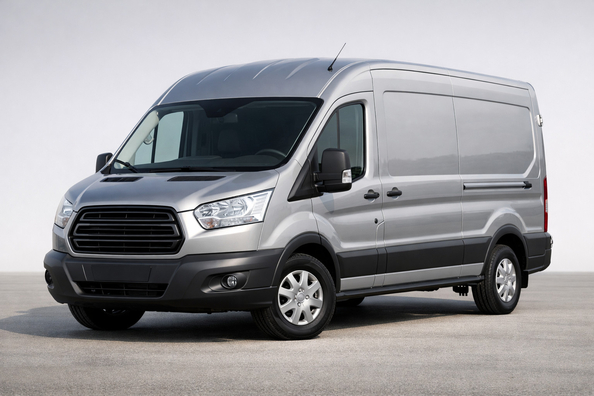

Ford Transit 2014+ is a large work van that can serve as a cargo panel van, a passenger shuttle, and a base for a camper or service vehicle. Its main advantage isn’t one single parameter, but the combination of a huge interior volume, multiple body lengths and roof heights, decent ergonomics, and handling that doesn’t make you feel like you’re driving a small truck every time.
An important nuance: Ford Transit 2014+ and Transit Custom are not the same thing. Below we’re talking specifically about the full-size Transit of this generation; the most thoroughly documented technical figures are for North American versions that launched as the 2015 model year, so European trims may differ in engine lineup, drivetrain, and some dimensions.
Transit plays in the large commercial van segment, where buyers typically care less about how the bumper looks and more about roof height, body length, payload, and day-to-day usability. That’s why it’s compared to the Mercedes-Benz Sprinter, Ram ProMaster, and Nissan NV: vehicles built for deliveries, installation teams, shuttles, people transport, and specialized conversions.
Who it fits: those who truly use the big volume, haul tools, goods, equipment, or people on intercity routes. Who it doesn’t: those who need a compact city van, minimum height for underground parking, or a car-like feel in a tight downtown.
Transit 2014+ is the current large-generation model that became a global platform for many markets. In Europe it took hold from 2014, while in North America it arrived as the 2015 model year and effectively replaced Ford’s older utilitarian solutions in the large-van segment.
The generation’s strong point is broad modularity. The lineup included cargo vans, passenger versions, chassis-cabs, and upfit-ready variants, with several wheelbases, different body lengths, and three roof heights. That’s why Transit is easy to spot in courier fleets, as a mobile workshop, and as a base for travel conversions.
In the well-documented specifications for this generation, three main engines appear: a 3.7L V6 gasoline engine with 275 hp and 353 N·m, a 3.5L V6 EcoBoost gasoline engine with 310 hp and 542 N·m, and a 3.2L five-cylinder diesel with 185 hp and 475 N·m. These versions used a 6-speed automatic transmission, and in the listed specs the drivetrain is rear-wheel drive.
In practical terms, the 3.5 EcoBoost is interesting for those who regularly drive fully loaded or tow a trailer. The naturally aspirated 3.7L is simpler in concept, but isn’t known for quietness or efficiency. The 3.2L diesel makes sense for high mileage, but before buying you should realistically calculate the difference in purchase price and maintenance.
| Parameter | Data |
|---|---|
| Generation | Ford Transit 2014+; in North America launched as the 2015 model year |
| Engines | 3.7 L V6 — 275 hp; 3.5 L V6 EcoBoost — 310 hp; 3.2 L diesel — 185 hp |
| Torque | 353, 542 and 475 N·m respectively |
| Transmission | 6-speed automatic |
| Drivetrain | Rear-wheel drive in the listed specifications |
| Wheelbase | 3299 or 3749 mm |
| Body length | 5585, 6035 or 6759 mm |
| Width | 2065 mm without mirrors, 2492 mm with mirrors |
| Height | 2123, 2560 or 2797 mm |
| Ground clearance | 155 mm |
| Cargo compartment volume | From 6986 to 13799 L depending on the body |
| Payload | 1356–2109 kg; for chassis-cab up to 2626 kg |
| Towing | Up to 3402 kg |
What’s interesting about Transit body styles is that it offers real choice rather than a token difference of a few centimeters. There are shorter and longer wheelbases, three roof heights, and multiple body lengths. For work, that means something simple: you can choose a van for boxes, shelving, passengers, or a sleeping setup without stepping up to overly heavy transport.
For cargo versions it’s more accurate to talk about a cargo compartment rather than a trunk: from 6986 to 13799 L. Interior height also varies a lot — 1445, 1829, or 2070 mm — so with the medium and high roof you can actually work standing up. But you pay for that in maneuverability: long versions in courtyards and on narrow streets require getting used to, even though the turning circle is perfectly workable for the class — about 11.95–13.32 m depending on wheelbase.
The 155 mm ground clearance tells you the vehicle’s character without any romance: it’s not meant for broken farm roads. On asphalt and under load, Transit feels in its element, but on steep ramps, high curbs, and construction sites you need to stay alert.
One reason Transit is popular is that the cab doesn’t feel purely “cargo.” The seating position is comfortable, visibility is good, the workspace layout is logical, and in passenger versions you can get 8, 10, 12, or 15 seats. For those who spend all day in the van, that matters more than decorative trim.
In terms of comfort, the model is often praised for ease of driving and space, but without illusions: reviews regularly mention noise, especially on some gasoline versions, and a somewhat firm ride. Safety is at a normal level for the class: stability control, ABS, and front and front side airbags were in the base set, while overall crash-test ratings depended on roof height and configuration.
In daily work, Transit’s strength is that it doesn’t tire the driver as quickly as you might expect from a large van. It’s chosen for delivery, service work, shuttles, installation crews, campers, and long trips precisely because it combines volume with fairly predictable road manners.
Fuel consumption depends on the specific engine and body. For some shorter gasoline versions, figures around 16.8 L in the city, 12.4 L on the highway, and 14.7 L combined were quoted, while for the diesel the official numbers weren’t always as transparent, and real-world measurements showed roughly 12.4 L combined. In plain terms: a big Transit is never cheap on fuel simply due to its size, but you can choose a configuration that matches your routes without an obvious misstep.
From an owner’s perspective, the main everyday plus is versatility. The main downside is that the size is always there: in parking, at the tire shop, in consumption, and in the cost of choosing the wrong body length.
| What the owner gets | Pros | Cons |
|---|---|---|
| Interior space | Very large volume and many configurations for different tasks | It’s easy to choose the wrong body and overpay for extra size |
| Engines | There are torquey options for hauling and towing | Gasoline versions can be loud; the diesel costs more upfront |
| Handling | For the class, it drives predictably and doesn’t intimidate the driver | A firmer ride without load doesn’t go away |
| Practicality | Suitable for business, passenger transport, and conversions | Size, height, and turning circle require daily привыкание |
| Load | Payload and towing are genuinely work-ready | On the used market, you need to carefully check the condition of the transmission and electrical system |
| Market | The model is widespread, so demand is strong and there are many options | Because it’s popular, you’ll run into heavily worn workhorse examples |
In short, Transit is strong where the vehicle has to earn money or solve a specific logistics task. If you just need a big family vehicle without regularly using the volume, its potential often goes unused — and the costs don’t.
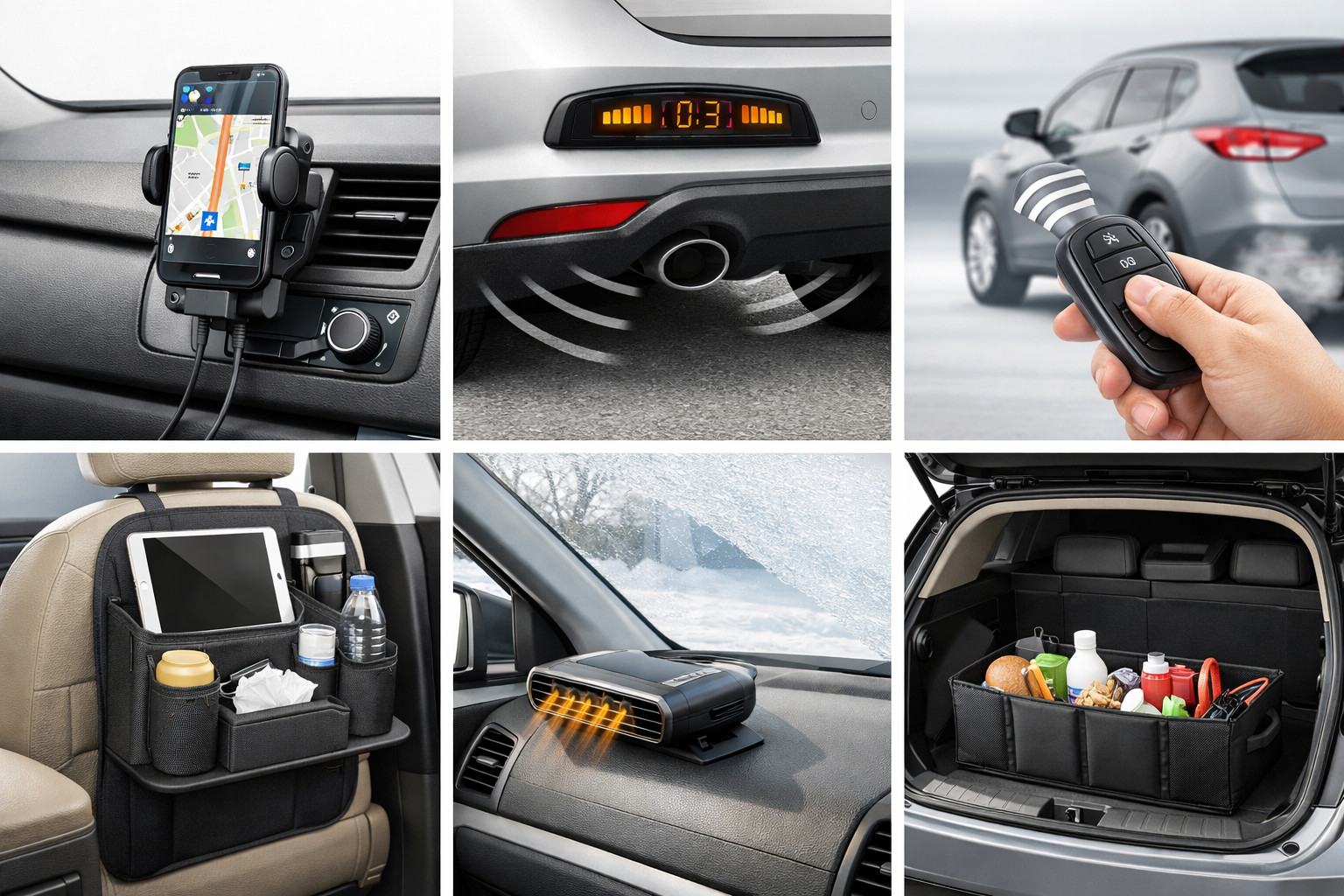
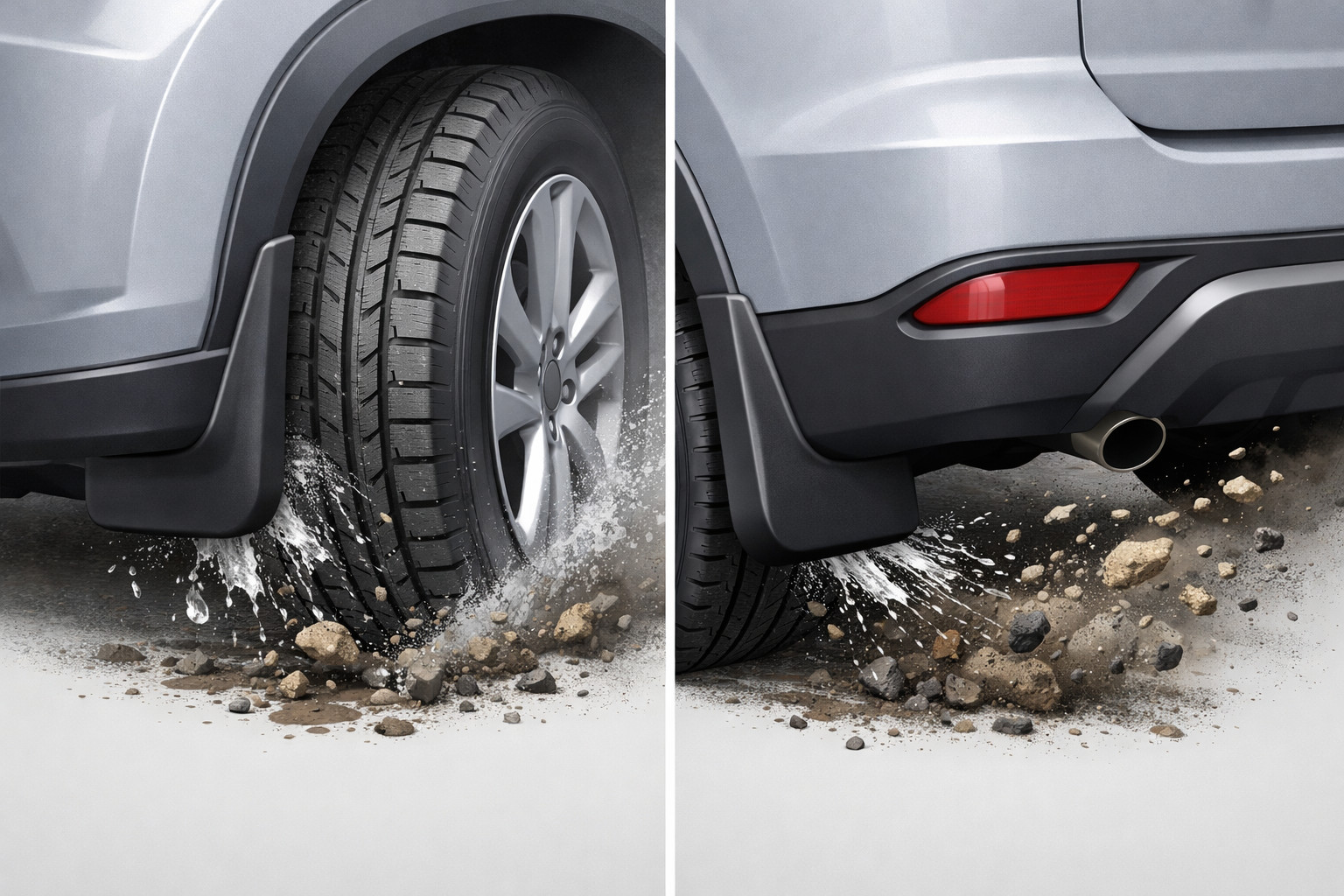
For Transit, tuning makes sense not as decoration, but as a way to adapt the van to real work. Most often, the most useful items are those that reduce daily wear, make cabin access easier, protect the body, and make long routes less exhausting. If you choose accessories for a specific scenario, they pay back faster than any decorative solutions.
Ford Transit 2014+ is a strong choice for those who need not just a big body, but true working flexibility: different roofs, wheelbases, powerful engines, and both passenger and cargo versions. It’s worth buying for a specific task — delivery, service work, shuttle, travel conversions — and not worth buying if your main use is short city trips with no cargo. This material is based on real selection experience, practice, and real-world use cases rather than abstract catalogs, and from that viewpoint Transit looks like a good vehicle when its format is truly needed.
| ✔ | The large dimensions across all configurations mean that parking, narrow courtyards, and tight streets require getting used to Transit. For daily short city trips, this is not a convenient format. |
| ✔ | The 155 mm ground clearance limits its capabilities on bad roads, curbs, and construction sites. It is not the best choice if you often have to leave proper asphalt behind. |
| ✔ | Reviews mention noise, especially in some gasoline versions, as well as a rather stiff ride when unloaded. In other words, driving an empty van is not as comfortable as one might like. |
| ✔ | On the used market, there is a risk of coming across a heavily worn workhorse, and when buying, it is important to carefully check the condition of the transmission and electrics. The model’s popularity works against the buyer here too. |
| ✘ | The large interior volume and many body versions make it possible to choose a Transit for different tasks — from deliveries to camper conversion. This is convenient when you need not just a “big van,” but a specific configuration for the job. |
| ✘ | There are torque-rich engines, including the 3,5 EcoBoost and the 3,2 l diesel, which are suitable for full loads and towing. For commercial use, this is important because the vehicle does not struggle under weight. |
| ✘ | The cabin is described as comfortable and logically arranged, while visibility and seating position make the driver’s daily work easier. For a van where you spend many hours behind the wheel, this is a more practical advantage than decorative comfort. |
| ✘ | The handling is understandable for its class, and Transit does not give the feeling of a “heavy truck” in everyday driving. This helps in city traffic and on routes with frequent stops. |
| ✘ | Payload and towing capacity are genuinely work-ready here, so the model suits businesses with regular loading. This makes it useful not only as a van, but also as a base for a service vehicle or a chassis with an upfit. |
Shipping to EU
Wholesale and retail
Own warehouse
Опис продукту
Подарунки не надаються при оформленні покупки у кредит під 0,01% або при покупці частинами.