01.06.2026
251
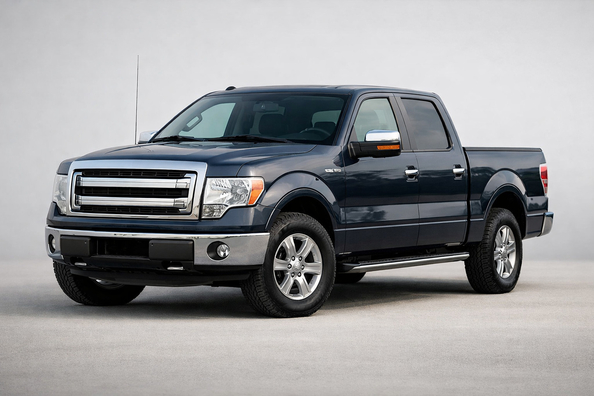
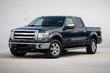
The Ford F-150 2014-2021 is loved in the US not for one headline spec, but for a very well-judged set of strengths: it’s a big body-on-frame pickup that can tow, haul, work every day, and still doesn’t feel like a purely work-only vehicle. In this span of years it’s important to understand the differences between versions: 2014 is the final year of the previous generation, from 2015 the aluminum body arrived, and in 2021 the model made another major step forward with a hybrid, a new interior, and more electronics.
That’s why you can’t judge the F-150 as one single configuration. It’s a model for people who need pulling power, space, high payload, and a big cabin for family or a crew. But if you want a softer ride, easier city parking, and a vehicle without extra size “just in case,” this pickup can easily be too much.
In the US, the F-150 has long become a universal tool: it’s chosen for work, family trips, towing a trailer, and getting outdoors. The secret of its popularity is simple: the model offers a very wide range of cabs, drivetrains, engines, and bed lengths, so it can be matched to your needs more precisely than many competitors.
In practice, the F-150 shines where balance is required. It’s not as soft-riding as the Ram 1500, but it’s very convincing in payload, towing, and the variety of trims and configurations. That’s why it’s loved not only by farmers or contractors, but also by everyday owners who want a big, comfortable, and genuinely useful vehicle for daily use.
The 2014-2021 period covers several stages of the model’s development. In 2014, the previous-generation F-150 with a steel body was still on sale. In 2015, a fundamentally updated vehicle arrived: an aluminum body and cab on a fully boxed high-strength steel frame reduced weight by up to 318 kg, and the version with the large four-door cab earned 5 stars in the US government safety rating.
In 2021, the next generation launched, with the emphasis shifting not only to towing and payload but also to everyday convenience. The full hybrid PowerBoost appeared, along with onboard power for tools, a large 12-inch screen, a folding gear selector, and a work surface in the cabin. This transition clearly shows why the F-150 is loved in the US: it evolves around real-world use cases, not just brochure numbers.
When it comes to powertrains, it’s one of the most diverse pickups in the class. Over the years, it offered naturally aspirated V6 and V8 engines, turbocharged gasoline V6s, a diesel, and a full hybrid. The right choice depends on what matters most to you: simpler character, pulling power under load, driving range, or running tools from the truck.
| Period | Engines | Transmission | Practical takeaway |
|---|---|---|---|
| 2014 | 3,7 V6 — 302 hp, 377 N·m; 5,0 V8 — 360 hp, 515 N·m; 3,5 EcoBoost V6 — 365 hp, 569 N·m; 6,2 V8 — 411 hp, 588 N·m | 6-speed automatic | An older, more straightforward lineup without lots of electronic add-ons |
| 2018 | 3,3 V6 — 290 hp, 359 N·m; 2,7 EcoBoost V6 — 325 hp, 542 N·m; 5,0 V8 — 395 hp, 542 N·m; 3,5 EcoBoost V6 — 375 hp, 637 N·m; 3,0 diesel — 250 hp, 597 N·m | 3,3 — 6-speed automatic; the rest — 10-speed automatic | This is where the F-150 became extremely strong in towing and task-specific variety |
| 2021 | 3,3 V6 — 290 hp, 359 N·m; 2,7 EcoBoost V6 — 325 hp, 542 N·m; 5,0 V8 — 400 hp, 556 N·m; 3,0 diesel — 250 hp, 597 N·m; 3,5 EcoBoost V6 — 400 hp, 678 N·m; 3,5 PowerBoost — 430 hp, 773 N·m | 10-speed automatic; for the hybrid — a modular hybrid version | The strongest and most high-tech lineup, but also the most sensitive to the condition of a specific vehicle |
If you want a classic feel, many people like the 5,0 V8. If low-end pull and confident towing are the priority, the 2,7 and 3,5 EcoBoost are very strong. The diesel makes sense for long distances, and PowerBoost is interesting for those who want maximum torque and the ability to power tools or a campsite directly from the vehicle. But it’s important not to idealize the model: some owners complain about jerky behavior from the 10-speed transmission, and in certain years the 3,5 EcoBoost had typical issues with cold-start noises and oil consumption in some configurations.
Structurally, the F-150 is a body-on-frame pickup with rear-wheel drive or four-wheel drive. Multiple cab styles and several bed lengths are available, so the size range is very wide. For everyday understanding, one thing matters: this is a truly large vehicle, and you need to be ready for its dimensions before you buy.
| Parameter | Value | What it means in real life |
|---|---|---|
| Wheelbase | 3 119-4 168 mm | Relatively short versions are still tolerable in the city; long ones require getting used to |
| Length | 5 311-6 358 mm | Parking and tight courtyards aren’t its strong suit |
| Width without mirrors | 2 029 mm | On narrow streets and in underground garages, you’ll feel this every day |
| Ground clearance | 208-239 mm, on Tremor — up to 277 mm | A solid margin for dirt, curbs, and jobsite entrances |
| Bed length | 1 676 / 1 981 / 2 438 mm | You can choose a bed for everyday needs or for long cargo |
| Bed volume | 1 495 / 1 764 / 2 192 l | In passenger-car terms, this is its “trunk” |
| Fuel tank | 87,1 / 98,4 / 136,3 l; on PowerBoost — 115,8 l | Long driving range even under heavy use |
| Maximum towing | up to 6 350 kg | One of the reasons the model is so valued in the US |
| Maximum payload | up to 1 508 kg | It’s not just a family vehicle with a bed—it’s a real working tool |
Four-wheel-drive versions may have electronically controlled 4x4 and a locking rear differential, and off-road trims like Tremor are even better suited for dirt. But keep in mind: all the figures above heavily depend on the cab, wheelbase, engine, and specific trim, so comparing different F-150s requires real attention to detail.
One of the main reasons people love the F-150 is the interior, which in well-specced versions doesn’t feel like the cab of pure work equipment. It’s quiet for a pickup, the driving position is comfortable, the controls are large and intuitive, and in the four-door cab there’s genuinely a lot of rear-seat space. For long trips or daily driving with a big family, that matters more than pretty numbers in a brochure.
In 2021, the model gained even more everyday logic: a large screen, a work surface in the cabin, and solutions that are genuinely convenient for those who use the truck as a mobile office or a base out in the field. Safety is taken seriously too, but you have to look at the exact trim: some systems depend on the year and configuration. On the downside, the small-item storage isn’t as thoughtfully designed as in some competitors, and seat comfort varies significantly by version.
In day-to-day life, the F-150 is better than you might expect given its size. It has good visibility, predictable steering responses, and powerful climate control, so on the highway and in the suburbs it feels natural. But in dense city traffic, the long wheelbase, wide body, and high seating position still take some getting used to.
Fuel consumption varies widely. For gasoline versions, a reasonable guideline is about 10,7-12,4 l per 100 km depending on the engine and configuration; the diesel can be more economical; and PowerBoost looks very attractive on paper, though in real life it often ends up closer to 11,8 l per 100 km. On the plus side, the large tanks provide great range, and the 2,4 or 7,2 kW onboard power in the hybrid makes the truck genuinely useful for work, camping, or off-grid trips without a generator.
If you’re considering an imported used F-150, the practical checklist is straightforward: service history, how the 10-speed transmission operates, the condition of the turbo engine, recall campaigns, and the quality of any body repairs. For aluminum panels this is especially important, because poor bodywork will show up quickly in real use.
The F-150 has a lot of strengths, but they only fully show when the configuration matches your use case. Below is a short, to-the-point owner’s view.
| Pros | Cons | What it means for the owner |
|---|---|---|
| A very wide choice of cabs, wheelbases, engines, and drivetrains | It’s easy to buy the wrong configuration if you don’t understand the differences between versions | You should choose an F-150 not “by name,” but by the exact task |
| Strong pulling power, high payload, and towing capability | Large weight and size make city life harder | Excellent for trailers and work; not always convenient in a tight downtown |
| Quiet, spacious interior, especially with the large cab | Ride comfort is firmer than in the Ram 1500 | Great on the highway, but small bumps are felt more clearly |
| Strong modern engines, including the hybrid | There are known questions around certain 3,5 EcoBoosts and the behavior of the 10-speed transmission | Diagnostics and a proper test drive are mandatory before buying |
| High potential for work, off-road use, and accessories | More electronics and equipment means a higher cost of mistakes during repairs | Easy to upgrade, but it’s not worth saving on service |
Who it fits best: those who regularly carry loads, tow trailers, value space, and want one big vehicle for both work and family. Who it doesn’t fit so well: those who barely use the bed, drive mostly in the city, and want the softest, most car-like behavior.
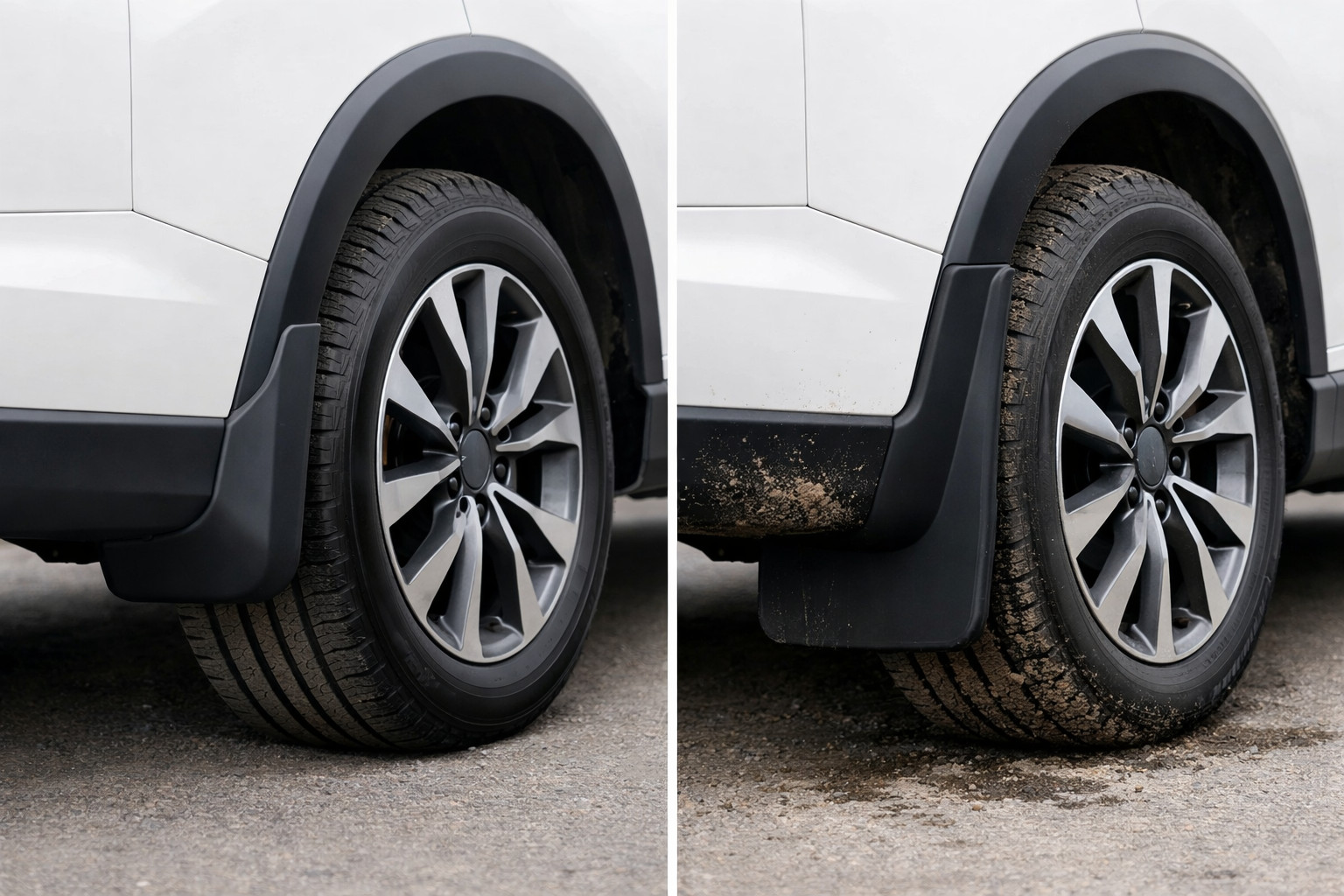
For the F-150, tuning makes sense when it solves specific tasks. With this pickup, you don’t have to start with an aggressive body kit: often more useful are side steps, mud protection, sensible auxiliary lighting, bed organization, and proper accessories for dirt-road trips. If the vehicle already arrived with modifications, it’s better to first make sure everything works properly mechanically and electronically.
If your F-150 often leaves the pavement, then it makes sense to look at off-road accessories, body protection, and additional work lighting. As for power upgrades for turbo versions, they’re worth considering only after a proper diagnosis of the engine and transmission.
The Ford F-150 2014-2021 is so loved in the US because it hits real needs with precision: a huge choice of configurations, serious pulling power, a roomy cabin, a useful bed, and the ability to be both a working tool and family transport. The best version depends not on trends but on your scenario: some will prefer a simpler V8, others a turbo engine, and others the hybrid with onboard power.
If you need a full-size pickup for real tasks, the F-150 remains a very strong bet. But if your top priorities are compact size, the softest ride possible, and no need for a large bed, its advantages simply won’t show. This material is based on real selection experience, practice, and real-world use cases—not abstract numbers without context.
| ✔ | A very wide choice of cabs, engines, drivetrains, and bed lengths. This allows you to choose an F-150 for work, family use, or towing, rather than taking a universal but not the best version. |
| ✔ | Strong pulling power, high payload capacity, and good towing capability. For hauling a trailer, tools, or a heavy load, this is one of the model’s main advantages. |
| ✔ | A spacious and quiet cabin, especially in the large four-door cab. For everyday use and long trips, this makes the pickup more comfortable than you would expect from something this size. |
| ✔ | There are practical solutions for work and trips, including onboard power in the hybrid, a large screen, and a work surface in the cabin. This is useful not only for comfort, but also for real-world use of the vehicle as a mobile base. |
| ✔ | Good ground clearance and versions with all-wheel drive and off-road trims. The vehicle feels at home on dirt, curbs, and construction/work sites. |
| ✘ | The dimensions are large even in relatively short versions. In the city, in tight parking lots, and in narrow courtyards, such a vehicle takes getting used to and is often inconvenient. |
| ✘ | The ride is firmer than in some rivals like the Ram 1500. The suspension feels small bumps more noticeably, especially on everyday city roads. |
| ✘ | There are complaints about the 10-speed transmission and some 3.5 EcoBoost engines. Before buying a used vehicle, diagnostics and a proper test drive are necessary. |
| ✘ | The many configurations make choosing more difficult and increase the risk of getting the trim wrong. Without understanding the differences between versions, it is easy to buy a vehicle that does not match its intended use. |
Shipping to EU
Wholesale and retail
Own warehouse
Опис продукту
Подарунки не надаються при оформленні покупки у кредит під 0,01% або при покупці частинами.