12.06.2026
170
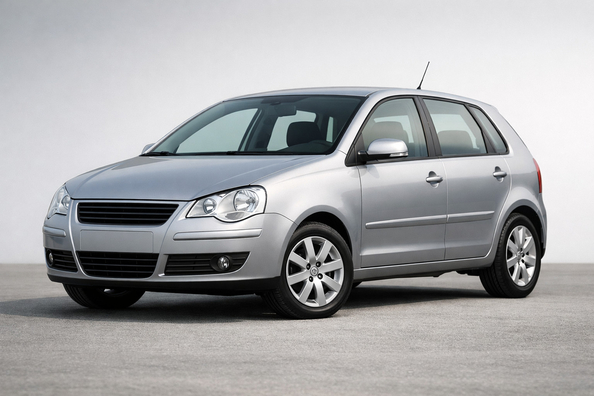
Volkswagen Polo IV 2001-2009 — a small hatchback without a complicated character: compact on the outside, surprisingly grown-up in feel on the inside, calm on the move, and economical enough for everyday use. Its main strength isn’t excitement, but how easy it is to live with in the city: parking doesn’t annoy you, visibility is fine, the controls are straightforward, and the interior doesn’t feel cheap even by the standards of its age.
This model suits those who need a simple daily city car, a second car in the family, or a tidy option for a beginner. It’s not for those expecting sporty reactions, lots of ground clearance, or truly bargain-basement upkeep from a neglected example.
Polo IV entered a segment where Ford Fiesta, Opel Corsa, Renault Clio, SEAT Ibiza, and Skoda Fabia were competing at the time. Against them, it didn’t win with flashiness but with cohesion: a softer, more mature character, a neat driving position, and the feel of a more “senior” car than its dimensions suggest.
That’s exactly why the model is still interesting on the used market today. It’s not about emotion, it’s about logic: a small body, a decent trunk, plenty of engine choices, and predictable behavior in the city and on the highway.
In this context we’re talking about the fourth-generation Polo — the 9N series, introduced at the end of 2001. In 2005, the 9N3 facelift arrived: the front end was changed, the styling refreshed, and the chassis tuning revised. In technical data you may also come across 9N2 with a different body length, so it shouldn’t be mechanically mixed up with the basic short 9N and 9N3 hatchback.
In its day, Polo IV landed well precisely as a “city Volkswagen”: without premium ambitions, but with a sense of quality. An important plus for an older car is the fully galvanized body, although at its real age the condition of a specific example matters more than factory promises.
The engine lineup in Polo IV is broad. Petrol options included 1.2 with 54, 60, 64, and 70 hp; 1.4 with 75, 80, and 101 hp; 1.4 FSI with 86 hp; 1.6 with 105 hp; plus GTI with 150 hp and GTI Cup Edition with 180 hp. Diesels include 1.9 SDI with 64 hp, 1.4 TDI with 70, 75, and 80 hp, and 1.9 TDI with 101 and 130 hp.
From a practical standpoint, the clearest choices for calm daily use are the petrol 1.4 or 1.6. The base 1.2 engines are sufficient in the city, but they feel noticeably weak under load. Diesels are interesting for those who drive a lot: the 1.4 TDI is about economy, the 1.9 TDI is about torque. Gearboxes are mostly a 5-speed manual; some versions have a 4-speed automatic, and here the condition of the specific car matters more than the mere presence of an automatic.
For the hatchback, the dimensions are as follows: early 9N — 3897 × 1650 × 1465-1520 mm, facelift 9N3 — 3916 × 1650 × 1467 mm. Wheelbase — 2460 or 2466 mm depending on the version. The trunk is 250 L in the standard position and up to 1030 L with the seats folded, the fuel tank is 45 L, and the turning circle is 10.6 m.
The suspension in the Polo is tuned more for comfort than for driving excitement. The car soaks up city joints smoothly and doesn’t demand constant attention from the driver. Ground clearance has a nuance: there isn’t one official value for all versions, so in practice this isn’t a car for curbs and rough courtyards — it’s a typical front-wheel-drive city hatchback.
| Parameter | What matters to know |
|---|---|
| Generation | Polo IV, codes 9N / 9N3, production years 2001-2009 |
| Drivetrain and layout | Front-wheel drive, transverse engine |
| Petrol engines | 1.2 54-70 hp; 1.4 75-101 hp; 1.4 FSI 86 hp; 1.6 105 hp; GTI 150 hp; GTI Cup Edition 180 hp |
| Diesel engines | 1.9 SDI 64 hp; 1.4 TDI 70-80 hp; 1.9 TDI 101-130 hp |
| Gearboxes | 5-speed manual, some versions with 4-speed automatic |
| Hatchback dimensions | 3897-3916 mm length, 1650 mm width, 1465-1520 mm height |
| Wheelbase | 2460-2466 mm |
| Trunk | 250 L / up to 1030 L |
| Fuel tank and turning circle | 45 L; 10.6 m |
| Ground clearance | There is no single official value for all versions |
The interior is one of the reasons why Polo IV still looks like a sensible choice. The seating position is comfortable, the controls are simple, and there’s enough room for four adults without the feeling of a cramped ultra-mini. By class standards it’s a very “correct” car: no design tricks, but also no odd decisions.
In terms of safety, the package was strong for its time: front and side airbags, ABS as standard, and ESP with brake assist — depending on trim. Officially the model earned 4 stars in Euro NCAP. Looking at an older car today, that doesn’t make it modern in protection levels, but for its age the Polo was well equipped.
In daily use, the Polo is strong exactly where a city hatchback should be: it turns easily in tight yards, doesn’t stress you out when parking, and doesn’t require getting used to. Official fuel consumption figures were quoted under the old European cycle, so real-world numbers will be higher, but the overall logic doesn’t change: diesels are very frugal, petrol 1.4 is a smart compromise, and BlueMotion was tuned specifically for economy.
The main risk today isn’t the model itself, but age. Before buying, it’s worth checking ignition coils, early 1.2 engines for the chain and tensioner, 1.4 and 1.6 for belt tensioners, electrics, window regulator mechanisms, and corrosion under the windshield seals and in the front arches. A well-kept Polo still remains a very convenient city car.
| Pros | Cons |
|---|---|
| Comfortable, calm suspension for the city | Doesn’t deliver sporty feel in corners |
| Grown-up cabin feel and solid ergonomics | Base petrol versions are frankly weak |
| Compact dimensions and easy maneuvering | Ground clearance isn’t for curbs and bad roads |
| Economical diesel engines | Diesels can feel a bit rough under load |
| Galvanized body and a good practicality balance | Age-related issues with electrics and small mechanisms |
| Decent range of engines for different scenarios | Maintenance can sometimes be pricier than people expect from a small car |
From an owner’s perspective the formula is simple: Polo IV is worth buying for condition, not for the badge. If you need a calm city car with decent interior quality and no extra fuss behind the wheel, it’s a good option. If you want driving excitement or the absolute cheapest ownership at any cost, it’s better to look elsewhere.
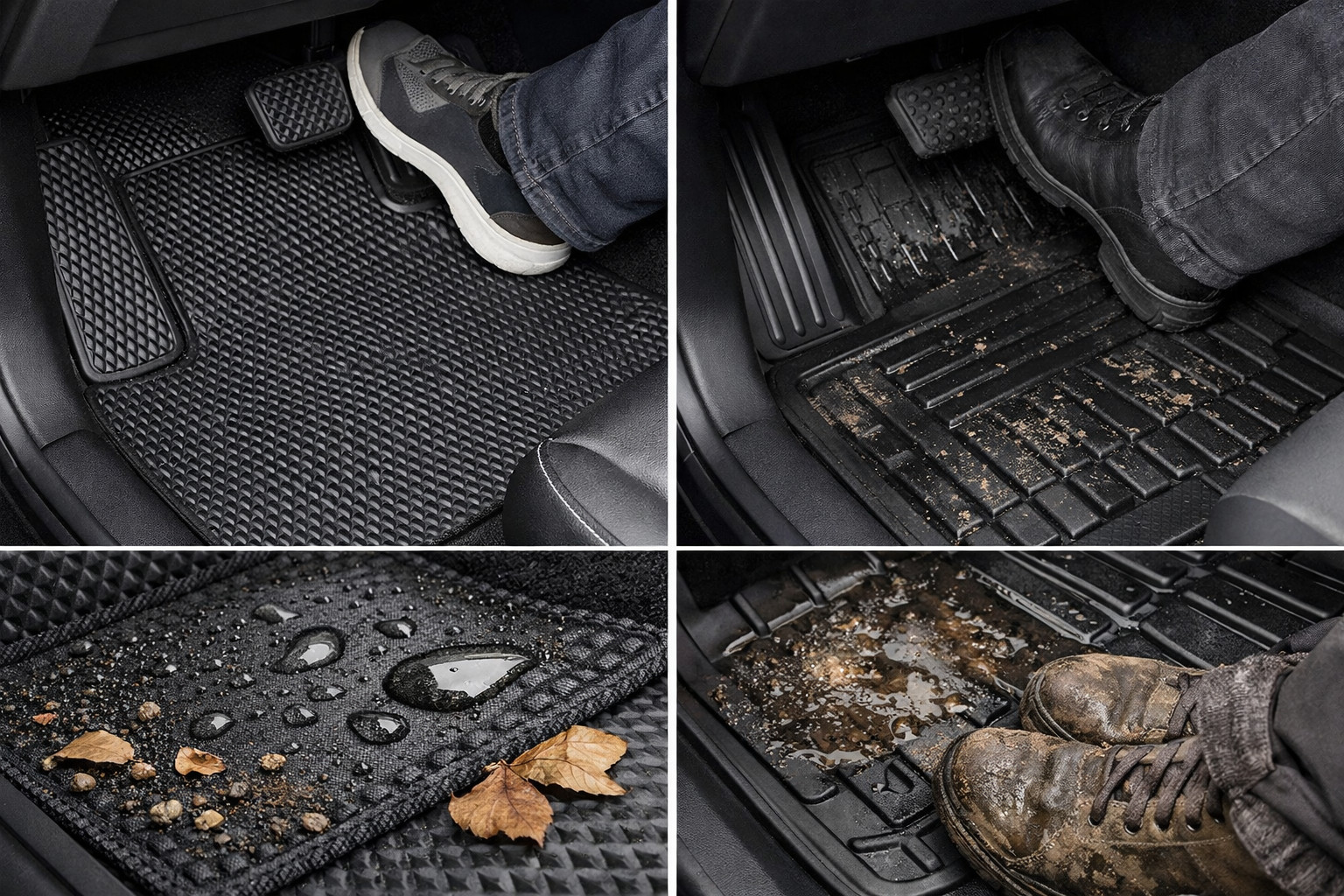
For Polo IV, the most sensible approach isn’t aggressive tuning but practical small upgrades: protecting the interior from dirt, improving everyday convenience, and a tidy refresh of the exterior. On an older city hatchback, this works better than big body kits or flashy decor.
In short, for this Polo it’s worth investing in things that deliver daily benefits: mats, door sill protection, deflectors, a basic refresh of the lighting or interior. This approach usually looks appropriate and doesn’t overload the car.
Volkswagen Polo 2001-2009 is one of those small cars valued not for flashiness, but for normality in the best sense. It fits the city, calm trips, everyday routine, and owners who want a compact body without the feeling of an overly basic budget car.
This model is at its best in well-maintained condition, with a sensible engine, and without postponed repairs left by previous owners. The material is based on real selection experience, practice, and real usage scenarios — which is why the main takeaway is simple: Polo IV makes sense when you need a convenient city car, not an excuse for emotional purchases.
| ✔ | Compact dimensions and a small turning radius make the Polo convenient in narrow courtyards and tight parking spaces. In the city, this is a practically noticeable advantage every day. |
| ✔ | The suspension is tuned for comfort, so the car smoothly handles city joints and does not wear you out on regular routes. This makes it a calm option for daily driving. |
| ✔ | The cabin has clear ergonomics and does not look overly basic even today. For its class, it comfortably seats four adults. |
| ✔ | There are good engine options for different scenarios: 1.4 and 1.6 gasoline engines for relaxed use, as well as economical diesels for those who drive a lot. This makes it easier to choose for specific needs. |
| ✔ | The body is fully galvanized, and the safety equipment was quite decent for its time: airbags, ABS, and in some trim levels ESP as well. This adds confidence when choosing a well-kept example. |
| ✘ | Basic gasoline versions, especially the 1.2, feel noticeably weak under load. If you often drive with passengers or on the highway, they may not be enough. |
| ✘ | The ground clearance cannot be called convenient for bad roads, curbs, and yards with broken pavement. This is a typical city hatchback, not a car for rough surfaces. |
| ✘ | Diesel engines are economical, but under load they can run a bit rough. For some drivers, this reduces comfort in everyday driving. |
| ✘ | Older examples often have issues with the electrical system, window regulators, and minor mechanical parts. Before buying, you have to carefully check the specific car rather than rely on the model’s general reputation. |
| ✘ | Maintenance is not always as cheap as expected from a small car. On a neglected example, the costs may not be pleasantly surprising. |
Shipping to EU
Wholesale and retail
Own warehouse
Опис продукту
Подарунки не надаються при оформленні покупки у кредит під 0,01% або при покупці частинами.