01.05.2026
163
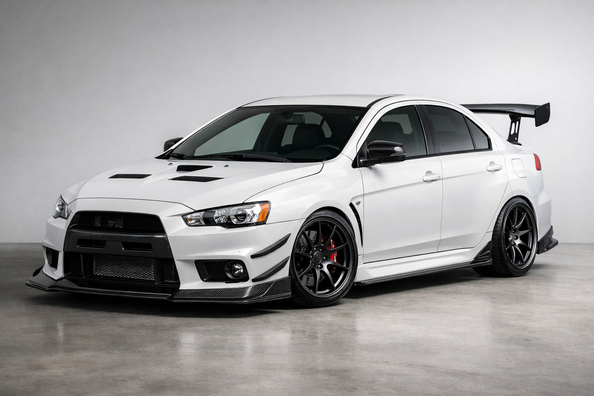
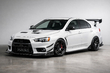
Mitsubishi today is worth judging not by promises of “drive,” but by which body style fits your daily life better and which accessories are actually available for it. If you need the simplest base for practical tuning, the most interesting choice is the Outlander Sport; for a family, travel, and a big trunk, the Outlander is the more logical option; if the main goal is to drive on electric power every day and stop at the gas station less often, then you should be looking at the Outlander PHEV; the Eclipse Cross is an urban compromise between compact size and all-wheel drive.
In this article, the reference point is the 2025 model year, because that’s the one with complete technical tables available. For the brand, this matters: Mitsubishi’s current lineup is almost entirely made up of crossovers, so the biggest sense lies not in decorative mods, but in cargo systems, floor mats, mud flaps, window deflectors, protection pieces, and other items that deliver practical value every day.
Mitsubishi holds its ground in the practical crossover segment and doesn’t try to play the sporty premium game. The brand’s strengths here are straightforward: easy-to-understand body styles, all-wheel drive in the versions that matter, a long powertrain warranty, and a solid base for accessories. That’s why these cars are often bought not “for emotion,” but for long-term everyday use.
If you look at Mitsubishi from the standpoint of choosing accessories, what matters is not so much the catchy generation names, but which body styles stay on the market for a long time and have steady demand. In the current lineup for this review, the key models are the Outlander, Outlander PHEV, Eclipse Cross, and Outlander Sport. For the Outlander Sport and Eclipse Cross you can already find pages for the next model year, but the core roles don’t change: a large family body, a hybrid version, a compact city option, and a mid-size crossover.
| Model | Period the review is based on | Body format | Practical value for tuning |
|---|---|---|---|
| Outlander | 2025 model year | Family 7-seat crossover | The best base for cargo systems, interior protection, and road-trip accessories |
| Outlander PHEV | 2025 model year | 7-seat plug-in hybrid | The logic is the same, but the focus shifts toward practicality rather than power mods |
| Eclipse Cross | 2025 model year | Compact 5-seat crossover | Makes sense for city accessories, roof gear, and body protection |
| Outlander Sport | 2025 model year | Compact crossover | The best balance between purchase price and useful upgrades |
Historically, these aren’t models people buy for a loud, showy project. Their market story is more about long service life, simple solutions, and a clear owner request: make trips cleaner, more comfortable, and more practical.
The gasoline Outlander uses a 2.5-liter naturally aspirated engine rated at 181 hp and 245 N·m, paired with a CVT; front-wheel drive or S-AWC is available. It’s a calm powertrain without sporty ambitions, but it fits the family body format well. The Eclipse Cross has a 1.5-liter turbo engine with 152 hp and 250 N·m, also with a CVT, and S-AWC all-wheel drive is standard.
The Outlander Sport offers two engines: 2.0 L with 148 hp and 197 N·m, or 2.4 L with 168 hp and 226 N·m. Both come with a CVT and AWC all-wheel drive. This is essentially the simplest recipe in the lineup: a small body, straightforward hardware, minimal extras. That’s why it handles everyday loads well and doesn’t require a complicated approach to accessories.
Standing apart is the Outlander PHEV: a 2.4-liter engine works together with two electric motors, with a combined output of 248 hp and 450 N·m; S-AWC all-wheel drive is standard. The claimed electric range is 61 km, and total range up to 676 km. An important nuance: open specifications differ on traction battery capacity — 16.8 or 20.0 kWh depending on version and source — so it’s best to verify this number for the specific trim.
Dimension-wise, the lineup is laid out very logically. The Outlander and Outlander PHEV are large family bodies with a third row, the Eclipse Cross is a lower and more compact urban option, and the Outlander Sport is the shortest and easiest in daily maneuvering. For Ukrainian roads, it’s useful that ground clearance on all four vehicles is adequate for curbs, dirt roads, and winter slush.
| Model | Dimensions, mm | Ground clearance, mm | Trunk, L | Seats |
|---|---|---|---|---|
| Outlander | 4719 × 1897 × 1748 | 213 | 309 / 866 / 1821 | 7 |
| Outlander PHEV | 4709 × 1860 × 1745 | 198 | 368 / 878 / 1812 | 7 |
| Eclipse Cross | 4547 × 1806 × 1690 | 216 | 663 / 1419 | 5 |
| Outlander Sport | 4366 × 1811 × 1646 | 216 | 623 / up to 1402 | 5 |
In practice, this means the following: the Outlander and PHEV work better for a family scenario with suitcases, kids’ stuff, and a roof box; the Eclipse Cross wins in city parking; the Outlander Sport delivers the strongest “simple working crossover” feel. The weak point of the larger Outlanders is the very conditional third row: it’s there, but you shouldn’t count on it as a full adult row.
The Outlander became quieter after the latest refresh, and that’s an important change: for a family car, sound insulation often feels more meaningful than an extra 10–15 hp. Owners also typically rate the seats and the space in the first and second rows well. But the third row remains an emergency option rather than a full part of the cabin.
The Outlander PHEV wins differently — with smoothness and the feeling of a quiet start in EV mode. It suits those who value calm driving, but it’s worth remembering that climate control noticeably affects electric range. Also, this body isn’t about power upgrades: the hybrid layout sets the limits of sensible tuning.
The Outlander Sport feels simpler and older: the interior doesn’t look fresh next to newer competitors, but the driving position is comfortable, and in daily life that matters more than pretty screen graphics. The Eclipse Cross also doesn’t impress with a cutting-edge cabin, but it wins on ergonomics and a small turning circle, which you really feel in the city.
In real life, the Outlander shines best as a family all-rounder: the second row is solid, the trunk is large, and mixed-cycle fuel consumption depending on drivetrain sits around 8.7–9.0 L/100 km. If you do a lot of highway driving, this body style looks the most fitting. The Outlander PHEV makes sense when most daily routes fit within its electric range: in that mode it genuinely saves fuel, but if you have nowhere to charge, part of the point simply disappears.
From an owner’s perspective, the fewest reasons for disappointment come from the models you don’t expect too much from. The Outlander shouldn’t be bought instead of a big minivan, the PHEV instead of a “hot” car, and the Outlander Sport instead of a tech-heavy class flagship. If you approach them correctly, their strengths become very obvious.
| Model | Pros | Cons | Who it’s for |
|---|---|---|---|
| Outlander | 7 seats, big trunk, quieter cabin after the refresh, wide choice of practical accessories | Third row is tight, driving character is calm, not for those looking for excitement | Families and those who often drive highways |
| Outlander PHEV | Everyday electric range, strong torque, all-wheel drive, 7-seat format | Only makes sense with regular charging, an older-type charge port can complicate public charging, not the best base for “hot” tuning | Those who want to save on daily driving and don’t need a sporty character |
| Eclipse Cross | More compact body, AWD standard, convenient in the city, good ground clearance | Moderate power, interior isn’t the freshest in the class, only 5 seats | Urban drivers who find the Outlander too big |
| Outlander Sport | Affordable entry into the lineup, standard AWC, compact size, simple and cost-effective for accessories | Base engine is sluggish, cabin feels noisier and older, second row is more modest than competitors | Those who need a practical compact crossover without extra spending |
All gasoline Mitsubishi models share one trait: the CVT smooths responses and removes the feeling of sportiness. In other words, the benefits here aren’t “explosive” dynamics, but predictability, efficiency, and the fact that the car doesn’t demand a complicated approach. That’s exactly the perspective they’re worth judging from.
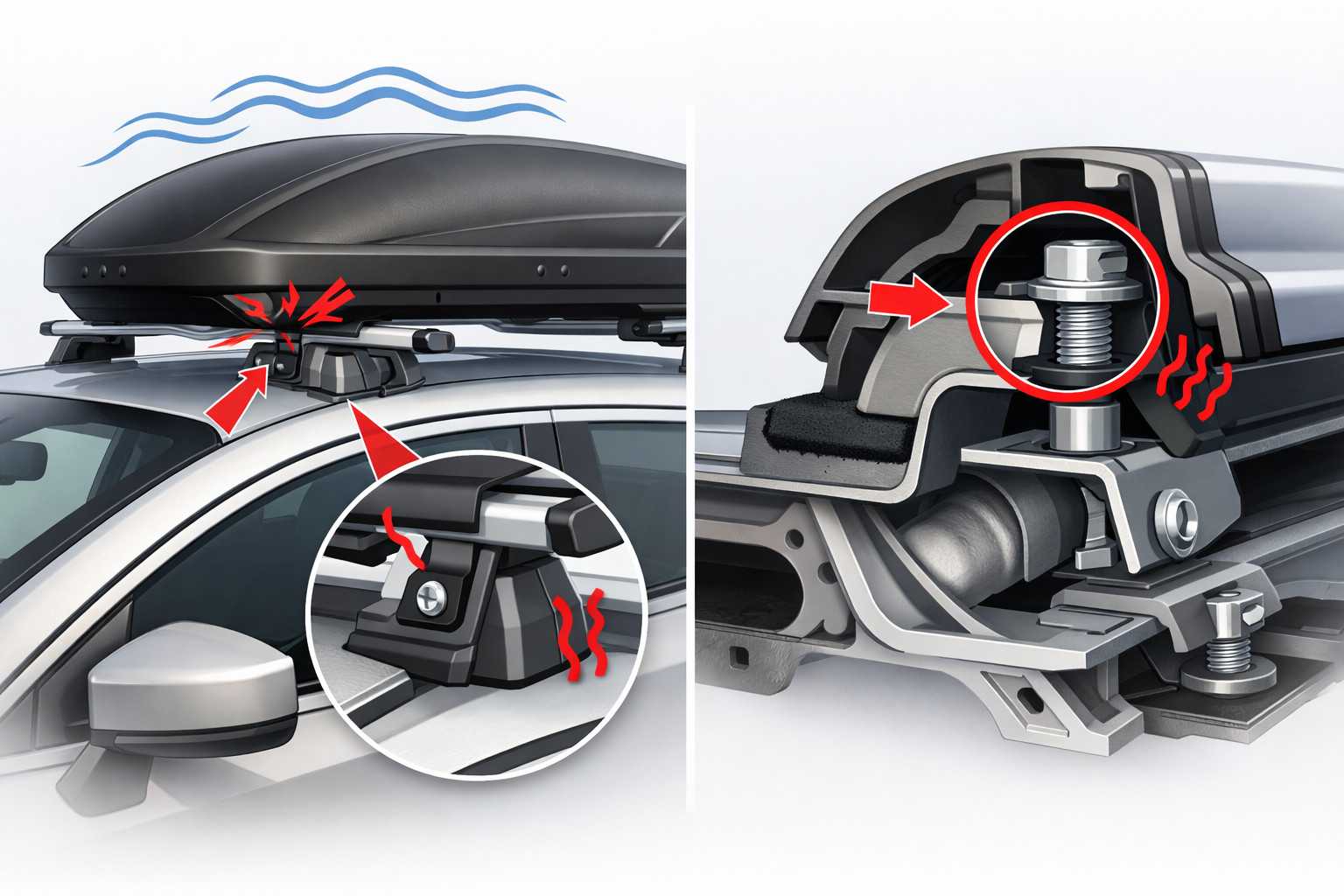
With Mitsubishi today, the biggest sense is not in performance tuning, but in useful upgrades. For the Outlander and similar use cases, that means roof systems, floor mats, trunk protection, mud flaps, and trim pieces for areas that get scratched constantly. For compact bodies like the Outlander Sport, it’s most cost-effective to start with things that have a daily impact: interior mats, window deflectors, trunk organizers, a simple roof carrier. The Eclipse Cross responds well to city-focused accessories, while the Outlander PHEV is best equipped around your route rather than for a showy appearance.
The most logical approach is this: first define the scenario — family, city, cottage, tourism, skis, bicycle — and only then pick accessories. The brand’s packages like the off-road-style Trail Edition work well, but even without them the most benefit comes from basic items that protect the cabin, roof, and trunk.
If you boil it down to a simple choice, the picture is this: the Outlander is the most successful family body in the lineup, the Outlander Sport is the best base for practical and inexpensive accessories, the Eclipse Cross is a smart urban format, and the Outlander PHEV only makes sense if you really will use its electric part every day. None of these cars is about “hot” tuning, but all of them respond well to upgrades that make real life easier.
The article is based on real selection experience, practical know-how, and real usage scenarios: family trips, city driving, carrying luggage, everyday dirt in the cabin, and the need to make the vehicle more convenient without unnecessary expense. From this point of view, Mitsubishi looks the most convincing today.
| ✔ | Outlander is a good family base: it has 7 seats, a large trunk, and a solid level of practicality for highway trips and vacations. |
| ✔ | Outlander Sport looks like the simplest and cheapest entry into the lineup, so it makes sense to fit it with basic accessories without major expense. |
| ✔ | Eclipse Cross is convenient in the city: a more compact body, standard all-wheel drive, and a small turning radius make it easier to park and maneuver. |
| ✔ | Outlander PHEV makes sense for daily short trips, because the electric range allows real fuel savings with regular charging. |
| ✔ | All models come with a good selection of practical accessories — floor mats, mud flaps, cargo protection, deflectors, and roof systems, meaning they are easy to equip for everyday tasks. |
| ✘ | None of the models delivers a truly sporty character: the CVT smooths out the responses, and the cars themselves are geared toward calm driving. |
| ✘ | The third row in the larger Outlanders is more of an occasional one than a full-size one, so it should not be counted on as proper adult seating. |
| ✘ | Outlander PHEV loses some of its point without home or regular charging, and it can also be inconvenient because of the older-type charging port. |
| ✘ | Outlander Sport has a simpler, older-feeling interior, and the base engine is described as sluggish, so it is not impressive either in performance or premium feel. |
Shipping to EU
Wholesale and retail
Own warehouse
Опис продукту
Подарунки не надаються при оформленні покупки у кредит під 0,01% або при покупці частинами.