01.05.2026
1609
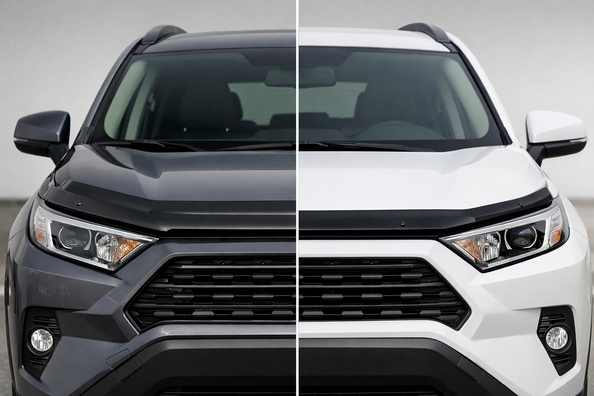
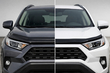
If the car is driven mostly in the city, for everyday use and without constant highway runs, a low hood deflector is often the more logical choice. But if you regularly travel on the highway, deal with lots of insects and gravel, or the car is used intensively, a high version makes more sense because it deflects the airflow upward more strongly.
The key mistake here is simple: people choose between “prettier” and “more massive,” when in reality you should compare installation, noise, practicality, durability, and what exactly you want to protect—only the hood edge or also part of the area in front of the windshield. There’s no universal winner, and most problems come not from the deflector type itself, but from a poor match for a specific car.
The point isn’t which deflector is “better overall,” but how it works for your scenario. A high profile picks up the airflow more aggressively and lifts it higher above the hood’s leading edge. A low profile acts more moderately: it protrudes less, draws less attention, and is often enough where the main goal is to preserve the hood’s paint rather than максимально change the airflow trajectory.
So the choice is always a compromise. A taller deflector usually provides more practical protection on the highway, but it may be more noticeable and more demanding to install. A low one is calmer in everyday use, but you shouldn’t expect the same effect as a high one on high-speed routes.
Another important criterion is compatibility with a specific car model. The same idea works differently on different vehicles: it all depends on the front-end shape, hood angle, and installation point.
| Option | Strengths | Weaknesses | Who it suits |
|---|---|---|---|
| High deflector | Deflects airflow upward more strongly, works better on the highway, more useful against insects and small gravel, partially relieves the area in front of the windshield | More noticeable visually, can be noisier, more sensitive to installation accuracy, doesn’t guarantee full protection from chips | Those who often drive between cities, on gravel, on business trips, or in a work vehicle |
| Low deflector | More restrained look, usually quieter, protrudes less, sufficient for daily city driving and protecting the hood’s leading edge | Raises airflow less, has less effect on the windshield area; for some drivers it feels more like a neat add-on than maximum protection | Those who drive in the city, don’t want a bulky accessory, and want moderate protection without an extra visual accent |
DD Tuning expert comment: most often, the people who make mistakes are those who choose a deflector for the catalog photo rather than for their route. The second common story is buying a universal or “almost compatible” option and then fighting noise, misalignment, or poor hood closing. If the car often drives on the highway, a couple of centimeters mistake in height and fit can really change the result.
Its purpose is to more actively change the airflow direction over the front of the car. In practice, this is useful where there are steady speeds, long trips, lots of insects, or small road debris. It’s именно in such conditions that a high profile has the most noticeable benefit.
The downsides are also predictable. It’s more noticeable, sometimes adds aerodynamic noise, and requires more careful installation. If the fit is poor or the mounting is weak, you may get vibration, play, or problems opening the hood. And one more thing: even a good high deflector is partial protection, not insurance against every paint chip.
This is the option for those who want a neat solution without extra bulk. It sits closer to the hood, is less eye-catching, and usually behaves more calmly in everyday use. For the city, short trips, and mixed routes without constant gravel, it’s often a smart balance.
Its weak point is the smaller airflow-deflection effect. In other words, it shields the hood edge, but you shouldn’t expect the same protection for the windshield and upper area as with a high one. Also, a low profile can be ruined by installation too: if you mount it too low or unevenly, you’ll get the same issues—noise, stress on the mounts, or inconvenience when using the hood.
For the city and daily driving without constant high-speed sections, a low deflector is usually enough. It puts less visual load on the car’s appearance, is less likely to annoy with noise, and covers the basic need to protect the hood’s leading edge.
For highways, business trips, travel, seasons with lots of insects, and routes where small gravel often flies up from under the wheels, it’s better to look toward a high profile. This is where its extra height stops being just a visual difference and starts delivering real results.
If the car is used commercially with lots of daily mileage, it’s also more logical to go with a high deflector with proper mounting. But if the car is a family vehicle, driven calmly and spending most of its time in the city, the extra cost for a high profile often doesn’t provide proportional benefit.
| Scenario | What to choose | Why |
|---|---|---|
| Daily city trips | Low deflector | Provides basic hood protection, is less noticeable, and usually quieter |
| Regular highway driving | High deflector | Deflects airflow better and makes more sense at steady speed |
| Routes with insects and small gravel | High deflector | More practical where the load on the car’s front end is higher |
| Family car, mixed use without extremes | Low deflector | Balance between protection, quietness, and low visual impact in everyday use |
| Work vehicle with high mileage | High deflector | The extra cost is more often justified by the use case, not the visual effect |
| Priority: a restrained look | Low deflector | Protrudes less over the hood and is closer to a factory-style look |
A more expensive option is justified when the car regularly drives on the highway, runs long routes, or often sees gravel and lots of insects. In that case, you should look not only at profile height, but also at mounting quality and model-specific accuracy. For a quick reference, you can review the pros and cons of a hood deflector, the hood deflectors section, and the overall deflectors category.
If the car is mostly used in the city and the goal isn’t maximum airflow deflection but a neat everyday option, paying extra for a high profile or more complex design often doesn’t bring a noticeable gain. Here it’s more important to choose a precise product for your model and install it properly.
From a customer’s experience: a crossover driver initially wanted a low deflector only because of the restrained look, but after several weekly highway trips with lots of insects, switched to a high one. After proper installation, they got exactly what was missing: less contamination on the hood’s leading edge and a clearer purpose for the accessory, without the feeling that they bought just a decorative piece.
A low deflector makes more sense for the city, calm daily use, and for those who don’t want a bulky accessory on the hood. A high one is for highways, long runs, insects, gravel, and work scenarios where stronger airflow deflection matters more than a restrained look.
The right choice here is simple: first look at your route and driving conditions, then at installation and compatibility, and only after that—at appearance. This material is based on real selection experience, practical use, and real-world scenarios, not an abstract comparison of “what looks cooler.”
| ✔ | The high-profile deflector redirects airflow upward better, so on the highway or in trips with insects or small gravel, it provides more practical protection for the front end of the car. |
| ✔ | The low-profile deflector protrudes less above the hood, so it looks more restrained and is usually less noticeable in everyday city driving. |
| ✔ | Both types can be installed without drilling if the kit includes factory mounting points or double-sided tape, which makes installation easier. |
| ✔ | For each option, the article clearly outlines use cases, so it’s easier to choose a deflector for real driving conditions rather than just for appearance. |
| ✔ | The high profile makes sense for cars with high mileage or for commercial use, where extra protection more often justifies the cost. |
| ✘ | A high-profile deflector can add wind noise at speed, especially if the hood shape is complex or the installation is not done precisely. |
| ✘ | Even the high version does not fully guarantee protection from chips, meaning it is only partial protection, not a complete solution to the problem. |
| ✘ | A low-profile deflector lifts the airflow less, so you should not expect the same effect on the windshield and upper area as from a high profile. |
| ✘ | For both types, precise fitment to a specific model is critical: poor installation or compatibility can cause misalignment, noise, and problems opening the hood. |
Shipping to EU
Wholesale and retail
Own warehouse
Опис продукту
Подарунки не надаються при оформленні покупки у кредит під 0,01% або при покупці частинами.