22.05.2026
299
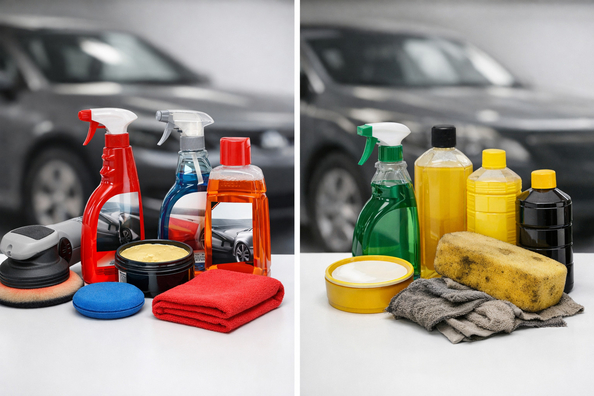
The choice between Sonax and cheap car chemicals doesn’t come down to the simple rule “more expensive = better.” For regular, routine body washing, a budget car shampoo is often genuinely enough. But on wheels, glass, winter grime, and delicate surfaces, the advantage of Sonax usually becomes noticeable sooner.
The key line is this: if the alternative to Sonax is an inexpensive but still automotive-specific product, then it’s about consistency of results, compatibility, and ease of application. But if we’re talking about household or overly “universal” chemicals, the savings often turn into streaks, aggressive impact on surfaces, and extra hand scrubbing.
Sonax is worth buying when you need more predictable chemistry for a specific task: separate products for wheels, glass, winter dirt, protection, or delicate materials. The brand’s strength isn’t a “magic” bottle, but the fact that products are usually better matched to the surface and the use case.
Cheap products make sense when the car is washed often, but without tough contamination: city dust, a light road film, basic interior cleaning. One key point: it must be automotive detailing products, not dish soap, kitchen cleaner, or an aggressive all-purpose degreaser.
Installation: here it’s not fitting parts, but how hard it is to apply—whether you need to be very precise, whether the product forgives mistakes, and whether it leaves spots. Noise: has almost no direct relevance, because detailing chemicals don’t affect a car’s acoustics; at most, they indirectly improve wiper performance on clean glass. Service life: it’s the consumption per wash and how long the effect lasts, not the bottle size. Practicality: compatibility with wheels, glass, plastic, winter use, and sensitive finishes. Price: not the number on the label, but the cost of one proper care cycle.
By these criteria, Sonax often wins in specialized tasks. For example, pH-neutral wheel cleaners, proper glass cleaners, or winter formulas are more convenient not because they’re “premium,” but because they work more consistently and less often force you to compensate for weak chemistry with a harsh sponge or a second pass.
| Option | Strengths | Weaknesses | Who it’s for |
|---|---|---|---|
| Sonax | More consistent results, specialized formulas for wheels, glass, winter, better compatibility with sensitive surfaces, can be economical in concentrated formats | Higher entry price, some products are technique-sensitive, the extra cost isn’t always noticeable in simple washes | New cars, dark paint, cars with coatings or film, complex wheel designs, winter driving |
| Budget automotive detailing products | Low price, sufficient effectiveness for regular body washing, simple everyday care | Often weaker on heavy grime, less lubrication, higher risk of streaks and an inconsistent finish | City use, older cars without demanding finishes, tight budget |
| Cheap universal or household chemicals | Only a visible upfront saving | Unclear compatibility, risk of spots, streaks, drying out surfaces, and excessive aggression toward aluminum, glass, or plastic | Almost no one for proper car care |
DD Tuning expert comment: The most common mistake is buying one cheap “universal” product for the body, wheels, plastic, and glass. In the end, either tough grime doesn’t come off, or you get streaks and dried-out surfaces. If the budget is limited, it’s better to take a simple set of two or three automotive products for different tasks than to try saving with one “does-it-all” bottle.
Sonax’s strong point is narrow specialization. pH-neutral wheel cleaners are better suited for regular work on sensitive surfaces, glass products remove insects, oily and silicone film well, and the winter line is designed for slush, salt, and low temperatures. On very dirty wheels, this often doesn’t mean a “wow effect,” but something more practical: less need to scrub hard by hand.
Another plus is service life. The brand also has concentrated formats, so a pricier product doesn’t always mean a high cost per wash. But the downside is real too: some protective products can be demanding to apply—they don’t like excess product, hot panels, or direct sunlight.
This is a solid working option for the body if we’re talking about regular hand washing without complicated tasks. An inexpensive car shampoo can cover everyday care quite adequately, especially when the car doesn’t have a delicate finish and the owner doesn’t need a perfectly clean finish in one pass.
Problems start where contamination is tougher: brake dust, winter salt, greasy film on glass, sensitive interior plastics. In these scenarios, budget products are often either weaker or more aggressive, which means you either scrub more or accept an inconsistent result.
This is where the savings are usually false. Some cheap all-purpose cleaners have a more aggressive formula, can leave streaks and spots, or work too harshly on aluminum, glass, and plastic—especially if you let them dwell too long or rinse poorly. For cars, this approach almost always loses even to basic but proper automotive detailing products.
For a city car that’s washed often and without special demands, a budget car shampoo usually gets the job done. For highway driving, dark paint, large wheels with heavy buildup, frequent winter trips, and cars with delicate finishes, it makes more sense to look toward Sonax.
The smartest compromise for most owners is a mixed kit. You can wash the body with a decent budget shampoo, but use Sonax for wheels, glass, winter care, and targeted protection. In these areas, the extra spend is more often felt not in words, but in the work.
| Scenario | What to choose | Why |
|---|---|---|
| Weekly city body wash | Budget car shampoo | Enough for dust and light road film without overpaying for narrow specialization |
| Heavily soiled wheels with brake dust | Sonax | Works better on tough grime and usually lets you scrub the surface less |
| Glass after highway driving, bugs, greasy film | Sonax | Gives a cleaner result and fewer chances of streaks when applied correctly |
| Winter slush, salt, low temperatures | Sonax | Dedicated winter formulas are more practical in the cold season and more predictable in use |
| Older car without a coating, minimal budget | Budget automotive detailing products | You can get a decent result if you avoid household chemicals and don’t expect universality |
| The temptation to buy the cheapest “one product for everything” | Better: a minimal set of separate automotive products | More practical and safer than trying to cover the body, interior, wheels, and glass with one bottle |
Paying extra for Sonax makes sense when the surface is demanding or the dirt is tough: a new car, dark paint, protective film, ceramic coating, sensitive wheels, regular winter use, lots of highway miles. Here it’s not just about cleanliness, but also lower risk of side effects, better compatibility, and a more predictable result. This is especially true for glass and wheels, where the difference between “just clean it” and “clean it without extra scrubbing” becomes obvious very quickly.
If you want to build a care routine without random purchases, start with the car care catalog, also check the material on choosing a car shampoo, and look at the guide on body polish. A more expensive option is justified when it reduces mistakes, saves time, and fits a specific surface better—not when it simply looks more solid on the shelf.
From a customer’s experience: the owner of a dark crossover first used an inexpensive shampoo and an all-purpose cleaner, but kept complaining about the wheels and the greasy film on the windshield after highway trips. In the end, he kept the budget shampoo for the body, and switched to Sonax for the wheels and glass. This combination delivered a tangible result: less hand scrubbing, fewer streaks, and no feeling that he had overpaid for the entire care routine at once.
Sonax isn’t necessarily needed for every wash, but it logically wins where grime is tough, the surface is sensitive, and the result must be consistent and safe. Cheap products also have their place—if they’re true automotive detailing products, not an aggressive universal cleaner with questionable compatibility.
For most owners, the smartest approach isn’t choosing between “premium only” and “cheap only,” but paying more only for the tasks where it’s truly noticeable: wheels, glass, winter care, protection, and delicate surfaces. This material is based on real подбор experience, hands-on practice, and real use scenarios—not on an abstract split between expensive and cheap brands.
| ✔ | Sonax delivers a more predictable result in demanding tasks — for wheels, glass, winter grime, and delicate surfaces. This reduces the need for a second pass and extra scrubbing. |
| ✔ | The brand offers specialized formulas for specific scenarios: separately for wheels, glass, winter use, and protection. This is more practical than one universal product for everything. |
| ✔ | In concentrated formats, Sonax can be economical in terms of cost per wash, so a high bottle price does not always mean a high actual maintenance cost. |
| ✔ | Budget car care products handle regular city washing of the bodywork without heavy dirt just fine. For frequent simple care, this is a sufficient and logical option. |
| ✔ | As a compromise, you can keep a budget shampoo for the bodywork and use Sonax selectively for wheels, glass, and winter care. This split lets you avoid overpaying where it is not needed. |
| ✘ | Sonax has a higher entry price, and the extra cost is not always obvious in a simple body wash. If the tasks are basic, the difference may not be that noticeable. |
| ✘ | Some Sonax products are demanding in terms of application technique and working conditions. They should not be applied to a hot surface, under direct sunlight, or in an excessive layer. |
| ✘ | Budget car care products are often weaker on heavy dirt, brake dust, winter salt, and greasy film. Because of this, you have to scrub more or put up with an inconsistent finish. |
| ✘ | Cheap all-purpose or household car chemicals are risky in terms of compatibility: they can leave streaks, spots, dry out surfaces, and be too aggressive on aluminum, glass, or plastic. |
Shipping to EU
Wholesale and retail
Own warehouse
Опис продукту
Подарунки не надаються при оформленні покупки у кредит під 0,01% або при покупці частинами.