23.06.2026
236
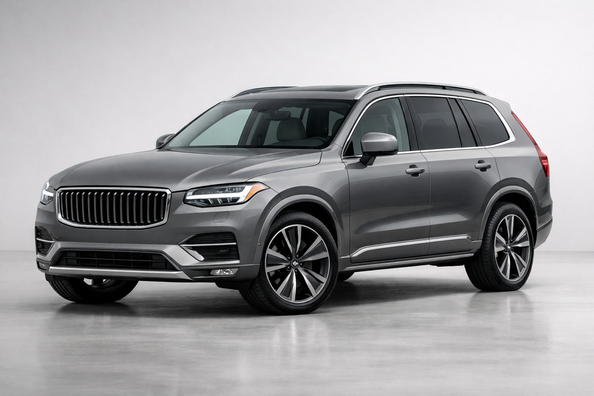
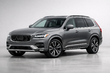
Volvo XC90 2025 is an updated version of the second-generation large family crossover—chosen not for excitement, but for quietness, smooth ride, safety, and everyday usability with kids, luggage, and winter trips. In the 2025 specification for the US market, all versions come with all-wheel drive, 6–7 seats, and an automatic transmission.
An important nuance: the 2025 model year is not uniform. Some early vehicles were almost transitional from 2024, while later cars received a more noticeable front-end refresh, a redesigned interior, and a larger central display. So when comparing specific vehicles, it’s worth looking not only at the year, but also at the build date and equipment.
The XC90 sits in the large premium family crossover segment alongside the Audi Q7, BMW X5, Mercedes-Benz GLE, Acura MDX, and Lexus TX. Its strength isn’t sportiness, but a calm character: it isolates noise well, doesn’t tire you out on the highway, and offers a lot of usable space.
It’s a strong option for a family that often travels long distances, carries kids, a stroller, sports gear, or drives in winter. It’s not the best choice for those who need a truly adult-friendly third row on a постоянній basis, the simplest possible electronics without menus, or the lowest fuel consumption in the class.
The first generation Volvo XC90 was produced from 2002 to 2014. The second generation arrived in 2015 and has stayed on the market for a long time, but it’s the foundation for all current versions, including the 2025 update.
For 2025, the XC90 did not become a new generation: it’s still the second generation, but with refinements in design, infotainment, and certain interior elements. Because of this, on the used market—or even among new cars—you can find vehicles of the same model year that differ slightly in interface and small details.
In 2025, the lineup is straightforward: B5, B6, and T8. All versions are built around a 2.0-liter four-cylinder engine, but differ in tuning and the type of electrification. The transmission is listed in descriptions and specifications as an 8-speed automatic.
| Version | Powertrain | Power and torque | Practical takeaway |
|---|---|---|---|
| B5 | 2.0 L turbo gasoline mild hybrid | 247 hp, 361 N·m | Enough for calm family driving, more moderate on fuel |
| B6 | 2.0 L mild hybrid with turbocharging and supercharger | 295 hp, 420 N·m | Pulls a loaded vehicle and highway driving better, but uses more fuel |
| T8 | 2.0 L plug-in hybrid | 455 hp, about 709 N·m | The most powerful option, up to 51.5 km of electric range, makes sense with regular charging |
A rough fuel-use reference is: B5 about 9.0 L/100 km combined, B6 about 10.2 L/100 km, and T8 only wins in the city when the battery is actually charged. In some markets, B5 and B6 output is sometimes rounded to 250 and 300 hp, but the essence doesn’t change.
The XC90 is large, but not clumsy. The long wheelbase gives stability on the highway, and the ground clearance is enough for snow, curbs, gravel driveways, and country routes. It’s not a serious off-road vehicle, although the all-wheel drive and bad-road mode here aren’t just for show.
| Parameter | Value |
|---|---|
| Length | 4953 mm |
| Width | 2009 mm |
| Width with mirrors | 2141 mm |
| Height | 1775 mm |
| Wheelbase | 2985 mm |
| Ground clearance | 205–216 mm depending on wheels and load |
| Turning diameter | 12.1 m |
| Trunk | 246 L with the third row up, up to 2427 L max |
| Towing | up to 2268 kg |
| Roof load | up to 100 kg |
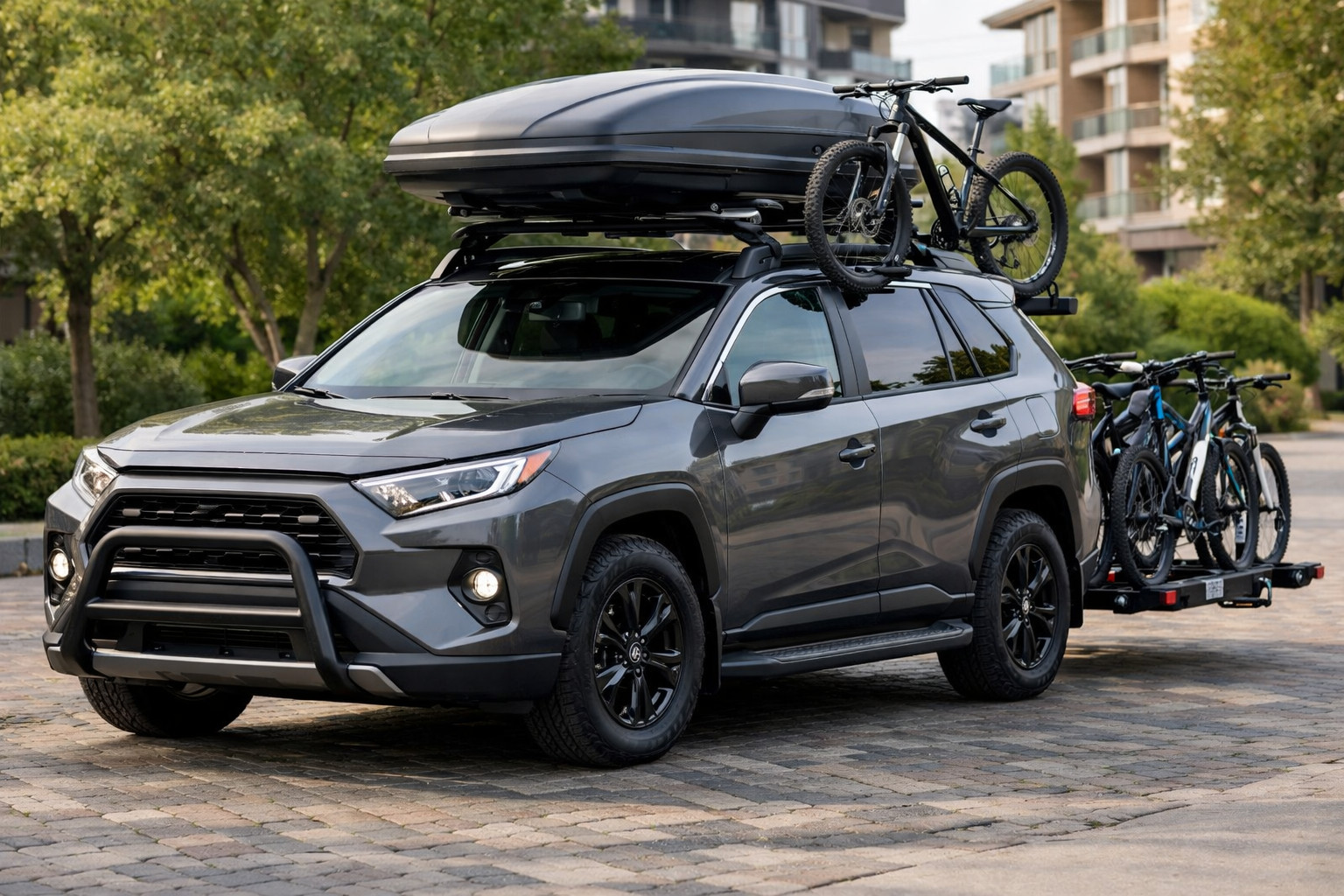
Practically, it means one simple thing: the vehicle is well suited for long trips with a full load, carrying a roof box, and towing a trailer. The flat cargo floor and power tailgate also serve everyday convenience rather than brochure effect.
The XC90’s main argument is the interior. The first and second rows are genuinely spacious, the second row has a built-in child booster, and the outer seats have ISOFIX. The third row is more for kids or short trips: seating there is a compromise, with knees raised, and comfort isn’t on the level of the roomiest competitors.
In terms of equipment, the model is strong: four-zone climate control, air purification, 4 USB-C ports, wireless charging, a digital instrument cluster, a large central display, 360-degree camera, cross-traffic alert with auto braking, blind-spot monitoring, and lane-keeping assist. The weak spot isn’t the list of systems, but the control logic: some functions have to be found in menus, and the screen sometimes isn’t as fast as you’d like.
In daily use, the B5 is the most sensible choice for a calm driver, the B6 suits those who often drive loaded or want a torque reserve without moving to a plug-in hybrid, and the T8 makes sense when you’re in the habit of charging the vehicle at home or at work. Otherwise, you’ll be carrying a heavy battery without getting its full benefit.
As a family vehicle, the XC90 is very strong: all-wheel drive is useful in winter, the trunk is large even in the 6–7-seat format, the cabin is quiet, and the suspension doesn’t annoy on long distances. But if you need seven adult seats, minimal electronic quirks, and an unquestionably trouble-free touch interface, this model may not match expectations.
| Strengths | Weaknesses |
|---|---|
| Very comfortable ride and a quiet cabin | Infotainment and software can be slow or unstable |
| 6–7 seats, good family ergonomics, large trunk | The third row is more of a backup than truly full-time |
| All-wheel drive, decent ground clearance, towing up to 2268 kg | The B6 isn’t class-leading on efficiency, and the T8 has limited electric range |
| Strong set of safety systems and useful options | There are complaints about electronics, so checking updates and recalls matters |
From an owner’s perspective, the biggest value is that the XC90 doesn’t wear you out on the road and is well adapted to family life. The most common irritations are also typical: touch controls for secondary functions, possible small electronic issues, and the need to carefully check service history, rearview camera operation, and software currency.
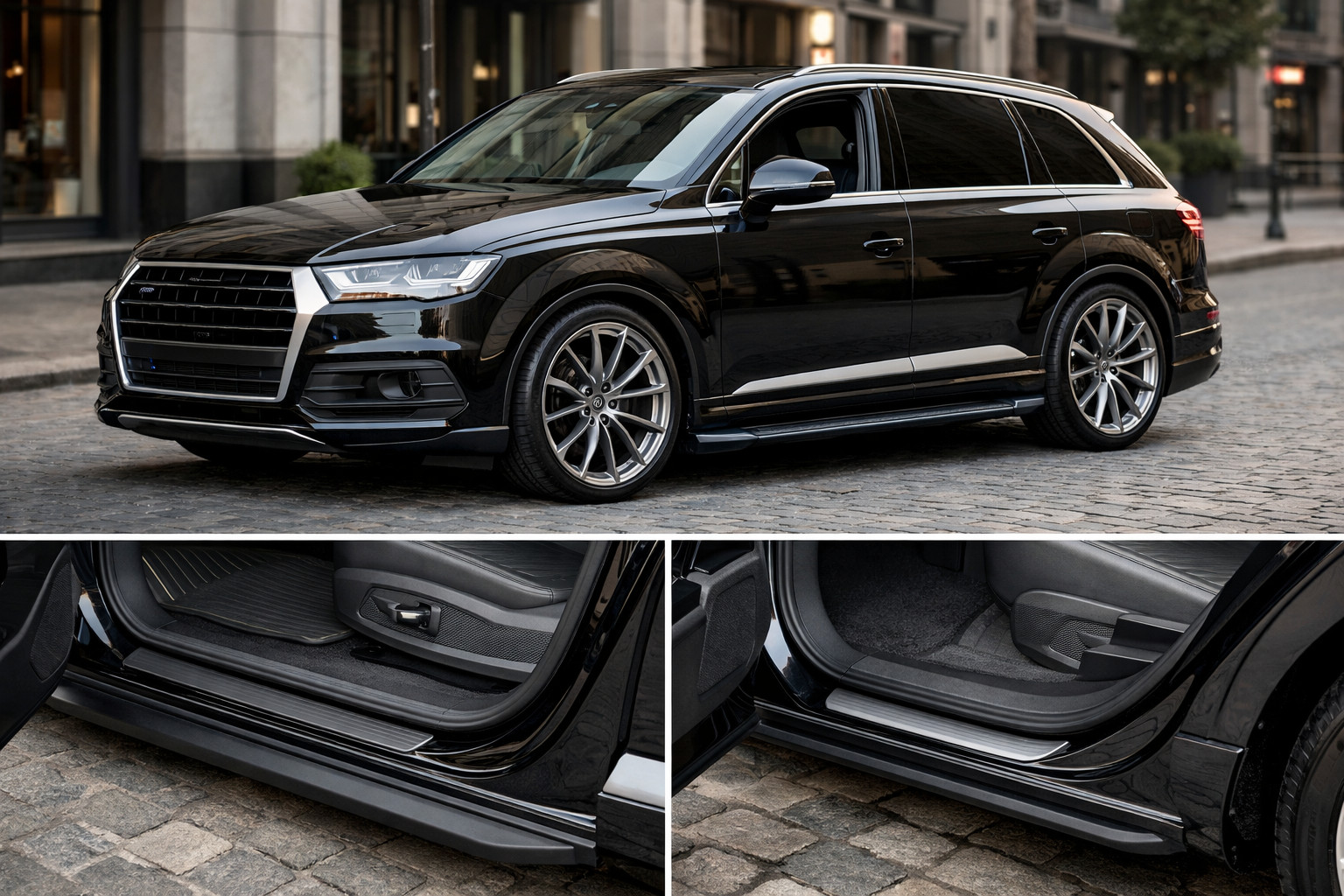
For the XC90, the point isn’t decorative tuning but practical things: protect the interior, simplify cargo carrying, and avoid damaging the body in everyday use. If you’re checking accessory compatibility for early and late vehicles of this model year, it’s worth keeping handy the review of the 2025 update.
Accessories like these best reveal the XC90’s character: the vehicle is made for family duty, not flashy exterior tuning. So the priorities here are protection, cleanliness, and transport flexibility.
Volvo XC90 2025 is a large family crossover for those who value comfort, quietness, safety, and practicality above all else—not sporty habits or showy dynamics. It fits best as a vehicle for travel, kids, winter routes, and mixed urban daily life; it fits least when you need a spacious third row for adults or flawlessly simple electronics.
This material is based on real-world selection experience, hands-on work with accessories, and real usage scenarios for such vehicles, so the main conclusion is simple: the XC90 is strong where a vehicle should make family life easier, but before buying, it’s worth taking a close look at the specific version, the state of the electronics, and whether the large seven-seat crossover format truly suits you.
| ✔ | Very comfortable for everyday driving: the quiet cabin and smooth ride don’t tire you out on the highway or in the city. |
| ✔ | Practical for a family: 6–7 seats, a spacious first and second row, a built-in child booster, and ISOFIX on the outer seats of the second row. |
| ✔ | Well suited for winter and travel: all-wheel drive, decent ground clearance, a large trunk, and towing capacity of up to 2268 kg. |
| ✔ | There is a choice of powertrain versions for different scenarios: B5 for relaxed driving, B6 for a loaded car, and T8 for those who can charge the car regularly. |
| ✔ | Strong equipment with useful everyday features: four-zone climate control, air purification, surround view, lane keeping assist, and blind spot monitoring. |
| ✘ | The multimedia and software can work slowly or unstably, and some functions are hidden in menus. |
| ✘ | The third row is more suitable for children or short trips than for regularly carrying adults. |
| ✘ | B6 does not offer an economy advantage, and T8 only makes sense if it is charged regularly; otherwise, you end up carrying the battery around without full benefit. |
| ✘ | For the 2025 model year, there are versions with different equipment and interfaces, so without checking the production date you may get a car with a noticeably different set of updates. |
Shipping to EU
Wholesale and retail
Own warehouse
Опис продукту
Подарунки не надаються при оформленні покупки у кредит під 0,01% або при покупці частинами.