24.05.2026
337
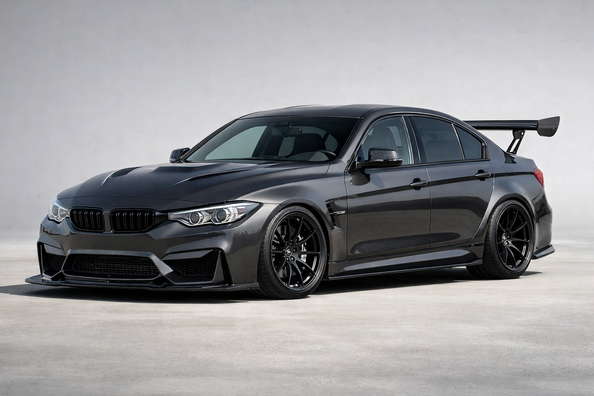

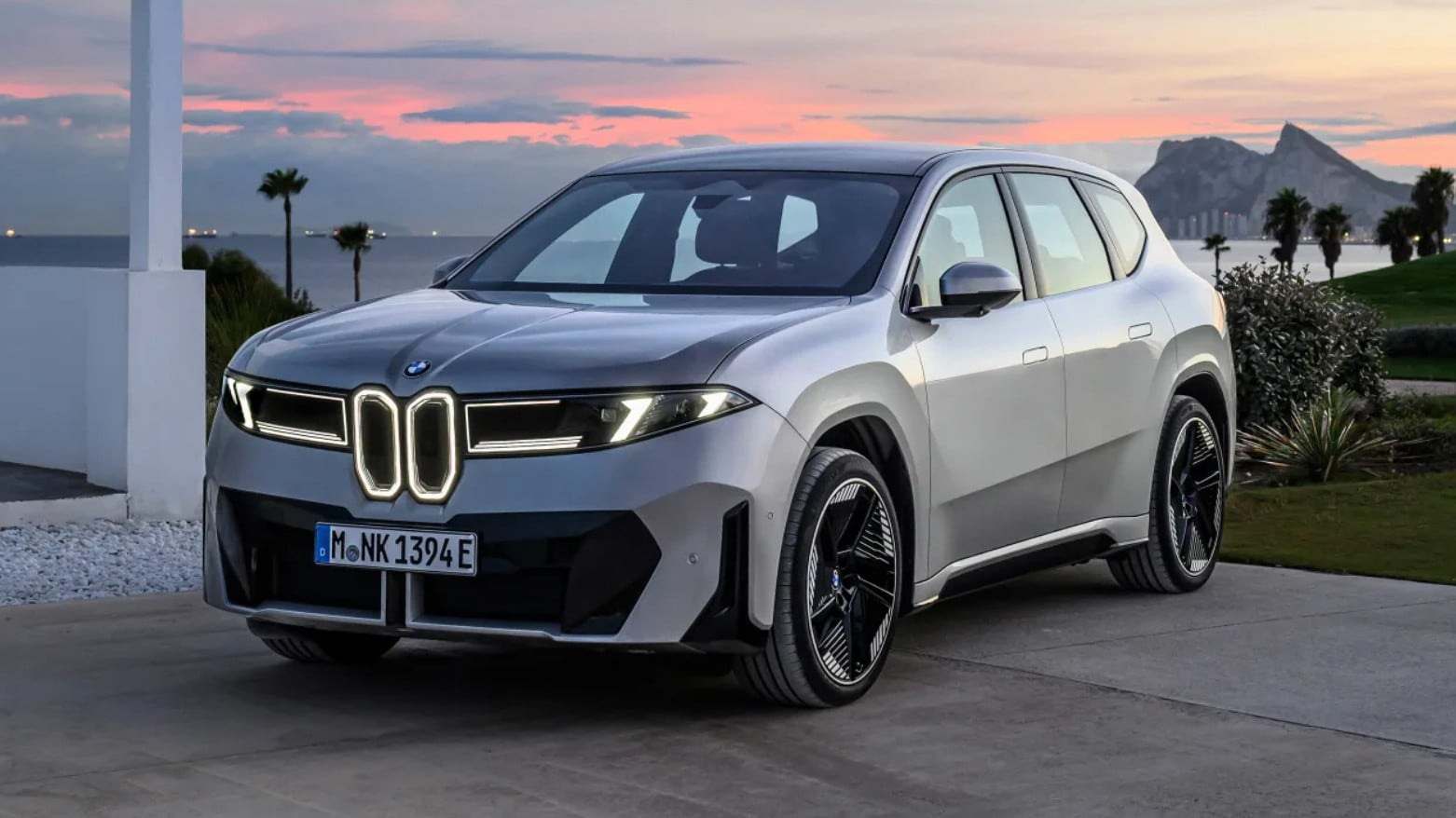
If you look at a BMW specifically as a platform for upgrades, the best candidates are rear-wheel-drive coupes and sedans with a turbocharged 3.0L inline-six. In this role, the strongest options are the E82 135i and E9x 335i as old-school choices, the F30 340i and G20 M340i as fast daily sedans, and the G42 M240i as a compact modern alternative.
The main difference between them isn’t only power. Older bodies deliver a more direct mechanical feel and are more interesting as a tuning base, while newer ones are better for daily life: quieter, more practical, and less demanding in the city. That’s why, in this topic, the body and generation matter no less than the numbers on the spec sheet.
In BMW’s lineup, mid-size coupes and sedans most often become the foundation for tuning. The reason is simple: rear-wheel drive, good chassis balance, powerful six-cylinder turbo engines, and a huge selection of parts for specific body styles. Unlike crossovers, here any change to the exterior or chassis is felt immediately.
For tuning, not every BMW matters—only a few key body styles do. The old-school camp is formed by the 1 Series Coupé E82 and the 3 Series Coupé E92/E93. Next comes the F30 340i—already much more civil, but still very rewarding for modifications. The modern stage is the G20 M340i and G42 M240i, where the factory already delivers plenty of power, and tuning more often revolves around body parts, wheels, and moderate power gains.
By years, the picture looks like this: E92/E93 — 2006-2013, F30/F31 — 2012-2019, G20/G21 — since 2018, G42 — since 2021. There’s a nuance with the E82: it’s a body within the E8x family, and publicly available data on years and dimensions varies by market, so it’s more accurate to treat it as a coupe from the late 2000s and early 2010s.
The most successful BMWs for tuning share one logic: a turbocharged 3.0L inline-six and classic rear-wheel-drive architecture. In the older E82 135i and E9x 335i that’s about 300-304 hp and 407 N·m; in the F30 340i — 326 hp and 450 N·m; in the G20 M340i — 382 hp at the start of the generation and 386 hp after the 2025 update; in the G42 M240i — 382 hp and 500 N·m.
As for gearboxes, the following is confirmed: the F30 340i came with either a 6-speed manual or an 8-speed automatic, while the G20 M340i and G42 M240i are effectively tied to the 8-speed automatic. In terms of performance, the older bodies still don’t feel slow: E82 135i — about 5.3 s, E9x 335i — 5.6 s, F30 340i — 5.2 s, G20 M340i — from 4.4 to 4.1 s depending on year and drivetrain.
| Body | Years and generation | Engine | Power and torque | Transmissions | Dimensions and wheelbase | Ground clearance / trunk | Practical takeaway |
|---|---|---|---|---|---|---|---|
| BMW 135i Coupé E82 | E8x family, late 2000s — early 2010s | 3.0L turbocharged inline-six | 300-304 hp, 407 N·m | depending on year and market | a complete set of public geometry data isn’t available everywhere | not confirmed / not confirmed | a very lively old-school tuning base |
| BMW 335i Coupé E92/E93 | 2006-2013 | 3.0L, 2979 cm³, turbocharged inline-six | 300-304 hp, 407 N·m | depending on version | 4588 × 1782 × 1375 mm, wheelbase 2760 mm | — / 430 L | a classic coupe that’s still usable daily |
| BMW 340i Sedan F30 | 340i versions within F30/F31 2012-2019 | 3.0L inline-six | 326 hp, 450 N·m | 6-speed manual or 8-speed automatic | 4633 × 1811 × 1429 mm, wheelbase 2810 mm | 140 mm / 480 L | the best daily balance |
| BMW M340i Sedan G20 | 2020-2025 within G20/G21 2018- | 3.0L inline-six, in 2025 with 48 V mild hybrid | 382-386 hp, 500-540 N·m | 8-speed automatic | 4719 × 1826 × 1433-1443 mm, wheelbase 2850 mm | 137-130 mm / 481-479 L | the quickest and most mature sedan in the selection |
| BMW M240i Coupé G42 | since 2021, current version 2025 | 3.0L inline-six | 382 hp, 500 N·m | 8-speed automatic | 4547 × 1839 × 1405 mm, wheelbase 2741 mm | 127 mm / 391 L | a compact modern coupe with minimal extra mass |
The geometry makes it clear why the F30 and G20 work better as everyday cars. They’re longer, more stable on the highway, and have nearly 480 L of trunk space. The G20 also brings an adult wheelbase of 2850 mm, so it feels calmer at speed. The G42 is shorter and tighter in feel, but pays for it with lower ground clearance of 127 mm and a smaller 391 L trunk.
The E92 335i, with its 430 L trunk, is more practical than many expect from a coupe, but it’s still not a family-sedan format. The F30 340i with 140 mm of ground clearance looks like the most reasonable compromise for our roads. With the E82, it’s worth stating honestly: not all public press materials provide a full set of dimensions, so it’s better judged not by centimeters but by character—a compact body, shorter wheelbase, and very lively response to chassis changes.
The interiors of these BMWs differ less in quality and more in philosophy. The E82 and E92 are still old-school ergonomics without an excess of electronics—a simpler sense of the car and less of a digital layer between the driver and the chassis. At the same time, even the 135i is often described by owners as quiet inside and quite practical for its class.
The F30 is noticeably roomier and more friendly for daily commuting. The G20 offers the most modern cabin, a proper trunk, and a 40:20:40 split-fold rear backrest, but some owners are put off by how intrusive the electronic assistants can be. The G42 M240i feels like a near two-seater: the rear bench is tight, and the suspension stiffness is more noticeable than in the sedans.
If you need one car for everything, the F30 340i and G20 M340i look best. The first gives decent ground clearance, a large trunk, and a character that isn’t yet overloaded with electronics. The second is clearly quicker, quieter, and more mature, but more expensive to buy into and more complex in feel.
In fuel consumption and noise comfort, the older E82/E9x lose to the newer B58 models. That’s exactly why they aren’t everyone’s pick as a daily: lots of drive, less calm.
| Body | Strengths | Weaknesses |
|---|---|---|
| E82 135i / E92 335i | lively rear-wheel-drive platform, compact size, honest chassis feel, huge tuning interest | age, fuel system risks, misfires, minor electrical issues, more noise and consumption |
| F30 340i | 326 hp, 480 L trunk, 140 mm ground clearance, you can find both manual and automatic | can be noisy on rough surfaces, steering may not feel expressive enough for everyone |
| G20 M340i | 382-386 hp, very strong performance, about 480 L of trunk space, good daily comfort | electronic assistants can be annoying, rear seat isn’t as roomy as in larger series |
| G42 M240i | compact body, modern 3.0L inline-six, sharp responses | tight rear seats, 391 L trunk, stiffer suspension and low ground clearance |
In this class of BMW, the biggest value isn’t flashy tuning, but precise tuning. For the E82 and E92, lip spoilers, subtle diffusers, grilles, and small body accents that don’t ruin the coupe’s lightness are appropriate. The F30 and G20 take restrained exterior tuning well, along with practical interior and trunk accessories. The G42 also asks for caution: with its compact body, a massive body kit often looks heavier than the car itself.
A typical mistake is building a daily BMW as if it were only a weekend car: elements that sit too low, overly stiff wheel setups, random decorative parts. If the car is genuinely driven every day, useful accessories often make more sense than a loud exterior image.
If you want the best base specifically for tuning, the first candidates are the E82 135i and E9x 335i: they deliver the чистest chassis feel and the most room for upgrades. If you want balance without constant daily compromises, it’s better to look at the F30 340i or G20 M340i. The G42 M240i is the pick for those who value compactness and modern tech, and don’t really need the rear seats.
The main thing is not to mix different tasks into one. Older bodies are interesting for an enthusiast, newer ones are stronger as daily transport. This material is based on real selection experience, hands-on practice, and real usage scenarios—not an abstract “who’s faster on paper” ranking.
| ✔ | E82 135i and E9x 335i deliver the most engaging rear-wheel-drive chassis feel and are a great base for tuning. For upgrades, this is the most interesting option from BMW’s old school. |
| ✔ | The F30 340i looks like the smartest daily compromise: 140 mm ground clearance, a 480 l trunk, and a choice between a manual and an automatic. It’s a convenient body style for those who want a fast car without unnecessary everyday inconvenience. |
| ✔ | The G20 M340i combines very strong performance with normal daily comfort and a large trunk. In the article, it is directly called the fastest and most mature sedan in the selection. |
| ✔ | The G42 M240i is convenient for the city and short trips thanks to its compact body and modern 3.0-liter inline-six. The car feels tight and responds sharply to driver input. |
| ✔ | For these BMW, restrained tuning makes a lot of sense: lip spoilers, diffusers, and other clean details nicely emphasize the body without unnecessary visual weight. This works especially well on E82, E92, F30, and G20. |
| ✘ | Older E82/E92 carry more technical risk: the mentioned fuel system issues, misfires, and minor electrical problems. For daily use, this means higher costs to keep the car in good shape. |
| ✘ | The E82 135i and E92 335i trail newer models in fuel consumption and noise comfort. As daily cars, they are less relaxed and more demanding on the owner. |
| ✘ | The G20 M340i may annoy some drivers with its electronic assistants, and the rear row is not as spacious as in larger sedans. It is no longer such a simple and “mechanical” car as older generations. |
| ✘ | The G42 M240i has a cramped rear row, a smaller 391 l trunk, and a stiffer suspension. Due to its low ground clearance, it is less convenient where poor roads are common or practicality is needed. |
Shipping to EU
Wholesale and retail
Own warehouse
Опис продукту
Подарунки не надаються при оформленні покупки у кредит під 0,01% або при покупці частинами.