24.06.2026
344
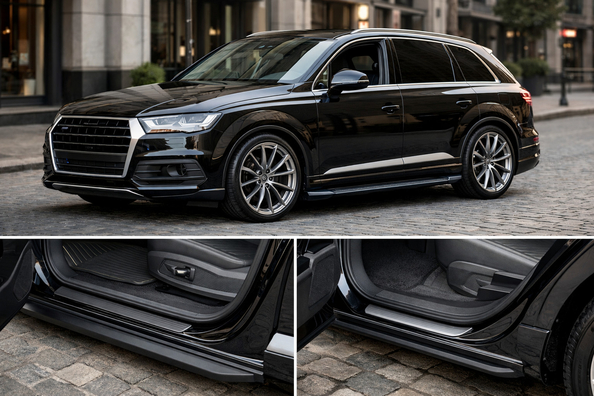

This plan is for an Audi Q7 owner who drives mostly in the city and wants not decorative tuning, but real everyday convenience: easier entry, less dirt dragged into the cabin, and no scratches on the trunk edge near the supermarket, a stroller, or suitcases.
The main idea is simple: for a city Q7, you shouldn’t start with side steps. In most cases, the first real impact comes from all-season floor mats, load-area protection, mud flaps, and basic trunk organization. Side steps make sense only when they genuinely make getting in easier or improve access to the roof.
In the city, this upgrade should cover three things: easier entry for kids or older passengers, less dirt at the cabin entry, and fewer scratches around the trunk opening. The Q7 is big and comfortable on its own, but the entry area and the loading edge are the first to suffer.
It’s important not to confuse visual effect with real usefulness. If your Q7 has air suspension, the seating height is often less of an issue. If the suspension is standard and you have kids or shorter passengers in the family, then side steps can be considered—but only after the basic interior protection.
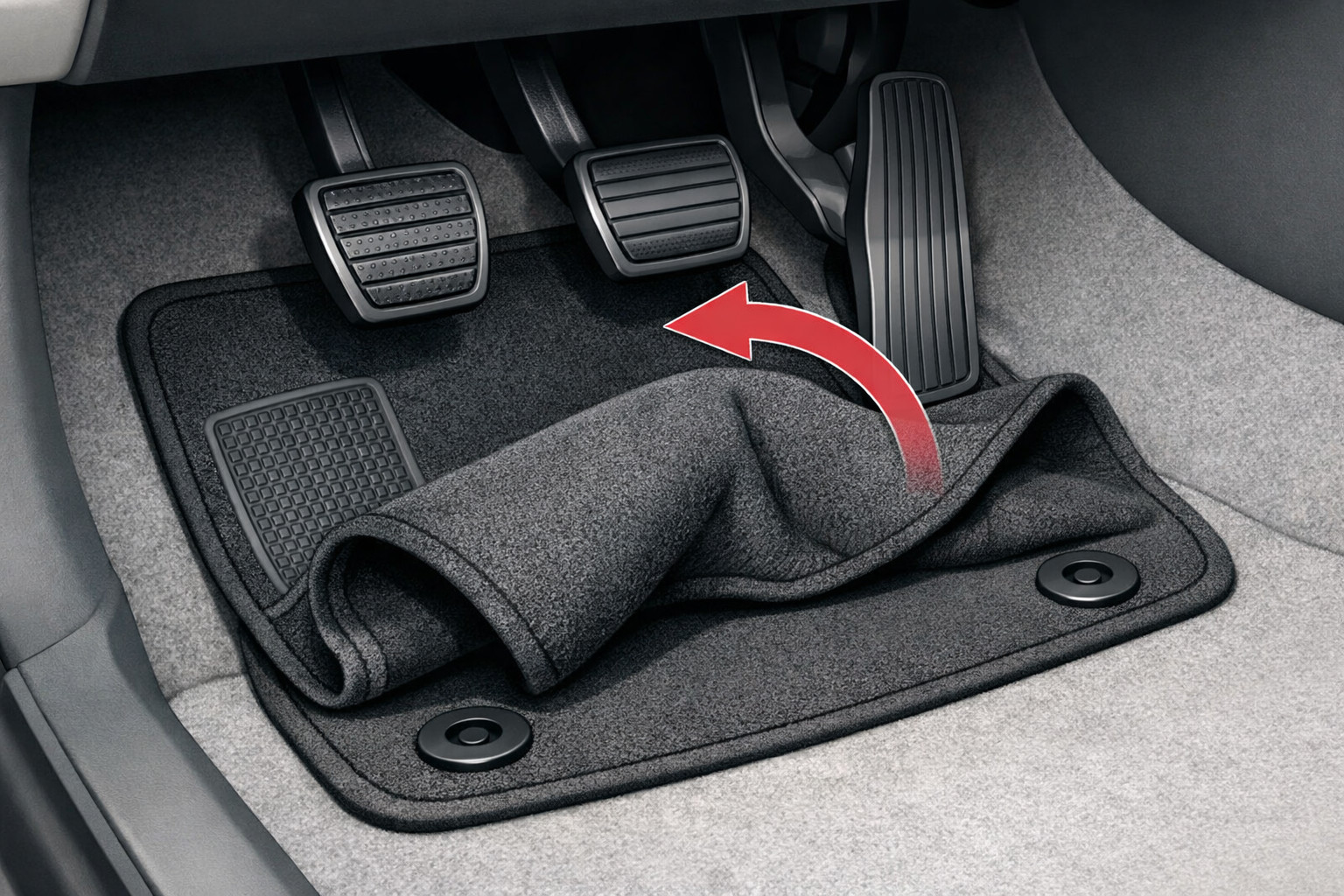
Start with all-season interior floor mats. They’re what capture water, snow, and road chemicals—the very things that make the lower cabin and door sills dirty by day two. For OEM sets, catalogs may list different part numbers for the front set, so it’s best to select by VIN.
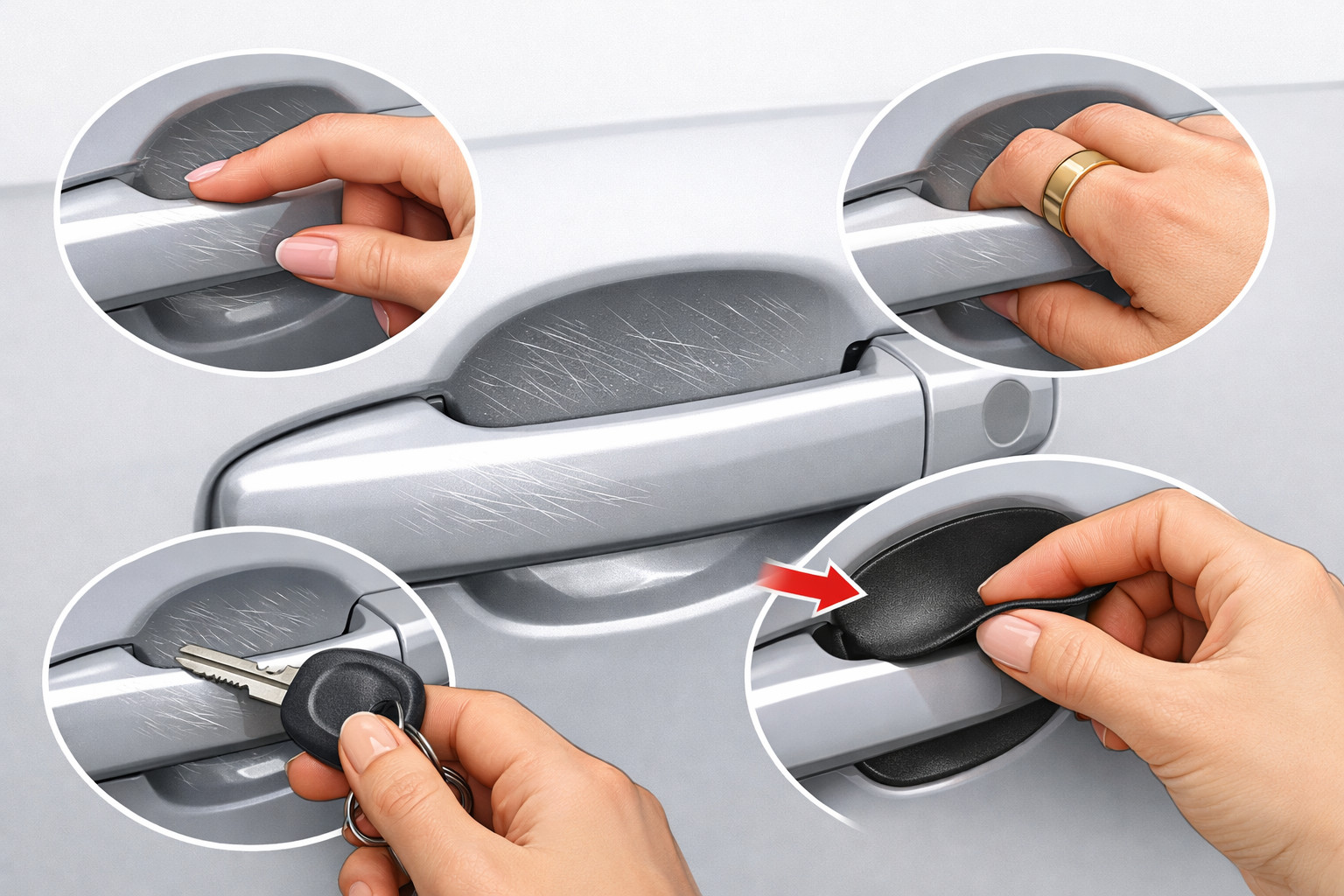
The second must-do step is protecting the trunk sill and the trunk floor. For city use, this is more useful than exterior add-ons, because this is where the first scratches appear—from shopping bags, tote bags, a scooter, or a stroller. Third come mud flaps, but only after checking compatibility with your model year and the S line version.
| Upgrade | Why it’s needed | Who truly benefits |
|---|---|---|
| All-season floor mats | Keep water, snow, and dirt on the mats rather than on the cabin carpeting. For the Q7, it’s worth verifying fitment by VIN. | Almost everyone who drives in the city daily and often gets into the car with wet shoes. |
| Trunk sill protector or trunk mat with a fold-out edge | Reduces scratches in the loading area and takes the dirt from bags and stroller wheels. | Those who regularly carry groceries, kids’ items, tools, or luggage. |
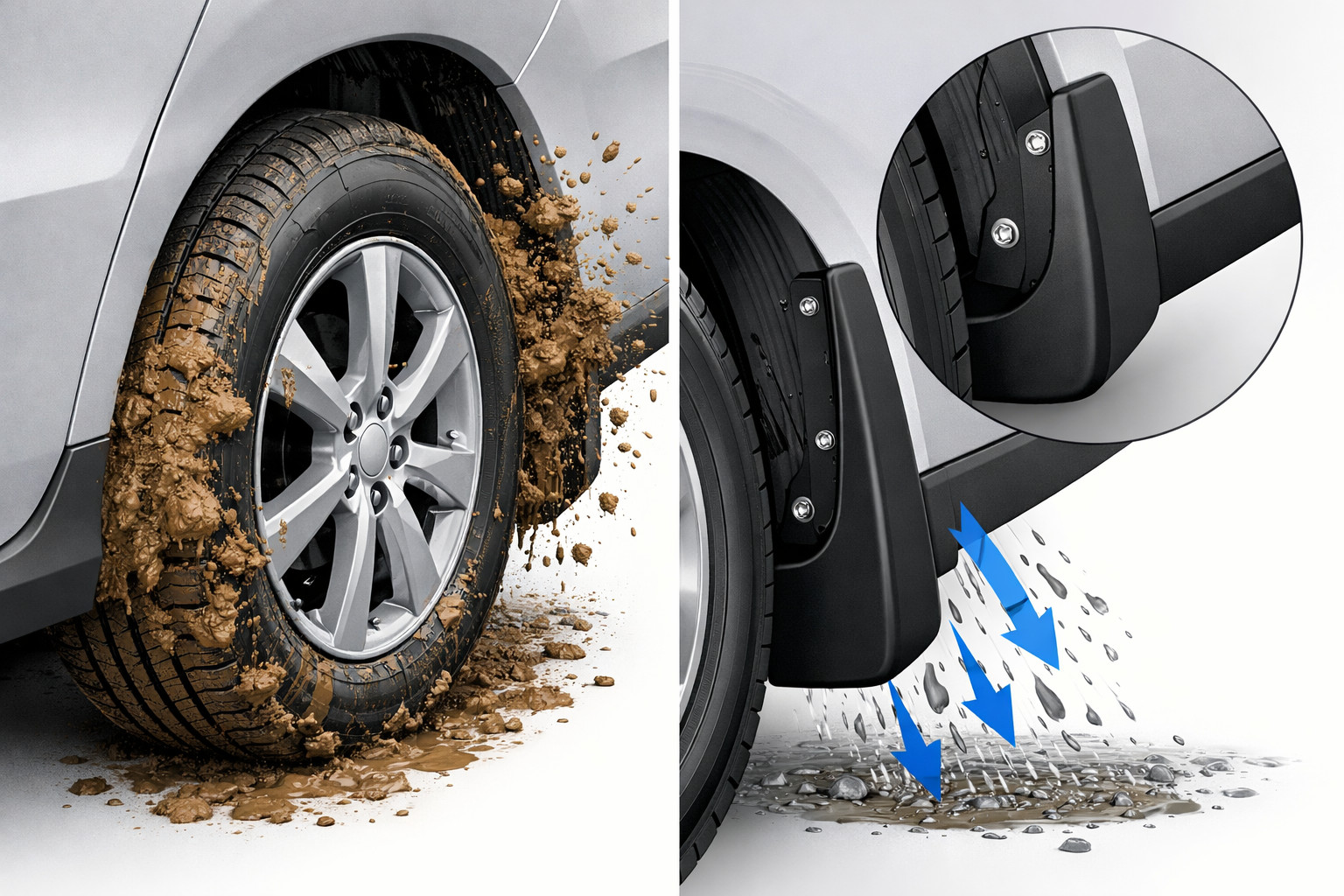
| Mud flaps | Fewer splashes and grime on the lower part of the doors and sills, especially in rain and slush. | Those who drive through courtyards, mud, park by curbs, and don’t want to wash the lower body often. |
| Cargo net or trunk organizer | Stops bags and small items from sliding around the trunk. | Families, anyone who shops daily or carries kids’ and sports gear. |
| Side steps | Provide an extra foothold and make roof access easier, but don’t solve the dirt-in-the-cabin problem. | Those for whom entry is genuinely high, those carrying kids, or those who often use the roof. |
| Wheel locking bolts | Reduce the risk of wheel or expensive rim theft. | Those whose car stays overnight outside or is parked in open lots. |
As a second stage, it makes sense to add what doesn’t affect cleanliness every day but noticeably simplifies everyday use. That’s a cargo net or trunk organizer so bags, canisters, and kids’ items don’t slide across the floor.
This also includes wheel locking bolts if the Q7 is parked outside and has expensive rims. If after the first stage the interior still gets dirty too quickly, then it makes sense to look at deeper mats with higher edges or another solution for your driving pattern.
DD Tuning expert comment: The most common mistake with a Q7 is buying side steps as the first item and then realizing a week later that shoes are still wet and the trunk edge is already scratched. The second mistake is not checking compatibility of mud flaps and sills by VIN and body version, especially on S line. For an urban scenario, it’s better to address dirt control and the loading area first, and only then choose exterior elements.
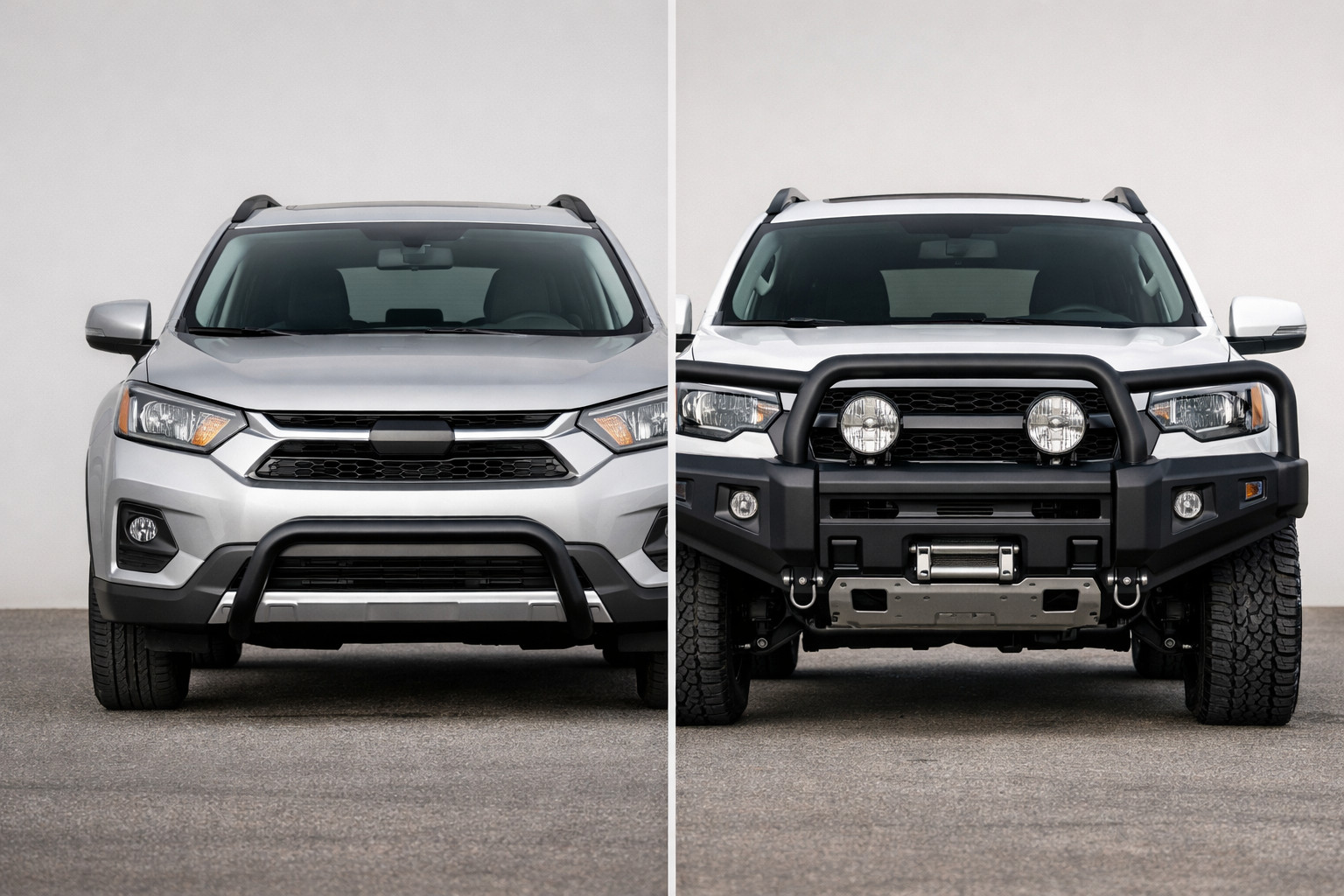
This group includes side steps, side bars, and other exterior elements that change the feel of the car more than daily practicality. Side steps make sense in three cases: you need to help kids or older passengers, you regularly reach the roof, or entry on your Q7 is truly too high.
But the nuance is that on some vehicles a side step can get in the way when stepping out, collect dirt in winter, and its installation and ongoing maintenance aren’t cheap. Some kits also require a special jack for service work, and it’s better to know that before buying, not after installation.
People often waste money on things that don’t solve the original task: exterior sills “to make the Q7 look right,” side bars instead of proper interior protection, duplicate trunk accessories without a clear role. If the car is used in the city, shiny exterior pieces won’t keep the sills clean—controlling dirt at entry and reducing splashes on the lower body will.
Another typical mistake is overpaying for looks where the car already has enough factory city convenience. If your trim includes easy trunk access, folding rows, and air suspension, there’s no need to duplicate that with expensive tuning without clear everyday benefits.
| Scenario | What to install first | What can be postponed | What isn’t required |
|---|---|---|---|
| Basic city Q7 | All-season floor mats, trunk sill protection, mud flaps | Cargo net or trunk organizer | Side steps if entry height isn’t an issue |
| Family use | Mats, trunk protection, trunk organization | Side steps after confirming they’re truly needed for kids | Side bars and other exterior elements without a function |
| Outdoor parking, expensive rims | Mats, mud flaps, wheel locking bolts | Side steps or expensive exterior solutions | Decorative add-ons that don’t affect safety and daily use |
More expensive solutions are justified not when you just want to “add something,” but when the basic kit has already handled dirt and the entry issue remains. If you truly need a foothold rather than a decorative element, look at Alliance side steps and immediately verify the year, body, and installation method.
For a newer body style, it’s convenient to start with the Audi Q7 2026- рр. page to understand which items are available for the model. And side bars are worth buying only when you consciously choose the exterior effect and understand that for entry they’re usually less useful than a full-width side step.
From a customer’s experience: A Q7 owner for daily city driving initially wanted side steps because it seemed like it would be more convenient for the kids. After selection, he started with mats, trunk sill protection, mud flaps, and a cargo net, and postponed the side steps. A few weeks later it turned out the main problem wasn’t entry height, but dirt and chaos in the trunk—and the first stage solved that completely.
For a city Audi Q7, the right starter upgrade looks like this: first protect the cabin and the loading area, then reduce grime on the lower body, then bring order to the trunk, and only after that decide on side steps. This order is cheaper in terms of mistakes and delivers daily results faster.
Side steps aren’t “forbidden” here—they’re just not the first step. If they’re truly needed for your height, kids, older passengers, or frequent roof access, then it’s a sensible upgrade. But for city use, the foundation is still mats, trunk sill protection, and mud flaps. This material is based on real selection experience, practice, and real use cases—not a catalog picture.
| ✔ | All-season floor mats really cover the basic city problem: water, snow, and road salt don’t get into the cabin but stay on the matting. This is especially practical for daily trips in wet shoes. |
| ✔ | Protection for the trunk sill and trunk floor is useful in everyday use: it reduces scratches from bags, groceries, a stroller, or a scooter. For city driving, this gives a faster effect than external decorative upgrades. |
| ✔ | Mud flaps help keep the lower part of the doors and the sills clean, especially in rain, slush, and dirty courtyards. They reduce how often you need to wash the areas that get dirty the fastest. |
| ✔ | A cargo net or organizer clears up the chaos during daily trips. Bags, children’s items, or small cargo don’t slide around on the floor or hit the trim. |
| ✔ | Running boards make sense in specific scenarios: when you need to help children or elderly passengers, as well as if roof access is often needed. In other words, this is not a pointless purchase but a solution for a specific need. |
| ✘ | Running boards do not solve the main city problem — dirt at the cabin entrance and clean sills. If you install them first, you can spend money without a noticeable daily effect. |
| ✘ | On some cars, the running board can get in the way of your foot when getting out, and in winter it collects dirt. This makes it less convenient to use than it seems at the selection stage. |
| ✘ | Some kits require a special jack for service work, and installation plus further maintenance are not cheap. In other words, this is not the simplest or cheapest upgrade. |
| ✘ | Mud flaps and running boards must be selected very carefully by VIN, model year, and S line version. Without checking, there is a risk of buying an incompatible kit and wasting time and money. |
Shipping to EU
Wholesale and retail
Own warehouse
Опис продукту
Подарунки не надаються при оформленні покупки у кредит під 0,01% або при покупці частинами.