01.05.2026
387
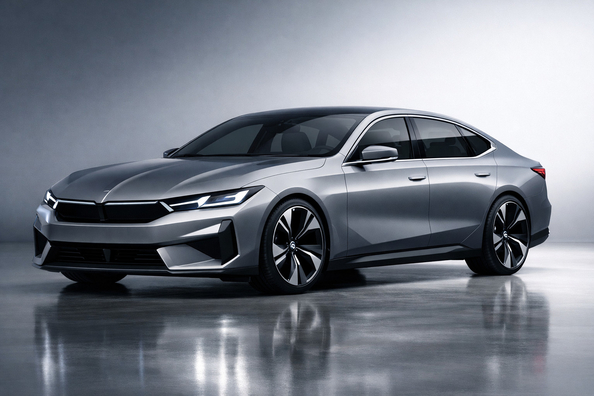
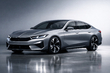
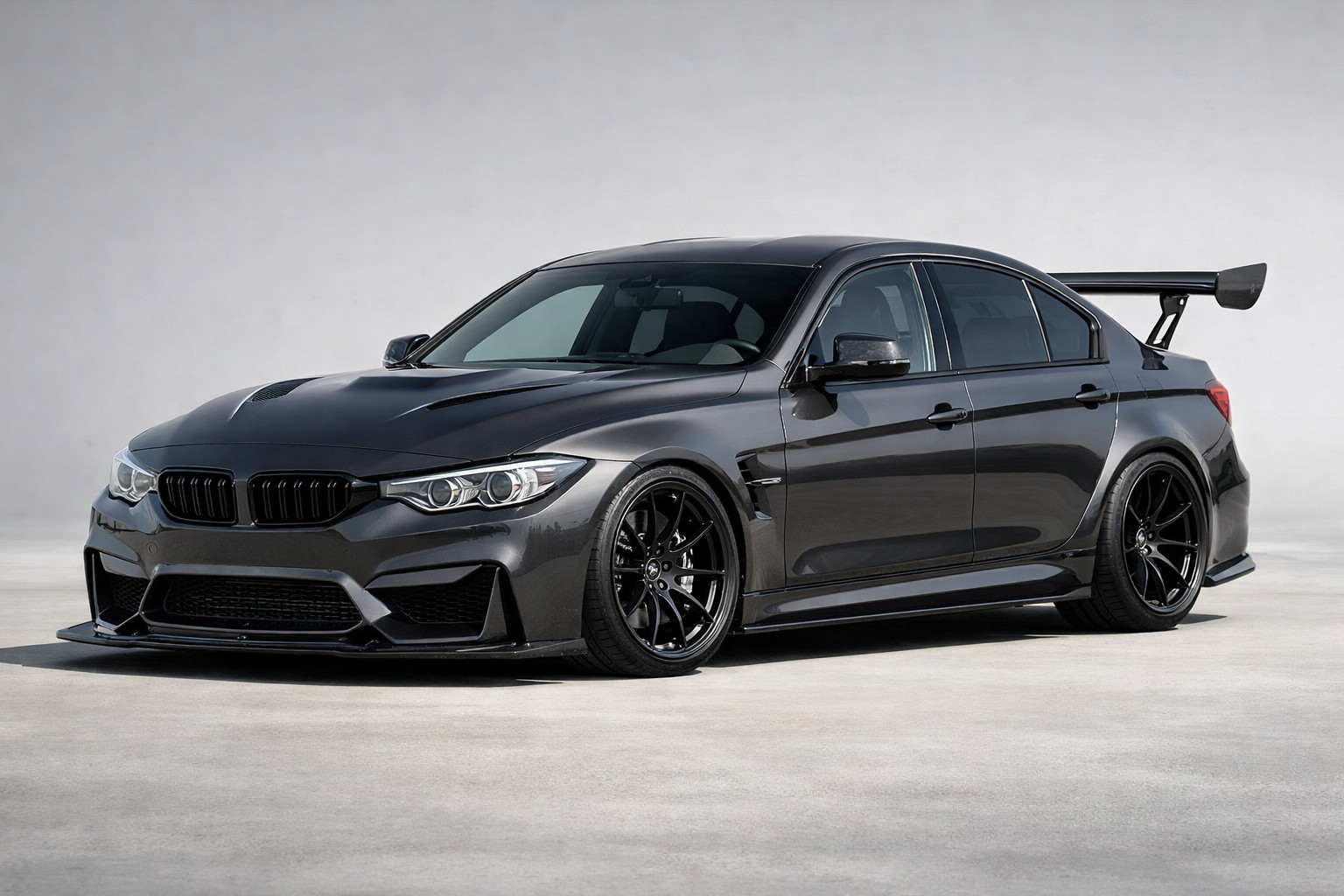
BMW 5 Series G60 in the context of 2027 has an unusual status right now: BMW has not shown a separate official concept, public prototype, or pre-production presentation, yet there is already an officially confirmed production 2027 model lineup for the US market. So this is not a “secret car”, but a current production vehicle, around which rumors about a future mid-cycle update are circulating in parallel.
That’s why it’s important here to separate facts from expectations. The facts come from the manufacturer’s press releases, official model pages, and the announced 2025 updates. Anything about a new front end, a redesigned interior, or the launch of a facelift in the second half of 2027 should for now be treated only as an expected scenario. In the author’s view, BMW will take an evolutionary path: no new platform, but a noticeable rework of the lighting, the cabin interface, and the tuning of electrified versions.
It is officially confirmed that the 2027 BMW 5 Series Sedan is already present as a production model on the brand’s official US pages. This means that for the 2027 model year the model’s status is closer to a production official reveal than to a concept or prototype. The manufacturer has not yet held a separate public reveal specifically of an “updated” G60.
The G60 generation officially debuted in May 2023 via the manufacturer’s press release, and in spring 2025 the brand separately announced targeted technical and equipment changes. That is why talking about 2027 has to happen on two levels: the production car already exists, but the future facelift has not yet been brought into the public space as a finished product.
| What is known | What is expected | What is unknown |
|---|---|---|
| The production 2027 5 Series has already been officially shown for the USA | A separate mid-cycle update with new lighting and a redesigned interior | The date of the public premiere of the updated version specifically |
| The G60 generation launched in 2023, and in 2025 it already received official refinements | A more restrained facelift without a platform change | How dramatically the front end will change |
| The powertrain lineup already covers gasoline, hybrid, and electric versions | Further efficiency improvements for the i5 and possibly the PHEV | Whether a front passenger display will be standard or optional |
It is officially confirmed that the G60 is built on a flexible architecture that from the outset is designed for multiple powertrain types: a classic ICE with a 48-volt system, a plug-in hybrid, and a fully electric version. For a business sedan, this is a strong foundation because BMW is not forced to re-engineer the body for each separate propulsion scenario.
The current car already has its key proportions set: length 5060 mm, width 1900 mm, height 1515 mm, and wheelbase 2995 mm. For the expected update, I see no reason to anticipate major changes in body geometry or cabin packaging, so most likely BMW will work on cladding, electronics, and equipment rather than the platform “hardware”. This is logical for the current BMW 5/i5 G60 as well, where the structure is already mature and does not require a radical overhaul.
Officially for the USA for the 2027 model year, seven variants are listed: 530i, 530i xDrive, 540i xDrive, 550e xDrive, i5 eDrive40, i5 xDrive40, and i5 M60. This is an important signal: BMW is not narrowing the lineup; on the contrary, it keeps the 5 Series as a universal model for the buyer who has not yet decided between gasoline, hybrid, and electric drive.
According to confirmed data, the 530i has 255 hp, the 540i xDrive — 375 hp, the 550e xDrive — 483 hp and 700 N·m, and the i5 eDrive40 develops 335 hp with a range of up to 499 km. The i5 M60 remains the performance flagship with 593 hp and 0–96.6 km/h in 3.7 s. As for the facelift itself, there are no separate official powertrain announcements yet, so what’s expected is not a change of philosophy, but targeted refinements to control electronics, efficiency, and possibly battery tuning.
DD Tuning expert comment: the most common mistake with updates like these is expecting completely new hardware where the manufacturer usually changes only tuning, lighting, and infotainment. If you look at the future 5 Series practically, it’s worth assessing not the volume of rumors but the fact that BMW has already officially kept a broad range of powertrains. In real-world selection, it’s the type of powertrain—not the shape of the headlight—that most strongly affects the daily use case.
The only officially confirmed changes are those already implemented for the current G60: since spring 2025, BMW Interaction Bar ambient lighting, front-seat lumbar support, and the Harman Kardon audio system have become standard across the entire 5 Series range. This means the cabin has already been pushed toward a more premium feel even without a major facelift.
According to rumors, the 2027 update will bring new headlights, a calmer front end, likely a smaller or differently styled grille, and a new dashboard in the Panoramic iDrive style. A possible separate front passenger display is also mentioned, but this has not been officially announced. In my view, BMW will try to make the G60 visually cleaner and less heavy up front without breaking the overall silhouette of the current car.
If you look not at rumors but at the numbers, the current 2027 lineup already looks strong. The only issue is that these figures belong to the current production versions, not to a separately revealed facelift. So you can use them as a reference for what BMW is bringing into 2027, but not as a guarantee of identical parameters for the future update.
| Version | Officially stated for the 2027 model year | What is expected for the update |
|---|---|---|
| 530i | 255 hp, 400 N·m, 0–96.6 km/h in 5.9 s | No change to the basic architecture; minor changes in calibrations and equipment are likely |
| 540i xDrive | 375 hp, 539 N·m, 0–96.6 km/h in 4.4 s | Keeping the inline “six” looks like the most logical scenario |
| 550e xDrive | 483 hp, 700 N·m, 22.1 kWh battery, 53 km electric range | Likely improved hybrid operating logic, but not necessarily more power |
| i5 eDrive40 | 335 hp, range 447–499 km | Work on efficiency is expected rather than a sharp battery leap |
| i5 M60 | 593 hp, 0–96.6 km/h in 3.7 s | The flagship will likely keep the focus on performance and the visual package |
Separately, it’s worth noting that even on the official pages there is a discrepancy in the i5 xDrive40 acceleration: one block lists 4.9 s, another 5.2 s. For the reader, this is a good example of why you shouldn’t draw overly categorical conclusions around a future update until the manufacturer publishes the final specifications.
The BMW 5 Series G60 sits in the classic business-sedan segment, but today its strength is not only handling—it’s also the breadth of powertrain choice. That’s what differentiates it from some competitors that are either stronger in comfort, or more clearly shifted toward electrification, or premium finishing.
| Competitor | Positioning | How the BMW 5 Series G60 responds |
|---|---|---|
| Audi A6 | A restrained business sedan with an emphasis on comfort and conservative design | BMW offers a broader, more expressive electrified lineup and a more dynamic image |
| Mercedes-Benz E-Class | A strong emphasis on a digital cabin, comfort, and status perception | BMW balances technology, driver feel, and the choice of powertrain layouts |
| Genesis G80 | A bet on rich equipment and better value for options | BMW counters with platform engineering, model image, and the availability of full EV and PHEV versions |
If the 2027 update is indeed restrained, BMW won’t change its positioning; it will simply bring the exterior and interior up to the brand’s newer design language. This is a sensible approach, because the car’s base still doesn’t look outdated.
Officially, the production 2027 model year has already been shown for the USA, so in that market the car is effectively present. As for the future update specifically, preliminary information suggests production is expected to start in July 2027, but the manufacturer has not publicly confirmed this yet.
On pricing there is only a partially solid baseline. For the USA, the official starting prices are listed as $60,500 for the 530i, $62,800 for the 530i xDrive, $67,700 for the 540i xDrive, $75,500 for the 550e xDrive, $67,100 for the i5 eDrive40, and $70,100 for the i5 xDrive40. The current official price of the i5 M60 for the 2027 model year is not shown in the available data. If the facelift arrives at the end of 2027, I would expect a moderate price increase within a few percent depending on market and trim.
For Europe and other markets, it is still unknown whether the launch schedule will be fully synchronized with the USA. For Ukraine, real timelines will traditionally depend not only on the announcement but also on quotas, dealer deliveries, and the actual availability of specific powertrain versions.
From customer experience: often the request is not about the rumors themselves, but about a practical decision—buy the current G60 or wait for the update. In one typical scenario, an owner was looking at the 550e xDrive but hesitated because of talk about a new interior in 2027. After breaking down the real differences, he decided not to wait for an unknown premiere date, because for daily driving the confirmed hybrid specifications mattered more to him than a potential change in dashboard graphics.
My conclusion is simple: the 2027 BMW 5 Series G60 already exists as a production model, but the update being discussed in the media has not been officially shown yet. So today you can speak confidently about the platform, powertrain types, and the current lineup of versions, but you cannot present rumors about a new front end or interior as confirmed fact.
In the author’s view, BMW will do a neat facelift without changing the car’s foundation: it will refresh the exterior, the cabin’s digital architecture, and slightly improve the efficiency of the electrified variants. If you need a forecast, it won’t be a “new 5 Series”, but a refined current G60. The material is based on real selection experience, practice, and real usage scenarios, so the main advice is this: ориент yourself by the already confirmed versions and specifications, not by renders that have not yet become a production car.
| ✔ | The 2027 update has not yet been officially revealed, so the key things — the front-end design, the cabin, and the exact premiere date — remain at the level of expectations. Because of this, it is hard to plan a purchase if the new look or new multimedia is decisive. |
| ✔ | There are discrepancies even in the official data for certain indicators, for example regarding the i5 xDrive40 acceleration. This reduces confidence in the details and shows that the final specifications may still be adjusted. |
| ✔ | No new engines or radical technical changes have been announced for the upcoming facelift, so a big leap in dynamics or battery capabilities should not be expected. The likely changes will mainly concern tuning, efficiency, and equipment. |
| ✔ | Not all data for the 2027 model year is already available: in particular, the official price of the i5 M60 is not shown in the materials provided. This makes it harder to compare all versions with each other and fully calculate the budget. |
| ✔ | For Europe, Ukraine, and other markets, the launch schedule may differ from the US, and in Ukraine it will also depend on quotas and dealer deliveries. So even with a ready production model, actual availability may be delayed. |
| ✘ | In 2027, the G60 5 Series already has an officially confirmed production lineup for the US, so this is not an abstract project but a real car with available specifications. For the buyer, this means a clear range of versions and already known basic characteristics. |
| ✘ | The platform is designed from the start for ICE, PHEV, and electric versions, so the model does not force a choice between “old” and “new” technology. This architecture gives a wider choice of powertrains without reworking the body for each type of drive. |
| ✘ | The engine and drivetrain lineup is very broad: there are gasoline versions, a plug-in hybrid, and several electric variants. This is convenient for those who want to tailor the 5 Series to a specific scenario — from daily driving to more dynamic driving. |
| ✘ | Already in the base and with the 2025 updates, the cabin has received practical improvements: BMW Interaction Bar ambient lighting, lumbar support for the front seats, and a Harman Kardon audio system. In other words, the car does not have to wait for a major facelift to be better equipped for everyday use. |
| ✘ | BMW does not plan to change the platform, so the most likely update looks like a restrained facelift without radical risks. For the buyer, this is a plus, because the model’s foundation is already mature and proven, and the changes are expected to concern mainly design and electronics. |
Shipping to EU
Wholesale and retail
Own warehouse
Опис продукту
Подарунки не надаються при оформленні покупки у кредит під 0,01% або при покупці частинами.